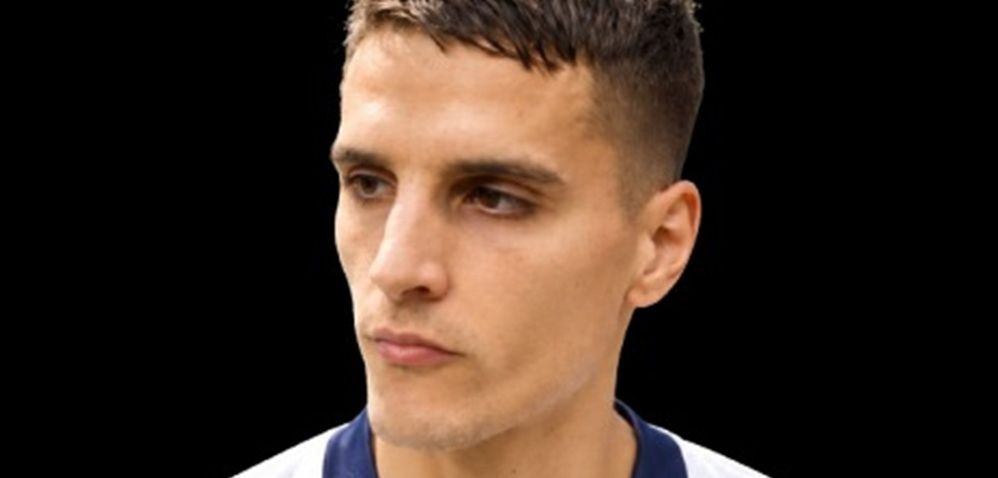
Erik Manuel Lamela, born 4 March 1992, Buenos Aires, Argentina.
PART ONE
Erik Lamela began his playing life at River Plate where the task was to progress through one of the country’s most demanding clubs and earn a place in a first team whose supporters expected their footballers to carry both the ball and the responsibility of wearing the shirt. The first senior opportunity arrived on 14 June 2009, when the 17-year-old replaced Robert Flores against Tigre in the Clausura tournament, making his entrance during the closing stages of the match. More appearances would come slowly at first, and there was value in that period of adjustment, since he needed to understand the movement around him as much as the movement of the ball, learning how to receive between the lines and how to keep an attack alive when the obvious route towards goal had been blocked.
By the second half of 2010, Lamela was becoming a more substantial presence in the River Plate side, and on 5 December he registered his first senior goal against Colón, giving a clearer indication that his development was reaching beyond promising touches and occasional runs. He found the net again against Lanús later that month in a 4–2 victory, and as the 2010–11 campaign continued he became a regular selection, notching up 34 league appearances and scoring four times while carrying an attacking responsibility that would have been considerable for a player several years older.
International recognition followed before that difficult season had finished, with Lamela making his senior Argentina debut against Paraguay on 25 May 2011 in a 4–2 friendly victory, but the satisfaction of representing his country soon gave way to an extraordinary crisis at club level. River’s position was governed by Argentina’s relegation averages across three seasons, meaning that an improvement over the latest campaign could not simply erase previous failures, and a play-off against Belgrano left the famous Buenos Aires club fighting to preserve its place in the top division. Belgrano won the first leg 2–0 on 22 June and the return finished 1–1 four days later, condemning River to relegation for the first time and leaving Lamela associated with a disaster whose causes stretched well beyond his own involvement, although the experience ensured that his first extended spell in senior football had already taught him how quickly the noise around a talented youngster can change when a club’s wider fortunes collapse.
The next step took him towards Europe during the summer of 2011, with Roma securing his transfer for an initial €12 million with further payments attached, while the Under-20 World Cup in Colombia also occupied his attention as Argentina reached the quarter-finals before losing to Portugal on penalties after a goalless draw. Lamela scored three goals at the tournament, but moving to Italy placed him in a different football culture at 19, and although the transfer offered distance from River’s relegation, it did not offer an escape from expectation at a club where supporters had strong opinions about their attacking players and little interest in expensive passengers. Working under Luis Enrique, Lamela had to adjust to Italian defensive organisation, new team-mates and another language, while the presence of Francesco Totti offered a daily example of how a gifted forward could control a match through positioning and timing, rather than assuming that every attack needed to be settled by beating the man in front of him.
His Roma debut on 23 October 2011 provided the kind of introduction that makes those early difficulties easier to absorb, because he scored the only goal against Palermo at the Stadio Olimpico and immediately gave the home crowd something concrete to encourage. Nevertheless, a debut winner did not remove the work required over the rest of the season, and there were afternoons when his touch attracted attention without producing enough damage, just as there were moments when his willingness to move inside from the flank gave defenders a problem they could not comfortably pass to somebody else, particularly if the full-back followed him and left room outside for another Roma runner to advance.
He scored twice in a 3–0 Coppa Italia victory over Fiorentina on 11 January 2012 and finished his first Italian season with six goals in 31 competitive appearances, a useful return for a young newcomer, although Roma’s seventh-place league finish showed that individual promise was developing inside a team that had not yet found enough consistency to meet the standards expected of it, and there remained a clear difference between supplying an encouraging passage of play and controlling his part of a match for the full afternoon.
Under Zdeněk Zeman in 2012–13, the attacking opportunities increased, and Lamela began producing the sustained scoring run that would make clubs outside Italy take a much closer interest, opening his league account against Bologna on 16 September before finding a particularly productive rhythm through October and early November. He scored against Atalanta and Genoa, struck twice in a 3–2 home defeat by Udinese and continued to contribute against Parma and Palermo, with his movement from the right towards central scoring positions becoming a serious weapon rather than an occasional variation. Even when Roma’s defending undermined his work, the change in his own output was clear, because he was attacking the penalty area with greater purpose and arriving where a loose ball or a low delivery could be converted quickly, giving a side already capable of entertaining its supporters another reason to believe that its young Argentine might become much more than a gifted supporting player.
The derby against Lazio on 11 November brought another goal but a 3–2 defeat, reinforcing the awkward pattern of personal progress inside a side that could score freely and still leave the field with nothing, and an ankle problem then interrupted his momentum before the winter break. Returning to the team, he scored twice against Milan in a 4–2 home victory on 22 December, a performance that demonstrated how effective he could be against stronger opposition when he combined sharp movement with a willingness to finish attacks himself, rather than always looking for another pass. He completed the league campaign with 15 goals in 33 appearances, but Roma finished sixth and lost the Coppa Italia final 1–0 to Lazio on 26 May 2013 through Senad Lulić’s goal, leaving Lamela without the trophy that might have given his two seasons in Rome a more satisfying ending and leaving prospective buyers to judge a highly productive attacker against the continuing unevenness of the team around him.
PART TWO
Tottenham Hotspur made their move in the summer of 2013, completing Erik Lamela´s signing on 30 August for an initial fee of about £25.8 million with possible additions taking the agreement towards £30 million, and the price made him the club’s record purchase during a summer already crowded with new arrivals. Gareth Bale was leaving for Real Madrid, and although replacing the Welshman’s influence was a job for the whole side rather than a single recruit, Lamela’s fee and attacking reputation ensured that comparisons were waiting before he had properly unpacked, while his first appearance came as a substitute in the 1–0 defeat at Arsenal on 1 September.
There were early signs of what he might provide, including an assist for Jermain Defoe against Tromsø in a 3–0 Europa League victory on 19 September and the pass from which Paulinho scored the late winner at Cardiff three days later, but those contributions did not establish him immediately in André Villas-Boas’s league side. Lamela scored his first Tottenham goal in the 2–1 home victory over Sheriff Tiraspol on 7 November, yet his first Premier League start came in the 6–0 defeat at Manchester City on 24 November, a punishing occasion on which the failings were collective and the newcomer had little chance of changing the direction of events. Villas-Boas was dismissed the following month and Tim Sherwood took over, while a serious back problem eventually removed Lamela from contention, leaving his first English season reduced to frustration, nine league appearances and a growing gap between the player Tottenham thought they had bought and the football their supporters had actually been able to watch.
Mauricio Pochettino’s arrival in 2014 gave him another starting point, with an Argentine manager who could communicate directly with him but who also demanded considerably more than an occasional piece of attractive football, particularly when Tottenham lost possession and needed to win it back. Lamela started the opening league match at West Ham on 16 August, then supplied two assists as a substitute in the 2–1 Europa League qualifying victory at AEL Limassol on 21 August and two more in the 4–0 home win over Queens Park Rangers three days later, giving his second season a much stronger opening. Argentina also brought him back into view, and on 3 September he scored his first senior international goal in a 4–2 friendly victory over Germany in Düsseldorf, an encouraging evening against the country that had beaten Argentina in the World Cup final, although a September friendly could offer personal satisfaction without changing what had happened in Brazil.
Back at Tottenham, the most striking evidence of his confidence came against Asteras Tripolis on 23 October, when he scored twice in a 5–1 Europa League victory and produced a finish that demanded a second viewing even from people standing close enough to see the first one clearly. With the ball outside the penalty area, Lamela wrapped his left leg behind his right and struck a rabona into the net, an extraordinary choice made more remarkable by the accuracy and power he generated from a position in which a conventional attempt would have been difficult enough, while Harry Kane supplied the other three Tottenham goals. The finish became the evening’s most widely discussed moment, but its place in Lamela’s progress was also useful in a more ordinary sense, because a footballer whose first season had been defined by absence was beginning to give the crowd things to remember from matches he had influenced, rather than asking them to continue trusting a reputation assembled elsewhere.
The next requirement was to make the spectacular part of a broader contribution, and his first Premier League goal arrived on 20 December in a 2–1 home victory over Burnley, when he moved in from the right and curled a left-footed shot beyond Tom Heaton. Pochettino continued to use him through a season in which Tottenham were learning the manager’s demands, and Lamela came off the bench in the League Cup final against Chelsea on 1 March 2015, although the 2–0 defeat at Wembley meant another close view of a trophy being collected by opponents. He ended the campaign with six goals in all competitions and an increasingly important role in creating chances, then travelled with Argentina to the Copa América in Chile, where the tournament ended on 4 July with a goalless final and a penalty-shoot-out defeat by the hosts, adding another runners-up finish without altering the stronger footing he had begun to establish in London.
PART THREE
By 2015–16, the work without the ball had become a much more noticeable part of Erik Lamela’s game, and while the left foot remained his main attacking tool, he was also chasing defenders, pressing passing lanes and making the awkward challenges that prevented opponents from enjoying comfortable possession. He scored in Tottenham’s 3–1 Europa League win over Qarabağ on 17 September, then added the fourth goal in the 4–1 league victory over Manchester City on 26 September before scoring in the 1–1 European draw at Monaco on 1 October, demonstrating that his contribution could survive changes of opposition and competition. There was still an edge to his decision-making, and he could irritate supporters by holding the ball when a pass looked available, but his willingness to keep working after a mistake mattered to Pochettino, whose improving side depended on attacking players accepting that the next useful action might be a recovery run rather than a shot.
The return against Monaco on 10 December gave him the first senior hat-trick of his playing life, all three goals arriving before half-time as Tottenham won 4–1 at White Hart Lane and finished top of their Europa League group, with Tom Carroll supplying the fourth after the interval. Lamela’s finishing that evening was direct and purposeful, giving the impression of a player who knew where he wanted the ball to go before it reached him, and the performance fitted a wider improvement in which he was becoming more comfortable combining with Kane, Christian Eriksen and the other players around the forward line, using their movement to find space rather than always trying to create it by carrying the ball past an opponent himself.
As Tottenham pushed Leicester City in the league title race, his importance increasingly rested on the connection between those attacking contributions and his defensive effort, because a pressing side needs the first challenge to be made properly, and Lamela was prepared to keep making it even when there was no immediate chance of receiving applause or finding himself in the next goals montage, helping the team force hurried decisions and regain possession before the opposition could settle into an organised attack.
The title challenge finally ended in the 2–2 draw at Chelsea on 2 May 2016, when Tottenham lost a two-goal lead on a night that exposed the difference between playing with aggression and maintaining control of it, and a poor finish to the campaign left them third behind Arsenal. Lamela had scored five Premier League goals, his best league return in England, and the summer then took him to the Copa América Centenario in the United States, where he scored a free-kick in the 3–0 group victory over Bolivia on 14 June and added another goal as a substitute in the 4–1 quarter-final win over Venezuela four days later. Argentina again reached the final against Chile, and Lamela appeared during extra time on 26 June before a goalless contest ended in another penalty defeat, leaving him with a second successive Copa América runners-up finish after a tournament in which he had made a more visible contribution to the scoring.
An equalising header in an evenly contested 1–1 draw against Everton at Goodison Park on 13 August gave his 2016–17 Premier League campaign a promising start, but unfortunately the progress stopped in the autumn when a hip injury developed into a much more serious and prolonged absence than the usual run of missed fixtures. Two operations were required, and while Tottenham went on to finish second in the league and complete their final season at the old White Hart Lane undefeated on home soil, Lamela was forced to watch events continue without him, unable to provide the sharp running and close control that had helped him become a regular. For an attacker whose game depended on changing direction, turning away from pressure and trusting his body in contact, recovery meant more than waiting for pain to ease, because he needed to regain the confidence to make those movements at full speed, and the length of the interruption raised reasonable doubts about how quickly he could return to the level he had reached before it began.
His return finally came at Leicester on 28 November 2017, more than a year after his previous first-team appearance, and although Tottenham lost 2–1, he supplied the pass for Kane’s goal soon after coming off the bench, a small but welcome demonstration that his understanding of the game had survived the long lay-off. A first league start followed in the 2–0 home win over Brighton on 13 December, and on 7 February 2018 he scored in the 2–0 FA Cup replay victory over Newport County, gradually moving from rehabilitation into the less dramatic but more valuable business of being available for selection. There was no sensible way to recover the lost year in a handful of matches, and Tottenham had developed while he was absent, but the early appearances showed that he could still receive under pressure and connect play around the penalty area, giving Pochettino an experienced option as the side managed its temporary home at Wembley and continued competing for another Champions League place.
The final league match of that season supplied a much louder confirmation of his recovery, as Tottenham beat Leicester 5–4 at Wembley on 13 May and Lamela scored twice during an extraordinary second-half reversal, with another of his efforts going in off Christian Fuchs for an own goal. Leicester led 3–1 shortly after the interval, but Lamela’s two finishes either side of the Fuchs deflection helped turn the score to 4–3 before Jamie Vardy equalised and Kane eventually supplied the winner, leaving Tottenham third and giving the Argentine a substantial part in a result that could easily have escaped them. A new four-year contract followed on 20 July, and although no agreement could guarantee his fitness, the extension showed that the club still saw value in a player whose determination had been tested over a much longer period than anyone would have chosen, while his own task was to turn the relief of returning into another run of useful, competitive performances.
PART FOUR
Lamela began 2018–19 with a productive spell from the bench, scoring against Liverpool in a 2–1 home defeat on 15 September and against Brighton in a 2–1 away win a week later, before finding the net again in the League Cup draw with Watford on 26 September, which Tottenham won on penalties. A goal against Barcelona followed in the 4–2 Champions League defeat at Wembley on 3 October, and on 20 October his header secured a 1–0 league victory at West Ham, demonstrating that he could still change a match through a well-timed arrival rather than a prolonged spell of possession. Argentina recalled him in November after a lengthy absence, but his place in the national picture never became secure enough to produce a World Cup appearance, and his international record ultimately stopped at 25 senior matches and three goals.
As Tottenham’s European campaign gathered momentum in the spring of 2019, Lamela remained part of the squad but continued to face interruptions to his availability, contributing during a season in which the side had to overcome both demanding opposition and the practical difficulties of moving into its new stadium. The Champions League run eventually carried Spurs beyond Manchester City and Ajax into the final against Liverpool in Madrid on 1 June, but Lamela remained an unused substitute as an early Mohamed Salah penalty and a late Divock Origi goal settled a 2–0 defeat. Having worked through the long hip recovery to regain his place in the group, he had at least returned to the level where he could be selected for such an occasion, yet that offered limited comfort while the final unfolded without him, because another major final had ended with the opposition celebrating and his own chance to influence the result had never arrived.
The following season began with evidence that he still had something substantial to offer, particularly at Manchester City on 17 August 2019, when he scored Tottenham’s first equaliser and then delivered the corner from which Lucas Moura headed the second in a 2–2 draw. Those contributions came against one of the strongest sides in the country, but Tottenham’s wider form deteriorated and Pochettino was dismissed in November, bringing José Mourinho into the job and requiring Lamela to adapt again after five years under the manager who had helped him establish himself in England. Injuries continued to affect his opportunities, while the suspension of football during the coronavirus pandemic disrupted the entire season, and when matches returned behind closed doors he was working in an environment where the familiar rhythm of selection, recovery and preparation had been altered, making another campaign of mixed availability part of a much broader period of uncertainty for the club.
Under Mourinho, there were still nights when his willingness to compete and remain involved in an attack provided exactly what Tottenham needed, and the League Cup meeting with Chelsea on 29 September 2020 offered a good example when he scored an 83rd-minute equaliser after Timo Werner had put the visitors ahead. The match finished 1–1 and Lamela converted his penalty in a shoot-out Tottenham won 5–4, contributing both the goal that kept the tie alive and the composed follow-up required when the contest became a sequence of individual attempts, rather than leaving the evening’s work half completed. Five days later he was involved in the 6–1 victory at Manchester United, including the confrontation that led to Anthony Martial’s dismissal after Lamela had also made contact during their exchange, an incident that drew criticism and underlined how his readiness to unsettle opponents could move beyond hard work into the less attractive business of provocation.
The most remarkable finish of his Tottenham years arrived at Arsenal on 14 March 2021, after he had replaced the injured Son Heung-min, when a ball from Lucas Moura left him in a crowded penalty area without the comfortable shooting angle he would normally have wanted. Lamela crossed his left leg behind his right and struck another rabona, sending the ball through Thomas Partey’s legs and into the far corner, a finish so quick in its execution that the full difficulty became clearer in the replays than it had been in real time, but Arsenal recovered through Martin Ødegaard and an Alexandre Lacazette penalty. His afternoon then ended with a second yellow card as Tottenham lost 2–1, producing an unusually concentrated account of the contradictions in his football, since the same substitute had delivered a goal of exceptional imagination and then left his team to chase the match with ten men, ensuring that admiration for the finish could not honestly be presented as satisfaction with the performance as a whole.
The Lilywhites finished the campaign without a single trophy, and on 26 July 2021 Lamela moved to La Liga outfit Sevilla as part of the agreement that brought Bryan Gil to north London, ending eight years in which he had scored 37 goals in 257 competitive appearances and survived two major periods of injury. At 29 years of age, he still had reason to believe that he could play an important part in a side accustomed to European competition, provided his body allowed enough consecutive weeks of training and matches to make selection a football decision rather than a medical one.
PART FIVE
The Spanish introduction could hardly have been more encouraging, with Erik Lamela scoring two goals on his league debut for Sevilla in a 3–0 victory over Rayo Vallecano on 15 August 2021. He added further useful contributions during the opening months, but a shoulder injury suffered in training in November required surgery and another lengthy absence, repeating the familiar frustration of a promising run being broken just as he was beginning to establish some continuity at his new club. During that recovery, on 17 January 2022, his Arsenal rabona won the FIFA Puskás Award for the best goal of 2021, an honour that recognised an exceptional piece of skill but arrived while the more pressing concern was once again the ordinary work of becoming fit enough to train fully and return to the squad.
Returning during the spring of 2022 allowed him to contribute again, and the 2022–23 campaign eventually became his busiest and most rewarding season in Spain, although it developed against a difficult background as Sevilla struggled domestically and changed managers before José Luis Mendilibar took charge in March. Their Europa League run offered a different direction, with progress past Manchester United taking them into a semi-final against Juventus, and after a 1–1 first leg in Turin the return at the Ramón Sánchez-Pizjuán on 18 May became a test of their ability to recover when the tie moved against them. Dušan Vlahović put Juventus ahead before Suso equalised, and early in extra time Lamela met Bryan Gil’s cross with a forceful header to make it 2–1 on the night and 3–2 on aggregate, sending Sevilla into the final.
The final in Budapest on 31 May placed Sevilla against Roma and brought Lamela into a contest involving both his former club and Mourinho, but the important business was winning a European trophy after years in which major finals had brought him little satisfaction. Paulo Dybala put Roma ahead and Gianluca Mancini’s own goal levelled the match, which remained 1–1 through extra time before Sevilla took control of the shoot-out, with Lamela converting their second penalty as they won 4–1 and claimed the competition for a seventh time. He had scored the semi-final winner and accepted the pressure of a final penalty, giving him a direct and substantial share in the success, and after so many campaigns interrupted by injury or concluded with opponents collecting the medals that mattered most, he finally had a senior club trophy earned through decisive contributions at the point where a competition leaves little room for an error.
There was no long uninterrupted run after Budapest, however, and his final Sevilla season in 2023–24 was again affected by physical problems, leaving his contribution more restricted before the club confirmed his departure at the end of his contract. He finished with 92 competitive appearances and 16 goals across three seasons, figures that recorded useful attacking work without fully explaining either the disruption surrounding it or the importance of that extra-time header against Juventus, and in July 2024 he signed for AEK Athens under Matías Almeyda. The move offered a fresh opportunity to use his experience in a team expected to compete for honours, but it also required another adjustment in training and matches, because the authority attached to a well-known signing means little unless the player can keep earning his place and give supporters reasons to value what he is doing now rather than what they remember from elsewhere.
His best AEK afternoon came away to PAOK on 2 February 2025, when he scored both goals in a 2–1 victory at Toumba, opening with a superb left-footed volley from distance and adding another after the interval before Baba Rahman reduced the deficit for the home side. The first finish offered another reminder of the control he could generate when the ball arrived awkwardly, but the value of the performance was also straightforward because both goals were needed to win an important away match, giving the technical quality a clear competitive purpose rather than leaving it as an attractive detail in a defeat.
AEK’s season ultimately failed to bring a trophy, and although Lamela had signed a longer agreement when he arrived, the arrangement ended in August 2025, closing a final playing spell that had contained flashes of the old invention without providing the sustained fitness and success that would have made a longer stay convincing. Then, on 16 August, Sevilla confirmed his return as an assistant to Almeyda, allowing him to remain close to the daily work of football after the demands of playing had become too difficult to sustain.