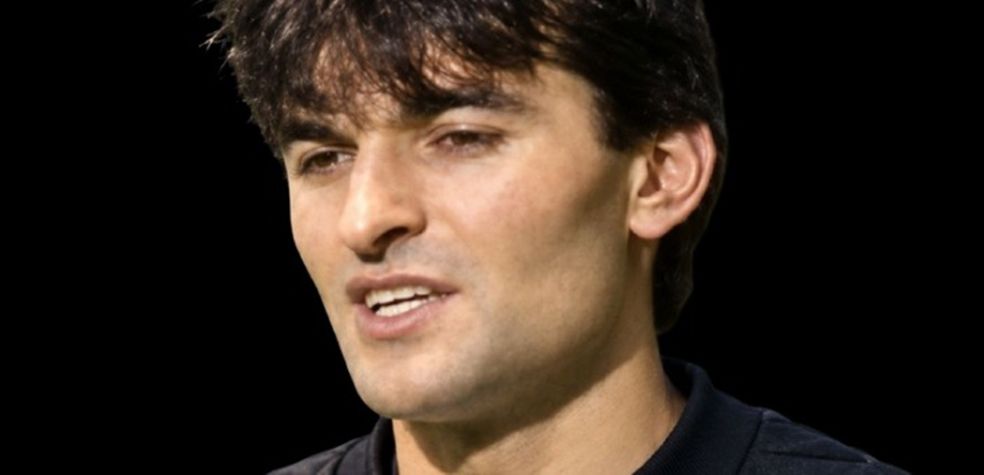
Pavel Srníček, born 10 March 1968, Ostrava, Czechoslovakia.
PART ONE
Pavel Srníček´s early development included military football, but it was with Baník that he established the senior reputation which attracted Newcastle United, making 30 Czechoslovak First League appearances across the 1989–90 and 1990–91 seasons. Newcastle boss Jim Smith brought the netminder to Tyneside early in 1991 for £350,000, offering a place in English football at a club whose support and expectations were considerably greater than its position in the Second Division suggested. For Srníček, the immediate business was learning how to work in unfamiliar surroundings, understand his defenders and deal with opponents who would challenge him under high balls without giving much thought to how recently he had arrived.
Before he could settle properly, however, Smith had gone, and it was Ossie Ardiles who gave Srníček his Newcastle debut against Sheffield Wednesday at St James’ Park on 17 April 1991, a 1–0 victory which supplied an encouraging first result. Competition from John Burridge and Tommy Wright meant there was no automatic route into the side, while the demands of English football exposed weaknesses which could not be corrected simply by being tall, agile or brave.
During Newcastle’s first 15 league matches of the campaign 1991–92 he conceded 32 goals, including six against Tranmere Rovers, and the frequency with which the ball was ending up behind him made an already difficult adjustment more uncomfortable. Ardiles turned to Wright, but changing the goalkeeper could not solve everything wrong with the team, and by February 1992 Newcastle were in serious danger of dropping into the Third Division. Kevin Keegan replaced Ardiles that month and eventually secured survival with victory at Leicester City on the final day, leaving Srníček at a club which had narrowly avoided a damaging relegation and now needed to turn relief into improvement.
From that narrow escape came a remarkable change in Newcastle’s results, although Srníček initially had to watch Wright keep the goalkeeping place as Keegan’s side won their opening 11 league matches of the 1992–93 season. The division had been renamed the First Division following the formation of the Premier League, but the task remained straightforward enough, because Newcastle needed to finish among the promotion places and return to the highest level.
After 14 league appearances Wright eventually lost his place to Srníček, and the Czech goal custodian consequently became a regular participant in a campaign which rewarded Keegan’s attacking approach with the championship and 96 points. His recovery mattered beyond the selection itself, since a player who had struggled badly during the previous campaign was now trusted to help a much more confident team complete its work. When the promotion celebrations arrived in 1993, Srníček wore a shirt bearing the words “Pavel is a Geordie”, giving a public answer to supporters whose affection had helped turn an uncertain arrival into someone who felt that he belonged.
Promotion brought stronger opponents and closer examination, and Srníček was in goal when Newcastle opened their Premier League programme against Tottenham Hotspur in August 1993, beginning another period in which he had to prove his suitability. Mike Hooper’s arrival from Liverpool introduced fresh competition, so the goalkeeper who had helped win promotion could not assume that his contribution entitled him to an uninterrupted run in the side. Newcastle nevertheless finished third in 1993–94, an exceptional first season back among the leading clubs, and their attacking football brought European qualification while making their matches attractive to viewers well beyond Tyneside.
The next season immediately illustrated how quickly a goalkeeper’s afternoon could change, for Newcastle won 3–1 at Leicester City on the opening day of 1994–95 but Srníček was sent off, putting an early interruption into his programme. September brought another uncomfortable incident against Liverpool, when his mistake allowed Ian Rush to score and Newcastle’s perfect league start ended, reminding him that an error could dominate the discussion regardless of what had happened beforehand.
Even so, Newcastle were also back in European competition, beating Royal Antwerp 10–2 on aggregate in the UEFA Cup, and Srníček was gaining experience against opponents whose approach differed from the weekly English routine. International recognition followed on 12 October 1994, when he made his senior Czech Republic debut in a goalless European Championship qualifier away to Malta, adding another responsibility to a demanding period at club level. Newcastle eventually finished sixth in the league, and although that position fell below their previous season’s achievement, Srníček had continued his progress from an inexperienced overseas signing to a goalkeeper being considered for both European and international football.
Competition intensified again in 1995 with the arrival of Shaka Hislop from Reading, and a suspension for Srníček gave his new rival the opportunity to take charge as Newcastle assembled a serious challenge for the championship. Hislop’s subsequent injury reopened the position, however, and Srníček responded with a strong spell which included a man-of-the-match performance in the 1–0 victory over Everton in December, providing an example of the points a goalkeeper could help preserve.
Newcastle’s attacking players understandably received much of the attention, but on afternoons when one goal had to be protected, the quality of the man behind the defence became an immediate practical concern. As the 1995–96 campaign continued, the advantage Newcastle had built over Manchester United disappeared, and they finished runners-up, leaving a season of outstanding football accompanied by the disappointment of a championship which had seemed within reach. Srníček then joined the Czech Republic squad for Euro 1996 in England, but Petr Kouba remained the first-choice goalkeeper throughout their run to the final, where Germany won 2–1 after extra time.
PART TWO
Although Euro 1996 had given him no playing time, the months afterwards brought Pavel Srníček a stronger international position, while at Newcastle he remained involved in a side determined to challenge Manchester United again. On 20 October 1996 he kept a clean sheet in the 5–0 victory over the champions at St James’ Park, as Darren Peacock and David Ginola scored before the interval and Les Ferdinand, Alan Shearer and Philippe Albert added the second-half goals. The scoring made the match famous, but keeping United out allowed Newcastle’s advantage to grow without the unease that a reply might have introduced, and Srníček completed his share of an emphatic team performance.
European football provided another useful contribution in December, when he made an important save from Amara Traoré as Newcastle beat Metz 2–0 at home and reached the UEFA Cup quarter-finals. Keegan’s departure in January 1997 then brought Kenny Dalglish into the manager’s office, and Newcastle finished second again that spring, giving Srníček another reminder that good performances and substantial progress did not necessarily end with a trophy. Dalglish’s signing of Shay Given in 1997 changed the competition for places, and Srníček’s opportunities diminished as Newcastle moved into another phase, although his international standing gave him important matches away from the club. At the Confederations Cup in Saudi Arabia that December, he was the Czech Republic’s first-choice goalkeeper as they advanced from their group, lost to Brazil in the semi-finals and beat Uruguay to finish third.
The tournament offered a useful contrast with his club situation, because a goalkeeper finding appearances harder to obtain in England was still being trusted to represent his country against strong international opposition. In 1998 he left Newcastle and returned briefly to Baník Ostrava, making six Czech league appearances before another English opportunity emerged through a trial with Sheffield Wednesday during the autumn. Wednesday subsequently signed him, and on 14 November he made his debut in a 1–1 draw at St James’ Park, returning to familiar ground as an opponent while deputising for the injured Kevin Pressman.
Returning to the Premier League with Wednesday gave Srníček the chance to establish himself again, but the circumstances were less favourable than those he had enjoyed when Newcastle were competing near the top of the table. He had to work within a side whose difficulties placed pressure on everyone, and a goalkeeper’s ability to prevent goals could only go so far when the team could not consistently produce the results needed to move clear of trouble.
On 18 December 1999, against Aston Villa, he saved penalties from both Dion Dublin and Paul Merson, an unusual double success which should have given Wednesday a substantial advantage in their attempt to get something from the match. Instead, Villa still won 2–1, leaving Srníček with the distinction of stopping two spot-kicks and the frustration of finding that neither save had been enough to earn even a point. His last Wednesday appearance came in March 2000, and the club’s eventual relegation confirmed how far the season had fallen short, while his own attention soon turned to the European Championship and another attempt to make an impression for his country.
At Euro 2000 Srníček finally occupied the starting position which had been beyond him four years earlier, but the Czech Republic had been placed in a group with the Netherlands, France and Denmark, leaving little room for a slow start. Against the Dutch in Amsterdam on 11 June he made several important saves, only for Frank de Boer’s penalty in the 89th minute to decide a match which the Czechs lost 1–0. A 2–1 defeat by France in Bruges on 16 June then ended their hopes of reaching the quarter-finals, before they completed their programme with a 2–0 victory over Denmark on 21 June.
Having played in all three matches, Srníček had gained the tournament involvement he wanted, although the final group position meant that his performances would be remembered within an early elimination rather than another extended Czech run. His Wednesday contract also ended that summer, and in July 2000 he signed a three-year deal with Brescia, exchanging the English game for Serie A and a club whose outstanding attacking talent included Roberto Baggio.
Italy offered another set of demands, but one of Srníček’s most disturbing experiences there had nothing to do with a misplaced clearance or an opponent’s finish, coming instead during Brescia’s visit to Reggina in November 2000. He was struck by a firework as objects were thrown towards the pitch, and the continuing disorder eventually led referee Pierluigi Collina to abandon the match, turning an ordinary professional assignment into a serious question of player safety.
PART THREE
Alongside his club football, Srníček remained involved in the Czech Republic’s attempt to qualify for the 2002 World Cup, a campaign which ultimately ended in defeat against Belgium in the play-offs in November 2001. He retired from international football that month with 49 senior appearances, closing a period which had included a European Championship runners-up medal, third place at the Confederations Cup and a starting role at Euro 2000. His Italian employment continued afterwards, including a loan spell with Cosenza in 2003, before he accepted another offer from England and joined newly promoted Portsmouth on a free transfer on 1 September that year.
Portsmouth reunited him with Hislop and also offered the company of Czech international colleague Patrik Berger, two familiar faces whose presence helped make the move attractive even though a regular place was far from guaranteed. Srníček made his debut in the League Cup in a 2-0 defeat against neighbouring Southampton at St Mary´s Stadium on 3 December 2003, and three days later kept a clean sheet in a goalless Premier League draw with Middlesbrough at Riverside Stadium.
With Hislop and Harald Wapenaar also competing for selection, his prospects remained limited, and on 19 February 2004 he joined First Division West Ham United on an initial month’s loan. His first appearance there arrived in difficult circumstances at Millwall on 21 March, when Stephen Bywater’s dismissal brought him off the bench for Matthew Etherington during a match West Ham lost 4–1. He subsequently signed until the end of the season and started against Derby County and Crystal Palace, but West Ham collected only one point from those two games, and he left after making just three first-team appearances.
With his English options narrowing during the summer of 2004, Srníček had a trial at Coventry City and trained with Opava before accepting a further change of country and joining Beira-Mar in Portugal. He made his debut in September, but the 2004–05 season brought another relegation as Beira-Mar finished bottom, leaving an experienced goalkeeper once more involved in a collective struggle which individual performances could not resolve. His time in Portugal continued into the following season, and by the time Newcastle needed emergency cover in September 2006 he was 38, an age at which another Premier League opportunity could hardly be taken for granted.
Nevertheless, an injury to Given created an opening, and on 29 September he returned to St James’ Park on a short-term contract, joining Glenn Roeder’s squad with the immediate purpose of strengthening its goalkeeping cover. The move restored a working relationship with a club which had changed considerably since his departure, but the affection attached to his name gave the arrangement a significance that went well beyond the usual recruitment of an experienced reserve. On 23 December 2006 that return became a playing appearance when Given suffered a groin injury late in Newcastle’s home match against Tottenham, and Srníček came on to a tremendous reception as the team completed a 3–1 victory. Three days later he started away to Bolton Wanderers, his first Newcastle start since October 1997, although the visitors lost 2–1 and the occasion consequently brought personal satisfaction without another winning result.
His contract was extended until the end of 2006–07, but those two December outings proved to be his final first-team appearances for Newcastle, who released him in May and thereby brought his senior playing days to a close. Coaching then gave him another way to use his experience, through his goalkeeping school and work with developing players before he joined Sparta Prague’s coaching staff for the second half of the 2011–12 season. That work kept him directly involved in preparing goalkeepers for matches, allowing the lessons gathered through difficult selections, relegation fights, international tournaments and title challenges to serve players still learning how to handle the position.
By December 2015 Srníček was still coaching at Sparta and remained closely connected to Newcastle, returning to Tyneside to promote his autobiography, which used the supporters’ familiar declaration, “Pavel Is a Geordie”, as its title. Later that month he suffered a cardiac arrest while running in the Czech Republic, and he died on 29 December at the age of 47, bringing widespread sadness among former colleagues and the people who had watched him play. The news was particularly hard to absorb because he had remained such an approachable presence around the game, continuing to work, visit old friends and take an interest in the club which had given him his English opportunity.