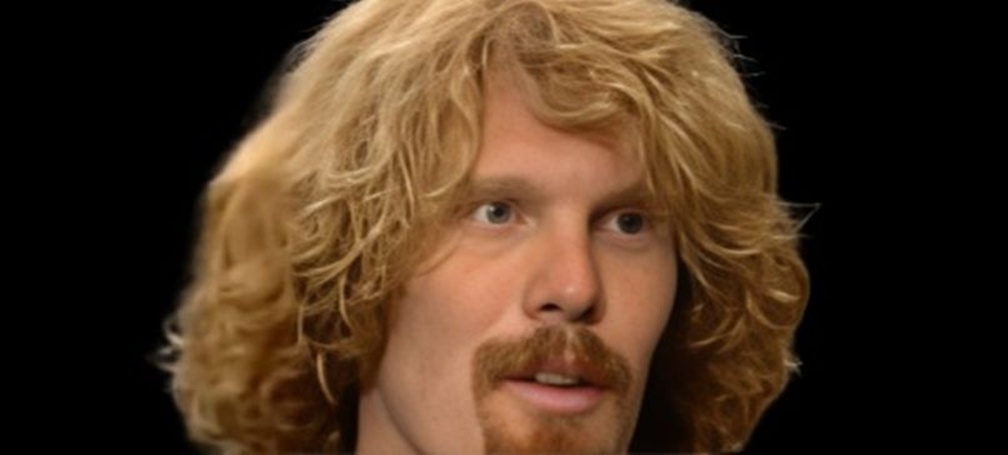
Panayotis Alexander Lalas, born June 1, 1970, Birmingham, Michigan, USA.
PART ONE
Alexi Lalas was never the most technically gifted player in any dressing room he walked into. But he had something that cannot be coached, cannot be bought, and cannot be faked: he had presence, he had hunger, and he had a fierce, burning belief that American soccer deserved to be taken seriously on the world stage — a belief he was willing to defend with every sinew of his body, every clash of shoulder and every last-ditch tackle he could muster across a career that stretched from 1991 all the way to 2004.
Raised in Birmingham, Michigan, he was the son of Demetrios Lalas, a Greek academic who would go on to become director of Greece’s national observatory, and Anne Harding Woodworth, a widely published poet. It is a background that tells you something important: this was a household of intellect, of culture, of ambition — and those qualities would eventually define the man every bit as much as his ability to read a through-ball or dominate a penalty box.
Lalas didn’t even pick up a football until he was eleven years old, which, in the modern era of academy systems and youth development programmes starting at the age of five or six, sounds almost comically late. Yet he developed quickly enough to attend Cranbrook Kingswood School in Bloomfield Hills, Michigan, and by his senior year he had been named the 1987 Michigan High School Player of the Year — a remarkable achievement for someone who had such a late start with the round ball.
Still, football was not his only sport. Far from it. Lalas was also a hockey player of real ability, captaining his school side to a state championship and even being rated for the Ontario Hockey League Midget Draft in 1987, though he was ultimately not selected. The dual athletic life he led in high school tells you a great deal about his mentality: this was not a boy who specialised and coddled himself within a single discipline but rather one who threw himself fully into whatever challenge was placed in front of him.
Lalas went on to Rutgers University in New Jersey, where he joined the men’s soccer programme and quickly made his mark as one of the most formidable defenders in the collegiate game. His four seasons with the Scarlet Knights, from 1988 to 1991, were marked by steady escalation, not just as a player but as a leader and competitor, and the results bore that out in dramatic fashion.
In 1989, the Rutgers side reached the NCAA Final Four, and Lalas — still finding his feet at the highest level of American college football — was named a third-team All-American. A year later, in 1990, the team went one better, reaching the National Championship Game itself, and Lalas earned his second third-team All-American selection. True to form, he was also leading the hockey team in scoring that same year, proving that his competitive instincts did not discriminate between codes.
Then came 1991, and with it a level of individual recognition that confirmed what his coaches and teammates had long suspected. Lalas earned first-team All-American honours and was selected for both the prestigious Hermann Trophy and the Missouri Athletic Club Player of the Year award — two of the most coveted individual honours in American college football. He was, in short, the best collegiate player in the country, and the world of professional football was beginning to notice.
He left Rutgers that year without completing his degree — a decision he made in order to focus entirely on the United States national team — though he would return to finish the job more than two decades later, completing a bachelor’s degree in English with a minor in music in May 2014 after what he cheerfully described as a 26-year plan, cramming 12 classes and 36 credits into just ten months of online study. That detail alone — the stubborn refusal to let an unfinished thing remain unfinished — reveals something essential about the man.
After representing his country at the 1992 Summer Olympics in Barcelona, Lalas trained with Bob McNab in California, a connection that led to something remarkable: a trial at Arsenal Football Club in north London during the winter of 1992. It is one of those tantalising footnotes of football history, the American centre-back testing himself against the standards of the English top flight at one of the most storied clubs in the world.
It did not go well, and Lalas has never pretended otherwise. It was quickly determined that he did not have the quality for a first-team spot at Highbury, and after only a handful of training sessions with the reserve side he was released and sent home. The brevity of the experience was stark and, no doubt, sobering.
He returned to Detroit and spent a month in a state of genuine uncertainty about his future in the game, which given everything that would follow, makes for poignant reading. It was coach Bora Milutinovic who broke the spell, inviting Lalas for United States try-outs in Mission Viejo, California, and setting in motion a chain of events that would eventually lead to the most iconic moment of his playing career.
PART TWO
If one had to identify the single defining moment in Alexi Lalas’s career — the passage of time and the weight of circumstance both pointing to the same fixed point — it would be the summer of 1994, when the United States hosted the FIFA World Cup for the first time and Lalas became, improbably and gloriously, one of the tournament’s most recognisable figures.
He had earned his first international cap back on March 12, 1991, in a 2–2 draw with Mexico in the NAFC Championship, and had worked his way steadily through the national team setup in the years that followed, earning caps against Denmark, El Salvador and a growing list of opponents as Milutinovic’s side prepared for the greatest challenge in American football history. By the start of 1994, Lalas had cemented his place in the central defence alongside the likes of Fernando Clavijo and Tab Ramos in Bora’s carefully constructed unit.
And then the tournament began, and Lalas — with his extraordinary mane of red hair cascading past his shoulders and his Viking beard giving him the appearance of someone who had wandered in from a medieval battle rather than a dressing room in New Jersey — became a phenomenon. He started and played the full ninety minutes in all four of the United States’ games, as the hosts beat Colombia, drew with Switzerland and lost to Romania before being knocked out by Brazil in the Round of 16, and every television camera in the stadium seemed inexplicably drawn to his extraordinary silhouette.
He was named an honourable mention All-Star for his performances, recognition that his contribution was not merely aesthetic but genuinely significant. The United States had shocked the world, and Lalas had been at the centre of their defence throughout.
What happened next was genuinely unprecedented. In the aftermath of the World Cup, Lalas signed with Calcio Padova of Italy’s Serie A — becoming, in doing so, the first American ever to play in the Italian top flight. It was a watershed moment not just for Lalas personally but for the entire project of American football, a declaration that players from the United States could compete at the very highest level of the European game.
The 1994–95 season at Padova was not without its difficulties. The club finished 14th in Serie A, spending much of the campaign battling against the threat of relegation, but Lalas anchored the defence with distinction and managed to score three goals from set pieces — including goals against Milan and Inter, two of the most celebrated clubs in world football. The fact that an American defender was heading the ball past the goalkeepers of Milan and Inter was the sort of thing that simply did not happen in those days, and yet there it was.
Padova’s survival was confirmed only after they won a relegation play-off on June 10, 1995 — a match from which Lalas famously flew directly to appear in the second half of a 1995 US Cup victory over Nigeria the very next day, June 11, landing from Italy and stepping straight onto the pitch for his country with barely time to catch his breath. That kind of total commitment, that refusal to ever be anything less than fully available for the cause, would become one of the hallmarks of his career.
MLS had signed Lalas in June 1995, intending to place him in their new league when it launched, but the first season was delayed until 1996 and so they loaned him back to Padova for the 1995–96 campaign. He played his last game for the Italian club on February 25, 1996, in a home match against Lazio, before returning to the United States to begin the next chapter.
His individual honours that year reflected the remarkable breadth of what he had achieved: Lalas was named the 1995 US Soccer Athlete of the Year, a fitting tribute to a man who had spent twelve months battling Serie A defences, flying across continents for international duty and helping establish American football’s credibility on the world stage.
The formation of Major League Soccer in 1996 was a landmark moment for the sport in the United States, and Lalas was one of its most high-profile foundational figures. He had been allocated to the New England Revolution by MLS on October 7, 1995, before the league’s inaugural draft, and arrived in Boston as one of the biggest names the new competition could boast.
His debut came on April 13, 1996, when the Revolution played their first-ever competitive match against Tampa Bay Mutiny — and Lalas, in characteristic fashion, made the moment count. He recorded the first assist in Revolution history, setting up Robert Ukrop for the club’s first-ever goal in the 20th minute, in conjunction with Wélton. It was a fitting way to mark the occasion: not with a flourish of individual brilliance but with a selfless, purposeful contribution to a collective achievement. His home debut followed on April 27 against DC United, and on August 26 he scored his first goal for the club in a 4–2 win over Tampa Bay.
Lalas was named an MLS All-Star in both 1996 and 1997, recognition of his consistent excellence at the back, but behind the scenes the situation at New England was becoming increasingly uncomfortable. His relationship with head coach Frank Stapleton deteriorated badly during the 1996 season, tension that came to a head when Lalas was benched in August following a humiliating 6–1 defeat to the San Jose Clash. Much of the friction was rooted in the trading of Giuseppe Galderisi — a Revolution teammate and a friend from Lalas’s time in Padova — after only four games, a decision Lalas regarded as both wrong and handled badly.
He later described his time at Revolution under Stapleton as a nightmare from the beginning, words that leave little room for ambiguity. The club attempted to trade him during the summer of 1997 but could find no takers, leaving both parties to endure an uneasy coexistence until November of that year, when the Revolution loaned him out to Ecuadorian First Division side Club Sport Emelec for a month — an unusual arrangement that speaks to the slightly improvised, figuring-things-out-as-they-go quality of the early MLS era.
He returned to New England at the end of December 1997 only to find himself traded on February 4, 1998, in what became the first three-team deal in MLS history — a convoluted arrangement involving the Revolution, the MetroStars and DC United that sent Lalas to New York alongside a second-round pick, with New England receiving Raúl Díaz Arce from DC United and various draft selections moving between the parties like pieces on a chess board.
He spent the 1998 season with the MetroStars, again earning MLS All-Star honours — his fourth such selection, a record that underscores the fact that, whatever the turmoil surrounding him at various clubs, his performances on the pitch remained of the highest order. Then, on January 28, 1999, he was traded once more, this time to the Kansas City Wizards along with goalkeeper Tony Meola in exchange for Mark Chung and Mike Ammann.
The Wizards chapter proved to be short. Lalas played one season in Kansas City and on October 10, 1999, announced his retirement from professional football — a decision that, at 29, seemed premature to many observers but perhaps reflected the accumulated fatigue of nearly a decade at the top of the game, the battles with coaches, the constant movement between clubs and the physical toll of playing a brand of football defined, as Lalas’s always was, by physicality and endurance.
PART THREE
Alexi Lalas earned 96 caps for the United States between 1991 and 1998, scoring nine goals — a remarkable return for a central defender — and was, for much of that period, one of the first names on the team sheet.
Among his most memorable international moments was a role in one of the greatest comebacks in US Soccer history: a match against Saudi Arabia in which the United States trailed 3–0 before fighting back to win 4–3, with Lalas scoring the first goal of the comeback. That kind of defiant, never-say-die contribution was quintessentially Lalas — the man who refused to accept that a situation was beyond saving.
His final World Cup came in France in 1998, but the experience was a bittersweet one: he was part of the squad but never entered a game, serving as an unused squad member as the US suffered an early exit. His last actual cap had come on May 30, 1998, in a goalless draw with Scotland, where he came on as a second-half substitute for Earnie Stewart — an understated ending to an international career of genuine distinction.
He had also represented his country at the 1992 Olympics in Barcelona and was selected as an overage player for the 1996 Olympic team in Atlanta, completing a patriotic record of service that few American footballers of his generation could match.
Just over a year after his first retirement, Lalas returned to professional football when he signed with the Los Angeles Galaxy as a discovery player on January 16, 2001, and what followed was the most decorated period of his playing career.
In 2001, the Galaxy won the CONCACAF Champions’ Cup — and Lalas was there, contributing to the defensive solidity that underpinned the club’s continental success. Later that year came the 2001 US Open Cup, won against his former club New England Revolution, a result that no doubt carried an additional and personal satisfaction for a man who had endured so much pain at that club.
The following year was even better. The Galaxy won the 2002 Supporters’ Shield, and then, in the crowning achievement of Lalas’s club career, they won MLS Cup 2002 — again beating New England Revolution in the final, a coincidence that verges on the poetic. He was named to the 2002 MLS Best XI, the highest individual honour the league could bestow upon a player in any given season, and he thoroughly deserved it.
Three years on from his Galaxy debut, on January 12, 2004, Lalas announced his permanent retirement from professional football. This time it stuck. He had won everything his domestic game could offer, had competed in Italy’s top flight at a time when no American had ever done so before, had played in two World Cups and represented his country 96 times. It was, by any measure, a career to be immensely proud of.
Retirement from playing, however, did not mean retirement from football, and in many ways the chapters that followed Lalas’s playing career revealed a different facet of the same restless, driven personality that had defined his time on the pitch.
He moved immediately into management and administration, serving as president and general manager of the San Jose Earthquakes during the 2004 and 2005 MLS seasons, before taking over as general manager of the MetroStars — by then rebranded as the New York Red Bulls — from 2005 to 2006. His most high-profile executive role came when he served as President of the LA Galaxy from 2006 to 2008, a tenure that coincided with one of the most significant single moments in MLS history: the signing of David Beckham from Real Madrid.
Whether you regard the Beckham project as a sporting triumph, a marketing exercise or some combination of the two, the decision to bring one of the most globally recognised athletes on the planet to Major League Soccer fundamentally changed the landscape of the American game — and Lalas was the man who helped make it happen. It was a bold, ambitious move, entirely in keeping with the character of the man who had worn his hair long and his beard wild on the biggest stage in world football thirty years earlier.
In 2006, Lalas was elected to the National Soccer Hall of Fame — a belated but entirely deserved recognition of a career that had pushed American football into new territories, broken barriers that many had thought unbreakable and inspired a generation of US players to believe that the world stage was within their reach.
He subsequently moved into media, spending six years as a commentator for ESPN before signing a deal with Fox Sports, where he has become one of the most distinctive and opinionated voices in American football broadcasting. He appeared as a legend card in FIFA 16 and FIFA 17, with an 86-rated centre-back card, introducing him to a new generation of fans who might never have seen him play. And he co-hosts the podcast State of the Union alongside David Mosse, a show dedicated to the ongoing story of American soccer — a subject he has been helping to write for more than three decades.
At the 2022 World Cup in Qatar, Lalas was on the ground as a reporter, watching the United States national team compete on the global stage once more and no doubt reflecting on how far the game had come since he stood in that same spotlight in 1994, all hair and beard and bloody-minded belief.
Alexi Lalas was the man who made American football look like it belonged. Not through elegance or technical wizardry, not through a bagful of tricks or a highlight reel of impossible goals, but through sheer force of character — through the willingness to walk into the cauldron of Serie A as the first of his kind and hold his head high, to lead from the back in a World Cup on home soil and become, however briefly and beautifully, the face of a sporting revolution.