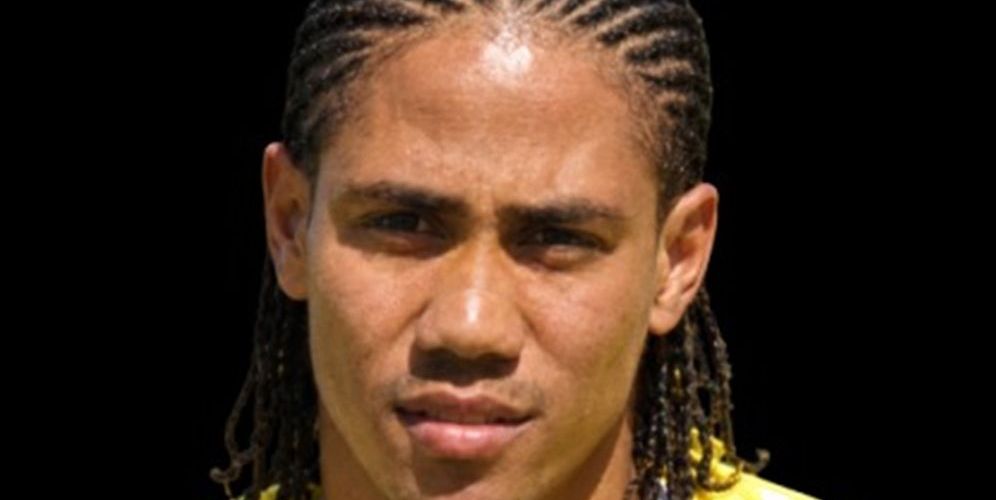
Steven Jerome Pienaar, 17 March 1982, Johannesburg, South Africa.
PART ONE
Steven Pienaar was born in Johannesburg and grew up supporting Orlando Pirates, yet the first club to pay him to play football sat some 1,400 kilometres away on the far side of the country. It started at the School of Excellence, where Ajax Cape Town noticed him and invited him to join their youth academy, and that invitation took him out of Johannesburg and down to the Western Cape. Pienaar then pulled on a South Africa shirt at Under-17 level and the ferociously fast flank forward would wear one at every youth grade after that.
By the spring of 2000 he had broken into the Ajax CT first team, and in March he scored twice, one of them a solo effort, in a 3–2 win over Orlando Pirates in Johannesburg, a game with a certain edge for a player who had grown up supporting the opposition. The club he was playing for was young and hungry and still waiting for its first domestic trophy, and that wait ended in December. Ajax Cape Town reached the final of the Rothmans Cup against, of all teams, Pirates, and the first meeting at the FNB Stadium on 9 December finished 1–1, so the sides went back to the same ground on Wednesday 13 December for a replay. This time there was no argument, because Ajax CT won 4–1, collected the first silverware in the club’s history, and sent Pienaar out of the door on a high, given that the game turned out to be his last for them. Few players get to leave a club with a trophy in the cabinet and a Pirates side beaten four ways, but he did.
The move that followed was the big one. In January 2001, at the age of 18, Pienaar was brought over to Ajax in the Netherlands, the parent club of the Cape Town side, and he arrived in Amsterdam knowing that the road to the first team there was a steep one. Soon afterwards the Under-20 coach Augusto Palacios took him to the 2001 African Youth Championship in Ethiopia, and about a month after he came home from that tournament he received his first call-up to the senior national team, for a friendly against Italy in April 2001, although did not play in it. Then, on 24 February 2002, Pienaar was finally handed his debut for the Amsterdammers in a narrow 1–0 win over NAC Breda, and while a debut of that kind rarely makes the newspaper headlines it was the start of something that really mattered, because he was now in a squad that was about to win the league.
The Ajax Amsterdam of 2001–02 was a crowded dressing room, and the names around him included Zlatan Ibrahimović, Maxwell, Cristian Chivu, Mido, Nigel de Jong, Rafael van der Vaart and Wesley Sneijder, along with two players he would meet again on Merseyside, John Heitinga and Andy van der Meyde. Pienaar found a place among them, and the Dutch title of 2002 was the first of two he would win in Amsterdam. Jomo Sono, then in charge of South Africa, had recalled him on 20 March 2002 for a friendly against Saudi Arabia, although he stayed on the bench all night, and on 23 May he made his senior debut in a friendly against Turkey, which was South Africa’s last preparation game before the 2002 World Cup. Sono put him in the squad for the tournament, which made him the youngest South African ever selected for a World Cup, and yet he did not get on the pitch once, remaining an unused substitute while South Africa went out in the group stage.
The months after the World Cup were a lesson in how club and country can pull in opposite directions. He withdrew from the 2002 COSAFA Cup because of his commitments in Amsterdam, which meant he missed South Africa’s eventual victory in it, and he was an unused substitute again in a friendly against Senegal, so the shirt he had won at such speed was not proving easy to hold. He returned to the starting line-up for a 2–0 win over Madagascar on 29 March 2003, and on 22 June he made his competitive debut, starting in a 2–1 victory over Ivory Coast in a qualifier for the 2004 Africa Cup of Nations. The good run did not last, though, because a knee injury later in 2003 ruled him out of the squad for the tournament itself in Tunisia, and he sat out the finals, which in his case was something of a recurring theme. Back in the Netherlands, Ajax won the league again in 2004, and Pienaar was part of the side that did it.
After that tournament he came back into the national team and eventually turned into an influential midfielder. He established himself during the qualifying campaign for the 2006 World Cup, scoring against Burkina Faso and against Uganda, but the goals did not carry South Africa through, and they failed to reach the finals in Germany. Still, they had finished among the top three teams in their qualifying group, and that was enough to take them to the 2006 Africa Cup of Nations, where Pienaar, once more, could not take part, because injury had struck again and coach Ted Dumitru left him out of the final squad. It was the third time in a row that a major tournament had gone ahead without him, either by injury or by choice of selector, and it had begun to look like a curse.
PART TWO
In January 2006, German Bundesliga outfit Borussia Dortmund signed Steven Pienaar from Ajax Amsterdam on a three-year contract, and the timing looked sensible enough, because Czech international Tomáš Rosický had just left Westfalenstadion for Arsenal and the Black and Yellow wanted someone to fill the gap he left in midfield. Pienaar struggled at Dortmund, however, and never felt that the other players at the club truly accepted him, a feeling that can drain a footballer faster than any hamstring tear, and the spell turned into one of the lowest points of his playing days. International football, at least, offered some relief, because he returned to duty in the middle of 2006 and helped South Africa qualify for the 2008 Africa Cup of Nations in Ghana.
The rescue arrived from England. Pienaar joined Everton on loan for the 2007–08 campaign, and he debuted at Goodison Park on 11 August 2007, coming on for Leon Osman in the 73rd minute of a 2–1 victory over Wigan Athletic, which was a polite introduction to the Premier League rather than a loud one. He scored his first goal for the club on 30 September, in a 2–0 home win over Middlesbrough, and from then on the doubts that had followed him from Dortmund began to fade, because David Moyes had a playmaker who could pick a pass and take a knock and still be involved in the move that followed. Things were not entirely smooth, though, because the January of 2008 brought an argument over where he was supposed to be, and it ended up in front of FIFA.
The Africa Cup of Nations in Ghana started with a dispute, because Everton initially held back Pienaar’s release so that he would stay available for club games, and South Africa’s FA referred the matter to FIFA, who ruled that the club had to let him go. Carlos Alberto Parreira had already named him in his 23-man squad, but Pienaar arrived in the national team’s camp two days after the deadline, and the late arrival became a sore subject at a press conference, which he walked out of. On the pitch he played in both of South Africa’s opening group games, starting in the 1–1 draw with Angola and then setting up Katlego Mphela’s consolation goal in a 3–1 defeat by Tunisia. An ankle injury in training then forced him to pull out before the last group match against Senegal, and the withdrawal prompted reports that questioned whether the injury was real and suggested he wanted to get back to England early, which he denied.
The loan became permanent, anyway, and Everton signed him from Dortmund for a pre-agreed fee of £2 million in April 2008, after an initial loan fee of £350,000, on a three-year contract. The national team, meanwhile, was going backwards, because in the qualifying campaign for the 2010 Africa Cup of Nations Pienaar made four outings, but Nigeria proved too strong, and although South Africa beat Equatorial Guinea at home and away and finished as runners-up in the group, only the winners went through, so they missed out on the competition for the first time since the 1994 edition. A broken toe then disrupted his involvement with the national side, and he was picked for a friendly against Cameroon but pulled out injured. SAFA suggested he was trying to avoid international duty, and Moyes answered that by producing scans which confirmed the injury, and when Pienaar was called up again in February 2009 he withdrew after another injury.
The relationship with the national team was repaired, in the end, by a home tournament. Pienaar came back in March 2009 for friendly matches against Norway and Portugal as South Africa prepared to host the 2009 Confederations Cup, and he was named in the squad, although he limped off during a 1–0 friendly fixture win over Poland on 6 June and so began the opening match against Iraq on the substitutes´ bench. He came on in the second half of a goalless draw, started the next game against New Zealand, and helped create the chances that led to both goals in a 2–0 triumph. He kept his place as South Africa moved into the semi-finals, where they suffered a 1–0 loss to Brazil, and he played the full ninety minutes and was named Man of the Match, which is quite an achievement against such opposition. The hosts eventually finished fourth, and his performances across the competition earned him the South African Player of the Year award for 2009.
By then the clubs that watched the Premier League had noticed him, and the 2009–10 season gave them plenty to look at. The afternoon that people on Merseyside still mention came on 20 February 2010, when Everton beat Manchester United 3–1 at Goodison Park. United were the defending champions and they went ahead in the 16th minute when Dimitar Berbatov powered in from a hard, low centre by Antonio Valencia, but only three minutes later Diniyar Bilyaletdinov hit a left-foot shot that brought the blue shirts level.
As the match wore on, Manchester United looked happy enough with a point and Sir Alex Ferguson’s side never really threatened a hard-working Everton team, and then in the 70th minute Moyes sent on Dan Gosling for Bilyaletdinov. Gosling put the home side in front 14 minutes from the end by meeting a brilliant cross from Pienaar, and to the great despair of the travelling fans another substitute, Jack Rodwell, beat Edwin van der Sar in the final minute to finish the job. Pienaar missed 11 games through injury that season but was still named Everton’s Player of the Season for 2009–10.
PART THREE
In January 2011, both Chelsea and Tottenham Hotspur had bids accepted for Steven Pienaar, after which the payer chose Spurs, who paid £3 million and gave him a four-year contract. He made his debut in a 1–1 draw away to Newcastle United, but the move never quite clicked. In August 2011 he picked up a groin injury that kept him out for six weeks, and on 15 December he scored his first goal for the club, in a 4–0 Europa League win over the Irish side Shamrock Rovers, which turned out to be a rare high point. His time at Tottenham was marked by persistent injuries and not much impact when he did play, and as a result he rarely featured in the team, so the transfer that had seemed so promising became a spell he would sooner forget.
Everton knew what they were missing, and late on transfer deadline day in January 2012 Pienaar completed his return to Goodison Park on a six-month loan. He made his second debut in a 1–1 draw away to Wigan Athletic, and a week later, on 11 February, he scored the first goal of his loan spell, the opener in a 2–0 home win over Chelsea, with Denis Stracqualursi adding the second. He ended the season by scoring against Newcastle United and said in a post-match interview that he wanted to re-join Everton for good, which hardly counted as subtle but suited everybody. He played only 14 games and was cup-tied for the FA Cup, and yet he still ended his spell with six assists, the most of anyone at Everton for the campaign, and four goals, which at that point matched his best league tally for the Blues.
The permanent transfer was agreed in the summer of 2012, with Everton paying Tottenham £4.5 million, and Pienaar wasted little time in showing what the Merseysiders had bought. On 25 August 2012 he scored his first goal since signing permanently, opening the scoring account in an impressive 3–1 victory over Aston Villa at Villa Park. Then, on 2 October, he announced his retirement from international football, a decision that closed a chapter in which he had played at a World Cup squad and a Confederations Cup semi-final.
On 9 December, Pienaar scored a powerful header against his old employers Tottenham, which was Everton’s 1,000th goal in the Premier League, and the Toffeemen came from being a goal down to win the clash 2–1 at Goodison Park. Not everything that season was so tidy, because he was sent off for two bookable offences twice, against Queens Park Rangers, where Everton managed a 1–1 draw, and against Manchester City, where they emerged 2–0 winners. He ended the season with seven goals, the most he had ever scored in a season for Everton, and the joint-most of his time there.
A hamstring injury in August 2013 kept him out for roughly two months, however, and the way he returned has not been forgotten at Goodison Park. On 19 October 2013 he came on as a substitute against Hull City, and with Everton level at 1–1 after Hull had pulled back, he scored the winning goal ten seconds after setting foot on the pitch, meeting a ball from Kevin Mirallas for a 2–1 win. The Liverpudlians finished the 2013–14 campaign in fifth place with a club record of 72 Premier League points, but Pienaar spent large parts of it injured, and in the games he did play he scored only one goal, the one against Hull, and made two assists.
Pienaar made relatively few appearances over the next two seasons, though, and at the end of the 2015–16 campaign, Everton let him go when his contract expired. On 19 August 2016 he signed a one-year contract with Sunderland, where he linked up again with David Moyes, who had first brought him to Goodison Park nine years earlier. He notched up 17 appearances for the Black Cats, and when the season was over his contract was not renewed, which brought to an end his time in English football. There was one more move left in him, back to his native South Africa, where in July 2017 he signed a one-year deal with Bidvest Wits, but he was released six months later, and in March 2018 he retired from professional football.