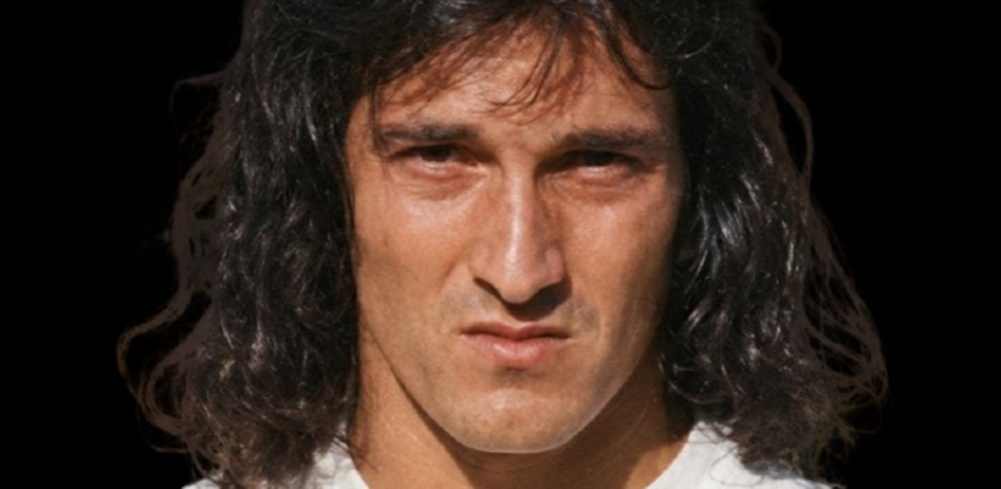
Muricy Ramalho, born 30 November 1955, São Paulo, Brazil.
PART ONE
Muricy Ramalho was handed his first-team debut for São Paulo FC on August 22, 1973, coming through the club’s youth system as an attack minded midfield player. Almost immediately, however, São Paulo shipped him out on loan to Pontagrossense, a modest posting that lasted only a matter of months but which nonetheless taught the teenager an early and useful lesson: first-team places, even for the gifted, are earned rather than gifted. Returning to São Paulo, he spent the mid-1970s establishing himself, though not without setback, for a serious knee injury struck him down before he had properly cemented his place, something that robbed him of a role in the pitch-side celebrations when his club won the 1977 Campeonato Brasileiro Série A, keeping him sidelined rather than central to the triumph that other summaries of his life have credited him with driving.
Either way, by 1975 he was fit enough and trusted enough to play his part in São Paulo’s Campeonato Paulista-winning campaign, a title secured alongside forwards of the calibre of Serginho, and it was that season, more than any other in his playing days, that first earned him a reputation as one of the finer young talents on the books at Estádio do Morumbi. The knee injury, recurring and stubborn, would also cost him a place in Brazil’s 1978 World Cup squad, denying him the one stage that might have made his name known well beyond his home city, and so it was that Muricy Ramalho, for all his gifts, spent his playing days as a relative unknown outside Brazil and, for a spell, even within it.
He remained on the books at São Paulo until 1979, by which stage the club’s patience with his fitness problems and a physical conditioning regime he found unappealing had worn thin, and the two parties agreed to part ways; the figures kept by different chroniclers of the São Paulo dressing room vary somewhat, with one placing his total at 177 appearances and 26 goals across the spell and another, drawing on a different set of match sheets, crediting him with 194 outings and 30 goals, but whichever tally is nearer the truth, there is no dispute that he left Morumbi as a player of real substance rather than mere promise. Puebla, of the Mexican top flight, paid a reported 100,000 dollars for his signature, and so at the age of twenty-four Muricy Ramalho packed his bags for a country he barely knew, exchanging the certainties of home for the unknown quantities of Mexican football.
The early months in Puebla were not easy ones. He wrestled with a division that valued physical imposition and defensive rigour above the flowing, technical football he had grown up playing, and the climate and the culture took some getting used to besides; yet he persisted, his family settled, and gradually the doubts that had trailed him from Brazil gave way to a period of real influence on the pitch. Playing predominantly on the right of midfield, Ramalho became known in Puebla for his eye for goal every bit as much as his passing, and by the 1982–83 campaign he had become the team’s talisman. Puebla finished the regular phase in third place that season, hardly the form of eventual champions, but the Liguilla playoffs told a different story altogether: Ramalho scored a hat-trick in an opening 3–0 win over Toluca, struck twice more against Guadalajara in the group phase, and then kept scoring through the knockout rounds as Puebla eliminated first the Tecos of the Universidad Autónoma de Guadalajara and then Leones Negros to reach a final against Guadalajara itself.
That final finished level on aggregate after two legs, forcing the match to penalties, and among the seven Puebla players who stepped up and scored from twelve yards was Ramalho, his spot-kick helping to seal a 7–6 shoot-out victory and, with it, the very first league championship in the history of the Estadio Cuauhtémoc club. The following campaign, 1983–84, he went one better in personal terms, finishing as the division’s leading marksman with twelve goals, a remarkable achievement for a midfielder playing in a league that prized brute defensive organisation above almost everything else.
In 1984, Ramalho was loaned out briefly to América, appearing in nine matches without troubling the scoresheet, though accounts of his life differ on precisely which América this was: some place him at the Rio de Janeiro club of that name, while the shape of his Mexican employment history and the more widely repeated version of events suggest it was instead a temporary switch to Club América, the great rival of Guadalajara in Mexico City. He returned to Puebla thereafter, but his body, worn down by years of niggling injuries dating back to that troublesome knee in his São Paulo days, was beginning to fail him, and in 1985, at the modest age of twenty-nine, he retired from playing. It was not, in fact, quite the end of his playing days, for he turned out briefly for the amateur club Esportivo Atibaiense in 1988, an attempted comeback cut short almost immediately by injury, though the experience did leave him in interim charge of that side’s bench for ten matches, an early and largely forgotten taste of the touchline that would come to define the rest of his working life.
PART TWO
Muricy Ramalho´s formal move into coaching started in Mexico, fittingly enough, when Puebla appointed him head coach for the 1993–94 campaign, bringing him back to the stadium where he had once scored penalties and hat-tricks alike. The posting proved short, more a transition than a triumph, and by the following year Ramalho was on his way home to São Paulo, hired in 1994 to take charge of the club’s youth and reserve sides, a role which he would hold until 1996.
It was here, working with the kind of raw, unheralded talent that senior coaches rarely bother to watch closely, that Ramalho first demonstrated the eye for a player that would come to mark out the finest chapters of his coaching life: his São Paulo side, nicknamed the Expressinho on account of its youthful, second-string composition, went on to win the 1994 Copa CONMEBOL, defeating the Uruguayan giants Peñarol in the final despite modest technical resources, and among the emerging names Ramalho helped bring through during that run were Denílson, soon to become one of the most expensive players on the planet, and Rogério Ceni, the goalkeeper who would go on to define a generation of São Paulo football.
From 1997 onward, Ramalho set about the long, unglamorous business of building a senior coaching reputation, moving from club to club across Brazil and briefly abroad, gathering results and lessons in roughly equal measure. At Guarani in 1997 he steadied a side under relegation pressure in the Campeonato Paulista, managing a points-per-match return in the region of 1.50 during a short stay, and the following year took him further afield still, to Shanghai Shenhua in China, where over six matches he posted a healthier rate of two points per game and helped guide the club to the 1998 Chinese FA Cup.
Back on home soil, brief postings at Ituano and Botafogo-SP in 1999 saw him fighting promotion battles in the third tier and the Paulista pyramid, his teams built, as ever, around compact defending and disciplined shape rather than any great attacking flourish. The 2000–2001 assignment at Portuguesa Santista was a rebuilding job in the lower divisions, blending youthful legs with more experienced heads to produce a run of solid, unspectacular mid-table finishes, and it was from there that he moved to Náutico in 2001, guiding them to the Campeonato Pernambucano title that year and repeating the feat in 2002, a triumph that ended a five-year wait for silverware at the club and did so through the same counter-attacking discipline that had become something of a trademark. Sandwiched between those two Náutico spells came a brief stay at Santa Cruz in 2001, which ended in relegation from the Série A despite promising early signs, and then a short 2002 assignment at Figueirense in the top flight, where he managed a 1.33 points-per-match return before moving on once again.
It was at Internacional, where he took charge in 2003 with an interruption in 2004 for a spell at São Caetano, that Ramalho’s coaching reputation truly began to take shape. At São Caetano he engineered one of the finest underdog runs of his working life, guiding the unfashionable club to the 2004 Campeonato Paulista title, defeating the mighty São Paulo in the semi-finals along the way and then dispatching Paulista in the final with a 5–1 aggregate scoreline, a run built, in typical Ramalho fashion, on a defence that gave away almost nothing.
Returning to Internacional, he claimed the 2003 Campeonato Gaúcho with a strong 1.57 points-per-match return across fifty-one matches, and then, across the 2004–2005 seasons, added the 2005 Gaúcho title as well, while steering the club to second place in the 2005 Campeonato Brasileiro Série A, a runners-up finish built on a season-long return of 1.86 points per game across eighty-one fixtures in all competitions. It was this run of consistency at the highest domestic level, allied to the state and cup silverware he had gathered along the way, that first made the big Brazilian clubs sit up and take proper notice of him.
PART THREE
São Paulo, the club that had shaped him first as a player and then as a fledgling youth coach, came calling on 3 January 2006, appointing Ramalho as head coach on the back of that runners-up finish with Internacional and signing him initially to a one-year deal, a full decade on from his first stint working with the club’s junior sides. He inherited a squad still riding the momentum of the previous year’s Copa Libertadores and FIFA Club World Championship triumphs, but domestic inconsistency had crept in, and it fell to Ramalho to instil the discipline that would turn undoubted talent into sustained, ruthless success.
He settled on a flexible 3-5-2 system, one that prized defensive solidity above all else but which also asked the wing-backs to double as auxiliary midfielders, springing forward on the counter-attack whenever the chance arose, and at the heart of it all stood goalkeeper and captain Rogério Ceni, the very player Ramalho had unearthed more than a decade earlier, his commanding distribution from the back giving the whole structure its shape, while further forward Hernanes and Borges combined craft with a genuine goal threat.
The results that followed were extraordinary by any standard. São Paulo won the 2006 Campeonato Brasileiro Série A with a 2–1 victory over Santos sealing 78 points from thirty-eight matches, and then did it again in 2007, this time collecting 77 points and confirming the title with a 2–2 draw against Palmeiras, before completing an unprecedented hat-trick of national titles in 2008, finishing on 75 points and beating Palmeiras 1–0 on the final day of the season to make absolutely certain of it. No club had ever won three consecutive Brasileirão titles under the competition’s points-based format before, and Ramalho’s achievement stood, and stands still, as one of the genuine landmarks of modern Brazilian football. He rounded out the sequence in 2009 by lifting the inaugural Supercopa do Brasil, seeing off Internacional 2–0 on aggregate in July of that year.
Yet for all the league dominance, the Copa Libertadores proved a persistent stumbling block, and it was ultimately this continental frustration, rather than any collapse in domestic form, that brought Ramalho’s first spell at São Paulo to its end. Having lost the 2006 Libertadores final to Internacional, been knocked out by Grêmio in the last sixteen, and then eliminated by Fluminense in the quarter-finals, São Paulo suffered a fourth consecutive continental exit in June 2009, beaten by Cruzeiro in the quarter-finals of that year’s tournament, and with domestic form also stuttering, club president Juvenal Juvêncio moved swiftly: on 19 June 2009, after three and a half years in the job, Muricy Ramalho was dismissed. It was a striking departure given the scale of what had gone before, but Brazilian boardrooms have never been sentimental about continental disappointment, however gilded the domestic record sitting alongside it.
The rest did not last long. After a month of negotiations, Ramalho agreed to take charge of Palmeiras, signing his contract on 22 July 2009 and inheriting a club that had been struggling badly under his predecessor, Vanderlei Luxemburgo. He steadied the ship well enough, guiding Palmeiras to a fifth-place finish in the 2009 Campeonato Brasileiro Série A with 64 points from thirty-eight matches, securing continental qualification in the process even though a late-season wobble cost the club a real shot at the title itself, and along the way he shifted the team’s shape to a 4-4-2, leaning heavily on the defensive anchor Pierre, whose reading of the game Ramalho rated as highly as almost anything he had seen in Brazilian football. But the new year brought new trouble: a 1–4 defeat to São Caetano, the very club with whom Ramalho had once won a Paulista title, arrived on 17 February 2010, and the Palmeiras board wasted no time, sacking him the following day after barely six months in the post.
Ramalho did not stay unemployed for long. Fluminense appointed him head coach on 25 April 2010, replacing Cuca and setting their sights considerably higher than mere survival. The gamble paid off spectacularly. Fluminense led the 2010 Campeonato Brasileiro Série A table for long stretches of the campaign, their transformation from relegation battlers into genuine title contenders driven by a mixture of improved organisation and a newly discovered self-belief, and reinforced besides by the August arrival of the Portuguese playmaker Deco, whose creativity added a further dimension to a midfield already built around the Argentine Darío Conca, who would go on to be named the league’s outstanding player that season, while veteran striker Washington supplied the goals up front. Corinthians and Cruzeiro both threatened to derail the run-in, but Fluminense held their nerve, and on the final day of the season, at the Engenhão, Emerson Sheik hit the winner in the 82nd-minute against an already-relegated Guarani to secure the club’s first national title in twenty-six years.
Momentum carried into 2011, with Fluminense winning the Campeonato Carioca to begin the new year in style, but it did not last: Ramalho resigned on 13 March 2011, following a goalless draw with Flamengo in the state championship, citing broken promises from the club over infrastructure and support that he felt had been guaranteed in his contract. It was, in its way, a departure that reflected well on him, for the previous July he had turned down an approach to become head coach of the Brazil national team, choosing instead to honour his commitment to Fluminense even as the Brazilian Football Confederation waited for an answer; when Fluminense refused to release him, the national job went instead to Mano Menezes, and Ramalho stayed loyal to a club he would leave of his own volition only months later, disillusioned rather than dismissed.
PART FOUR
Ramalho´s next stop, and in many ways the most star-studded of his coaching life, came at Santos, who appointed him on 6 April 2011. He inherited a squad shot through with academy talent, chief among them the teenage Neymar and the gifted Paulo Henrique Ganso, and set about building a team that married defensive discipline with genuine attacking freedom for its brightest young stars. The rewards arrived almost immediately: Santos won the 2011 Campeonato Paulista, their nineteenth state title, beating São Paulo 2–1 in the final on 15 May 2011 with Neymar among the scorers, and that success propelled the club into the 2011 Copa Libertadores, where Ramalho’s tactical management proved decisive as Santos advanced through the knockout stages and overcame Uruguay’s Peñarol in the final, drawing 0–0 away before winning 2–1 at home to complete a 2–1 aggregate victory and claim the club’s first continental crown since the days of Pelé in 1963.
Neymar was the individual sensation of that run, scoring six goals across the tournament and dazzling with a style of play that made him, almost overnight, one of the most talked-about young footballers on the planet, but it was Ramalho’s structure around him that turned individual brilliance into collective silverware. The following December, after Santos had been beaten 4–0 by Pep Guardiola’s Barcelona in the final of the FIFA Club World Cup, Ramalho offered a pointed assessment of the Nou Camp coach’s achievements, suggesting that while the Catalan’s work in Europe was admirable, it had been made considerably easier by the financial power at his disposal to sign almost any player he wanted, and that European coaches, would only earn his full respect once they had proven themselves able to win with the more limited resources available to a Brazilian club. It was a typically blunt assessment, delivered without malice but without much diplomacy either, very much in keeping with a man who had never been shy of a strong opinion where journalists were concerned.
Domestic success followed regardless. In 2012, Santos retained the Campeonato Paulista, beating Guarani 4–2 on aggregate across two legs in May, and added the Recopa Sudamericana that September, defeating Universidad de Chile 2–0 in the second leg, following a goalless first leg, with goals from Neymar and Bruno Rodrigo securing the trophy and confirming Ramalho’s knack for keeping a talented, youth-driven squad both hungry and successful. But the good times could not last forever: Santos lost the 2013 Campeonato Paulista, and shortly afterwards Neymar completed his move to Barcelona, stripping the squad of its most valuable asset, and on 31 May 2013, with results deteriorating, Santos dismissed Ramalho from his post.
Barely three months later, on 9 September 2013, São Paulo came calling for a third time, sacking Paulo Autuori with the club mired in the relegation zone of the Série A and turning once again to the man who had delivered three straight titles between 2006 and 2008. Ramalho’s first match back in charge, a 1–0 win over Ponte Preta, was greeted at the Morumbi by supporters chanting his name in evident relief, and under his guidance the club climbed clear of danger to finish ninth that season, a rescue job that owed everything to the calm organisation for which he had long been known. He spoke afterwards, in an interview with the newspaper O Estado de S. Paulo, of how winning meant something different to him at São Paulo specifically, given that the city was his birthplace and the club the setting for the whole of his footballing story, and in December 2013, having enjoyed a productive finish to the year, he signed a new two-year contract, telling the club’s supporters that their affection for him only motivated him further.
The 2014 season brought a run to the semi-finals of the Copa Sudamericana, in which São Paulo were eventually eliminated by the Colombian side Atlético Nacional on penalties, and a genuinely strong showing in the league itself, with the club finishing runners-up in the Campeonato Brasileiro Série A on 70 points, ten adrift of champions Cruzeiro but well clear of the pack behind them, a campaign given an extra shot of nostalgia by the mid-season return to Morumbi of Kaká, the former FIFA World Player of the Year. It would prove to be the last full season of Ramalho’s coaching life. In January 2015 he was hospitalised with a digestive complaint, and although he returned briefly to work, his health did not hold, and on 6 April 2015 he stepped down as São Paulo coach, his departure attributed to a combination of arrhythmia and ongoing digestive trouble that had made the daily strain of top-level coaching untenable.
He did not stay away for good, at least not immediately. Flamengo announced his appointment in December 2015, and Ramalho took charge of the Rio club ahead of the 2016 season, guiding them to the semi-finals of the Campeonato Carioca and opening the Brasileirão campaign with a 1–0 win over Sport Recife. Across his five months in the job, spanning all competitions, he oversaw twenty-five matches, winning thirteen, drawing five and losing seven, a return of 1.76 points per game that reflected a side playing with the same defensive discipline that had characterised almost every team he had ever put out. But the health problems that had ended his previous posting had not gone away, and on 26 May 2016 Ramalho resigned from Flamengo, citing fatigue and the lingering effects of the cardiac trouble that had first surfaced at São Paulo; the club thanked him publicly for his efforts and turned to its own under-20 coach, Zé Ricardo, as an interim replacement.
In June 2016, Muricy Ramalho announced his retirement from coaching altogether, a decision he confirmed publicly again in early 2017 when he made plain he had no intention of returning to the touchline. From late 2016 through to December 2020 he worked instead as a football analyst for Grupo Globo’s SporTV channel, offering his views on the tactical trends reshaping Brazilian football and on the financial gulf increasingly separating the game’s biggest clubs from the rest, drawing throughout on decades spent both playing and coaching without ever stepping back into a dugout of his own.
On 2 January 2021, however, São Paulo brought him back once more, this time in an administrative capacity, naming him football coordinator, a position broadly equivalent to a sporting director, in which he took responsibility for the strategic direction of the club and, crucially, for the hiring of head coaches, a list that would go on to include names such as Hernán Crespo and, eventually, his old goalkeeper Rogério Ceni. Ramalho held that post for five years, longer than any of his individual spells as head coach at the club, before worsening health forced him to step away in January 2026, bringing to a close, for what appeared to be the final time, a working association with São Paulo that had begun with a teenage debut on the pitch fifty-three years earlier.