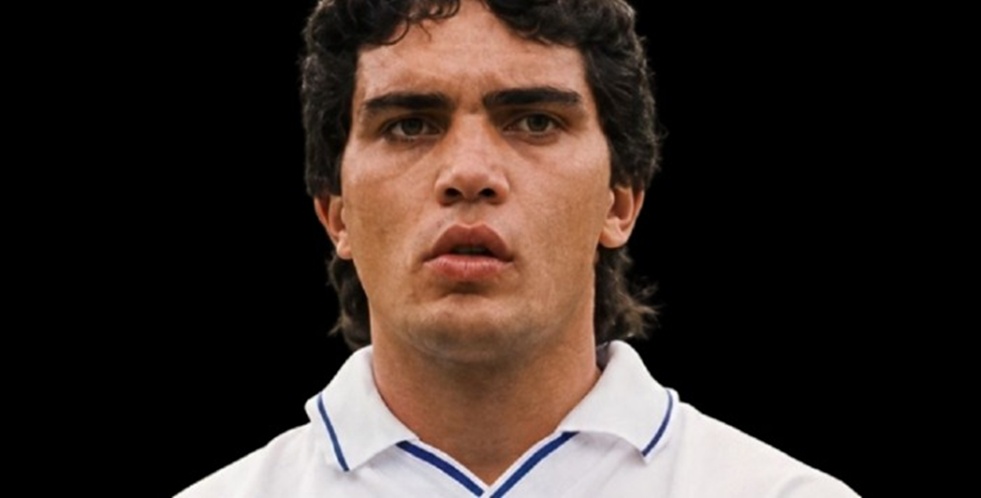
Cláudio Ibrahim Vaz Leal, born 4 April 1964, Bagé, Brazil.
PART ONE
Cláudio Ibrahim Vaz Leal came into the world on 4 April 1964 in Bagé, a cattle town tucked into the flatlands of Rio Grande do Sul so close to the Uruguayan border that the local accent carries a faint gaucho twang, and nobody in that dusty corner of southern Brazil could have guessed that the boy would one day stand over a dead ball in Dallas with a World Cup quarter-final hanging by a thread. He would grow up to be known simply as Branco, a nickname earned for his pale complexion in a country where such tags stick for life, and by the time he was finished kicking a football for money he had worn the shirts of clubs on three continents and left a free-kick imprint on some of the biggest stages the game has to offer.
He began among the youth ranks in Rio Grande do Sul before signing his first senior forms with Internacional in Porto Alegre in 1980, and it was there, wearing the red of the Colorado, that he tasted his maiden piece of silverware when Internacional lifted the Campeonato Gaúcho in 1981. He was still a teenager, raw around the edges but already blessed with the whip of a left foot that would come to define him, and the title win gave him the sort of early confidence that clubs further afield could not fail to notice. Fluminense came calling that same year, and the move north to Rio de Janeiro would prove to be the making of him.
Founded in 1902 and steeped in the sort of old-money tradition that Rio’s other big clubs liked to sneer at even as they envied it, Fluminense had once dominated Carioca football so thoroughly between 1906 and 1911 that the Team of Warriors won five of the first six championships on offer, racking up forty-three victories from a possible fifty-two matches in that stretch while conceding a miserly forty-nine goals. Branco arrived at a club that still carried the weight of that early swagger, and he set about adding a fresh chapter of his own.
Deployed as a left-back with license to bomb forward, Branco built his standing throughout the early 1980s as a defender who defended first but never turned down the opportunity to join the attack, and by 1983 he was a fixture in a Fluminense side that would go on a genuine tear through the Rio state game. Carioca titles arrived in 1983, 1984 and 1985, three in a row, and sitting inside that run was the 1984 Campeonato Brasileiro Série A crown, a national championship that confirmed Fluminense as one of the country’s leading forces at the time and confirmed Branco as one of Brazilian football’s most dangerous set-piece operators, since even in domestic action his blistering free kicks were starting to draw comparisons with the very best strikers of a dead ball anywhere in South America.
Word of his outstanding performances soon reached Italy, and in 1986 Branco was shipped out on loan to Brescia, who were grinding away in Serie B at the time and needed the sort of steel and craft down the left that a Brazilian international could bring. He spent two seasons in the biancazzurro shirt, adjusting first to the rougher, more combative rhythms of Italy’s second tier and then, once Brescia won promotion, to the unforgiving intensity of Serie A itself, and although the Lombardy club would eventually slip back down, Branco’s stock had risen rather than fallen through the experience. He had shown that he could adapt his game to Italian defensive football without losing the attacking instinct that made him distinctive, and that adaptability was exactly what caught the eye of Portuguese giants FC Porto.
PART TWO
Signing for FC Porto in 1988, Branco walked into a squad being sharpened for continental relevance, and the step up in tactical rigidity and physical combat compared with what he had known in Brazil was considerable, yet he met it with the same calm application he had shown in Italy. Over three seasons in the blue and white of the Dragões, he made more than sixty appearances across all competitions, chipped in with a handful of goals, and formed part of a defensive block that gave Porto the platform to push for trophies at home and abroad.
The pinnacle came in the 1989–90 campaign, when Porto claimed the Primeira Liga title for the first time since 1987–88, and Branco followed that up by helping the club lift the 1990 Supertaça Cândido de Oliveira, the traditional curtain-raiser that pitted league champions against cup holders. His overlapping runs down the left flank had by now become something of a trademark on the Iberian peninsula, just as they had been on the banks of the Tiber and the shores of Guanabara Bay.
From Porto, he moved on to Genoa, joining the Ligurian club for the 1991–92 Serie A season and staying with them through to 1993, a spell in which he encountered some of the most tactically disciplined and physically uncompromising football anywhere in Europe. Italian defending in that period asked questions of every full-back who arrived from outside the peninsula, and Genoa themselves were no soft touch, having built a reputation under Osvaldo Bagnoli for organisation and resilience that took them deep into European competition.
Branco slotted into that structure, made well over seventy league appearances during his time at the club, found the net around eight times, and lent his experience to a Genoa side that pushed on in the UEFA Cup, his positional sense allowing him to bomb forward in support of the attack while still tracking back to snuff out counters from opposing wingers. It is worth noting that some accounts of this period have circulated a specific claim about a match-winning free kick against Sampdoria in the Derby della Lanterna dated to November 1990, but the timing of that fixture sits awkwardly against Branco’s confirmed move to Genoa, which did not happen until the summer of 1991 while he was still on Porto’s books, and so that particular detail belongs among the discrepancies flagged at the end of this piece rather than the settled record.
By 1993 Branco was heading home. What followed was a string of shorter spells that took him back through the clubs of his homeland: Grêmio, a return to Fluminense, a run at Corinthians, a stint at Flamengo, and finally a second spell at Internacional, the club where he had started out over a decade earlier. None of these stops lasted especially long, but collectively they kept him sharp and visible to the Seleção selectors at a time when his place in the national set-up mattered more than ever, and it was during this itinerant stretch of Brazilian football that he added the second Campeonato Gaúcho medal of his time in the game, with Grêmio, to bookend the one he had won as a young man with Internacional.
In 1996, Branco took on the challenge of English football, joining Middlesbrough as the Teesside club looked to add continental know-how to a squad with ambitions of establishing itself in the Premier League. The move did not, in truth, work out the way either party had hoped. Injuries and irregular selection meant he made only nine appearances for Boro in the top flight that campaign though he did find the net twice in the League Cup, scoring in both legs of a second-round tie against Hereford, once at Riverside Stadium and once away from home. Beyond those cup strikes, however, sustained rhythm proved elusive, and by Christmas 1996 he had left Middlesbrough on a free transfer as the club turned its attention to other options.
A brief stay with Mogi Mirim back in Brazil followed, more of a stopgap than anything else, before Branco crossed the Atlantic once again in 1997, this time to join the New York/New Jersey MetroStars in the fledgling Major League Soccer. He featured in the league that season, and among the moments supporters remember from his time in America is a long-range free kick against the Los Angeles Galaxy, though the MetroStars themselves could not push higher than a mid-table finish. He returned to Fluminense for what amounted to his farewell season in Brazilian club football before stepping away from playing altogether, closing out a spell at the top level that had carried him from the Maracanã to the Estádio das Antas, from the San Siro’s neighbours in Liguria to the American East Coast, and back home again.
PART THREE
It was in the yellow shirt of Brazil that Branco´s free-kick technique and his defensive discipline reached their widest audience. He earned his first cap on 25 April 1985, starting at left-back in a 2–1 friendly win over Colombia at the Mineirão in Belo Horizonte, and that early call-up reflected the impact he was already having at Fluminense. Selection for the 1986 FIFA World Cup in Mexico followed, and under Telê Santana, Branco started all five of Brazil’s matches that summer. The group stage brought victories over Spain, Algeria and Northern Ireland, then a further win against Poland took Brazil into the last eight, but the tournament ended in heartbreak: a 1–1 draw with France in the quarter-final went to penalties, and Brazil lost the shootout 4–3, an early exit that stung given the attacking talent on show throughout that Brazilian squad.
Three years on, Branco was a central figure when Brazil hosted the 1989 Copa América, playing every minute of all seven matches as the Seleção went unbeaten through the tournament. They topped Group A courtesy of wins over Venezuela and Paraguay alongside draws with Colombia and Peru, and Branco’s defending was a significant part of those clean results, before Brazil swept through the decisive final round with victories against Argentina, Paraguay and Uruguay to claim the trophy at the Maracanã. It was Brazil’s fourth Copa América success and, remarkably, their first since 1949, so the achievement carried real historical weight for a football-mad nation that had gone four decades without lifting the continental crown.
The 1990 FIFA World Cup in Italy brought Branco back to the country where he had already spent time at club level, and under new coach Sebastião Lazaroni he started all four of Brazil’s matches, forming a settled defensive partnership alongside centre-back Ricardo Rocha. Brazil, among the tournament favourites, negotiated Group C with narrow wins over Sweden, Costa Rica and Scotland, only to fall in the round of sixteen against Argentina, beaten 1–0 by a solitary Claudio Caniggia strike.
That defeat became notorious for reasons that had nothing to do with the scoreline: during a stoppage in play, Branco drank from a water bottle handed to him by Argentine physiotherapist Miguel di Lorenzo, and he later said he felt drowsy afterwards, giving rise to allegations, dubbed the “holy water” affair by the Argentine press, that the drink had been laced with a sedative. Diego Maradona would go on to hint the story was true when he discussed it in a 2004 interview, though the episode has never been conclusively proven either way, and it remains one of the stranger footnotes attached to Branco’s time on the biggest stage.
Redemption, when it came, was total. Branco made Brazil’s squad for the 1994 FIFA World Cup in the United States as understudy at left-back, and he watched from the sidelines through the first four matches before his chance arrived in the round of sixteen against the hosts on 4 July, when Leonardo was sent off for an elbow on American midfielder Tab Ramos. Branco came into the side and started the remaining matches at left-back, his experience proving invaluable as Brazil tightened up defensively on their way to the latter stages. The signature moment arrived in the quarter-final against the Netherlands in Dallas on 9 July, when, with the match delicately poised, Branco stepped up and curled a long-range free kick past the Dutch wall and goalkeeper Ed de Goey to help settle a tense tie in Brazil’s favour, a strike he later described as one he would remember for the rest of his days and one that underlined, on the sport’s grandest platform, exactly why he had built such a reputation as a specialist from dead-ball situations.
In the final against Italy at the Rose Bowl on 17 July, Branco’s defensive work helped keep Roberto Baggio and company at bay through a goalless ninety minutes and extra time, and when the match went to penalties he stepped up and converted his spot kick calmly, watching Brazil win the shootout 3–2 after Baggio famously skied his own effort over the bar, sealing Brazil’s fourth World Cup and the country’s first in twenty-four years. By the time his international days ended in February 1995, Branco had won 72 caps and scored 9 goals for the Seleção, a record built on reliability at the back and menace at set pieces in equal measure.
Retirement from playing did not mean Branco stepped away from the game altogether, and by December 2011 he had taken his first steps into coaching when he was appointed manager of Figueirense, then competing in Brazil’s Série B. His time in charge lasted through to 13 May 2012, and along the way he guided the club through the 2012 Campeonato Catarinense, the state championship, where Figueirense won thirteen of their twenty-two matches, drew five and lost four to finish as runners-up.
That was not quite enough, however, as they lost the final to fierce rivals Avaí, and the disappointment of missing out on the state crown led to Branco’s departure from the club by mutual consent. He did not stay out of the dugout for long. In early January 2013 he took charge of Sobradinho in Brazil’s lower divisions, though this assignment proved brief in the extreme, lasting only two matches in the Campeonato Brasiliense before he left, somewhat unexpectedly, on 27 January 2013 to take the reins at Série B side Guarani.
Appointed at Guarani on that same day as a replacement for the outgoing Zé Teodoro and handed a contract through to the end of the year, Branco’s second stint of the winter did not last much longer than his first. He resigned on 31 March 2013 following a 3–0 defeat to Atlético Sorocaba in the Campeonato Paulista, with Guarani having managed just two wins, three draws and eight defeats across thirteen matches under his charge, a run that left them bottom of their Paulista group and effectively ended his short reign there and then. Throughout these managerial spells, Branco leaned on a 4–4–2 shape built around defensive organisation, a set-up that echoed the discipline he himself had shown as a player, but the results simply never gave any of the three jobs room to breathe, and by the middle of the 2010s he had stepped away from front-line management altogether, leaving behind a playing record considerably more decorated than his brief time on the touchline.