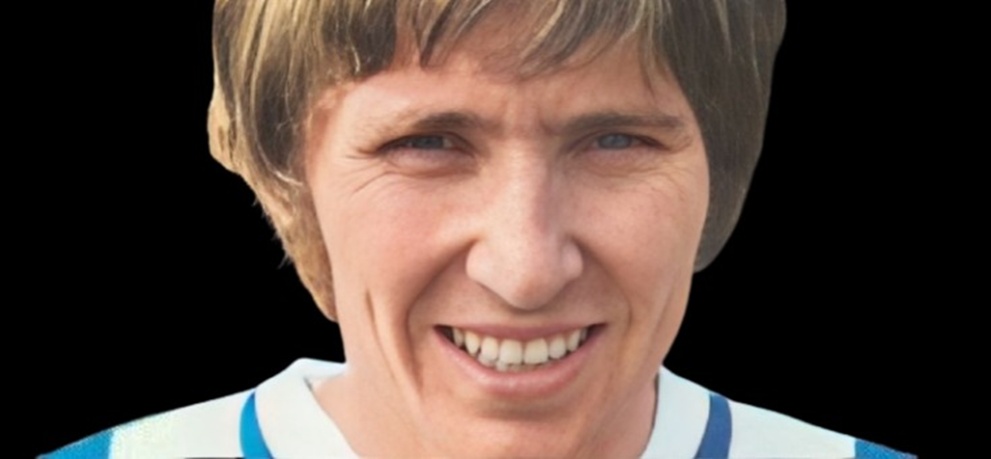
Born in Chesterfield on February 20, 1947, Brian Greenhalgh was never one for theatrics, yet his story is one of perseverance, timing, and the quiet satisfaction of knowing you gave the game everything you had.
PART ONE
To begin with, Brian Greenhalgh’s early footballing education came at Preston North End, where he joined as an apprentice in 1964. It was a time when apprentices scrubbed boots, carried kit, and learned the value of hard work long before being handed a first-team jersey.
Moreover, it was at Deepdale that he first began to demonstrate his sharp instincts in front of goal — the kind of predatory movement that separates a journeyman from a natural finisher. Between 1964 and 1967, he scored nine goals in 19 league appearances for The Lilywhites, a record that hinted at something more substantial on the horizon.
As a result, his steady progress soon attracted attention from higher up the footballing ladder, and in 1967, Aston Villa came calling. Villa Park, with its steep stands and rich history, offered Greenhalgh a grander stage. However, football is rarely a fairytale, and although he netted 12 times in 40 league games for the Villains, the winds of managerial change would soon blow cold.
Tommy Docherty, that famously fiery Scottish disciplinarian, arrived in Birmingham midway through the 1967–68 season and, as was often his way, began reshaping the squad with ruthless efficiency. Consequently, Greenhalgh was deemed surplus to requirements, his time at Villa abruptly curtailed despite a respectable scoring return.
Nevertheless, his career continued apace, and by early 1969 he was pulling on the blue shirt of Leicester City. On paper, it seemed a promising move — Filbert Street was home to a side with top-flight ambition, and Greenhalgh’s energy might have been the missing ingredient in their attacking mix. Yet, footballing fortunes can shift like sand through one’s fingers.
Despite his best efforts, he found himself buried deep in the pecking order, a victim of fierce competition and tactical reshuffles. The result was predictable enough: after just four months with the Foxes, he was on his way again — this time to Huddersfield Town for a fee of around £15,000.
If his time at Leicester was frustrating, then Huddersfield offered both redemption and reward. Under manager Ian Greaves, The Terriers were a team on the rise, and Greenhalgh’s arrival coincided with their march toward promotion. In the 1969–70 season, Huddersfield clinched the Second Division title, returning to the top flight after a sixteen-year absence.
Greenhalgh, though not always a fixture in the starting XI, played his part in that achievement — a dependable squad man whose attitude and professionalism added depth to the side. However, the jump to the First Division proved a tough one, and opportunities for the forward became increasingly scarce as Huddersfield sought to bolster their attacking options.
Therefore, in 1971, a new challenge beckoned in the unlikeliest of places — Cambridge United. The U’s had just been elected to the Football League a year earlier, replacing the struggling Bradford Park Avenue, and were eager to prove their worth among the professional ranks.
For a player like Greenhalgh, who understood both the grind and the glory of lower-league football, it was the perfect match.
PART TWO
From the moment he arrived at Abbey Stadium, Brian Greenhalgh became a pillar of reliability, a player who could be counted on to deliver even when conditions were grim and pitches resembled cabbage patches. What’s more, his knack for scoring crucial goals quickly made him a fan favourite. In particular, the 1972–73 season cemented his place in Cambridge folklore.
The U’s, under the guidance of manager Bill Leivers, clinched promotion to the Third Division, a remarkable achievement for a club still finding its feet in the Football League. Greenhalgh’s contributions — both in goals and experience — were invaluable.
The season began on 12 August 1972 with a sobering 0–3 home defeat to Darlington. It was hardly the sort of start to set pulses racing at the Abbey Stadium, and even the 3,478 faithful who turned up could have been forgiven for thinking it might be another hard slog. A week later, the U’s went down 1–3 away to Barnsley, with Brian Greenhalgh still looking for his first goal of the campaign. But football is never static — and Cambridge soon began to stir.
By late August, they’d earned a stirring 3–1 home win over Doncaster Rovers, with Greenhalgh and his teammates finally giving supporters something to cheer about. The early fixtures were a mix of frustration and fight — narrow defeats, occasional draws — but by mid-September, the tide began to shift.
It was at Newport County on 16 September 1972 that Greenhalgh finally opened his account. Cambridge won the game 2–0, with goals from David Lill and Greenhalgh himself. It wasn’t just the goal that mattered, though — it was the feeling of relief, the confirmation that he could still turn a half-chance into a headline. And from that moment on, he seemed to grow taller with each passing week.
Furthermore, the team’s growing understanding became evident as the leaves began to turn. A 3–1 home victory over Peterborough United a week later was another highlight, with Lill, Greenhalgh, and Collins all on the scoresheet. Then came another strong performance in a 2–1 win away to Gillingham, where Greenhalgh again found the net. Suddenly, a side that had looked short of confidence was beginning to hum with purpose.
As autumn crept in, so did the momentum. The Abbey was starting to believe. A 2–1 home win over Bradford City on 7 October featured another Greenhalgh strike, while a tidy 3–0 victory against Colchester United two weeks later underlined the U’s growing authority. Leivers had instilled belief, and players like Greenhalgh, Lill, and Collins were the spearhead of a side that looked increasingly at home in the promotion race.
However, football has a way of reminding players that the journey is never straightforward. November and December brought their share of setbacks — a heavy 1–5 defeat away to Workington, for instance, stung badly — but Cambridge always found a way to respond. Indeed, Greenhalgh’s resilience became emblematic of the team itself.
On 9 December, he was at his lethal best, scoring twice in a 3–1 home victory over Northampton Town. Just a week later, he added another in a 1–1 draw against Bury, and before Christmas, he struck again in a 2–2 draw with Aldershot. What’s more, on Boxing Day, away at Peterborough, he netted yet another vital equaliser in a 1–1 draw before thousands of travelling fans.
By the turn of the year, Cambridge United were right in the mix — their early inconsistency replaced by a dogged determination. Greenhalgh wasn’t always the flashiest player on the pitch, but he was often the most effective.
January 1973 was a cold, testing month for Leivers’ men. Points were harder to come by, pitches turned heavy, and goals were at a premium. Yet, Greenhalgh kept plugging away, scoring in a 1–0 home win over Crewe Alexandra on 31 January. Then, in early February, he struck again — away at Hereford United, though Cambridge went down 1–2 in front of nearly 9,000 fans at Edgar Street.
Still, there was no sign of panic. If anything, the defeats only seemed to sharpen the collective edge. The U’s hit their stride again with a 3–1 win over Newport County and another 3–3 thriller away at Darlington. And through it all, Greenhalgh’s goals kept them afloat — particularly in the gritty draws that so often define a promotion campaign.
The late winter months saw him notch braces and single strikes with the regularity of a man who knew exactly when to pounce. On 24 February, he scored twice in a 2–2 home draw with Bury, keeping Cambridge in the thick of the chase. Then, in March, came a hard-fought string of results that would push them over the line.
By spring, promotion was no longer a distant dream — it was tangible, touchable. The Abbey was alive with hope. On 31 March, Greenhalgh struck again, his goal securing a 1–0 victory over Workington. Then came one of his finest moments: 7 April 1973, away to Torquay United. Cambridge needed a result, and Greenhalgh delivered in style — scoring both goals in a 2–1 win that sent the away supporters into raptures.
From then on, it felt inevitable. A week later, Cambridge edged Reading 1–0 at home, and though there were hiccups — like a 1–2 defeat away to Lincoln City — the U’s had enough steel to finish the job. On 24 April, Greenhalgh scored once more in a 1–1 draw at Aldershot before the final-day crescendo: a 3–2 home victory over Mansfield Town in front of a jubilant 11,542 fans.
The promotion was sealed. Cambridge United, a club barely out of non-league football, had clambered into the Third Division. Bill Leivers was rightly lauded as the architect, but players like Brian Greenhalgh were the bricks and mortar of that success — steady, consistent, and utterly dependable.
In total, Greenhalgh scored 18 goals across all competitions that season, many of them coming at crucial junctures when nerves were fraying and the stakes were high. He wasn’t a showman; he was a craftsman — the sort of forward who did the simple things well, who made goals look easy not because they were, but because he understood the art of timing.
Undoubtedly, his influence went beyond statistics. His experience calmed younger teammates, his professionalism inspired them, and his goals propelled them. Cambridge’s climb in 1972–73 was a triumph of unity and belief, and Greenhalgh was central to both.
PART THREE
Indeed, over the next few years, Brian Greenhalgh embodied the spirit of Cambridge United. He wasn’t flashy, he wasn’t noisy, but he was effective. With 47 goals in 166 league appearances, Greenhalgh’s numbers spoke for themselves.
Furthermore, Greenhalgh´s leadership and consistency provided a foundation on which the club could build, helping to stabilise Cambridge as a respectable force in the lower divisions of the Football League. Fans admired him not only for his finishing but also for his commitment — he chased lost causes, battled defenders twice his size, and rarely gave less than everything.
By 1974, after a fruitful spell in Cambridgeshire, Greenhalgh caught the eye of AFC Bournemouth’s manager, Trevor Hartley. Once more, he packed his boots and moved south to Dean Court, eager for a new challenge.
However, football careers often run on unpredictable tracks, and his stay with The Cherries proved relatively brief. The goals didn’t flow quite as freely as they had at Cambridge, and before long he found himself on loan to Torquay United in 1975 — another seaside stop on his well-travelled journey through the Football League.
Even so, Greenhalgh never lost his enthusiasm for the game. He had seen enough of football’s ups and downs to understand that a career wasn’t defined by glamour, but by longevity and contribution. Therefore, when Watford came calling in 1976, offering him one final run in professional football, he didn’t hesitate.
His stint at Vicarage Road might not have been headline-grabbing, but it rounded off a career that had spanned over a decade, taken him across six clubs, and earned him a reputation as a player every manager could trust.
Correspondingly, when his playing days wound down, Greenhalgh remained close to the game. Like many ex-pros of his era, he turned to scouting — the art of spotting the next generation. Working for several clubs over the years, he put his eye for talent to good use, helping to unearth players who would go on to make names for themselves in the professional ranks.
It was a fitting postscript to a career built on footballing instinct and understanding.