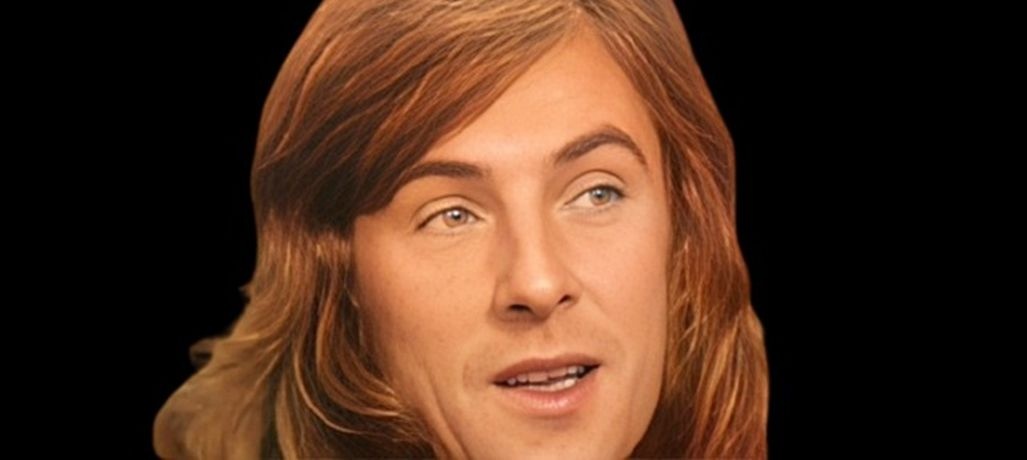
Stanley Bowles, born 24 December, 1948, Collyhurst, Manchester, England.
PART ONE
To claim that Queens Park Rangers and England international striker Stan Bowles was a man of contradictions would most probably be a considerable understatement.
Bowles did not so much arrive in football as burst into it, because from the moment he first pulled on a professional shirt there was talent, trouble and tension wrapped together, and his early career would become a restless tug-of-war between raw brilliance and restless behaviour. Undoubtedly, his formative years shaped the player the public later adored and despaired over in equal measure, and they began in the unforgiving streets of north Manchester before spilling into the grand stage of a club riding the crest of English football.
Born in Collyhurst, Manchester, Stan Bowles grew up in an environment where sharp elbows were as useful as sharp feet, and that edge stayed with him as he joined Manchester City as an apprentice, a move that promised structure but instead exposed the first cracks between discipline and instinct. In particular, Bowles made an instant impression once given a chance, scoring twice in each of his first two games, and for a brief moment it looked as though City had uncovered another jewel to polish alongside their glittering stars.
However, football at the top level is rarely about momentum alone, and Bowles’ early surge was halted almost as quickly as it had begun, because he was left out of the side for the next game and then reinstated without finding the net in the two matches that followed. As a result, uncertainty crept in, and when Francis Lee arrived at Maine Road, Bowles found himself pushed further to the margins, a young talent watching doors close while knowing he could open them with one touch.
Bowles played only one more game during the 1967–68 season, a campaign that ended with City winning the First Division under Joe Mercer, and while medals were handed out, Bowles stood on the fringes, learning that success does not always reward promise. Nevertheless, the season planted a seed of frustration, because he felt overlooked, misunderstood and constrained, and that sense of rebellion would soon spill beyond the pitch.
Building upon that uneasy relationship, the 1968–69 season proved even more damaging, because Bowles’ off-field behaviour and relaxed attitude to training hardened opinions against him within the club hierarchy. In particular, a disagreement with coach Malcolm Allison in a Manchester nightclub became emblematic of Bowles’ refusal to toe the line, and from that point on opportunities dried up almost completely.
Accordingly, Bowles played just one full League match during the 1968–69 campaign, a staggering statistic for a footballer of such ability, and while Manchester City continued to chase honours, Bowles drifted further from the centre of things. Thus, what should have been a period of development instead became one of stagnation, mistrust and missed opportunities.
Still, City persisted with him into the 1969–70 season, perhaps hoping maturity would catch up with talent, but the pattern refused to change, and Bowles made 11 appearances across league and cup without scoring. In consequence, patience finally snapped, and after a series of further off-field incidents, Manchester City released him, cutting loose a footballer who had promised everything and delivered little under their watch.
Moreover, the fall from grace was swift and sobering, because Bowles’ next move was a brief and unsuccessful spell at Third Division outfit Bury, where the spark flickered but never caught fire. Compared to the grandeur of Maine Road, the setting was humbler, yet the problems followed him, and once again Bowles found himself searching for purpose rather than glory.
However, football has a habit of offering second chances to those with rare gifts, and Bowles’ arrived in the shape of Ernie Tagg, the no-nonsense manager of Crewe Alexandra, then struggling in the Fourth Division. Signed initially on a one-month trial, Bowles quickly convinced Tagg that there was still magic in his boots, and less than two weeks later he agreed a two-year contract, a decision that would change the course of his career.
Bowles later described Tagg as a father figure, and that description mattered, because for the first time he felt understood rather than judged, guided rather than scolded. As a result, he rediscovered both his touch and his appetite for the game, and Crewe became the unlikely stage upon which his reputation was rebuilt.
In particular, Bowles thrived in an environment that demanded responsibility rather than restraint, and over 51 league games he scored 18 goals for the Railwaymen, numbers that caught the eye but only hinted at the influence he exerted through movement, imagination and audacity. Therefore, clubs higher up the ladder began to circle, aware that a talent once discarded was ripening again in the lower leagues.
Nonetheless, his time at Crewe was never without controversy, because his gambling habits were as well known as his footballing ability, and Tagg became famous for paying Bowles’ wages directly to his wife.
Yet, Bowles himself later pushed back against that image, pointing out that Ernie Tagg ran The Vine pub and occasionally missed matches for darts games, adding with typical sharpness that at least he always turned up to play. Still, beneath the humour lay a deeper truth, because Bowles needed structure and belief, and at Gresty Road he found just enough of both to relaunch his career.
Building upon that resurgence, the next step came in October 1971, when Carlisle United, then a Second Division club, signed Bowles for £12,000, a fee well below Crewe’s £25,000 valuation but one that reflected lingering doubts about his temperament. Accordingly, Carlisle took a calculated risk, betting that Bowles’ talent would outweigh his reputation, and that gamble paid off almost immediately.
In addition, Bowles adapted quickly to the demands of the Second Division, bringing craft and bite to a Carlisle side punching above its weight, and he scored 12 goals in 33 league appearances, an impressive return for a midfielder with a taste for the spectacular. Hence, his performances began to attract wider attention, and the whispers that once questioned his attitude now marvelled at his ability.
Undoubtedly, one of the defining moments of Bowles’ early career came in a moral-boosting 3–0 victory over Division Two leaders Norwich City, when he registered a hat-trick at Brunton Park, dismantling a promotion-chasing side with confidence and flair. Consequently, that performance announced him not merely as a rehabilitated talent but as a footballer capable of dominating games at a higher level.
Moreover, Carlisle’s adventure extended beyond domestic competition, because in 1972 they travelled to Italy to face AS Roma in the Anglo-Italian Cup, and Bowles ensured the occasion would never be forgotten. In particular, Carlisle’s 3–2 triumph at the Stadio Olimpico stunned the home side, but it was Bowles’ audacity that inflamed the crowd, as he performed keepie-uppies on the halfway line, taunting the Italians and delighting those who understood football as theatre.
However, that moment perfectly captured the paradox of Stan Bowles, because the same showmanship that thrilled fans also antagonised opponents and officials, and it was clear he would never be a quiet professional. As a result, Bowles left his early career with a reputation firmly established, not merely as a gifted footballer, but as a force of nature who refused to be tamed.
PART TWO
Stan Bowles arrived at Queens Park Rangers in September 1972 with a reputation that flickered between genius and gamble, and from the moment he stepped off the train in west London it was clear this would not be a quiet footballing relationship but a noisy, colourful and unforgettable marriage of talent and club. Undoubtedly, Bowles’ Rangers years would define both his career and the modern identity of the club, because rarely has one footballer so completely embodied the spirit, defiance and thrill of a team punching above its weight.
Bowles was signed from Carlisle United for £112,000, a sizeable fee for the time, after impressing Rangers boss Gordon Jago in the penultimate home match of the 1971–72 season, a 3–0 Loftus Road victory over Carlisle that doubled as an audition. Consequently, Jago moved decisively, convinced that Bowles’ blend of craft and edge was exactly what QPR needed as they looked to reshape their side after a seismic departure.
Moreover, Bowles was recruited as the direct replacement for Rodney Marsh, who had left Queens Park Rangers six months earlier for Manchester City, creating both a tactical gap and an emotional wound among supporters. In particular, Marsh’s famous number 10 shirt hung heavy with expectation, and several players had avoided it out of fear of comparison, but Bowles took it without hesitation and later joked that, coming from the North, he had barely heard of him anyway.
However, confidence was never an issue with Stan Bowles, and from his earliest appearances in hoops he played with a swagger that suggested he belonged at the centre of things rather than on the fringes. And as a result, Loftus Road quickly warmed to a footballer who demanded the ball, took risks and treated defenders as obstacles rather than opponents.
Queens Park Rangers’ 1972–73 season was not merely a promotion campaign but a statement of intent, because it marked the moment a restless West London club decided it no longer belonged in the second tier and set about proving it with patience, resilience and a growing sense of authority under the calm stewardship of Gordon Jago. Undoubtedly, what unfolded across those 42 league games at Loftus Road and beyond was the foundation stone for everything Rangers would later become.
Rangers had started the campaign on 12 August 1972 at Swindon Town, and even though a 2–2 draw hardly screamed promotion certainty, it would hint at attacking promise and a refusal to fold when tested. Then, a week later, Rangers went on to beat Sheffield Wednesday 4-2 on home ground, before grinding out a 1–1 draw at Preston, results that suggested balance rather than brilliance would be the early hallmark of this side.
However, September tested that resolve, because consecutive draws against Middlesbrough and promotion rivals Burnley showed how tight Division Two could be, even if Queens Park Rangers were rarely second best. Consequently, momentum arrived with conviction when Nottingham Forest were hammered 3–0 at Loftus Road, with Bowles scoring on his debut for the Hoops. This was followed by another cluster of draws against Bristol City and Orient, which kept Rangers ticking rather than flying.
Yet, the first real jolt came on 26 September, when Queens Park Rangers were thrashed 4–1 at Hull City, a result that threatened to derail confidence just as belief was forming. As a result, the response mattered enormously, and it arrived in emphatic fashion with a 3–0 home win over Cardiff City and a commanding 4–0 against Carlisle United, victories that reasserted control and sharpened ambitions.
In contrast to the early caution, October became the month where Rangers learned how to dominate, because wins away at Aston Villa and Fulham were followed by a pulsating 3–2 home victory over Sunderland. The again, a 2–0 defeat at Blackpool reminded Jago’s men that consistency, not bursts, would define promotion races.
Still, November steadied the ship, even if not always smoothly, because a 1–1 home draw to Hull City and a 3–1 home defeat to Millwall exposed lingering vulnerabilities. Accordingly, away wins at Bristol City and Portsmouth proved vital, demonstrating that Rangers could travel, scrap and survive when the pressure mounted.
December brought its own rhythm, because while goalless or high-scoring draws against Oxford United and Luton Town slowed momentum, the festive period revived it spectacularly. In particular, a 2–1 win at Brighton was backed up by a 3–1 Boxing Day victory over Orient, results that pushed Rangers firmly into the promotion conversation before the year closed with a sobering 3–1 loss at Sheffield Wednesday.
Thus, 1973 dawned with clarity rather than doubt, because Queens Park Rangers opened January by sweeping aside Preston 3–0 at Loftus Road, a performance that combined steel and style. Moreover, a gritty 0–0 draw with Middlesbrough at Ayresome Park and a pivotal 2–0 win over Burnley at Loftus Road signalled that Rangers could beat the very side standing between them and the title.
Correspondingly, February accelerated belief into conviction, because wins over Huddersfield Town and Swindon Town showcased attacking confidence at its peak. However, draws at Nottingham Forest and Huddersfield away underlined that the margin for error remained slim, especially with Aston Villa lurking just behind.
In spite of that tension, March became decisive, because Queens Park Rangers turned Loftus Road into a fortress and visiting teams into spectators. A 1–0 home victory against Aston Villa felt like a psychological blow to a direct rival, and when Blackpool and Portsmouth were dismantled in successive home matches, promotion no longer felt like a question of if, but when.
Nevertheless, the run-in demanded nerve, because a 2–0 defeat at Oxford United briefly reopened wounds, even if a 2-0 triumph over Luton Town and a disciplined goalless draw at Cardiff City restored balance. Consequently, a hard-earned 1–0 win away at Millwall and a polished 2–0 home victory over Brighton & Hove Albion pushed Rangers to the brink.
Accordingly, the season closed with authority rather than anxiety, because wins against Fulham (2–0) and a final flourish at Sunderland (3–0 away) sealed second place with 61 points, just one behind champions Burnley, and comfortably ahead of Aston Villa, who missed out despite finishing third. Promotion was secured not with fireworks alone, but with a sense of inevitability built over months.
Ultimately, the 1972–73 season was about growth, because Gordon Jago moulded a side that learned how to draw without despair, win without panic and lose without collapse. And the punchline still resonates decades on: Queens Park Rangers did not stumble into Division One that year, they marched there, step by careful step, and English football would soon feel the full force of what they had become.
Nevertheless, Bowles was never simply a footballer, and his reputation as a character followed him closely, occasionally colliding with authority and tradition in spectacular fashion. One such moment became legend in May 1973, when QPR travelled to Roker Park to face Sunderland in the Second Division just four days after the Wearside club had lifted the FA Cup.
In particular, Sunderland paraded the trophy pitchside before kick-off, placing it on a small table near the touchline, and according to Bowles’ own account, temptation proved irresistible. Consequently, Bowles claimed he deliberately smashed the ball at the trophy, sending it flying and igniting chaos in the stands, before scoring two goals in a match that ended with a pitch invasion, though QPR manager Gordon Jago later insisted it was defender Tony Hazell who struck the Cup with an accidental clearance.
Still, the truth hardly mattered, because the story captured Bowles perfectly, cheeky, provocative and utterly fearless, and it cemented his bond with QPR fans who relished a footballer willing to poke the establishment in the eye. Accordingly, Bowles became not just a key player but a cult figure, someone who turned ordinary league fixtures into events.
Building upon that growing influence, Bowles matured into the heartbeat of a QPR side steadily climbing the table, blending flair with bite and leadership with unpredictability. In contrast to the stereotype of the lazy genius, Bowles worked relentlessly with the ball, demanding possession and driving attacks, even if his relationship with training regimes and authority figures remained uneasy.
PART THREE
By the mid-1970s, QPR had assembled a formidable side, and Bowles stood at its core alongside players like Dave Thomas, Gerry Francis, Frank McLintock and Don Givens, each complementing his creativity with structure and steel. Therefore, when Dave Sexton took charge and shaped the team with tactical discipline, Bowles became the free spirit within a controlled system, the spark allowed to roam while others held the line.
Undoubtedly, the 1975–76 season marked the high point of Bowles’ domestic career with QPR, as the club embarked on a remarkable title challenge that defied logic and budgets alike. Consequently, Rangers finished runners-up in the First Division, one point behind champions Liverpool.
Moreover, Bowles was outstanding throughout that season, dictating tempo, unsettling defences and delivering moments of invention that lifted tight matches in QPR’s favour. In particular, his ability to carry the ball through midfield under pressure gave Rangers a release valve when games threatened to slip away, and his influence extended far beyond goals and assists.
Queens Park Rangers’ 1975–76 season remains one of the most gripping near-misses English football has ever seen, because it was built on bravery, balance and belief rather than hype, and because it carried a modest West London club to the very edge of the promised land before fate, fixtures and Liverpool’s ruthless know-how finally intervened. Undoubtedly, what Dave Sexton fashioned at Loftus Road was not a flash-in-the-pan curiosity but a carefully constructed title challenge, grounded in discipline, technical quality and an unshakeable collective spirit.
The campaign began on 16 August 1975, and in particular it began with a statement, because QPR opened the season by beating champions Liverpool 2–0 at Loftus Road, a result that instantly told the rest of Division One this side was neither overawed nor over-impressed. Moreover, a 1–1 draw with Aston Villa followed before Rangers truly announced themselves by hammering Derby County 5–1 away, a devastating performance that blended Stan Bowles’ imagination with crisp finishing and relentless movement.
However, early consistency was built more on resilience than glamour, because draws at Wolves (2–2), West Ham (1–1) and Birmingham (1–1) showed a team learning how not to lose, even when fluency dipped. Consequently, the narrow 1–0 home win over Manchester United on 13 September felt like another step forward, particularly when followed by a solid 0–0 at Middlesbrough and successive 1–0 victories over Leicester City and Newcastle United, results that kept Rangers firmly lodged near the summit.
Nevertheless, the first wobble arrived in October, because a 2–1 defeat at Leeds United was swiftly followed by a thumping 5–0 home win against Everton, a reminder that this side responded to setbacks with conviction rather than caution. Still, defeat at Burnley (1–0) showed how fine the margins were, even if wins over Sheffield United (1–0) and steady draws at Coventry, Tottenham and Ipswich maintained momentum.
As autumn turned to winter, QPR’s title credentials hardened rather than faded, because victories over Burnley (1–0) and Stoke City (3–2) ensured they remained Liverpool’s closest pursuers. Furthermore, a pair of goalless draws against Manchester City away and another 1–1 with Derby County demonstrated Sexton’s ability to manage games as much as inspire them, even if the festive period brought a reality check.
In consequence, defeats at Liverpool (2–0) and Arsenal (2–0) either side of Christmas briefly threatened to derail the dream, but a 2–0 home win over Norwich City steadied the ship before the new year exposed how brutal the title race would become. Indeed, losses at Manchester United (2–1) and West Ham (1–0) in January reminded Rangers that champions need not only style but stamina, especially as winter pitches and relentless schedules took their toll.
Yet, February marked the turning point, because QPR surged with renewed purpose and precision, starting with a 2–1 home win over Birmingham City and a priceless 2–0 victory away at Aston Villa. Moreover, wins against Wolves (4–2) and Tottenham (3–0) showcased attacking depth and defensive organisation working in harmony, while a 3–1 success over Ipswich and a vital 1–0 away win at Leicester kept the pressure firmly on Liverpool.
Similarly, March became the month where belief turned into obsession, because Rangers simply refused to blink, grinding out results with increasing assurance. A 0–0 draw at Sheffield United was followed by commanding victories over Coventry City (4–1), Everton (2–0 away) and Stoke City (1–0 away), and when Manchester City were beaten 1–0 at Loftus Road, the title chase moved from hopeful to historic.
Accordingly, April arrived with QPR still very much alive, and wins away at Newcastle United (2–1) and home to Middlesbrough (4–2) pushed them tantalisingly close. However, a painful 3–2 defeat at Norwich City served as a cruel reminder that nothing was guaranteed, even if a stirring 2–1 win over Arsenal reignited the charge heading into the final week.
Thus, the season concluded on 24 April 1976, with QPR beating Leeds United 2–0 at Loftus Road, a result that left them perched on 59 points from 42 games, just one point behind Liverpool, who clinched the title days later by winning their final fixture. Manchester United finished third on 56 points, Derby County fourth on 53, but those numbers barely capture the emotional weight of what Rangers had done.
Ultimately, this was a season where Loftus Road became a fortress, where Dave Sexton’s calm authority shaped a side greater than the sum of its parts, and where Stan Bowles and company proved that intelligence and courage could challenge football’s superpowers. And the punchline is simple and enduring: Queens Park Rangers didn’t win the league in 1975–76, but they won something rarer, because they earned respect, belief and a place in football memory that silverware alone could never buy.
However, finishing second brought its own reward, because QPR qualified for European competition for the first time in their history, stepping onto a continental stage that seemed tailor-made for Bowles’ sense of theatre. As a result, the 1976–77 UEFA Cup campaign became one of the most exhilarating chapters in both his career and the club’s story.
In addition, Bowles elevated his game against unfamiliar opposition, thriving on space, noise and hostility, and he embarked on a scoring spree that stunned observers across Europe. Hence, he broke the record for goals scored by a British player in a European campaign, netting 11 goals, a figure built on audacity as much as accuracy.
In particular, Bowles scored two hat-tricks against Brann Bergen of Norway, dismantling the Scandinavian side with ease and confidence, and showing that his talent was not confined by borders. Furthermore, he added two goals against Slovan Bratislava, a formidable side packed with players from the Czechoslovakia team that had won the European Championship in Yugoslavia only months earlier.
Nevertheless, the defining European night came on 20 October 1976, when QPR travelled to Bratislava and produced what many still regard as the club’s greatest away performance. Consequently, the 3–3 draw was achieved through courage and composure, with Bowles orchestrating attacks under relentless pressure, silencing the crowd with his nerve and vision.
Similarly, that match captured everything Bowles represented at QPR, because he played without fear, without deference and without compromise, refusing to be intimidated by reputation or setting. Thus, European football did not tame him; it amplified him.
Still, as the seasons rolled on, the demands of top-level football began to grind against Bowles’ temperament, and the harmony that once existed started to fray at the edges. In contrast to the understanding he had enjoyed under Sexton, the arrival of Tommy Docherty as manager in 1978 proved combustible.
By 1979, the relationship had deteriorated beyond repair, and Bowles’ famously sharp tongue ensured the fallout would be memorable. In particular, when Docherty told him, “You can trust me, Stan,” Bowles replied, “I’d rather trust my chickens with Colonel Sanders,” a line that sealed his fate.
Accordingly, Docherty banished Bowles to the reserves, where he trained in exile for nearly six months, a humiliating end for a player who had carried the club through its greatest era. Consequently, in December 1979, Bowles was sold to Nottingham Forest, closing the book on a QPR career that had spanned just over seven years.
Yet, even in departure, Bowles’ legacy at Loftus Road was secure, because supporters knew they had witnessed something rare and irreplaceable. Undoubtedly, he had flaws, and he made no effort to hide them, but his brilliance outweighed his chaos more often than not.
In retrospect, Bowles’ time at QPR stands as the defining chapter of his footballing life, because it was here that his talent found its fullest expression and its most appreciative audience. Therefore, it is no surprise that in a 2014 fans’ poll, he was voted Queens Park Rangers’ greatest player of all time, a verdict shaped as much by emotion as by evidence.
Moreover, the club’s recognition went beyond polls and memory, because in 2022 QPR renamed the Ellerslie Road Stand at Loftus Road the Stanley Bowles Stand, ensuring his name would remain stitched into the ground itself. In consequence, future generations would ask who Bowles was, and why one man mattered so much.
The answer is simple and complex all at once, because Stan Bowles gave QPR something money could never buy, a sense of identity, rebellion and belief, delivered with a grin and a nutmeg. And the final punchline fits him perfectly: Stan Bowles did not just play for Queens Park Rangers, he lived there, loudly, brilliantly and entirely on his own terms.
PART FOUR
Stan Bowles’ later footballing career unfolded like the final act of a gripping play, full of sharp dialogue, sudden twists and flashes of brilliance that reminded everyone why he had once been the most watchable man in English football. Undoubtedly, these years lacked the sustained highs of Loftus Road, but they revealed Bowles in raw form, still defiant, still gifted and still unwilling to bend quietly to football’s tightening rules.
Following his acrimonious exit from Queens Park Rangers, Bowles arrived at Nottingham Forest in December 1979, stepping into a club already glittering under the force of Brian Clough’s authority and fresh from conquering Europe. However, Forest was no longer a playground for free spirits, and Bowles found himself an awkward fit in a system built on discipline, hierarchy and absolute loyalty to the manager.
In particular, Bowles was effectively cast as understudy to Trevor Francis, Britain’s first £1 million footballer, and while the dressing room boasted medals and confidence, opportunities were scarce. Consequently, Bowles made only 23 appearances in all competitions, struggling to impose himself in a side that prized control over spontaneity.
Nevertheless, silverware still arrived, because Bowles was part of the Forest squad that won the two-legged European Super Cup against Barcelona in February 1980, an achievement that added another unusual chapter to his career. Still, tensions simmered beneath the surface, and when Clough refused to release him to play in John Robertson’s testimonial, Bowles responded by ruling himself out of the 1980 European Cup Final, a decision that effectively ended his Forest career.
Accordingly, Bowles moved on once more, and his next destination reflected a familiar pattern, a club seeking ambition, identity and inspiration in one bold signing. Thus, he was sold to Leyton Orient for £90,000, where manager Jimmy Bloomfield envisioned Bowles as the centrepiece of a push towards the top, pairing him with club-record signing Peter Taylor, bought from Tottenham Hotspur for £150,000.
However, plans unravelled quickly at Brisbane Road, because neither Bowles nor Taylor delivered the spark Bloomfield hoped for, and the momentum vanished once John Chiedozie was sold, stripping the side of its pace and threat. As a result, Bloomfield resigned, and Bowles, once again surplus to requirements, was moved on as Orient retreated from ambition to survival.
Building upon that restless decline, Bowles teamed up with Brentford, a club operating far from the spotlight but willing to accommodate a footballer whose reputation still drew crowds. In contrast to previous moves, this one came with a typically Bowles twist, because he was persuaded to sign after receiving a £4,000 cash payment, money that promptly disappeared at White City Greyhounds, swallowed by bookmakers before his boots were even broken in.
Yet, football remained the one place where Bowles still made sense, and under manager Fred Callaghan, he was picked regularly and trusted to shape games. Consequently, Bowles became part of a rugged and distinctive midfield trio alongside Chris Kamara and Terry Hurlock, blending experience, aggression and flashes of old-world skill during the 1981–82 and 1982–83 seasons.
Moreover, Bowles’ influence at Griffin Park was less about dominance and more about guidance, because while the legs slowed, the brain still worked quicker than most. In particular, he provided moments of calm and invention in a side built on effort, but the gap between ambition and reality remained wide.
Thus, when Brentford finished 18 points short of automatic promotion at the end of the 1982–83 season, Bowles decided to retire, choosing dignity over drift and stepping away before the game could push him aside. Nevertheless, the farewell did not quite stick, because Bowles returned briefly during the 1983–84 season on a non-contract basis, before finally retiring again in February 1984.
Still, football had not finished with him entirely, and Bowles remained a figure people wanted to see, talk about and remember. Accordingly, he was awarded a testimonial in 1987, raising £17,000, a fitting tribute to a career that had given supporters more stories than statistics.
In addition, Bowles continued to play the game he loved at non-league level with Epping Town, swapping packed stands for muddy pitches and familiarity, yet still drawing smiles from those who knew exactly who they were watching. Compared to the European nights and title races of his past, it was a quieter existence, but one that suited a man who had always followed his own path.
Ultimately, Stan Bowles’ later career was not about redemption or revival, but about persistence, because even as the spotlight dimmed, the desire to play never quite left him. And the punchline writes itself, because while football moved on and tried to forget him, Stan Bowles never stopped being Stan Bowles, unpredictable, uncompromising and utterly unforgettable.
PART FIVE
Stan Bowles’ international career with England was brief, fragmented and faintly maddening, because it offered tantalising glimpses of what might have been rather than a settled place at the top table, and yet it still managed to underline why he remained such a compelling and controversial figure. Undoubtedly, Bowles was never a natural fit for the international game as it was then structured, but when he did pull on the England shirt, he did so with the same defiance and imagination that defined his club football.
Bowles made his England debut in April 1974, lining up against Portugal in Lisbon in what proved to be Alf Ramsey’s final match as England manager, a symbolic moment heavy with transition and uncertainty. However, even in that changing landscape, Bowles stood out as something different, a player who wanted the ball under pressure and who played instinctively rather than cautiously, which both intrigued and unsettled selectors.
Moreover, Bowles’ England career unfolded entirely while he was a Queens Park Rangers player, and across five senior caps he played under three different managers, Ramsey, Joe Mercer, and Don Revie, a level of instability that mirrored his own uneasy relationship with authority. Consequently, he was never given a sustained run in the side, appearing more as an option than a cornerstone, despite performing weekly in the First Division with style and bite.
In particular, Bowles’ defining international moment came later in 1974, when he scored his only England goal in a 2–0 victory over Wales at Ninian Park, a match that suited his temperament because it demanded courage, composure and a thick skin. As a result, Bowles briefly silenced doubters by delivering on the biggest stage, showing that he could translate club form into international impact when trusted to play his natural game.
Alas, that trust never fully developed, and Bowles drifted in and out of contention as England searched for balance and discipline during a turbulent period. Still, his final cap came in February 1977, in a 2-0 friendly defeat against the Netherlands at Wembley, bringing the curtain down on an England career that promised far more than it delivered.
Thus, Stan Bowles’ international story is best understood not through numbers but through context, because five caps and one goal hardly capture the talent involved or the frustration felt. And the punchline is unmistakable: England never quite knew what to do with Stan Bowles, but when he played, he reminded everyone that football is meant to be played with courage, character and a little bit of chaos.