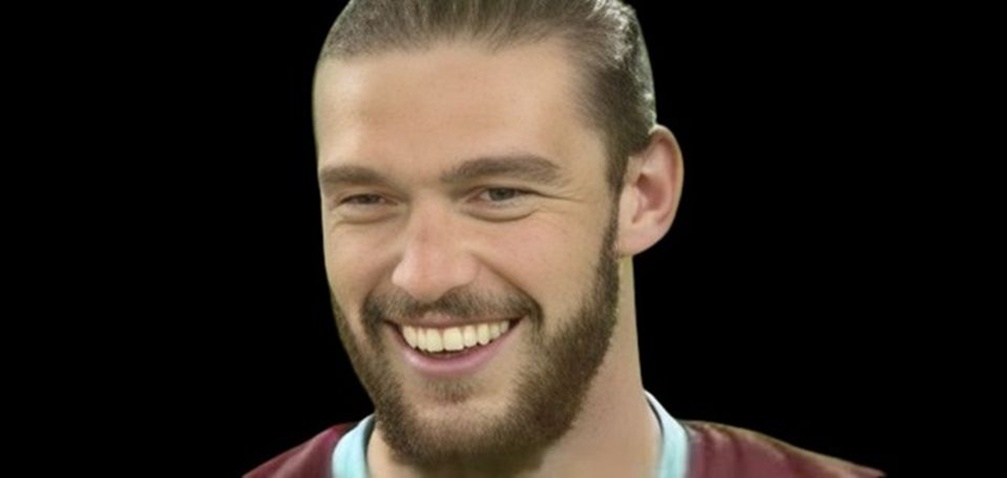
Andrew Thomas Carroll, born 6 January, 1989, Gateshead, England.
PART ONE
Andy Carroll was a product of Newcastle United’s youth academy and made his first-team debut on 2 November 2006, coming on as a late substitute in a UEFA Cup match against Palermo. It was a momentous occasion, as it made him the youngest player ever to represent Newcastle in Europe. But breaking into the first team was no easy task and he had to bide his time, making cameo appearances and gaining invaluable experience without yet establishing himself as a regular starter.
Carroll’s potential was recognized early, as he was awarded the Wor Jackie Milburn Trophy in 2007, an annual accolade given to the most promising young talent in North-East football. Besides individual recognition, he also had to develop the physical and technical aspects of his game, leading to a six-month loan move to Paul Simpson´s Preston North End in August that year.
While at Deepdale, he experienced the rough and tumble of Championship football, scoring his first league goal against Leicester City and, notably, receiving his first red card in professional football. These formative months were vital in shaping the aggressive, aerially dominant forward that Newcastle fans would soon embrace.
Upon returning to St James’ Park, he continued his steady development, though regular first-team opportunities remained limited. Still, the 2008–09 season offered him a significant breakthrough. On 10 January 2009, he scored his first Premier League goal in a 2–2 draw against West Ham United, a moment that suggested he was ready to play a greater role. Despite this, Newcastle endured a torrid season, culminating in relegation from the Premier League. While this was a disaster for the club, it inadvertently became a turning point for Carroll, as the Magpies’ demotion to the Championship cleared the way for him to assume a central role in their attack.
Newcastle’s Championship campaign in 2009–10 saw Carroll flourish, as he formed a productive strike partnership with Denmark international Peter Lovenkrands. His first league goal of the season came on 16 September 2009 against Blackpool, and from there, his confidence grew.
By the turn of the year, he was Newcastle’s focal point in attack, scoring crucial goals as the club marched toward an immediate return to the Premier League. Carroll ended the season with 19 goals in all competitions, cementing his status as the club’s leading striker and earning the famous No. 9 shirt, previously worn by legendary forwards such as Jackie Milburn, Malcolm Macdonald, and Alan Shearer. With that number on his back, expectations soared.
The 2010–11 season saw Carroll announce himself in the Premiership in spectacular fashion. In Newcastle’s first home game of the campaign, he hit a stunning hat-trick in a 6–0 beating of Aston Villa. His blend of physicality, aerial dominance, and surprising agility made him a nightmare for defenders, and he continued to torment opposition backlines. On 3 October, he was given the captain’s armband for the first time in a clash with Manchester City, an indication of the faith the club had in him. He repaid that trust with another crucial goal against Liverpool on 11 December, a fierce 25-yard drive that showcased his shooting ability from distance.
PART TWO
Carroll’s performances attracted significant attention, and in January 2011, Newcastle received a staggering £35 million bid from Liverpool. The sum was too substantial to reject, and despite his apparent reluctance to leave his boyhood club, the deal was pushed through on transfer deadline day. His departure left a vacuum at Newcastle, but financially, the club had secured an extraordinary windfall.
When Liverpool secured the services of Carroll on a frantic transfer deadline day in January 2011, the footballing world stood in disbelief at the eye-watering £35 million fee. The towering striker had shown promise at Newcastle United, bullying defenders with his sheer physicality and eye for goal, but few would have expected him to become, at that moment, the most expensive British footballer in history. At Anfield, he was expected to fill the void left by Fernando Torres, who had just departed for Chelsea in a record-breaking £50 million move.
Carroll’s Liverpool career did not get off to the most auspicious of starts, though. Due to an injury he had sustained while at Newcastle, he was forced to wait before making his debut. Consequently, anticipation built, with Liverpool fans eager to see what their new number 9 could deliver. That long-awaited debut finally came on 6 March 2011, when Carroll appeared as a substitute in a pulsating 3-1 victory over Manchester United. And just a few days later, he made his first European appearance for the club in a Europa League clash against Braga, though the match ended in disappointment with a 1-0 defeat.
Despite his fitness struggles, Carroll was gradually integrated into the side and, on 11 April, he provided a glimpse of his potential. In a resounding 3-0 victory over Manchester City at Anfield, Carroll opened his Liverpool account in emphatic fashion, first thundering home a long-range strike and then nodding in a trademark header. This brace was meant to signal the start of a dominant run in a red shirt, but as history would prove, it was merely a fleeting moment of joy in an otherwise frustrating tenure.
The following season, 2011-12, was supposed to be the one where Carroll justified his price tag. He kicked off the campaign by scoring in a League Cup tie against Exeter City and followed that up with a well-taken goal in a 2-0 victory over Everton at Goodison Park. He added another in a win over West Bromwich Albion, hinting that he was beginning to find his rhythm. But consistency continued to elude him, and doubts over whether he truly fit into Kenny Dalglish’s tactical system persisted.
Despite his struggles, Carroll played a key role in Liverpool’s domestic cup campaigns. In the FA Cup, he provided the assist for Dirk Kuyt’s late winner against Manchester United in the fourth round before scoring himself against Brighton & Hove Albion in the fifth. And on 26 February, he picked up his first piece of silverware with the Anfielders as Liverpool triumphed over Cardiff City in the League Cup final, albeit with Carroll largely a spectator from the substitutes´ bench.
As the season progressed, Carroll’s influence began to grow, and he demonstrated his knack for scoring crucial goals. On 10 April, he powered home a dramatic injury-time winner against Blackburn Rovers to halt Liverpool’s poor run of form. Then, in the FA Cup semi-final against Everton at Wembley, he once again proved to be the hero, heading in another late goal to send Liverpool to the final. That moment, in particular, was seen as the justification for his price tag, with Jamie Carragher claiming that goal alone was worth £35 million.
The FA Cup final against Chelsea would provide Carroll with yet another opportunity to step up, and he nearly inspired a dramatic comeback. With Liverpool trailing 2-0, he came off the bench to pull one back with a well-taken finish, before almost equalising with a towering header that was spectacularly clawed away by Petr Cech. Replays suggested the ball may have crossed the line, but the referee just waved play on. Liverpool ultimately lost 2-1, but Carroll had finally shown he could influence the biggest of occasions.
Carroll´s resurgence came too little too late, though. With Brendan Rodgers appointed as Liverpool’s new manager in the summer of 2012, Carroll found himself surplus to requirements in a system that emphasised swift passing and movement rather than aerial dominance. He was shipped out on loan to West Ham United and, despite brief flashes of quality, never truly recaptured the form that had convinced Liverpool to spend such an exorbitant sum on him in the first place.
PART THREE
In August 2012, a move that would mark the beginning of Andy Carroll’s complicated relationship with West Ham United was forged. The strongly built striker, whose time at Liverpool had been marred by injuries and underwhelming performances, was sent on loan to the newly-promoted Hammers.
Initially, the deal included a hefty £17 million option for a permanent transfer, which Liverpool soon dropped, likely aware that the striker’s injury history would make such a commitment too risky. Nevertheless, West Ham secured Carroll’s services for a season with a £2 million loan fee, along with covering his £80,000-a-week wages. The move to East London was both a fresh start and a challenge. he made his debut on 1 September 2012 in a 3–0 home victory over Fulham, where he set up two goals, offering a tantalizing glimpse of his potential. It was, however, a glimpse that would be followed by long stretches of absence due to injury.
His first goal for West Ham came later that year, on 25 November 2012, in a 3–1 defeat to Tottenham Hotspur. Despite a promising start, Carroll’s recurring injuries hindered his consistency. Yet, in February 2013, he managed to score the only goal in a 1–0 win over Swansea City, further underlining his talent when fit. By the end of the 2012–13 season, Carroll had registered seven goals in 24 appearances, a respectable return given his injury record. West Ham’s interest in a permanent deal was clear, and on 19 June 2013, they secured his services for a then-club record fee of £15 million, making him a permanent fixture at Boleyn Ground.
What followed was the sort of injury misfortune that would come to define much of Carroll´s tenure at the club. The 2013–14 season began with a heel injury sustained in the final match of the previous campaign. Despite this setback, he made his first appearance of the season on 12 January 2014, coming on as a substitute in a 2–0 triumph against Cardiff City, where he assisted Mark Noble’s second goal.
As the campaign progressed, Carroll’s form fluctuated. On 31 March 2014, he produced a standout performance in a 2–1 victory at Sunderland, scoring one goal and assisting another. He nonetheless ended the season with just two goals in 18 league appearances, a disappointing return for a striker of his quality.
Injuries continued to plague him in the following years. The summer of 2014 saw Carroll suffer an ankle ligament injury during a pre-season tour of New Zealand, sidelining him for the first eleven matches of the season. He made his return on 8 November 2014 in a 0–0 draw against Aston Villa but would only truly find his stride later in the campaign. On 7 December 2014, he scored his first goals of the season—two in a 3–1 win over Swansea City—while his third came against Leicester City on 20 December, marking his 50th career league goal.
Yet, as with many of his seasons, the joy was short-lived. Carroll’s injuries seemed to be always lurking, and in February 2015, he was sidelined once again after tearing a medial ligament in his knee. The setback was severe enough to rule him out for the remainder of the 2014–15 season. A season that had shown such promise, with Carroll contributing five goals in just 14 appearances, was now marred by another frustrating injury.
But as always, Carroll returned to the fold, battling through the setbacks with his usual resilience. He made his comeback in September 2015, and by October, he was once again a hero. Coming on as a substitute in a 2–1 win over Chelsea, Carroll scored a towering header to secure all three points for West Ham, a moment of redemption for the big man. This marked the beginning of another mini-revival. Carroll went on to score his first-ever hat-trick for West Ham in a 3–3 draw against Arsenal in April 2016, further cementing his importance to the team.
In the 2015–16 campaign, he became a key figure for Slaven Bilic’s West Ham. His aerial prowess and physicality made him a constant threat in the Premiership, and his performances in the latter part of the season were a reminder of the striker West Ham had signed. His bicycle kick against Crystal Palace on 14 January 2017—a stunning goal that earned him Premier League Goal of the Month honours—was one of the most memorable moments of his West Ham career, showcasing his ability to produce magic when fully fit. Alas, it was just one of too few moments of such brilliance, as injuries once again played a role in curtailing his impact.
In April 2017, Carroll became West Ham’s captain for the first time in a 2–1 defeat to Hull City, a significant milestone in his career. But the following years continued to be an exercise in frustration. Carroll played only 14 games in the 2018–19 season, scoring a solitary FA Cup goal before undergoing ankle surgery in April 2019. His struggles with fitness led to West Ham parting ways with him at the end of the season, bringing to a close a roller-coaster tenure that had promised so much but ultimately fell short.
PART FOUR
On August 8, 2019, Andy Carroll made his return to Newcastle on August 8, 2019, signing a one-year contract with the club where he had previously made his name. Carroll’s return debut came on September 21, 2019, was as a substitute in a goalless draw against Brighton & Hove Albion, a match that could hardly be described as a celebration of his long-awaited return.
Over the course of the 2019-2020 season, Carroll played sporadically but still managed to show glimpses of the form that once made him one of the most sought-after strikers in England. His most memorable moment came on January 3, 2021, when he netted his first goal for Newcastle in almost a decade, although it came in a 2–1 loss to Leicester City. This brief spark, however, wasn’t enough to keep him at St. James’ Park beyond the summer of 2021, when he was released after two seasons with the side.
In November 2021, Carroll found himself signing a short-term contract with Championship side Reading. A club that was struggling for firepower, the Royals hoped that Carroll could provide just the spark that they needed. Despite his age and injury record, Carroll brought experience to the frontline, making his debut on November 20, 2021, against Nottingham Forest. It was in this game that his physical presence made a difference as he assisted in the build-up to an equalizer.
But it wasn’t just the assists that earned him recognition during his time at Reading. On November 27, 2021, he scored his first goal for the Royals in a thrilling 3–2 victory over Swansea City, showcasing that despite the injuries and years away from his best form, he still had a nose for goal. Another goal followed in a 2–1 loss to Middlesbrough on January 15, 2022, yet despite these flashes of brilliance, his contract with Reading was not renewed, and the club opted not to extend his stay beyond the January window.
West Bromwich Albion came calling shortly after Carroll’s departure from Reading, offering the forward a chance to prove himself in the Championship once again. Signing a short-term deal until the end of the season, Carroll joined a club with a rich history of producing gritty, hardworking players, and he was expected to bring his wealth of experience to the squad. But his debut on January 29, 2022, was one to forget, as West Brom suffered a 2–0 defeat at the hands of Millwall at The Den.
His struggles continued, but on March 12, 2022, Carroll finally had his moment, scoring a dramatic 85th-minute equalizer in a 2–2 draw against Huddersfield Town. This late goal was an example of the kind of physical, no-nonsense forward play that had once made Carroll a household name in English football. But despite this moment of glory, his stay at The Hawthorns was not destined to be long. By the end of the 2021-2022 season, he was released, with the club deciding not to extend his contract. A bittersweet end to another short chapter, it seemed as though Carroll’s time in English football had all but ended.
In September 2022, Carroll made a return to Reading, signing a four-month contract, and quickly became a familiar figure once more. His return to the club seemed like a last-ditch attempt to rediscover his form and possibly keep his career alive in England’s lower leagues. Though he was no longer the powerhouse that terrorized Premier League defences, he still had a knack for contributing when it mattered.
His performances, while no longer the show-stopping displays of his youth, were competent and provided vital depth to Reading’s squad. Eventually, Carroll’s time with Reading came to an end In the summer of 2023 when he triggered a release clause in his contract, leaving the club once more.
On 1 September, 2023, the latter part of Carroll’s career took an unexpected turn when he joined French side Amiens, a club playing in Ligue 2. Many eyebrows were raised at the move, given his age and the relative decline of his career in recent seasons, but Amiens offered Carroll a chance to prove himself in a new league, far from the pressures of English football. His debut arrived on 3 September as he came on as a substitute in a 4–1 victory over Guingamp, a result that moved the Unicorns to second in the league.
It didn’t take long for Carroll to find his feet in France, and his performances, though not electrifying, were steady enough for him to stay with the club. But football, as always, remains full of surprises, and just over a year later, in September 2024, Carroll made the move to Bordeaux in France’s Championnat National 2. His debut came with a bang, as he scored twice in a 2–2 draw against Voltigeurs de Chateaubriant, demonstrating that while he may have been in the twilight of his career, his instincts in front of goal had not completely deserted him.
PART FIVE
Andy Carroll’s time with the England national team can be best described as one of tantalizing glimpses of greatness, filled with both memorable highs and frustratingly fleeting appearances. His powerful presence, sharp eye for goal, and unrelenting aerial prowess seemed to promise much, yet his international career, much like his club trajectory, would remain a story of what could have been.
His international voyage started on 11 September 2007, when he made his debut for the England Under-19s in a 4-0 drubbing of Belarus. He marked the occasion by scoring, an early sign of his undeniable potential. It wasn’t until 12 March 2009, however, that Carroll’s next international involvement came, this time with the Under-20s. Though initially selected for a match against Italy, his withdrawal and replacement by Hal Robson-Kanu perhaps symbolized the beginning of the unpredictable nature of his international career.
On 5 August 2009, he received his first call-up to the England Under-21s, a team brimming with future internationals. His debut came on 11 August 2009 in a match against the Netherlands, where he appeared as a second-half substitute. While that game ended without any fireworks, his next outing was a different matter entirely. On 9 October 2009, in a thrilling 6-3 win over Macedonia, Carroll scored twice and provided an assist, showcasing his lethal instincts in front of goal. The performance served as a clear statement: this was a young player who could deliver on the international stage.
Yet, it wasn’t until November 2010 that Carroll earned his first senior England call-up. His scintillating form at Newcastle United, having established himself as one of the Premier League’s most formidable forwards, had not gone unnoticed. On 17 November 2010, he was named in the squad for a friendly against France at Wembley. Despite passing a late fitness test, Carroll started the match but found little space to showcase his talents, reflecting the difficulty of translating club form to international success. Still, he had shown enough to keep the national team coaches interested.
In March 2011, a major milestone arrived: Carroll registered his first senior goal for England. In a friendly against Ghana, he drilled a left-foot shot into the bottom corner of the net, marking a memorable moment in his career. Yet, the euphoria was fleeting as the match ended 1–1, a scoreline that highlighted England’s inability to capitalize on their attacking opportunities, despite Carroll’s efforts.
Only a few months later, Carroll was named in England’s squad for UEFA Euro 2012, a tournament that was expected to be his breakout international stage. In England’s second group match, Carroll opened the scoring against Sweden with a majestic header. The England fans went wild and his towering leap and clinical finish seemed to confirm the promise he had long shown.
England’s defensive fragility allowed Sweden to claw their way back into the game, however, and although Carroll’s contribution was crucial, it was Theo Walcott’s late heroics that saved England. The match ended in a 3–2 victory for the Three Lions, but Carroll’s performance, like many of his international appearances, was ultimately overshadowed by the team’s defensive shortcomings.
The brief flickers of brilliance that Andy Carroll provided in an England shirt were never enough to cement his place in the side, despite the undeniable talent that had once made him one of the most talked-about forwards in English football. His time with England, filled with only 9 caps and 2 goals, never matched the expectations set by his domestic performances. One couldn’t help but feel that, with the right circumstances, Carroll could have been an England regular for years to come. But the stars never quite aligned, and the injuries that often hindered his club career continued to plague him on the international stage.
Carroll’s international career, much like his club career, is best viewed with a sense of what if’ What if injuries hadn’t taken their toll? What if England had been more consistent during his appearances? Carroll’s story is one of missed opportunity, but also one of powerful moments that will not soon be forgotten by those who witnessed his potential. In the end, we are left to wonder if he was the great forward England never truly had. But at least he gave us that header against Sweden. And for a moment, that was enough.