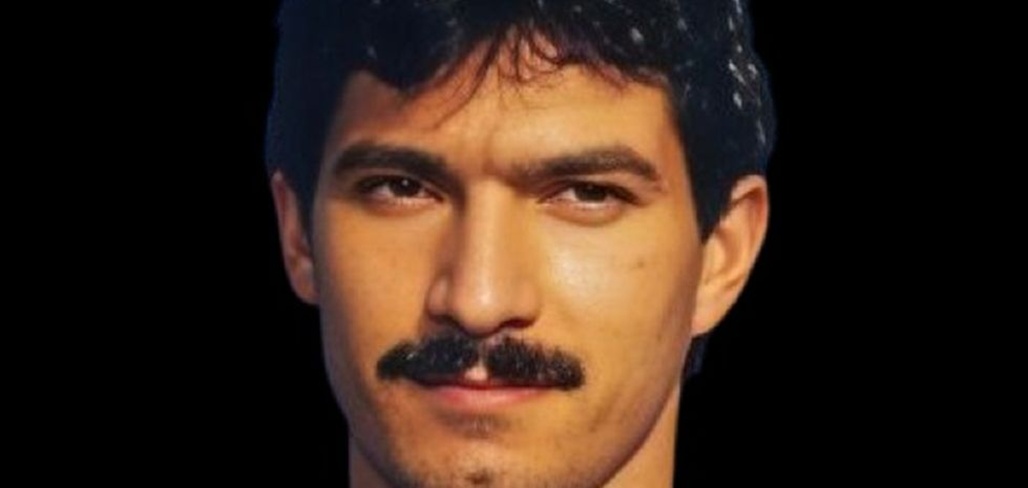
Herbert Waas, born 8 September, 1963, Passau, Lower Bavaria, Germany.
PART ONE
Herbert Waas was handed his senior debut by TSV 1860 Munich in the 1981–82 campaign of the 2. Bundesliga, and the youth from Passau wasted absolutely no time in announcing himself. 35 appearances and 11 goals. Mid-table comfort for the Lions, and a calling card that the rest of the Bundesliga could not ignore.
Waas was 18 years old. He was powerful, direct, and had a striker’s instinct, that rare, almost primal sense of where the ball is going to drop and how to get there first, that simply cannot be taught. What can be taught is tactical discipline, positional awareness, and the art of reading a game at the highest level, and that education was about to begin in earnest because Bayer Leverkusen came calling in the summer of 1982, and he answered without hesitation.
The BayArena, or the Ulrich-Haberland-Stadion as it was then known, became his home for the next seven years, and the relationship between the young attacker and the North Rhine-Westphalia outfit was one of those happy marriages that professional football occasionally produces: the right player at the right club at exactly the right moment. Leverkusen were not yet the European force they would become in later decades, but they were ambitious, organised, and hungry, and Waas fitted the profile of what they needed perfectly.
His debut Bundesliga season in 1982-83 was, by any measure, a remarkable one. He played in all 34 league matches, not bad for a 19-year-old making his top-flight debut, and contributed eleven goals as Leverkusen settled comfortably into an 11th-place finish. There was no disgrace in that, and there was certainly no disgrace in the striker who delivered it. It was the following campaign, however, which truly announced Waas as a performer to take seriously.
15 goals in 25 appearances. Despite missing time through minor setbacks that interrupted the season, he hit that return with a consistency and composure that belied his age, and Leverkusen climbed to a creditable seventh in the table. That was a significant leap, and the youngster was a significant reason for it. Additionally, his influence was not merely statistical, he brought energy and directness to an attack that was still finding its identity at the top level, and the supporters on the terraces responded to him with genuine warmth. He ran hard, he held the ball up when required, and when the chance arrived, he buried it.
The subsequent campaigns told the story of a marksman maturing steadily and sustaining his output through the natural fluctuations that any career endures. 11 goals in 1984–85. 14 in 1985-86. 15 again in 1986-87, matching his best return and confirming that his early promise had not been a fluke but a genuine indication of quality. Indeed, those twin hauls of 15 in 1983–84 and 1986–87 bookend what were arguably the finest stretches of his Leverkusen career, and they underline his durability and his reliability as a goal-getter across multiple seasons at the highest level of German football.
There were quieter periods, of course. One goal in 1987-88 and five in 1988-89 reflected a footballer entering a different phase of his playing life, perhaps slowed by the accumulation of games and the inevitable physical toll that seven seasons of Bundesliga football extracts from a body. But even in those less prolific terms, he contributed, participated, and remained a part of everything that Leverkusen were building, and what they built in the spring of 1988 was something genuinely extraordinary.
The 1987–88 UEFA Cup campaign is one of the great underappreciated stories in German club football, and Waas was part of it from start to finish. Leverkusen, a side that had never won a major European trophy, navigated a path through the competition that reads, in hindsight, like a script that no one would have dared to submit, because no one would have believed it possible.
Austria Vienna fell. Then Barcelona, the club that would later win the European Cup itself, were knocked out by a team from a mid-sized industrial city on the Rhine, and German football sat up and paid very close attention indeed. Werder Bremen, no easy proposition, were beaten in the semi-final. And then came Espanyol, the Catalans, in a two-legged final that went to penalties.
Waas appeared in eight matches during that UEFA Cup run, including the final legs against Espanyol. He did not score in open play during the tournament, but that framing, that reduction of a player’s contribution to the number beside his name on a goals list, misses something important. A forward line in a knockout competition is not merely the person who finishes; it is the person who creates space, who pulls defenders out of position, who holds the ball under pressure in the 85th minute when the side needs to see out a result. Waas provided all of that, and when the shoot-out against Espanyol arrived, he stepped up, placed his penalty with conviction, and found the goal. And as as it turned out, the men from North Rhine-Westphalia claimed the trophy on penalties. Leverkusen had their first major European honour and Waas had his UEFA Cup winner’s medal.
PART TWO
As a matter of fact, Herbert Waas had already secured his place in Bayer Leverkusen’s history books through a different kind of distinction. In June 1983, just months into his first Bundesliga season, and still only 19 years old, his performances had caught the eye of the West Germany national team selectors, and he was called into the senior squad for a friendly against Yugoslavia on 7 June.
The match was played in Luxembourg, part of the celebrations marking the Luxembourg Football Federation’s 75th anniversary, and West Germany won it 4–2 in handsome fashion. Waas entered the game in the 67th minute, replacing the experienced Hansi Muller, and in doing so became something historic: the first player in Bayer Leverkusen’s history to be capped by the German senior national team.
Waas, a teenager from Passau who had been at Bayer Leverkusen for less than a year, became that pioneer. Bild would later rank him at number 35 in their list of Leverkusen’s 50 greatest ever players, with his status as the club’s first German international cited explicitly as part of his legacy.
Before that senior debut, he had been cutting his teeth in the West Germany U-21 setup, and the education he received there was formative in the best possible sense. His U-21 debut came on 22 February 1983, a 3–1 away victory against Portugal, and he immediately looked at home in an environment that demanded quality and composure from its young forwards.
The U-21 qualifying campaign for the 1984 UEFA European Under-21 Championship took West Germany into a group containing Turkey, Albania, and Portugal, and Waas featured in key moments throughout. A 1–1 draw away to Albania on 29 March 1983 demonstrated his ability to contribute in difficult, unglamorous circumstances, and a 7–0 demolition of Turkey at home on 25 October of the same year, in which he came off the bench to add his clinical touch, showed the other side of the coin entirely. Despite finishing strongly, West Germany did not advance to the finals held in England, but he had done more than enough to make his case for higher honours.
He went on to earn 11 U-21 caps in total, scoring twice, with further appearances including a 2–0 home win over Bulgaria in April 1985 and a goalless draw with South Korea in March 1986. Eleven U-21 appearances across three years, two goals, and a developing game that was clearly heading in only one direction.
His senior international career stretched across five years and 11 caps, and while that number might suggest a peripheral figure, the reality was rather more nuanced. He featured in eight friendlies and three 1984 European Championship qualifiers, in a squad that included some of the finest players West Germany has ever produced. Competition for forward places was, to put it mildly, fierce. Rudi Voller. Klaus Allofs. Players of extraordinary quality who were at or near the height of their powers during the same period. Under coaches Jupp Derwall and then Franz Beckenbauer, the Germany attack was not a department that offered many vacancies.
And yet Waas got 11 opportunities to wear the national shirt, to run out in front of crowds and represent his country, and he took every one of them seriously and contributed meaningfully each time. He was part of the preliminary squad of 40 players assembled for the 1986 World Cup in Mexico, the tournament that West Germany came agonizingly close to winning before falling to Argentina in the final, though he did not make the final 22 and therefore did not travel. It is the kind of near-miss that sits quietly in a career, visible only if you look for it, but his inclusion in that preliminary group of 40 is evidence enough that Beckenbauer and his staff considered him a serious option.
His lone senior international goal came on 15 October 1986, in a friendly against Spain at Hannover’s Niedersachsenstadion. West Germany and Spain drew 2–2, and it was the Bayer Leverkusen ace who stepped forward in the 61st minute to convert the equalizer. It may have been his only senior goal for his nation, but it was a goal that mattered, scored in a context that mattered, and it carries the kind of weight that numbers alone cannot fully convey.
When he eventually left Leverkusen in September 1989, after seven seasons and 247 appearances in all competitions, 88 goals in total, the move that awaited him was an ambitious one. Bologna FC 1909, one of the oldest and most storied clubs in Italian football, had come calling, and Waas crossed the Alps for what would be a two-season adventure in Serie A.
Italian football during the late 1980s and early 1990s was arguably the finest league in the world, drawing the best players from every corner of the globe and squeezing them through a tactical framework which was simultaneously brutal and brilliant. Goals were harder to come by, chances were fewer and required more patience to manufacture, and the physical demands were different from those of the Bundesliga, but Waas adapted, contributed, and earned his place in a team fighting to establish itself among the elite. 52 appearances and six goals over two seasons in Bologna’s colours; modest by his previous standards, but honest work in a league that gave absolutely nothing away for free.
In 1991, he returned to Germany, joining Hamburger SV for the 1991-92 Bundesliga campaign. The move back to familiar surroundings did not quite produce the reinvigoration that might have been hoped for; 33 appearances but only two goals told the story of someone whose best days in the Bundesliga were behind him, though his experience and professionalism remained genuinely useful to a squad that needed both.
Switzerland followed, and FC Zurich provided Waas with something he had not experienced for several years: regular football and a prominent role. Over three seasons from 1992 to 1995, he amassed 57 league appearances in the Nationalliga A, scoring 15 goals, and contributed a further 12 appearances and four goals in promotion and relegation playoffs. It was not the Bundesliga or Serie A, but it was purposeful, professional football played with commitment and intelligence, and the Bavarian gave it everything he had.
The final chapter was brief and poignant in the way that all last chapters are. Herbert Waas signed for Dynamo Dresden midway through the 1994–95 campaign, appeared five times, and retired from professional football. in the summer of1995, at the relatively young age of 31.