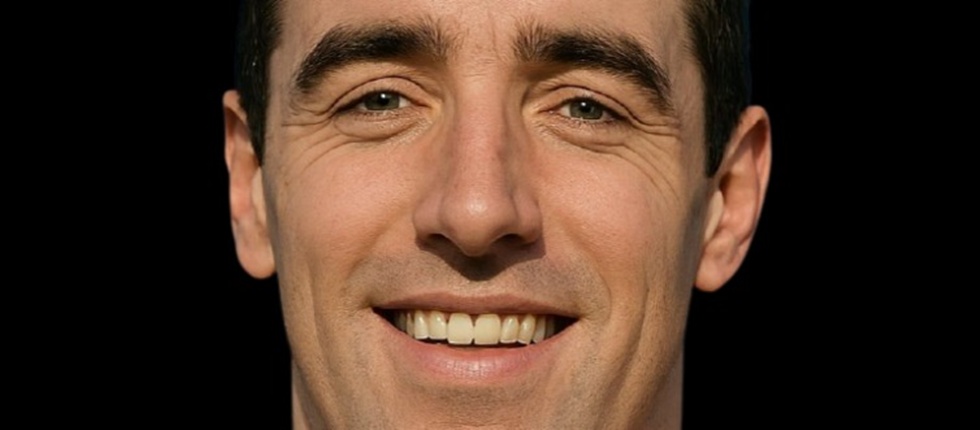
Dominic Sharkey, born 4 May 1943, Helensburgh, Dunbartonshire, Scotland.
PART ONE
At just 15, Nick Sharkey joined the Sunderland youth system—a breeding ground of fine footballing pedigree during the 1950s, where manager Alan Brown was shaping a side that would blend grit with guile.
Sharkey’s rise through the Sunderland ranks coincided with a period of genuine rebuilding at the club. Brown wasn’t one for sentiment, nor for coddling young players. If you made the grade, it was because you had something about you—and Sharkey, despite his slender frame, had plenty.
After two years of learning the ropes, studying his craft, and undoubtedly fetching more than a few teas for the senior squad, Sharkey was handed his debut at the remarkably tender age of 16. It came on 9 April 1960 in a gritty 1–0 win over Scunthorpe United at Roker Park. Though not earth-shattering on paper, that game signified the start of something—and not just for Sharkey, but for a Sunderland side hungry for heroes.
However, breaking into the first team consistently would take time. The teenage forward was pitted against some serious competition: the robust Don Kichenbrand, the nimble Ian Lawther, and the peerless Brian Clough. It was a masterclass in patience, perseverance, and personality, and Sharkey, though raw, showed signs that he was made of stern enough stuff.
When his opportunity finally came to shine in the 1962–63 season, he didn’t just step up—he surged. Indeed, March 1963 would provide the kind of moment every striker dreams of but very few achieve. In a thunderous 7–1 thrashing of Norwich City, Sharkey helped himself to five goals, becoming only the third Sunderland player at that point to achieve such a feat after Charlie Buchan and Bobby Gurney. It was the kind of performance that lives forever in fan folklore, and Roker Park that day buzzed with disbelief and delight in equal measure.
Correspondingly, the future seemed to beckon brightly. Sharkey had that knack—an intangible quality—which separated the merely good from the memorable. He wasn’t the strongest, he didn’t have blistering pace, but he had an eye for the back of the net and a positional sense that bordered on telepathic. He found the gaps where others saw walls.
Yet, football has a habit of reshuffling its deck with dispassionate regularity. In 1964, Sunderland brought in Glaswegian Harry Hood, a more physically imposing forward, and Sharkey, rather than sulk, was shifted into the inside-left role. It wasn’t his natural home, but he adapted with maturity, providing deft link-up play and continuing to chip in with goals.
Still, all good things must change, and in Sharkey’s case, that change arrived in 1966. Sunderland had appointed Ian McColl as manager—a man with a different vision and, crucially, different favourites. Despite scoring 51 goals in 99 league appearances—a near one-in-two strike rate that would make any statistician raise an eyebrow with approval—Sharkey was suddenly surplus to requirements. Football can be cruel like that.
PART TWO
And so, to Filbert Street. Leicester City beckoned with a fresh opportunity, but sometimes a change in scenery doesn’t guarantee a change in fortune. Sharkey found life with the Foxes somewhat frustrating. He struggled to cement a place in the first team, though he did impress in the reserves—reminding onlookers of the talent that had once lit up Roker Park.
Nevertheless, if top-flight football had begun to pass him by, Sharkey wasn’t done yet. In fact, his next move would offer something of a personal renaissance. He joined Mansfield Town in the Third Division, and rather than sulk over what might have been, he rolled up his sleeves and began to thrive again. Positioned as an inside-right, he adjusted his style to the new surroundings and soon found the net with familiar regularity.
Between 1967 and 1969, he would play 69 league games for Mansfield and score 17 goals, many of which were crucial, clever, or simply classic centre-forward finishes. He helped propel the Stags into the national spotlight when they reached the quarter-finals of the FA Cup in 1969—a phenomenal run for a club not used to basking in such company. Though they would ultimately fall short of glory, the run remained one of the club’s proudest moments, and Sharkey was integral throughout.
What’s more, that Mansfield spell reaffirmed something important—that Nick Sharkey was still a striker of substance, still a player who could turn a game. But football doesn’t pause for reflection. The game moves on at a relentless pace, and by 1969, Sharkey was on the move once again—this time back to the North East, where he joined Hartlepool United.
His time at Hartlepool was brief but spirited. He added a further 5 goals in 32 league appearances, and even if the goals were less frequent, the guile remained. The fans appreciated his effort, his intelligence on the ball, and the sense that they were watching a player who had once graced bigger stages but was still playing for the shirt.
After Hartlepool, Sharkey wound down his professional career with a spell at South Shields, bringing him back full circle to the North East where he had made his name. Though records of his time there are sparse, one can only imagine the wealth of knowledge he would have passed on to teammates—some of whom, no doubt, were too young to remember his five-goal masterclass against Norwich but were still aware that they were playing alongside someone who had made his mark.
In addition to his club commitments, Sharkey also earned two caps for the Scotland under-23 side. Though a full senior call-up never arrived—largely due to being out of favour during key moments—those appearances confirmed his status as one of the more promising Scottish forwards of the 1960s. The fact that he never progressed to the full national side remains one of those curious football what-ifs, but then again, there are dozens of players whose talent flickered brightly but briefly on the international radar.
And just to sum it up, Nick Sharkey was a forward with finesse, a worker with wonder, and a man who proved you don’t need to be built like a brick wall to break down defences. All you need is a sharp mind, sharp movement… and perhaps, now and then, a little sharp shooting.