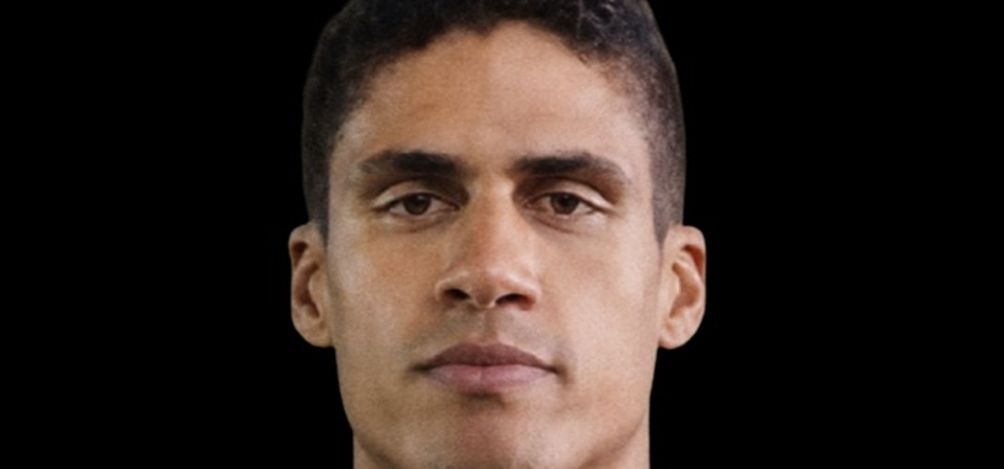
Raphaël Xavier Varane, born 25 April 1993, Lille, France.
PART ONE
Raphaël Varane started his footballing days in the Arrondissement of Lille appearing for local outfit Hellemmes at the young age of seven. Two years at Hellemmes were more than enough to catch the eye, and in the summer of 2002 the nine-year-old signed for Lens. Varane was sent to the Centre de Préformation de Football in nearby Liévin, an academy reserved exclusively for players raised in the Nord-Pas-de-Calais region, and for two years he trained there during the week while turning out for Lens at weekends.
By the 2008–09 campaign, alongside future stars Thorgan Hazard and Geoffrey Kondogbia, Varane was part of the Lens under-16 side that won the Championnat National des 16 ans, a triumph that announced him as something rather more than just promising. The following year he leapfrogged into the under-19 group despite being two years younger than several of his teammates, and ahead of the 2010–11 season he signed his first professional contract, before being promoted straight to the reserve team in the Championnat de France amateur. His amateur debut came in a 2–0 win over Drancy, and he went on to start nine of the following ten matches, with the side losing only once in that stretch, a run that suggested that the coaching staff at Lens had a decision to make sooner rather than later.
That decision was forced upon manager Jean-Guy Wallemme in late October 2010, when an injury to centre-back Alaeddine Yahia left a gap ahead of the match against Montpellier on 6 November, and the seventeen-year-old Varane was thrown into the starting line-up after training with the first team all week. He played the full ninety minutes as Lens emerged 2–0 winners, only the club’s third clean sheet of that campaign, and praise flowed in from captain Adil Hermach, defensive partner Éric Chelle, and striker David Pollet alike, as well as from the local press and from Wallemme himself.
He was left out for tough away trips to Marseille and Lyon but returned for a 4–1 defeat at Brest on 30 November, and although Wallemme was sacked in the aftermath of that result, new manager László Bölöni kept faith with the teenager. In December, with both Chelle and Yahia fit again, Varane was even deployed as a roving third centre-back in a defensive-midfield role against Bordeaux, and he made a goal-line block on a close-range effort from Yoan Gouffran in the eighty-fourth minute to protect a 2–1 lead, only for Bordeaux to snatch a 2–2 draw during the closing stages.
Word travels fast in French football, and by early 2011 Varane was already the subject of transfer speculation from clubs who had spotted what Lens supporters already knew. In an attempt to calm matters, on 3 February 2011 he signed a two-year contract extension that tied him to Lens until 2015, and that same day he received his first call-up to the France under-21 squad from coach Erick Mombaerts for a friendly fixture against Slovakia, an invitation the youngster described simply as a huge surprise. He earned his first under-21 cap in that match, playing the entire ninety minutes of a fine 3–1 win, and by November the massive stopper had opened his scoring account at that level too, finding the back of the net in a 2–0 victory over Slovakia in Euro 2013 qualifying that confirmed France’s passage to at least the play-offs.
Back at club level, Varane scored his first professional goal on 8 May 2011 in a 1–1 draw with Caen, and he struck again days later to equalise in another 1–1 stalemate against Monaco, though the point did nothing to prevent Lens sliding out of Ligue 1 after only two seasons in the top flight. On 21 May, with relegation already confirmed, he captained the side in a 1–0 defeat to Arles-Avignon, and barely a month later, on 22 June, Lens president Gervais Martel told supporters at a club meeting that their prized central defender would be moving on to Real Madrid. Varane had already visited the Spanish giants’ training facilities and met club advisor and fellow Frenchman Zinedine Zidane, and once he passed his medical the move was confirmed on 27 June, with Varane putting pen to paper on a six-year contract.
Varane made his first appearance for Real Madrid as a substitute in a 4–1 pre-season triumph over Los Angeles Galaxy, before starting four days later in a 3–0 success over Guadalajara, and he went on to feature in seven of the club’s eight pre-season fixtures that summer, settling in with a speed that belied his years. His competitive debut arrived on 21 September 2011, starting alongside Ricardo Carvalho in a goalless draw with Racing Santander, and just three days after that he scored his first goal for the club in a 6–2 thrashing of Rayo Vallecano that made him, at eighteen years and 152 days old, the youngest foreign player ever to score competitively for Real Madrid. His European education followed swiftly: a Champions League debut in a 3–0 group-stage win over Ajax on 27 September, and then, that November, a second continental appearance against Dinamo Zagreb in which he set up José Callejón for the fifth goal of a 6–2 victory that secured top spot in the group.
Ahead of the 2012–13 season Varane swapped the number 19 for the number 2, and although he missed Real Madrid’s opening four league fixtures, he returned for the Champions League opener against Manchester City on 18 September, playing the full ninety minutes of a 3–2 win. That August, meanwhile, he had also been called into the senior France squad for a friendly against Uruguay, remaining an unused substitute, though the wait for his first cap would not last much longer.
On 30 January 2013 he made his El Clásico debut in the Copa del Rey, clearing a dangerous Xavi effort off the line among a string of important interventions, and he capped the display with a headed goal in a game that finished 1–1, making him only the second-youngest foreign player to score for Real Madrid in a Clásico. He went one better in the return leg at the Camp Nou on 26 February, heading home from another Özil corner as Madrid won 3–1 away from home. Not long afterwards, on 22 March 2013, Varane made his first start for France, helping his country to a 3–1 win over Georgia in World Cup qualifying, before a Champions League quarter-final display against Galatasaray in which Real Madrid kept a clean sheet in a 3–0 win, with every one of his twenty-seven passes finding a teammate and every tackle, most of them against Didier Drogba, succeeding.
In April 2013, Marca readers named Varane in the best foreign eleven in Real Madrid’s history, an extraordinary accolade for someone still only nineteen years old, though a right knee operation that May, following an injury sustained against Real Sociedad, served as a reminder that even the most gifted young defenders are not immune to the physical toll of the game. He was fit again in time to be included among Didier Deschamps’ squad for the 2014 World Cup, having been named on the shortlist that May, and before the tournament he also came off the bench for Karim Benzema in the 2014 Copa del Rey final, a 2–1 triumph over Barcelona, and started all 120 minutes as Real Madrid demolished Atlético Madrid 4–1 in the Champions League final in Lisbon, deputising for the more experienced Pepe.
PART TWO
In the 2014 FIFA World Cup in Brazil, Raphaël Varane partnered Mamadou Sakho in central defence for France’s opening fixture, a 3–0 win over Honduras on 15 June, and started every match thereafter as Les Bleus beat Switzerland in the group stage and Nigeria in the last sixteen, before falling 1–0 to Germany in the quarter-finals. Varane held himself partly responsible for allowing Mats Hummels the freedom to score the winning header from a set piece, but the tournament nonetheless earned him a place on the three-man shortlist for the Best Young Player award. Back on domestic duty, he signed a new six-year contract with Real Madrid on 18 September 2014 that extended his stay to 2020, and less than a month later, on 14 October, he became the youngest player ever to captain France, taking the armband from Blaise Matuidi at half-time in a 3–0 triumph against Armenia; he wore it from the start against Sweden that November too, scoring his first international goal in a 1–0 victory for Les Bleus.
Injury denied Varane a place at UEFA Euro 2016, a thigh problem ruling him out on 24 May of that year and handing his spot to Adil Rami, though he remained a part-time squad member as Real Madrid lifted the 2015–16 Champions League regardless, proof that a wide net of contributors, and not merely the eleven who start on the night, tends to lift the biggest trophies. Fitness returned in time for the 2016–17 season, in which he made twenty-three appearances as Madrid won the La Liga title, and he started the Champions League final that year as the club won the competition once more.
His contract was extended again on 27 September 2017, this time to 2022, and during the 2017–18 Champions League he made eleven appearances as Real Madrid claimed their thirteenth European crown, completing a hat-trick of continental titles under Zinedine Zidane’s management. The individual recognition that followed was considerable: a place on the thirty-man shortlist for the 2018 Ballon d’Or, in which he eventually finished seventh, ninth spot in The Best FIFA Men’s Player award behind Kevin De Bruyne, and selection in both the 2018 FIFPRO Men’s World 11 and the UEFA Team of the Year as the starting centre-back.
France called him up for the 2018 World Cup on 17 May of that year, and Varane started every single one of his nation´s seven matches in Russia, playing every available minute. His moment of individual glory arrived in the quarter-final against Uruguay, where he rose to head his country into the lead in a comfortable 2–0 triumph over The Sky Blue, a goal that proved decisive on the way to the final, and when France beat Croatia to lift the trophy, Varane became only the fourth player in history to win the World Cup and the Champions League in the same year, joining Christian Karembeu in 1998, Roberto Carlos in 2002 and Sami Khedira in 2014, all of them, like Varane, wearing Real Madrid white at the time.
The following season brought further silverware in the form of the 2018 FIFA Club World Cup, with Varane featuring in forty-three matches across the campaign, and in 2019–20 he was a regular starter as Real Madrid won the La Liga title once again, even though the Champions League ended in disappointment that year with elimination in the last sixteen at the hands of Manchester City. In the second leg at the Etihad Stadium, Madrid lost 2–1, and Varane was widely judged to be at fault for both goals conceded, a rare off night that he later apologised for publicly.
Varane also travelled to UEFA Euro 2020 with France, named in the squad in May 2021, and he played every minute of the team’s four matches at the tournament, including the additional half-hour of extra time in the last-sixteen defeat to Switzerland, a game that went all the way to penalties; he was not, however, selected among the first five takers as France lost the shoot-out 5–4. Change was already stirring behind the scenes at club level, and on 27 July 2021 Manchester United and Real Madrid announced they had reached an agreement over a transfer, subject to a medical and to personal terms being finalised.
The move was completed on 14 August, with Varane unveiled to a packed Old Trafford ahead of United’s Premier League opener against Leeds United, and he was given the number 19 shirt previously worn by Amad Diallo, the very same number he had donned in his early days at Real Madrid a decade earlier. His debut followed on 29 August, in a 1–0 win away at Wolverhampton Wanderers to which he contributed the assist for the winning goal, and his first goal for the club came on 2 May 2022 in a 3–0 league win against Brentford.
That November, Varane was named in France’s twenty-six-man squad for the 2022 World Cup in Qatar, though not before a leg injury sustained against Chelsea on 22 October 2022 had briefly clouded his prospects; United manager Erik ten Hag confirmed four days later that the problem would keep Varane out of every fixture before the winter break, leaving genuine doubt over his World Cup involvement. He recovered in time, however, and started for France in their second successive World Cup final on 18 December 2022, a match Les Bleus ultimately lost 4–2 on penalties to Argentina after a breathless finish. Barely six weeks later, on 2 February 2023, Varane announced via Instagram, at the age of twenty-nine, that he was retiring from international football altogether, bringing an end to a ten-year run with the national side in which he had earned himself ninety-three caps and registered five goals.
Back in Manchester, Varane collected his first piece of silverware with United on 26 February 2023, starting in the EFL Cup final victory over Newcastle United at Wembley, a 2–0 win, and he opened the following season in style too, scoring the winning goal against Wolverhampton Wanderers on 14 August 2023 in United’s first fixture of the 2023–24 campaign. Yet by May 2024 the writing was on the wall, and on 14 May Varane confirmed that he would leave the club once his contract expired at the end of the season; his farewell appearance came on 25 May, when he lifted the FA Cup after a 2–1 win over local rivals Manchester City at Wembley, closing out a spell in England that had brought ninety-five appearances and two goals in all competitions.
A fresh chapter opened on 28 July 2024, when newly promoted Serie A club Como confirmed the signing of Varane on a two-year deal with an option to extend, but the new adventure was cut cruelly short: on 11 August, in his very first match for the club, a Coppa Italia tie against Sampdoria, he sustained a serious knee injury, and by the end of that month he had already been left out of Como’s Serie A squad list altogether. Weighing up the damage and, one suspects, the accumulated toll of well over a decade at the very top of the European game, Varane announced his retirement from playing on 25 September 2024. He did not, though, step away from Como altogether: on 19 October 2024 the club confirmed his appointment to their board, a role in which he now works alongside Osian Roberts and Juliette Bolon on youth development, education and product innovation.