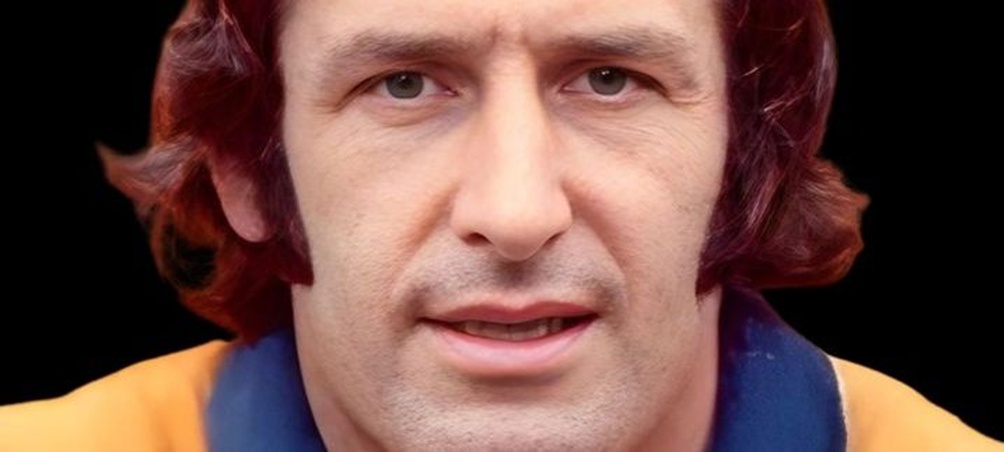
Kevin Randall, born Ashton-under-Lyne, England, August 20, 1945.
PART ONE
Football, for all its glittering millionaires and glamorous arenas today, was once about something purer, harder, and infinitely more human — grit, graft, and the smell of mud-soaked leather. Kevin Randall belonged to that era.
Randall was never destined for the footballing red carpets. He wasn’t one of those schoolboy prodigies whose names were whispered in the corridors of Stretford End; instead, his career was built on persistence, hunger, and an unrelenting will to make the most of every chance he got. And as fate would have it, those chances — when they came — he took with both feet.
Every footballer’s story begins somewhere humble, and for Randall, it began in the northern heartland of English football, where smoky skies and Saturday afternoons were dominated by football talk. As a teenager, he earned himself trials with Manchester United — the dream of every young lad from the area. Yet football, like life, is rarely a straight road to glory. The trials didn’t bear fruit, but rather than sulk or fade into obscurity, Randall simply rolled up his sleeves and moved on.
Nevertheless, rejection did not deter him. If anything, it spurred him forward. He joined Droylsden, a small semi-professional outfit on the outskirts of Manchester. There, he learned the trade — the bumps, the bruises, and the bravery that make a striker worth his salt. The Northern Premier League wasn’t glamorous, but it was a proving ground. What’s more, it was here that his sharp instincts in front of goal began to blossom. He was that classic English centre-forward: hard-running, fearless, and always sniffing for the half-chance that others missed.
As a result, when Bury came calling in October 1965, offering him a professional contract, Randall grabbed the opportunity with both hands. The dream he’d chased since his youth was now within reach. The surroundings at Gigg Lane were more polished, but the competition was fierce. He wasn’t the finished article yet — but he was learning fast.
If Bury was the apprenticeship, Chesterfield was the masterclass. In 1966, less than a year after joining Bury, Randall moved to Chesterfield. It was here, at Saltergate, that he truly became a name to be reckoned with.
He settled in quickly at the club, driven by the same dogged determination that had defined him since his Droylsden days. And Chesterfield — then slogging it out in the lower divisions — proved the perfect platform for his brand of honest, industrious football. Randall wasn’t just a goal scorer; he was a worker, a grafter who never let defenders rest.
Moreover, he was a leader by example, often setting the tone for his teammates with his energy and directness. While Chesterfield were not the biggest club, they possessed something far more precious: spirit. And Randall embodied that spirit completely.
Season by season, the goals came thick and fast. He developed a reputation as one of the most consistent forwards in the Fourth Division. Between 1966 and 1972, he plundered 96 goals in 258 appearances — an extraordinary record by any measure. Indeed, it wasn’t just his scoring that won fans over; it was the manner of it. He’d score with his head, with his boot, or with whatever part of his body the ball happened to hit — and he’d celebrate with that unmistakable glint of satisfaction that only a true poacher knows.
The crowning moment of his Chesterfield years came when the club clinched the Fourth Division Championship. For a team of modest means, it was a triumph built on teamwork, resilience, and Randall’s cutting edge. Furthermore, that title medal wasn’t just silverware — it was vindication for a man who’d worked tirelessly to climb football’s ladder the hard way.
Every successful player eventually finds a manager who truly understands them, and for Randall, that man was the mercurial Scotsman Jimmy Sirrell. Sirrell had watched the forward’s progress at Chesterfield with keen interest. He liked what he saw — a centre-forward with hunger, drive, and a knack for goals. And like any good manager, he wasn’t afraid to play the long game.
In 1972, after a lengthy pursuit, Sirrell finally got his man. Notts County paid £20,000 to secure Randall’s signature — no small sum for a lower-league side back then. Consequently, it was clear just how highly the manager rated him.
Unfortunately, paperwork and timing conspired against a dream debut; the deal was completed too late for Randall to feature in a goalless draw at Shrewsbury Town. However, four days later, he got his chance. It came in a League Cup tie at Meadow Lane against York City — a neat twist of fate, as York would later become such a defining chapter in his football life.
That night, he donned the black-and-white stripes for the first time, and, in true Kevin Randall fashion, he announced himself the only way he knew how — by scoring. His goal opened the scoring in a 3–1 victory, with Jon Nixon and Arthur Mann also on the scoresheet. Thus, Randall’s Notts career began not with fanfare but with effectiveness — and it was effectiveness that would become his hallmark.
The York City win was no flash in the pan. It kicked off one of the most memorable League Cup runs in Notts County’s history. The Magpies went on to defeat higher-tier opposition, taking down Southampton away and then dispatching Stoke City at Meadow Lane after brushing aside Southport in round two.
What’s more, Randall was at the centre of it all. His composure from the penalty spot became a reliable weapon. By the time Stoke arrived for a fourth-round tie in late October, he’d already assumed the role of designated penalty taker — and once again, he delivered. From twelve yards, he opened the scoring in another 3–1 triumph, with Les Bradd and Brian Stubbs completing the rout.
Fans began to adore him. He wasn’t flashy, but he was dependable — and in Nottingham, that mattered more than style. He was the kind of player supporters trusted implicitly when he stood over a penalty, his no-nonsense approach reflecting the city’s own working-class pride.
While cup runs bring excitement, it’s league success that truly cements a player’s legacy. For Notts County, the 1972–73 season was a defining campaign. The goal was promotion from the Third Division, and they entered the final game against Tranmere Rovers needing a win to make it happen.
On that fateful day, over 21,000 fans packed Meadow Lane, nerves jangling, hearts pounding. Early on, Jon Nixon fired the Magpies in front at the Kop End, sparking wild celebrations. But the day would belong to Randall, who coolly slotted home two penalties to make sure of the result. David Needham added another as County ran out 4–1 winners. Promotion was secured, and Randall had played his part to perfection.
Therefore, it was no surprise that his 11 other league goals that season were seen as equally vital. His consistency and nerve under pressure made him indispensable. Notts County finished runners-up to Bolton Wanderers, and their striker from Ashton-under-Lyne could hold his head high.
The following season, in the Second Division, he continued to be a regular, adapting to the faster pace and tougher defenders with typical resilience. Still, every football story has its turning point, and for Randall, it came in November 1975, when the call came from nearby Mansfield Town.
Mansfield paid £10,000 for Randall’s services — a tidy bit of business considering the value of his experience and leadership. The Stags, under manager Dave Smith, were building something ambitious, and Randall’s arrival was another piece of the puzzle.
He hit the ground running. His hunger had not dimmed; if anything, the new surroundings reignited it. In the 1976–77 campaign, he became Mansfield’s leading goal scorer and was instrumental in their Third Division Championship win — adding another medal to the Fourth Division one he’d earned years earlier with Chesterfield. In addition, his knack for scoring crucial goals and motivating younger teammates made him a dressing-room cornerstone.
However, football’s wheel keeps turning, and not always kindly. The following season, Peter Morris took over as manager, and for reasons known only to himself, he largely ignored Randall. It was a frustrating period for the forward, who still believed he had plenty to offer. Consequently, in October 1977, the unthinkable happened — he was transferred to York City.
To many, joining York City at the age of 32 might have seemed like a gentle winding down of a well-worn career. But to Kevin Randall, it was just another challenge. And as always, he met it head-on.
He announced himself to the Minstermen faithful in spectacular fashion. On his debut, he scored both goals in a 2–1 win over Doncaster Rovers — the perfect way to endear himself to the Bootham Crescent crowd. Correspondingly, it set the tone for what would be a fruitful four-year stay.
Between 1977 and 1981, Randall made 118 appearances for York City and found the net 31 times. He wasn’t quite the same blistering forward of his Chesterfield days, but he compensated with nous and clever movement — the kind that only comes with years of experience.
PART TWO
Moreover, his role extended beyond the pitch. He combined his playing duties with youth-team coaching, helping to shape the club’s next generation. His commitment and professionalism impressed everyone around him, and before long, he was appointed assistant manager to Barry Lyons.
Randall was transitioning smoothly from player to mentor, a natural progression for a man whose footballing brain was as sharp as his finishing once had been. Indeed, his time at York marked not just the end of his playing career but the beginning of a new one in management.
When Lyons departed in 1981, York City turned to a familiar and reliable face. Randall was appointed manager — his first taste of leading a team from the dugout. It wasn’t an easy task. The resources were limited, the expectations modest, but Randall brought the same principles that had guided him as a player: hard work, togetherness, and belief.
Although his managerial spell at York was brief, lasting until 1982, it gave him valuable experience. Subsequently, he returned to Chesterfield in a managerial capacity between 1987 and 1988, a fitting homecoming to the club where he’d made his name as a player. Football has a way of coming full circle, and for Randall, being back at Saltergate was both nostalgic and affirming.
Some players fade into obscurity after retirement; others find ways to stay connected to the game they love. Randall belonged firmly to the latter group. In the years that followed, he became a trusted ally of Neil Warnock, one of football’s most outspoken and colourful characters.
The pair’s relationship was built on mutual respect and understanding. Warnock valued Randall’s sharp eye for talent and his no-nonsense footballing judgment. Over time, Randall became his right-hand man, working as chief scout at Sheffield United, Crystal Palace, and Queens Park Rangers. Furthermore, in 2012, when Warnock took charge at Leeds United, Randall joined him there too — a testament to their enduring professional partnership.
Looking back over Kevin Randall’s career, one sees a man who never took a shortcut. His journey — from the trial fields of Manchester to the dugouts of Yorkshire — was one of perseverance and pride. He played 133 times for Notts County, scored 96 goals for Chesterfield, and added vital strikes for Mansfield and York along the way. But numbers alone don’t capture his influence.
He represented an era when footballers played for the love of the game and the roar of the terrace rather than the size of a pay cheque. He was tough but fair, competitive yet loyal, and, above all, he gave everything to every club he served.
In contrast to the modern obsession with transfer sagas and social media fame, Randall’s story reminds us that football’s soul lies in effort, community, and authenticity. His medals might not fill a museum cabinet, but his legacy endures in the memories of supporters who saw him play and the players he later helped shape.
And so, as we look back on Kevin Randall’s long and colourful football journey, it’s impossible not to smile at the ironies that football loves to serve up. He scored against York on his Notts debut, only to later wear York’s colours himself. He was overlooked by Manchester United as a teenager, yet went on to spend decades shaping players who might have dreamed of Old Trafford themselves.
In the end, Randall’s career was the story of English football itself — unpredictable, passionate, and stubbornly beautiful. And if there’s one lesson that he left behind, it’s this: never underestimate the bloke from Ashton-under-Lyne who just won’t stop running. After all, football might have changed, the boots might be lighter, and the wages might be heavier, but the game still needs its Kevin Randalls — men who play not for glory, but for the sheer, glorious love of it.