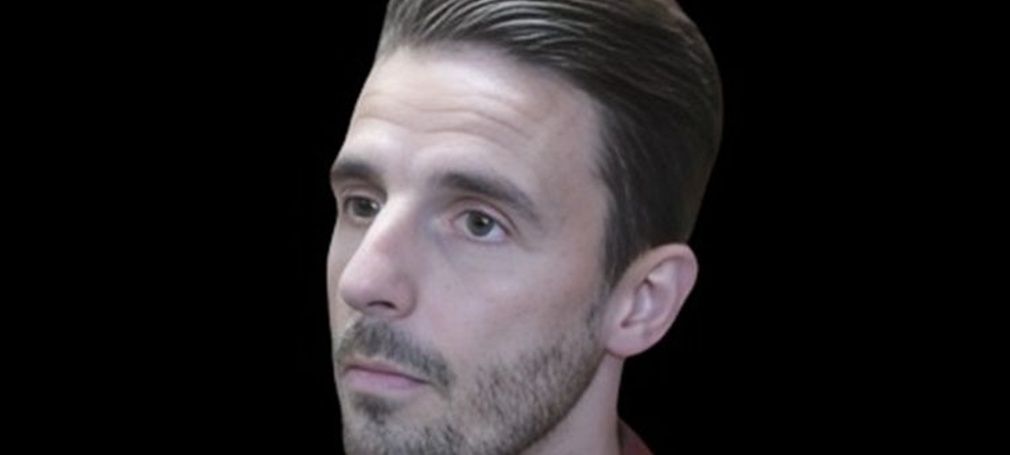
Matt Derbyshire’s soccer career was not one gilded in constant glory, nor marked by fame or fortune, but one shaped by determination, grit, and an unerring eye for the back of the onion bag.
PART ONE
Born on 14 April 1986 in Great Harwood, Lancashire, Matt Derbyshire’s first love wasn’t fame, but football itself — pure and simple. Like many Northern lads of his era, he honed his skills on the local playing fields and for his school, Our Lady and St John R.C. High in Blackburn. Football was not a pastime; it was a lifeline.
He began his senior journey with Great Harwood Town, a small non-league club whose name rarely made headlines outside the North West Counties League. But in 2002, a young Derbyshire began to stand out. His first goal for the senior side came when he was just 16 — the kind of fairytale start that tends to define destiny.
Moreover, his finishing instincts and blistering pace quickly drew attention. He scored 26 goals before his 18th birthday, including 18 in his last nine appearances. In an age where scouts scoured the lower leagues for the next Jamie Vardy-like gem, Derbyshire was impossible to miss.
As a result, offers began to pour in. Accrington Stanley and Radcliffe Borough wanted a closer look, but destiny had bigger plans. Blackburn Rovers, his boyhood club, came calling. And when Blackburn Rovers come knocking — especially when they’re in the Premier League — you don’t just open the door; you sprint through it.
In November 2003, Derbyshire signed for Blackburn Rovers for £20,000 — a record fee for Great Harwood Town. The move wasn’t just a career step; it was a fairytale for a young man who had once coached kids in Rovers’ own community department.
He turned down interest from none other than Manchester United, which, in hindsight, shows both loyalty and courage. Blackburn Rovers wasn’t just a football club for him; it was home.
Derbyshire’s rise through the Rovers’ youth and reserve teams was swift. He earned the Supporters’ Young Player of the Year award in 2004–05, a testament to his progress and promise. His first-team debut arrived on 7 May 2005, when he came on as a late substitute in a Premier League defeat to Fulham. It wasn’t glamorous, but it was a moment of arrival.
However, breaking into a top-flight team full of established names was no easy task. So, as many young strikers do, he sought experience through loan spells.
First came Plymouth Argyle in August 2005. It was meant to be a full-season loan, but football, as it so often does, threw in a twist. Manager Bobby Williamson was sacked just days later, and under Tony Pulis, Derbyshire found opportunities limited. He made 12 appearances but didn’t find the net.
However, his next move proved transformative. In January 2006, Wrexham took him on loan. League Two football was a world away from the Premiership, but his instinct for goal was universal. He hit five goals in five games, and by the end of his stay, he had 10 goals in 16 league matches — a stunning return that caught Blackburn’s attention. Consequently, he earned a new two-year contract and returned to Rovers ready to prove his worth.
Derbyshire’s big breakthrough came during the 2006–07 season. On New Year’s Day 2007, he scored his first senior goal in a 3–0 win over Wigan Athletic, and once that first went in, the floodgates opened. Six days later, he struck again — this time against Everton in a 4–1 FA Cup victory. That goal, coming away at Goodison Park, was proof that the young striker could handle himself against elite defences.
He followed that up by scoring against Manchester City, and then came a brace in a thrilling 4–0 FA Cup win over Luton Town. Suddenly, Blackburn had a local lad lighting up the scoresheets, and fans adored it. Moreover, his goal against Manchester United, capitalising on a defensive mix-up, remains etched in memory — not just because of who he scored against, but because of how he did it: pure opportunism.
He ended the campaign with nine goals in all competitions, a solid return given his limited starts. It was a season of vindication — proof that Great Harwood’s favourite son could cut it in the Premier League.
The following season, he started where he left off. On 11 August 2007, he came off the bench to score the winner against Middlesbrough in a 2–1 victory. And when he bagged a 90th-minute winner against Newcastle United the following March, his reputation as a super-sub grew. He was fast, fearless, and often decisive.
Yet football’s cruel paradox is that form doesn’t always guarantee favour.
PART TWO
When Paul Ince took over at Blackburn Rovers, Matt Derbyshire found himself increasingly marginalised. Under Sam Allardyce, things worsened. Despite his previous heroics, chances were few and far between.
Therefore, when Olympiacos, the giants of Greek football, came calling in January 2009, Derbyshire took the leap. For many English players, moving abroad was a gamble. For him, it was a chance to reignite his career — and, as it turned out, to etch his name into Greek football folklore.
He announced himself in style. In the Greek Cup Final against AEK Athens, Olympiacos were 2–0 down at half-time. Derbyshire came on and, within minutes, scored. Later, deep into stoppage time — bloodied, bruised, and barely conscious after a collision — he headed home a dramatic equaliser to make it 3–3.
Olympiacos went on to win 15–14 on penalties, and Derbyshire was named Man of the Match. His courage and determination were immortalised that night, and Greek fans dubbed him “The English Killer.” What´s more, he didn’t stop there. He signed permanently that summer for £3 million and continued to find the net — most memorably scoring the winner against fierce rivals Panathinaikos in March 2010.
However, in football, new managers bring new philosophies. When Ernesto Valverde arrived, Derbyshire was told he wasn’t in the plans. Once again, he was forced to move on — but his legend in Greece was already sealed. Derbyshire returned home in August 2010, joining Birmingham City on loan. He made his debut against former club Blackburn and scored his first Blues goal in a 3–2 League Cup win over Rochdale.
Nevertheless, opportunities were limited, and while he chipped in with two FA Cup goals against Millwall, he was left out of the League Cup Final squad, which saw Birmingham stun Arsenal 2–1 at Wembley. So, once again, he moved on — this time to Nottingham Forest, signing a three-year deal in August 2011.
Forest offered a fresh start, and Derbyshire’s debut in a 1–0 win at Doncaster seemed promising. Yet injuries and managerial changes hampered his rhythm. His solitary goal that season came in a 3–2 defeat to Southampton, a reminder that form is fleeting when consistency is absent.
Still, Derbyshire never lost his love for scoring, and he sought opportunities to rediscover it. In September 2012, he joined Oldham Athletic on loan and immediately reignited his touch. He scored on debut in a 2–2 draw against Notts County, then again versus Scunthorpe, Crewe, and Leyton Orient. Oldham wanted to keep him, and for a while, it looked like the old Matt was back.
Later, a brief stint at Blackpool followed, but without goals, it was another chapter that faded quietly into the background. Then, in May 2014, Rotherham United, newly promoted to the Football League Championship, offered Derbyshire a two-year contract. For a player seeking redemption, it was the perfect stage — humble, hardworking, and fiercely competitive.
Derbyshire delivered. Over two seasons, he scored 17 goals in 69 matches, many of them crucial in keeping Rotherham afloat. His work rate, movement, and professionalism earned praise from teammates and supporters alike. Furthermore, his time in Yorkshire restored something vital — joy. He was smiling again, scoring again, and once more playing the game he loved the way he wanted to.
Then came an unexpected twist — one that would turn out to be one of the happiest moves of his career. In June 2016, Derbyshire joined Omonia Nicosia in Cyprus. Some might have seen it as semi-retirement, but Derbyshire saw it as a new challenge — and how he thrived. On his debut, he scored the only goal against Banants Yerevan in the Europa League qualifiers. On his first league appearance, he netted a penalty within two minutes.
In January 2017, he produced one of the most astonishing feats of his career — a four-minute hat-trick against Ethnikos Achna, turning a 2–0 deficit into a 3–2 victory. That season, he finished as Cyprus’s top scorer with 24 goals, a feat he repeated the following year with 23.
Omonia fans adored him. He was no longer just a striker from Lancashire; he was Matt Derbyshire, the Cypriot hero. However, the 2018–19 season brought challenges. Injuries and tactical changes saw his goal tally drop to just two, but by then, he had nothing left to prove. He had given the Cypriot game everything.
In August 2020, Derbyshire swapped the Mediterranean sun for the Australian outback, signing for Macarthur FC — a brand-new club in the A-League. Even at 34, he wasn’t done scoring. His movement, composure, and leadership proved invaluable as he became one of Macarthur’s key men during their debut campaign.
Nevertheless, wanderlust called again. In July 2021, Derbyshire returned to Cyprus with AEK Larnaca, before heading to India a year later to join NorthEast United. Though his appearances there were relatively brief, his professionalism stood out. Younger players often looked to him as a mentor, learning from a man who had seen almost every corner of the footballing world.
In 2023, Bradford City brought him to Valley Parade where he stayed for two seasons before he ended his playing days at Northern Premier League Matlock Town in 2025.
Internationally, Matt Derbyshire’s time with the England U-21 side was memorable. He scored on his debut at Wembley in a 3–3 draw with Italy, marking the reopening of the stadium in March 2007.
Moreover, he courted controversy at the 2007 European Under-21 Championship, scoring against Serbia despite a player being down injured. He also took part in the dramatic 13–12 penalty shootout loss to the Netherlands, scoring one spot-kick before his second was saved.
Two years later, the goal plunderer scored twice in a fine 5–0 victory over Norway, finishing with 14 caps and 4 goals. It was a short but bright chapter in his football story.
Now, you can take the man out of football, but you can’t take football out of the man.