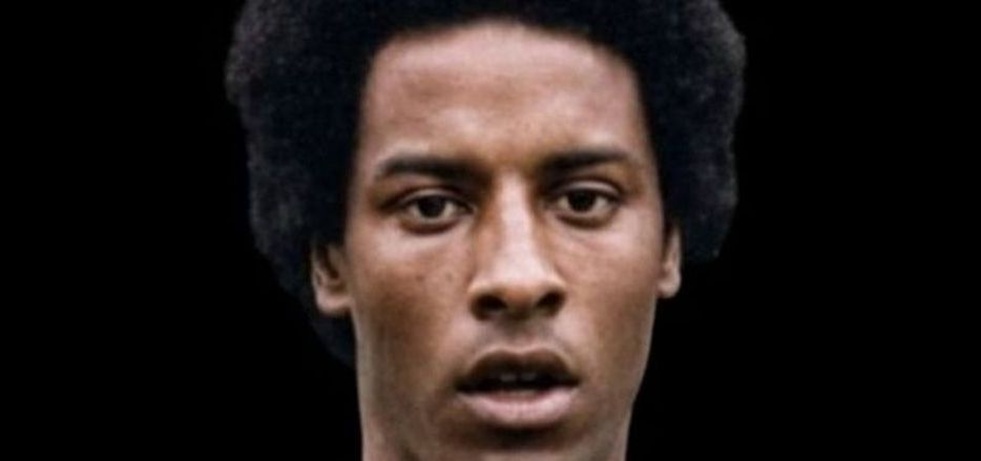
Brendon Martin Batson, born 6 February 1953, St. George’s, Grenada.
PART ONE
Brendon Martin Batson was born in St George’s, Grenada, on 6 February 1953, and although his name would eventually become closely associated with some of the most important changes seen in English football during the 1970s and early 1980s, the game itself played no part in his earliest years. His parents were of Trinidadian heritage, but his Grenadian-born mother returned to the island for his birth, and he remained there until he was six, growing up in surroundings where cricket was familiar but organised football barely entered his world.
Grenada was still a British colony, its economy depending heavily upon nutmeg, bananas and other agricultural exports, and work was often poorly paid and uncertain, so Batson’s family belonged to a generation of West Indians who had to look elsewhere for steadier employment and wider opportunities. They moved first to Trinidad in 1959, and the change brought the six-year-old into a larger and busier society, but football still meant little to him, and he later recalled that he had never seen a football match before leaving the Caribbean. That simple fact gives the beginning of his story its sharpest edge, because within little more than a decade the boy who knew nothing about the sport would be standing on a First Division pitch in Arsenal colours.
Batson and his older brother arrived in England in April 1962, when Brendon was nine, joining their mother and stepfather as part of the continuing movement of Caribbean families to a country still filling post-war labour shortages in transport, manufacturing, health care and public services. The family initially settled in the Essex area around Tilbury and Chadwell St Mary, and later moved to Markhouse Road in Walthamstow, where the surroundings, weather and everyday manner of life bore little relation to anything the brothers had known in Trinidad or Grenada.
East London could be hard and direct, and racial prejudice was neither hidden nor unusual, so adaptation required patience as well as a willingness to stand one’s ground, yet it was here that football first caught Batson’s attention and then began to occupy more of his time. There was no sporting tradition waiting for him at home, because his mother and stepfather knew virtually nothing about the round ball game and could offer neither technical advice nor useful contacts, but school football provided an entrance available to any boy who was prepared to play. His first attempts were hardly polished, and one teacher even suggested that cricket might be more suitable for somebody born in Grenada, but Batson kept returning to the ball, learning its movement through repetition and discovering that his pace, balance and powers of concentration gave him something on which he could build.
Football in the London schools of the 1960s demanded quick learning, because matches were competitive, places were contested and promising boys could soon attract the attention of scouts from the capital’s professional clubs, and Batson progressed with striking speed once he understood the game. By the age of 12 he had come within Arsenal’s view, which represented a considerable advance for a boy who had first encountered the sport only after arriving in England three years earlier, but ability alone did not make entry into professional football straightforward. Black footballers had appeared in the English game long before Batson, yet they remained rare, and the old claims that black players lacked courage, discipline or staying power were still repeated inside and outside the grounds, sometimes quietly by supposed judges of talent and sometimes loudly from the terraces.
Batson heard those views while he was still a teenager, but he refused to arrange his ambitions around other people’s prejudice, and Arsenal’s interest gave him a practical route forward. He joined the club on schoolboy terms, trained within a system that expected technical discipline and physical resilience, and gradually learned the full-back’s work, from judging when to challenge and when to hold his position to supporting an attack without leaving the defence exposed. Arsenal also supplied the guidance unavailable at home, and Batson always retained gratitude for the instruction he received during those formative years.
PART TWO
The scale of the task facing any young player at Highbury was considerable, for Bertie Mee had turned Arsenal into one of the strongest sides in the country, and the standards demanded below first-team level reflected the ambitions of a club preparing to challenge for the largest prizes. Batson developed among young players who understood that only a small percentage would reach the senior side, and he therefore had to become dependable as well as gifted, because a defender who switched off or ignored instructions rarely received many second chances. His most substantial early success arrived in the 1970–71 FA Youth Cup, when Arsenal won the competition for the first time, defeating Cardiff City 2–0 in the final and completing a fine season for the club’s younger ranks while Mee’s senior team secured the League championship and FA Cup Double.
Batson’s involvement in that winning youth squad placed him within a group already accustomed to Arsenal’s expectations, and on 17 January 1971, one month before his eighteenth birthday, he signed professional forms. That contract did not guarantee first-team football, but it confirmed how far he had travelled since his arrival from the Caribbean, and it placed him inside a senior squad containing established defenders who had just proved themselves against the best opposition in England. The right-back position was held by Pat Rice, who was only in his mid-twenties and had become a firm part of the Double-winning side, so Batson’s route into the team was narrow from the start. Arsenal’s records confirm both his January 1971 professional signing and his participation in the club’s first FA Youth Cup success.
Reserve-team football consequently formed the bulk of Batson’s work during his first year as a professional, and although such matches lacked the crowds and attention of the First Division, they were essential to his education because they brought him up against experienced opponents, senior players recovering from injury and young forwards desperate to be noticed. He had to sharpen his tackling, improve his distribution and become physically stronger, but he also developed the calm manner that would remain one of his most useful qualities, for he was not a defender inclined to rush wildly towards the ball or surrender his position for the sake of a showy challenge.
His first-team chance finally came on 11 March 1972, five weeks after his nineteenth birthday, when Arsenal travelled to St James’ Park to face Newcastle United in the First Division. Mee named Batson among the substitutes and introduced him in place of Charlie George during a match that the Magpies won by a comfortable 2–0 score, with the result denying the newcomer any easy celebration, yet his appearance carried a significance that extended beyond the afternoon’s score because he had become the first black footballer to represent Arsenal’s senior side. Batson did not ask to be judged as a symbol and would have preferred his football to provide the entire discussion, but the distinction could not be separated from the barriers surrounding black players at the time, and his presence in Arsenal’s red and white shirt established a fact that could never be removed from the club’s record.
A second appearance followed on 22 April 1972, when Arsenal beat West Ham United 2–1 at Highbury, and Batson therefore finished his first senior season with two league outings, but regular selection remained beyond him because Rice was durable, consistent and trusted by Mee. Arsenal entered 1972–73 with another championship challenge in view, eventually finishing second behind Liverpool, and Batson added three First Division appearances as he tried to turn occasional opportunities into a settled place. His first league start came at The Hawthorns on 28 February 1973, although West Bromwich Albion won 1–0, and there was a later irony in that defeat because the same ground would become the setting for his finest football.
For the moment, however, he remained an Arsenal reserve trying to force his way past one of the most reliable right-backs in the country, and five further appearances during 1973–74 took his senior total to ten league matches without a goal. Six of those outings were starts and four came as a substitute, which showed that Mee trusted him sufficiently to use him but could not promise the sustained run required by a young defender approaching his twenty-first birthday. Batson had learned much at Arsenal, and he had crossed a line of genuine historical importance, but he also understood that remaining at Highbury without regular football might hold him in place rather than carry him forward, so when Cambridge United manager Bill Leivers offered him a route into the Third Division in January 1974, the decision meant exchanging the surroundings of a major London club for the weekly responsibility he now needed.
PART THREE
Brendon Batson joined Cambridge United in January 1974, leaving behind Arsenal’s marble halls and championship expectations for a club playing only its fourth season in the Football League, but the change was neither a retreat nor an admission that he had failed, because it gave him the chance to play every week and to accept responsibility for his own development. Bill Leivers, the Cambridge manager, had identified a defender who was still only 20 but had received an excellent education at Highbury, and Batson entered a side struggling near the bottom of the Third Division, where points mattered more than reputation and opponents quickly tested whether a young arrival from Arsenal possessed the appetite for a relegation fight.
He appeared in 16 league matches during the remainder of 1973–74 and scored once, yet Cambridge could not escape, finishing 21st and dropping into the Fourth Division, so his first months at the Abbey Stadium brought disappointment rather than immediate progress. Even so, regular selection allowed him to establish a rhythm that had been impossible at Arsenal, and week after week he learned how to deal with direct forwards, poor playing surfaces and crowded penalty areas, while the demands of Saturday-Tuesday football strengthened him physically. There was less ceremony around Cambridge and far less money, but Batson found something he had wanted for several years: a manager prepared to put his name on the team sheet and leave it there.
Relegation placed Cambridge under pressure when the 1974–75 season began, because the club needed to show that its time in the Third Division had not been an accident, and Batson quickly became one of the most dependable members of the side. He played 35 league matches and scored four goals, an unusually productive return for a defender whose first duty remained preventing trouble at the opposite end, while his pace and willingness to move forward gave Cambridge an extra outlet on the right. Leivers remained in charge during the opening months, but results did not meet expectations and the directors made a change in November 1974, appointing Ron Atkinson, a 35-year-old former Oxford United captain who had already shown his ability in management with Kettering Town.
Atkinson arrived with confidence, firm ideas and a natural understanding of dressing-room personalities, and Batson soon recognised that the new manager intended to judge players by what they could do rather than where they had come from. Cambridge improved and finished sixth, missing promotion but moving away from the uncertainty of the previous spring, and Batson’s 35 appearances meant that he had already played considerably more league football in one full season at the Abbey than in all his years around Arsenal’s senior squad. The value of that opportunity could be seen not only in his consistency but in his growing authority, because he was beginning to look like a player capable of organising others instead of merely looking after his own position.
Atkinson’s methods took firmer hold during 1975–76, and his relationship with Batson developed through mutual trust, because the manager valued defenders who could think clearly while the player responded to a man willing to place demands upon him without wrapping every instruction in unnecessary complication. Batson made 41 league appearances and scored once, missing only a handful of fixtures, while Cambridge continued to assemble the foundations of a promotion side even though their final position did not yet provide the reward they wanted.
Atkinson encouraged his players to be organised but adventurous, and he did not regard a full-back as somebody who should remain permanently chained to the edge of his own penalty area, so Batson’s ability to carry the ball, pass sensibly and support attacks became an important feature of the team. His Arsenal training remained useful, particularly in the way he positioned his body before receiving possession and avoided hurried clearances when a measured pass was available, but the Fourth Division had taught him other skills, including how to meet force with firmness and how to keep playing when the surface turned into mud. Alongside those footballing improvements came a deeper understanding of leadership, because Batson was quiet rather than theatrical and did not need to shout continually to hold the attention of teammates; he spoke when he had something useful to say, maintained his standards and rarely asked another player to do work he was unwilling to undertake himself.
PART FOUR
That steady authority led Ron Atkinson to appoint Brendon Batson as Cambridge captain for 1976–77, placing a 23-year-old black defender at the head of a Football League side during a period when black players were still routinely subjected to doubt before they had even kicked a ball. The appointment was made for football reasons, because Atkinson believed Batson could organise the side and represent the standards he expected, and the captain responded by playing 43 of the club’s 46 league matches as Cambridge drove towards the Fourth Division championship. Promotion campaigns at that level were rarely elegant from beginning to end, for winter pitches, long journeys and the pressure of being chased by rivals could turn even a strong team into an anxious one, but United remained sufficiently consistent to finish at the top and return to the Third Division three years after relegation.
Batson’s contribution came through disciplined defending and careful use of possession, and although he did not score during the league programme, his influence could be measured in the security he provided behind the players given greater attacking freedom. His fellow professionals recognised the quality of his work by selecting him for the 1976–77 PFA Fourth Division Team of the Year, an honour carrying particular weight because the votes came from men who had faced him rather than journalists viewing from a distance. Cambridge had given him sustained football, and Atkinson had given him authority, but Batson had earned both through three seasons of reliable work.
Promotion raised a fresh question in the summer of 1977, because Cambridge now had to prove that their championship side could compete against stronger Third Division opposition, and the early weeks provided a blunt reminder that confidence from the previous season would not guarantee anything. A heavy defeat at Bradford City exposed the higher division’s pace and power, but United did not lose their nerve, and Batson helped restore order as the promoted team adjusted to the greater demands. He made 28 league appearances during the first part of 1977–78 and retained the captaincy, while Cambridge moved from the status of newcomers to genuine promotion contenders, playing with the conviction that consecutive rises were possible. The central partnership between Batson and Atkinson remained vital, because the manager’s belief allowed the defender to lead without constantly fearing that one mistake would cost him his place, and the player’s consistency gave Atkinson a reliable figure around whom he could organise the back line.
Batson’s performances were again noticed throughout the division, and he would be named in the 1977–78 PFA Third Division Team of the Year, making it two successive selections at two different levels. Cambridge eventually completed the season in second place behind Wrexham, winning promotion to the Second Division with 58 points from 46 matches, although Batson would not be there for the closing weeks; nevertheless, the 28 appearances he made before leaving formed a substantial part of the work that carried the club upwards. The National Football Museum records his captaincy, Cambridge’s Fourth Division title and the consecutive promotion secured after Atkinson’s departure.
The sequence that took Batson away from Cambridge began on 12 January 1978, when West Bromwich Albion appointed Atkinson as successor to Ronnie Allen, who had left The Hawthorns to work in Saudi Arabia, and the new manager immediately began considering which of his former players could operate in the First Division. Atkinson knew Batson’s temperament, fitness and intelligence, and he also knew that the defender would not be overawed by returning to a level at which he had made only ten appearances for Arsenal, so West Brom agreed to pay Cambridge £28,000 for him in February. Batson left the Abbey Stadium having made 163 league appearances and scored six goals, a record that demonstrated the scale of his transformation from an occasional Arsenal reserve into an established captain selected twice by his fellow professionals among the best players in his division.
Cambridge supporters were losing one of the men who had helped reverse the club’s decline, but Batson was now 25 and the opportunity could not sensibly be refused, for he had earned another chance in the First Division and this time he would arrive as a mature defender rather than an uncertain teenager waiting behind Pat Rice. At West Brom he would join Laurie Cunningham, already one of England’s most exciting young wingers, and Cyrille Regis, a powerful centre-forward signed from Hayes in 1977, but the importance later attached to the three black players was not the reason Atkinson brought Batson to The Hawthorns. He signed him because he trusted him, and because he believed Brendon Batson was good enough.
PART FIVE
Brendon Batson’s West Bromwich Albion debut came on 28 February 1978, when Atkinson selected him at right-back for a First Division match away to Birmingham City, and a 2–1 victory gave the newcomer a winning return to the level he had left four years earlier. The result helped, but Batson’s opening weeks were not entirely comfortable, because the pace of top-flight football was sharper than he had recently experienced and supporters naturally wanted to see whether a defender bought from the Third Division could handle opponents of international quality. He made five league appearances before the season ended, while Albion finished sixth with 50 points and secured qualification for the UEFA Cup, but the small number reflected the need for adjustment rather than a lack of confidence from Atkinson.
Batson had spent much of the previous four years playing in the lower divisions, and although those seasons had made him stronger and more experienced, the First Division allowed less time on the ball and punished positional errors more severely. He therefore concentrated on the sound habits learned at Arsenal and refined at Cambridge, keeping his passes straightforward, judging his forward runs carefully and resisting any temptation to prove himself through unnecessary risk. Atkinson knew precisely what he had bought, and Batson knew the manager would give him a fair chance, so neither man treated the first few matches as a final judgement.
Albion already possessed a side rich in pace, movement and personality, with John Wile and Ally Robertson providing experience in central defence, Derek Statham advancing from left-back, Bryan Robson supplying youthful drive in midfield, Len Cantello passing the ball intelligently and Tony “Bomber” Brown continuing to score from deeper positions. In attack, Cyrille Regis had moved from non-League outfit Hayes to The Hawthorns in May 1977 and immediately demonstrated his power, speed and capacity for spectacular goals, while Laurie Cunningham, signed from Leyton Orient two months earlier, offered balance, close control and sudden acceleration from the wing.
Batson’s arrival meant that Atkinson could select three black players in the same First Division side on a regular basis, something unprecedented in the English top flight, and the manager borrowed the name of the popular American singing group when he called them the Three Degrees. The label was light-hearted and easy for newspapers to repeat, but the men themselves were quite different: Cunningham was a slender, adventurous attacker who could beat defenders with changes of pace, Regis was a forceful centre-forward, and Batson was an older, quieter right-back whose first concern was the shape of the team behind them. They were not selected to create a social statement, and Atkinson never treated their presence as an experiment, because each had earned his place through ability, yet the sight of all three in Albion colours inevitably carried weight in a game where black players remained comparatively scarce.
The summer of 1978 took Albion to China, where they became the first English professional club to tour the country, and the journey gave Atkinson an extended period in which to shape the side he intended to use during his first complete season. Batson benefited from that preparation, because he could work daily with the defenders around him and develop an understanding with Cunningham on the right, balancing the winger’s attacking freedom by deciding when to overlap and when to remain in position. Once the 1978–79 campaign began, he made the right-back place his own and missed only one of Albion’s 42 league matches, providing the reliability that Atkinson had expected when he paid £28,000 for him.
The side’s strength lay in its mixture of individual expression and shared responsibility, because Cunningham, Regis, Brown and Robson could carry attacks at speed, but Wile, Robertson, Statham and Batson gave the team sufficient security to commit men forward. Batson was rarely the first player mentioned after a sweeping Albion victory, yet his reading of danger and unhurried distribution helped those performances take shape, and his partnership with the men ahead of him allowed the team to attack without becoming careless. The Hawthorns crowd soon understood his value, appreciating a defender who did his work cleanly and consistently, and the doubts that had accompanied his arrival from Cambridge disappeared as he stood up to the best forwards in the First Division.
European football added a different rhythm to the season, beginning with a UEFA Cup first-round tie against Galatasaray in September 1978, and Albion won 3–1 in Istanbul before repeating the score at The Hawthorns to progress 6–2 on aggregate. Batson played every minute of the club’s European run, dealing with unfamiliar opponents and contrasting styles while Atkinson’s side showed that its football could travel, and the second round brought another convincing performance as Portuguese club Braga were beaten 3–0 over two legs. Valencia presented a far more demanding test in November and December, because their team contained Mario Kempes, whose goals had driven Argentina to the World Cup only months earlier, but Albion refused to approach the tie as grateful outsiders.
Cunningham produced an outstanding display in the Mestalla on 22 November, scoring as the visitors earned a 1–1 draw, and Batson contributed by remaining disciplined behind the winger while Valencia attempted to use their home advantage. The return at The Hawthorns on 6 December brought an even stronger response, with Tony Brown scoring both goals, one from the penalty spot, in a 2–0 victory that completed a 3–1 aggregate success. Albion had eliminated one of Spain’s leading clubs through controlled, attacking football, and Cunningham drew most of the attention, but the clean sheet depended upon a defence in which Batson’s positioning and composure were again essential. Albion’s official history records the third-place finish and the defeat of Kempes’s Valencia during the UEFA Cup run.
PART SIX
The match that brought the side its widest national attention arrived at Old Trafford on 30 December 1978, when Albion met Manchester United on a snow-covered pitch before 45,091 spectators, and the first half unfolded at a pace that left the score level at 3–3 after only 45 minutes. Brian Greenhoff put United ahead in the 21st minute, Tony Brown equalised six minutes later and Len Cantello gave Albion a 2–1 lead almost immediately, but Gordon McQueen replied in the 30th minute and Sammy McIlroy restored United’s advantage two minutes after that. Brown then struck again on the stroke of half-time, sending the teams in level and leaving both defences with urgent work to do, yet Albion did not retreat after the interval and instead used the speed of Cunningham and Regis to attack the spaces opening ahead of them.
Cunningham scored in the 76th minute after surging clear with the grace and control that made him so difficult to stop, and Regis completed the 5–3 victory six minutes from time, driving forward before beating goalkeeper Gary Bailey with a powerful finish. Batson’s part was less spectacular but no less necessary, for he helped Albion steady themselves after conceding three times in 11 first-half minutes, and his restraint allowed Cunningham to continue attacking rather than being dragged back into defensive cover. The game was broadcast to a wide audience and became one of the defining displays of the season, because Albion had gone to one of England’s largest grounds and played with freedom rather than fear. The recorded scoring order was Greenhoff, Brown, Cantello, McQueen, McIlroy, Brown, Cunningham and Regis.
The quality of Albion’s football did not protect Batson, Cunningham and Regis from racial abuse, and away grounds regularly subjected them to monkey noises, insults and bananas thrown from the crowd, while the authorities offered little practical support and such behaviour was too often treated as an unpleasant but unavoidable feature of the afternoon. At Old Trafford the abuse could be heard during a match in which the three men were helping to produce football of the highest standard, and the contradiction was impossible to ignore, but Batson’s response remained controlled because he understood that reacting to the crowd risked surrendering his concentration and harming his team.
The three players supported one another, and the rest of the Albion dressing room stood with them, which mattered at a time when formal reporting systems, specialist welfare services and organised anti-racism campaigns did not yet exist. Batson was older than Cunningham and Regis and possessed a naturally measured manner, so his presence offered reassurance, but he never pretended that abuse became harmless simply because players learned how to endure it. They continued because football was their work and because leaving would have given hostile spectators precisely what they wanted, and every assured performance made it harder for clubs to maintain the false belief that black footballers lacked courage or discipline. Albion’s results carried the argument onto the league table, where prejudice could offer no answer to points won, opponents beaten and places climbed.
The chase for the First Division title remained open deep into the winter, and Albion stood among the main challengers with Liverpool and Nottingham Forest, but postponements caused by the severe weather produced a crowded programme and Atkinson’s side could not quite maintain the pace required to finish first. European competition also demanded energy, and when the UEFA Cup resumed in March 1979, Red Star Belgrade defeated Albion 1–0 before an enormous crowd in Yugoslavia, with Dušan Savić scoring the only goal. Regis equalised the aggregate score during the return at The Hawthorns on 21 March, but Savić struck again and a 1–1 draw sent Red Star through 2–1 overall; the Yugoslav club would reach the final before losing by the same aggregate score to Borussia Mönchengladbach.
Albion finished their league programme in third place with 59 points under the two-points-for-a-win system, seven behind champions Liverpool and one behind Nottingham Forest, having won 24 of 42 matches and scored 72 goals while conceding only 35. Batson had appeared in 41 league fixtures and played every minute of all eight UEFA Cup matches, turning the uncertainty of his first weeks into one of the most consistent seasons produced by any right-back in the country. The championship had escaped them, and Europe had ended at the quarter-final stage, but Albion had combined results with football people wanted to watch, while Batson, Cunningham and Regis had established their places in one of England’s strongest sides through the most direct argument available: they had played, and they had been very good.
PART SEVEN
The 1978–79 season had barely finished when Batson took part in one of the most unusual matches staged at an English ground, Len Cantello’s testimonial at The Hawthorns on 15 May 1979, when a West Bromwich Albion side made up of white players faced an invited team of black professionals captained by Cyrille Regis. The idea emerged through dressing-room conversation rather than a planned political campaign, and players on both sides initially regarded it as a lively way to mark Cantello’s long service, but the composition of the teams gave the evening an importance that became clearer with time. Batson lined up alongside men including Regis, Cunningham, Garth Crooks, Bob Hazell, George Berry, Remi Moses and goalkeeper Derek Richardson, and the black team won 3–2 before a crowd of 7,023.
For Batson, the unfamiliar sight inside the dressing room was as telling as the match itself, because black players were usually isolated individuals or part of a very small minority at their clubs, whereas this time an entire team shared an understanding of the abuse, suspicion and additional scrutiny that accompanied them each week. The players wanted to win, partly because they knew the result would be noticed and partly because old claims about black footballers being weak, lazy or tactically unreliable still circulated throughout the game, but the evening remained friendly and competitive rather than bitter. Albion’s account confirms that Cantello’s side met a Cyrille Regis XI composed of black players from across the country.
Change soon reached the successful Albion side, because Cunningham’s performances against Valencia and throughout the First Division had attracted Real Madrid, and the Spanish club paid £950,000 for him during the summer of 1979. His departure broke up the Three Degrees after only one complete season together, and although Batson and Regis remained at The Hawthorns, Albion lost an attacker whose speed and invention had given opponents a problem they often could not solve. The 1979–80 season began with high expectations after the third-place finish, but the side could not reproduce the same fluency, while its return to the UEFA Cup ended almost immediately against East Germany’s Carl Zeiss Jena.
Albion lost the first leg 2–0 in Jena on 19 September 1979, and although John Wile scored in the return at The Hawthorns on 3 October, two goals from Jürgen Raab gave the visitors a 2–1 victory and a 4–1 aggregate success. Batson remained one of the team’s most consistent performers, making 40 league appearances, but Albion drew 19 of their 42 First Division matches and finished tenth with 41 points, a respectable position that nevertheless felt disappointing beside the achievements of the previous spring. Atkinson continued rebuilding around Regis, Robson, Brown, Statham and his dependable right-back, yet the loss of Cunningham altered the balance of the attack, and there was no simple replacement for a winger who had been capable of changing a match through one run.
Albion improved again during 1980–81, and Batson’s form brought him closer to full international recognition than at any previous point, although England’s strength at right-back presented a substantial obstacle. Liverpool’s Phil Neal had won European Cups and league championships, while Ipswich Town captain Mick Mills was experienced on either flank and would lead England at the 1982 World Cup, so Batson needed to maintain an exceptionally high standard merely to enter the discussion. His first England B appearance came against the United States at Old Trafford on 14 October 1980, when he started in a 1–0 victory and helped the team keep a clean sheet, a pleasing return to the ground where Albion’s 5–3 win had placed him before a national television audience less than two years earlier.
He was selected again on 17 November for another 1–0 victory, this time against Australia at St Andrew’s in Birmingham, and his consecutive starts showed that the selectors regarded him as a genuine alternative rather than a ceremonial choice. Batson approached the matches in his usual fashion, defending first and joining attacks when the space was safe, and although the B team did not provide the attention attached to a full international, the call-ups acknowledged the quality of his work in one of England’s strongest club sides. He had reached Arsenal’s first team as a teenager, rebuilt himself through four years at Cambridge and then returned to the First Division, and the England shirt offered a measured reward for that sustained progress.
PART EIGHT
The 1980–81 league season also gave Batson his only goal for West Bromwich Albion, and it came in a match carrying real weight in the championship race. Ipswich Town visited The Hawthorns on 4 April 1981 as league leaders under Bobby Robson, with a side containing Mills, Terry Butcher, Frans Thijssen, Arnold Mühren, John Wark, Paul Mariner and Alan Brazil, but Albion beat them 3–1 and Batson scored the goal that put the home side 2–1 ahead. A defender who rarely entered goalscoring positions had chosen his moment well, and the result confirmed Albion’s ability to compete with the best teams in the country, even though Aston Villa eventually won the championship and Ipswich finished second.
Five days before that league match, on 25 March, Batson had made his third and final England B appearance away to Spain B at the Estadio Los Cármenes in Granada, close to the island of his birth only in name and language rather than geography, and England lost 3–2 after a demanding contest. No senior call followed, because Neal and Mills remained ahead of him, but three B caps between October 1980 and March 1981 represented clear recognition from the national selectors. Batson appeared in 35 league matches as Albion finished fourth with 52 points, securing another UEFA Cup place, and the team’s 20 victories showed that the decline of the previous season had been checked. At 28, he was playing mature, controlled football and appeared well placed to remain among the First Division’s leading defenders for several more years.
That possibility weakened during the summer of 1981, when Atkinson left West Bromwich Albion to become Manchester United manager on 9 June, ending the partnership that had guided Batson from the Fourth Division to European football and the edge of England’s senior squad. Ronnie Allen returned to take charge at The Hawthorns, but the club soon lost Bryan Robson and Remi Moses to Atkinson’s United, and the side that had finished third in 1979 and fourth in 1981 began to come apart. Albion’s 1981–82 UEFA Cup place produced another brief European campaign, with Grasshopper Club Zürich winning 1–0 in Switzerland and then 3–1 at The Hawthorns to eliminate Allen’s team 4–1 on aggregate in the opening round.
Domestic results were equally difficult, although Batson remained almost ever-present and made 39 league appearances as Albion struggled near the bottom of the First Division. His consistency mattered during an unsettled season, because the loss of leading players and a decline in confidence left the remaining experienced men carrying a heavier responsibility, but he could not prevent a steep fall from fourth place to seventeenth. Albion collected 44 points under the newly introduced three-points-for-a-win system, finishing four points above the relegation positions, and the figures conveyed the scale of the change more clearly than any dressing-room explanation. Within three years the club had moved from chasing Liverpool near the top to fighting for safety, and Batson had witnessed the whole shift from the right side of the defence.
The FA Cup offered relief from the league struggle and carried Albion to the semi-finals in the spring of 1982, with Allen’s side earning a meeting against Second Division Queens Park Rangers at Highbury on 3 April. Batson started in a defence also containing John Wile, Ally Robertson, Derek Statham and Martyn Bennett, while Regis led the attack, but Rangers possessed an experienced and inventive team under Terry Venables and were not intimidated by their lower divisional position. The match remained goalless until the second half, when Clive Allen scored the only goal and sent QPR to Wembley with a 1–0 victory, ending Albion’s best opportunity to rescue the season with a major final.
For Batson, the disappointment was sharpened by the physical trouble beginning to threaten his football, because years of matches on hard and muddy pitches had placed a heavy strain upon his knees. He completed the 1981–82 league programme with his position in the side still secure, but the problem became increasingly serious during 1982, and treatment could not restore the joint to the condition required by a First Division full-back. Pace had always been part of his defensive strength, particularly when recovering after an opponent broke behind the midfield, and any reduction in mobility changed the calculations on which his play depended. He attempted to continue and did not surrender his place lightly, but the body was setting limits that determination could not remove.
Batson made 12 league appearances during 1982–83, taking his West Bromwich Albion total to 172 First Division matches and one goal, but the knee injury prevented him from continuing with any regularity after that final run. He was only 29 when his playing days were effectively brought to a close, an age at which an experienced defender might reasonably have expected several more seasons, and the ending lacked the tidy certainty of a planned final match followed by a public farewell. Operations and rehabilitation offered hope, but the knee repeatedly failed the tests demanded by professional football, and by 1984 his attention had moved towards work away from the pitch.
His senior league record stood at 345 appearances and seven goals across Arsenal, Cambridge United and West Bromwich Albion, with ten matches for Arsenal, 163 for Cambridge and 172 for Albion, while his three England B caps showed how close he had come to the full national side. Numbers alone could not explain his influence, but they corrected any suggestion that he should be remembered solely because he was Arsenal’s first black player or one of the Three Degrees, for he had played hundreds of matches, captained a championship side, won consecutive PFA selections, competed in Europe and held his place within a leading First Division team. The knee had removed him from the field, but it had not removed him from football, and in 1984 the Professional Footballers’ Association gave him a different position from which to serve the people who played it.
PART NINE
Brendon Batson joined the Professional Footballers’ Association as a senior administrator in 1984, beginning a new period of work while many men of his age were still playing, and the timing gave him a clear understanding of how quickly injury could remove a footballer’s income, routine and sense of purpose. He rose to become deputy chief executive alongside Gordon Taylor and remained with the union for 18 years, dealing with matters that rarely attracted the attention given to matches but could determine whether players and their families received proper advice during difficult periods.
Contractual disputes, serious injuries, insurance, education, financial planning and preparation for life after playing all came within the PFA’s responsibilities, and Batson could speak to members with the authority of somebody who had experienced both the rewards and insecurity of the profession. He had started at Arsenal without any family knowledge of professional football, dropped into the lower divisions to find regular selection and then lost his place in the game through injury at 29, so he understood why young players required dependable guidance before a problem became a crisis. Alongside his work as deputy chief executive, he served as chairman of PFA Financial Management and as a director of PFA Enterprises, the union’s commercial arm, while his calm manner and ability to listen made him particularly suitable for discussions in which a player’s future, finances or physical welfare might be at stake.
The position also allowed Batson to address racial discrimination from inside one of football’s principal institutions, and the subject remained urgent during the 1980s because the increasing number of black players had not removed abuse from the terraces or prejudice from recruitment and promotion. He did not claim that his generation had solved the problem simply by establishing itself in the First Division, for the experience of Batson, Cunningham, Regis and their contemporaries had shown that acceptance could remain conditional and that good performances did not prevent hostile crowds from targeting them.
As the decade continued, the PFA supported players facing racist treatment and pressed the governing bodies to acknowledge conduct that had once been dismissed as part of the match, while Batson brought direct experience to those discussions without turning every meeting into a speech about himself. His argument was practical: black footballers had demonstrated their ability at every level, and they were entitled to work without being abused because of their colour, just as they were entitled to fair consideration for positions beyond the pitch. That final point became increasingly important, because the growing presence of black players was not reflected among managers, coaches, directors or senior administrators, and Batson could see that barriers capable of weakening at team level remained firmly in place elsewhere.
A more organised response began in 1993 with the launch of “Let’s Kick Racism Out of Football”, led by Herman Ouseley and the Commission for Racial Equality with support from the PFA, the Football Trust and people throughout the professional game. Batson played a significant role in its development through his PFA position, working with Ouseley, Taylor, Paul Elliott, John Fashanu, Richard Faulkner and others who believed that condemnation without education, reporting procedures and pressure upon institutions would achieve too little. The campaign adopted the message “It’s only the colour of the shirt that counts” in 1994, and by 1997 it was generally known as “Kick It Out” before becoming an independent organisation the following year.
Its work extended into schools, academies, clubs and supporters’ groups, while greater publicity made it much harder for football authorities to pretend that racist chanting represented a series of unrelated incidents rather than a problem requiring a coordinated response. Batson never confused progress with completion, because offensive behaviour continued and discrimination could take quieter forms in interviews, appointments and access to influential networks, but the campaign changed the terms of the argument. Players who reported abuse were no longer expected to carry the matter alone, and clubs faced growing pressure to investigate, educate and act.
Recognition for his service came when Batson was appointed a Member of the Order of the British Empire in the 2001 New Year Honours, but another substantial change followed in 2002, when West Bromwich Albion asked him to return to The Hawthorns. Albion had just finished second in the First Division under Gary Megson, overtaking Wolverhampton Wanderers during the closing weeks and earning automatic promotion to the Premier League, which took the club back into the top flight for the first time since 1986. On 1 July 2002, Batson became managing director as part of a boardroom reorganisation, with Mike O’Leary appointed chief executive, and the former right-back was asked to work closely with Megson during a season that placed heavy financial and sporting demands upon a newly promoted club.
The role differed sharply from his PFA work, because he was now involved in the daily operation of one employer rather than representing players across the industry, and every decision had to be made within the restrictions of Albion’s modest budget. The club was competing against opponents with far greater Premier League income and deeper squads, while Batson and the board had to balance the manager’s understandable demand for reinforcements against the danger of spending money that could become unmanageable after relegation. UEFA’s contemporary report confirms Batson’s appointment as managing director on 1 July 2002 and his responsibility for working with Megson.
Albion won only five league matches during 2002–03 and finished nineteenth with 26 points, above Sunderland but below West Ham United, so their return to the highest division lasted one season, yet the club avoided the reckless spending that later damaged several promoted sides and was able to challenge for another promotion after going down. Batson left his executive post in June 2003, but one important connection created during his year remained, because a conversation with Graham Williams, captain of Albion’s 1968 FA Cup-winning team, led to the establishment of the West Bromwich Albion Former Players Association.
A meeting at the Belfry Hotel in May 2003 brought together former players and supporters to form the organisation, which was designed to maintain contact among men who had represented the club and to provide a structure through which they could attend events, support one another and remain connected to The Hawthorns. Batson subsequently served as its president, preserving his relationship with a club that had occupied only a few years of his playing life but had provided his finest football and his closest public identification. West Bromwich Albion dates the formation of its Former Players Association to 2003 and traces it to the discussion between Batson and Williams.
PART TEN
Brendon Batson continued working across football and public administration after leaving Albion, establishing a consultancy concerned with equality, coaching and financial support, while also serving organisations representing professional players beyond football. In 2007 he joined the Football Licensing Authority, which later became the Sports Grounds Safety Authority, contributing to a body responsible for overseeing safety standards and helping grounds protect spectators without returning to the dangerous conditions that had scarred earlier decades. He also became chairman of Sporting Equals, served with the Professional Players Federation and EU Athletes, and retained his connection to the PFA as a trustee, so his work stretched across player welfare, representation, equality and stadium safety.
The range was somewhat broad, but the separate positions shared a practical concern with the treatment of people inside professional sport, whether they were players negotiating uncertain futures or supporters entering crowded grounds. Batson also continued to challenge the blatant shortage of black managers and coaches, arguing that football could not congratulate itself for the number of black players on the field while qualified candidates remained absent from interview lists and senior offices. He supported consideration of an English version of the Rooney Rule, under which clubs would interview applicants from underrepresented backgrounds, because the purpose was to secure access to the selection process rather than to hand jobs to anybody without the required qualifications.
Batson’s work brought a further national honour when he was appointed Officer of the Order of the British Empire in the 2015 New Year Honours for services to football, following the MBE he had received 14 years earlier. The award arrived at a time when he was advising the Football Association on equality and development, and his comments remained characteristically restrained, because he accepted recognition without suggesting that the problems he had spent decades confronting had disappeared. He was particularly sceptical of gestures that were not accompanied by measurable action, and when debates over racial equality intensified during the following years, he repeatedly returned to recruitment, education, reporting procedures and accountability.
Batson did not expect football to remove racism from society by itself, but he rejected the argument that the game could therefore excuse failures within its own control, and he wanted clubs to examine why black former players who had accumulated knowledge, qualifications and experience were so rarely trusted with managerial or executive authority. The question carried a personal dimension without becoming a personal grievance, because Batson himself had moved from the dressing room into senior positions at the PFA and West Bromwich Albion, and he knew that capable former players could contribute in offices and boardrooms when a genuine opening was provided. The Football Association announced his OBE on 31 December 2014, citing his services to football and his work in equality and development.
On 16 January 2019, the University of Warwick awarded Batson an honorary Doctor of Letters in recognition of his contribution to football, player welfare and equality, and four months later his years at West Bromwich Albion received a permanent public commemoration. A ten-foot bronze statue of Batson, Cunningham and Regis, created by sculptor Graham Ibbeson, was unveiled at New Square in West Bromwich on 21 May, depicting the three players celebrating together and giving the town a physical reminder of the side that had entertained the country 40 years earlier.
Batson attended with the families of his former West Bromwich Albion teammates, but the occasion contained unavoidable sadness because Cunningham had died in a road accident in Madrid in July 1989 and Regis had died after a heart attack in January 2018. The surviving member of the trio therefore stood beside bronze representations of two close colleagues who could not share the day, and his response mixed pride in what they had achieved with grief at their absence. The statue did not claim that three men had transformed English football on their own, but it recorded how their ability, resolve and visibility had challenged beliefs that restricted black players, while its position in the centre of West Bromwich connected that change to the town and supporters who had backed them.
Batson was appointed chairman of The Players Foundation in 2021, returning in another form to the welfare work that had occupied so much of his time at the PFA, and the charity supports current and former professional footballers facing financial, medical or personal difficulty. Its services include welfare-rights guidance, benefits assessments, debt advice, grants and assistance during the transition out of playing, all of which reflect the lesson Batson learned when his knee failed before his thirtieth birthday: football can stop without warning, but the individual still has a life to manage after the cheering ends.
In September 2023 he published The Third Degree, his autobiography written with Chris Lepkowski, setting down his memories of Grenada, Walthamstow, Arsenal, Cambridge, West Bromwich Albion and the administrative work that followed. On 2 March 2024 he was inducted into the National Football Museum Hall of Fame, with the museum recognising his contribution on the field and his service after retirement, and he continued as chairman of The Players Foundation into 2026. The Foundation confirms that Batson has served as chairman since 2021 and remains in the position.
The full measure of Brendon Batson’s football life lies in the clear sequence of what he did: he arrived in England at nine without knowing the game, entered Arsenal’s system, became the club’s first black senior player, left Highbury to find regular football, captained Cambridge United to a championship, earned promotion again, returned to the First Division and then played 172 league matches for West Bromwich Albion. He made three England B appearances, helped Albion finish third and fourth, played throughout a UEFA Cup quarter-final run and remained steady while Cunningham and Regis supplied the explosive moments ahead of him, but a damaged knee stopped him at 29 and forced an early decision about what should come afterwards.
He answered it through 18 years at the PFA, practical involvement in “Kick It Out”, executive responsibility at The Hawthorns and continuing work for players who required support when their own football ended. Batson was seldom the loudest man in any side or meeting, and much of his influence came through preparation, persistence and an unwillingness to be pushed away from work he had earned the right to perform. The boy who had never seen a football before leaving the Caribbean did not simply reach the English game; he stayed within it for over half a century, and he helped make its doors harder to close behind him.