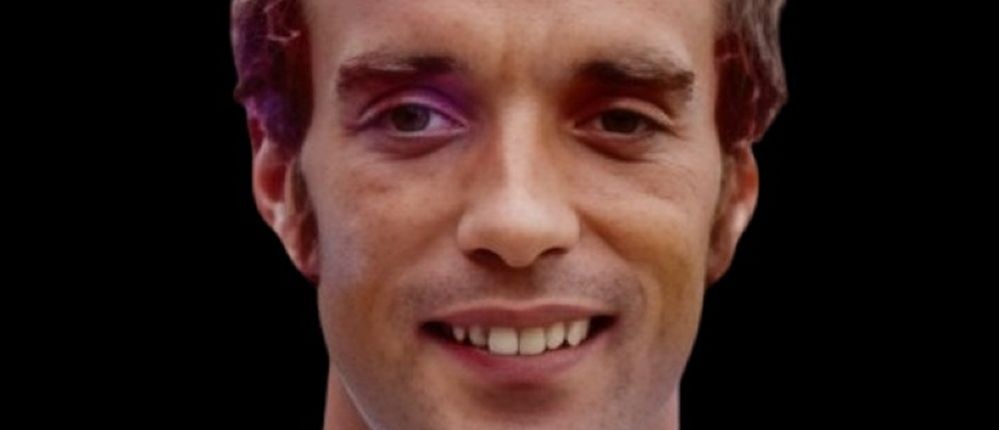
Full name: Dennis Allen Walker. Birthdate: 26 October, 1944. Birthplace: Northwich, England. Total league appearances: 221. Total international senior appearances: None.
PART ONE
Dennis Walker was raised in Northwich, a market town that sat roughly equidistant between Manchester and Liverpool, two cities that would come to define English football’s great post-war rivalry, and it was in those modest surroundings that a he first began to make people sit up and take notice.
He captained the Cheshire Schoolboys team, which was no small thing in an era when county schoolboy football was fiercely competitive and the scouts from the big clubs watched from the touchline like hawks, and by 1956, when Walker was just twelve years old and barely into his second year of secondary school, Manchester United had seen enough to bring him inside the fold.
The timing of his arrival at United was significant in ways that went far beyond his own promise. The club was still rebuilding from the devastation of the Munich air disaster in February 1958, which had killed eight first-team players and left manager Matt Busby hospitalised and heartbroken, and the response — the only sustainable response — was to pour faith and resource into young talent, to nurture rather than buy, to find the next generation in the yards and schoolyards and county grounds of the English north. Walker was part of that generation, absorbed into a youth system that had already delivered back-to-back FA Youth Cup victories in 1956 and 1957, a system built on discipline and daily practice and the quiet, grinding accumulation of skill.
He signed apprentice forms with United and immersed himself in the kind of rigorous training that shaped not just footballers but men — repetition, competition within the squad, pace work on the training pitches, the constant pressure of knowing that the boy alongside you was after the same shirt you were. He was a forward and a right-sided midfielder by instinct, quick enough to burn past defenders and sharp enough with the ball to make defences turn, and his dribbling in those early years drew admiring comments from those who watched the reserves and the youth team. By September 1960 he had begun his formal apprenticeship, and on 1 November 1961, at just seventeen years of age, he signed professional terms with the biggest club in England.
However, the road from professional contract to first-team place at Old Trafford in those years was not merely steep — it was almost vertical. Denis Law was at the club by 1962. Bobby Charlton was already a world-class figure. George Best was arriving on the scene with a swagger that made the whole football world feel it. Walker trained with these men, competed alongside them in the reserves, and pushed himself day after day, but the brutal truth of elite football is that the pack only thins when someone falters, and at Manchester United under Matt Busby, precious few of the first-choice attackers were faltering at all.
His sole senior appearance came on 20 May 1963, the final day of the First Division season, when United travelled to the City Ground to face Nottingham Forest and were beaten 3–2. Walker wore the No. 11 shirt that afternoon, one of those late-season outings that clubs occasionally gave to promising squad players when the table’s position was settled and the pressure had eased, and he stepped onto the pitch as part of a rotation rather than as a direct challenger for a regular berth. Yet what made that afternoon extraordinary — extraordinary in a way that was barely remarked upon at the time but would grow in historical significance with each passing decade — was that Dennis Walker became the first player of African descent to appear in a senior match for Manchester United. Not a footnote, and not an accident. A milestone.
Still, the mathematics of squad life at a club competing at the very top of English football were unforgiving, and Walker could not displace men of the quality arrayed ahead of him. United released him in April 1964, and he subsequently joined York City, making the kind of transition that thousands of English footballers made in that era — from the glamour and pressure of a top-flight environment to the unglamorous, end-to-end, get-stuck-in world of the lower divisions.
PART TWO
At York City, Walker did not just survive the step down — he thrived in a way that revealed what he was truly capable of when the stage was his. He joined the club in 1966 following a period out of the professional game, and in his first eight appearances as a forward he scored ten goals, a run of form so immediate and so emphatic that it must have left a few of those who’d seen him struggle to break into Manchester United’s attack wondering exactly what might have been. The Minstermen had won promotion from the Fourth Division the previous season, and Walker arrived into a club still finding its feet in the Third Division, a club that needed men who could contribute across multiple phases of play without needing a tactical blueprint to do so.
By the 1966–67 season he had shifted into a left half-back role, a change that reflected both the tactical needs of the club and Walker’s own capacity for reinvention, and it was in this deeper, more defensive position that he became a genuine fixture in the York side. The physical demands of Third and Fourth Division football in the mid-1960s were enormous — pitches that cut up badly from October onward, travel by coach to distant grounds, no sports science, no careful rotation, just a thick pair of boots and the expectation that you would go again on Saturday. Walker’s pace, which had been a weapon in his youth, now became a tool for recovery as much as attack, allowing him to track runners, close down the ball quickly, and harry opponents into mistakes. His stamina suited the era’s high-tempo, route-one style, and his versatility — comfortable as a forward, a winger, or a half-back — made him invaluable to a manager working with a tight squad and an even tighter budget.
He went on to make 154 league appearances for York City and scored 19 goals across his time at Bootham Crescent, numbers that told the story of a dependable, hardworking professional who contributed consistently without ever dominating the headlines, and those numbers only scratched the surface of what his presence meant to the club in terms of stability and reliability in a period when York were simply trying to establish themselves and avoid the drop back to the Fourth Division.
In 1968 Walker moved on, joining Cambridge United at a remarkable moment in the club’s existence. Cambridge had been elected to the Football League in 1970 as a replacement for Bradford Park Avenue, entering the Fourth Division as a newly professional outfit with a squad drawn largely from the semi-professional ranks of the Southern League, and Walker found himself in the middle of an experiment — a club learning what it meant to operate at the professional level, reliant on experienced journeymen like himself to provide structure and knowhow while the younger players found their feet. During the 1970–71 campaign, his first in the Football League with the club, he contributed as a versatile midfielder across both attacking and defensive phases, helping Cambridge navigate the transitional difficulties of a side punching into new territory and finishing mid-table in their inaugural season.
It was a different kind of challenge from anything Walker had faced before, and one that suited the particular intelligence of a player who had learned to adapt throughout his professional life. Cambridge were not going to win anything that year; survival and consolidation were the objectives, and Walker’s experience in the lower divisions — his reading of the game, his ability to cover ground and perform across multiple roles — was precisely what the club needed from him.
In 1971, however, came an adventure of an entirely different kind. Walker crossed the Atlantic to join Montreal Olympique in the North American Soccer League, the NASL, which in the early 1970s was in the midst of a noisy, colourful, and somewhat chaotic expansion drive aimed at bringing the game to an American and Canadian audience that remained largely indifferent to it. The league recruited experienced European professionals — men who had the technical background that the emerging domestic talent lacked — and Walker made ten appearances for Montreal, contributing what he could to a competition whose physical style and extraordinary travel demands made English lower-division football look almost leisurely by comparison. He did not score, and after a single season he returned to England, where the professional opportunities that had once been plentiful were now beginning to thin out.
Walker retired from competitive football by the mid-1970s, not through any single catastrophic injury but through the slow accumulation of miles and matches that wears a player down over time, particularly one who had given himself so completely to versatility, covering so much of the pitch in so many different roles across so many different clubs and competitions. He had made approximately 221 league appearances across his career, scored 23 goals, and done it all without a red card to his name, without a major disciplinary record, without the kind of controversy that might have brought him unwanted attention.
After football he went into security work, the kind of quiet, unglamorous post-playing transition that characterised the end of the road for most men of his generation, men who had given their bodies to the game at a time when the financial rewards bore no resemblance to those enjoyed by later generations.