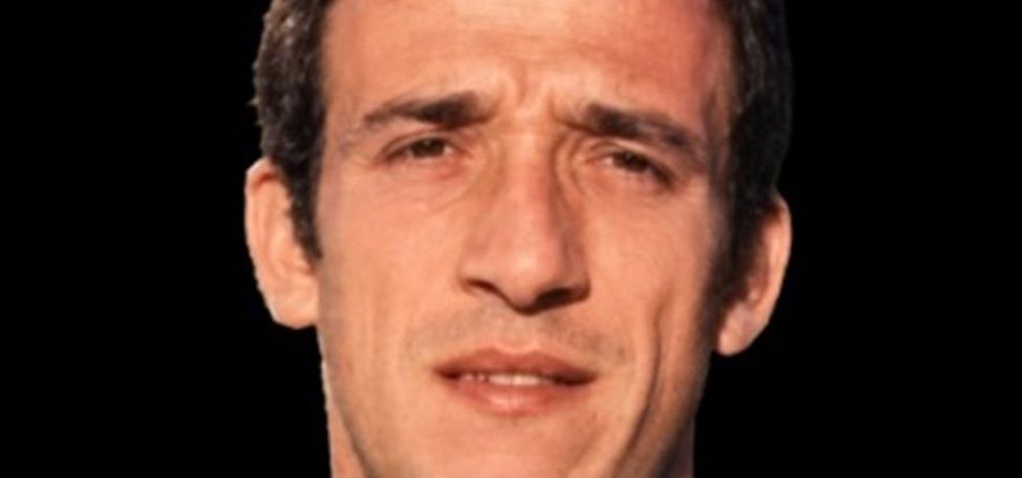
Pierluigi Cera, born 25 February 1941, Legnago, Italy.
PART ONE
Pierluigi Cera entered senior football with Hellas Verona in 1957, and when the seventeen-year-old was given his Serie A debut against AC Milan at San Siro on 4 May 1958, a 2–0 defeat gave him an early measure of the demands awaiting a young player among Italy’s best. Over the next six seasons, Cera developed as a midfielder, building the awareness and assurance in possession that would eventually allow him to operate farther back, although at this stage his immediate business was helping Verona compete in the second division. By the time he waved goodbye to the Stadio Marcantonio Bentegodi club, he had accumulated 141 league appearances and registered seven goals, figures that reflected a substantial grounding in senior football rather than a brief introduction followed by an early move elsewhere.
That grounding brought Cera to Cagliari in 1964, just as the Sardinian outfit were preparing for their first campaign in Serie A, and the move placed a twenty-three-year-old midfield dynamo in a team whose ambitions were growing considerably faster than its experience at the highest level. The Islanders needed players who could withstand the demands of unfamiliar opposition, and Cera immediately became a regular, appearing in all 34 league matches as they finished seventh in 1964–65.
There was useful progress in that placing, because a newly promoted club had established itself comfortably among teams accustomed to the division, and his contribution helped provide the continuity needed while Cagliari worked out how far they could go. Nor was his football confined entirely to Italy, for in the summer of 1967 he joined the Cagliari contingent who competed in the United Soccer Association under the name Chicago Mustangs, an unusual arrangement through which overseas clubs represented American franchises. They finished third in the Western Division, with three victories, seven draws and two defeats, before returning to the more familiar business of Italian football.
Back in Sardinia, that business became increasingly serious, and Cagliari’s second-place finish in 1968–69 established that they could challenge for the championship rather than merely trouble the stronger clubs on a good afternoon. Cera made 30 league appearances and scored twice that season, but during the following campaign his importance would be measured through a different responsibility, when an injury to Giuseppe Tomasini prompted coach Manlio Scopigno to move him into the libero position.
It was a practical response to a missing player, yet it also made use of qualities that Cera had acquired in midfield, because the man covering behind the defence could do more than clear danger if he was comfortable receiving the ball and choosing a pass. From that deeper position he could see the play developing ahead of him, protect his teammates and help turn a defensive recovery into a controlled attack, bringing a midfielder’s understanding to a job often associated chiefly with caution. As captain, he also carried responsibility for keeping the side organised, and Scopigno’s adjustment gave Cagliari a solution that strengthened their championship challenge.
PART TWO
Cera´s growing standing at club level brought an international opportunity on 22 November 1969, when he made his senior Italy debut in a 3–0 World Cup qualifying victory over East Germany, and the months that followed joined his first experience with the national side to Cagliari’s pursuit of the title. On 12 April 1970, the Sardinians beat Bari 2–0 at the Amsicora, with Luigi Riva opening the scoring before Sergio Gori added the second, and Juventus’s defeat at Lazio confirmed Cagliari as champions with two matches still to play. Riva’s goals naturally drew attention, but the championship also depended on the organisation behind him, where Cera’s contribution helped a team capable of scoring win matches without repeatedly having to repair damage at the other end. Cagliari completed their 30 league fixtures with 17 victories, 11 draws and only two defeats, collecting 45 points and conceding just 11 goals. Cera appeared in 27 of those matches, and the captain who had arrived six years earlier to help a promoted club establish itself was now a champion of Italy.
The championship was followed by selection for the 1970 World Cup in Mexico, where Cera was one of six Cagliari players in Italy’s squad alongside Enrico Albertosi, Comunardo Niccolai, Angelo Domenghini, Gori and Riva, a strong representation for a club that had only recently entered Serie A. Italy opened against Sweden on 3 June, winning 1–0 through Domenghini’s goal, and then drew 0–0 with Uruguay on 6 June and Israel on 11 June, results that took them through the group without conceding.
Cera started each match, supplying defensive cover in a side whose early progress owed much more to restraint than to a flood of goals, but the quarter-final against hosts Mexico on 14 June required a response after José Luis González put the home team ahead. Gustavo Peña’s own goal brought Italy level, and in the second half Riva scored, Gianni Rivera added another and Riva struck again to complete a 4–1 victory over the Mexicans. Having advanced with a single goal in three group matches, Italy had now shown that their attacking players could settle a game emphatically when the opening came.
That convincing win led to a much more punishing examination against West Germany at the Azteca on 17 June, when Italy took an early lead through Roberto Boninsegna and held it until Karl-Heinz Schnellinger equalised in the closing moments of normal time, forcing an additional half-hour upon players who had already given plenty. Gerd Müller then put West Germany ahead, only for Tarcisio Burgnich to level and Riva to restore Italy’s lead before the teams changed ends in extra time, and the match still refused to settle as Müller scored again and Rivera supplied the decisive reply.
Italy had edged out the Germans 4–3, with Cera playing throughout a contest in which the defence had to keep responding as the score changed around it, and their reward was a place in the final against Brazil on 21 June. Pelé headed the Brazilians in front before Boninsegna managed to equalise, leaving the teams level at the half-time break, but Gérson restored the Brazilian lead in the second half, Jairzinho extended it and Carlos Alberto completed the scoring after receiving Pelé’s pass. The 4–1 defeat ended Italy’s hopes of lifting the trophy, while Cera finished the tournament as a runner-up who had started all six matches.
After Mexico, Cera returned to Cagliari and continued playing for Italy, eventually completing 18 senior appearances without scoring, with his final international outings coming in 1972. His club football continued in Sardinia until 1973, when he left with 240 Serie A appearances and four league goals for Cagliari, and at thirty-two he teamed up with Cesena as they prepared for their first season in the top division. The transfer move gave another recently promoted club access to a player who understood the practical requirements of establishing a side at that level, and Cera returned to the libero role with the benefit of years spent reading games from both midfield and defence.
Cesena finished eleventh in 1974–75 before improving to sixth in 1975–76, a placing that earned qualification for the UEFA Cup and brought European football to the club. Cera made 29 league appearances during that successful season, remaining a substantial contributor rather than simply an experienced name in the squad, and his work helped Cesena achieve something beyond the immediate aim of survival that had accompanied their arrival in Serie A. European competition proved brief, however, with Cesena losing 3–0 away to Magdeburg before winning the return match 3–1 and going out 4–3 on aggregate, and the disappointment was followed by relegation at the end of the 1976–77 season. Cera stayed with the club in Serie B, although his league appearances became less frequent as he approached the end of his playing days, with nine in 1977–78 and one in 1978–79 before he retired in 1979, aged thirty-eight.