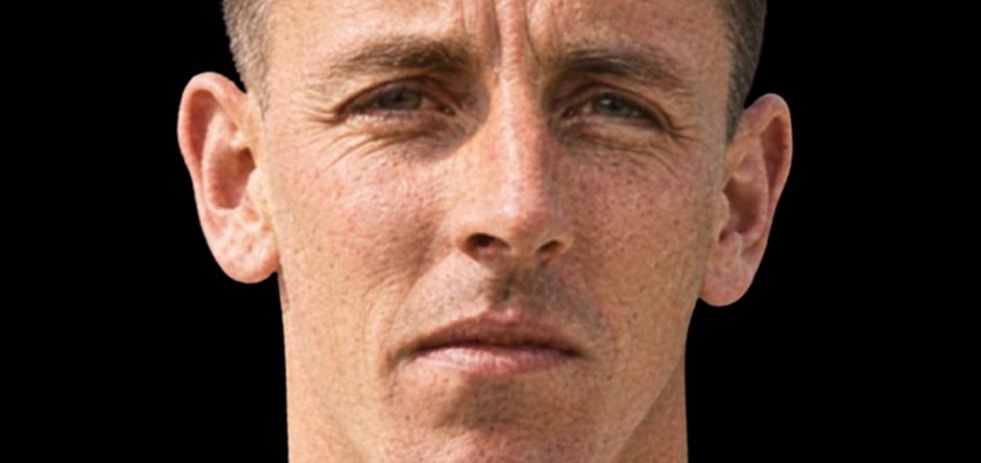
James John Stewart Imlach, 6 January 1932, Lossiemouth, Scotland.
PART ONE
Stewart Imlach began with Lossiemouth FC in the Highland League, a world of muddy pitches and short trips and crowds who knew every player by his first name. It was there that he first showed the pace and the trickery that would carry him south, a left-winger built along slight lines — he stood only five feet five inches tall — but blessed with the sort of acceleration that full-backs twice his size struggled to live with. Scouts from the English leagues had eyes even in the far north of Scotland in those days, and word filtered down that there was a quick, direct winger playing his football on the Moray coast who was worth a closer look. Bury came calling, and in May 1952, at the age of twenty, Imlach signed for the Gigg Lane club for a fee of £150, a sum that reads almost as a misprint today but which, in the transfer market of the early 1950s, represented a considerable act of faith in an unproven Highland League winger.
Bury in the early fifties were a Second Division club with ambitions of their own, and Imlach settled into the side quickly, his directness down the left flank giving the team an outlet that had previously been missing. Two seasons he spent at Gigg Lane, learning his trade against the more physical defenders of the English game, and in that time he built the sort of reputation that persuades bigger clubs to come looking. Derby County were the ones who came, and in 1954 they took him north to the Baseball Ground as part of a player-exchange deal, the kind of transaction that was common enough in an era when transfer fees were still modest and clubs preferred, where they could, to trade like for like rather than part with hard cash.
It should have been a step up. Instead it turned into one of the more bruising episodes of his early life in the game, for Derby were relegated out of the Second Division at the end of the 1954–55 season, a drop that left the club scrambling and its younger players exposed to decisions made in haste. Worse, for Imlach personally, was the housing dispute that followed: the accommodation the club had promised him was handed instead to a new signing, John Buchanan, and the winger found himself retained by Derby but on reduced wages, a small domestic betrayal that nonetheless spoke to the precarious footing on which even a first-team professional stood in that era of the maximum wage and the retain-and-transfer system. There was no arguing with a club in those days, no agent to fight your corner, no freedom of contract to threaten; a player simply absorbed the blow and looked for the next move.
That next move came in 1955, when Nottingham Forest paid £5,000 to bring him to the City Ground, and it proved to be the making of him. Forest were rebuilding under Billy Walker, a manager who understood the value of width and pace in an age when English football still leaned heavily on brute force through the middle, and Imlach’s low centre of gravity and burst of speed down the flank gave Walker’s side precisely the dimension it needed. Season followed season through the second half of the 1950s, Forest establishing themselves as a First Division outfit with genuine cup pedigree, and Imlach himself growing from a promising young wide man into one of the most feared wingers outside the game’s biggest clubs.
His form did not go unnoticed north of the border either. In 1958 he became the first Nottingham Forest player ever to be capped for Scotland, and over the course of that year he won four appearances for his country — against Hungary, against Poland, against Yugoslavia, and against France, the latter two coming at the 1958 World Cup finals in Sweden, where Scotland’s brief campaign gave Imlach the rare distinction, for a player of his modest transfer history, of testing himself on the game’s grandest stage.
It ought to have been the crowning moment of his international involvement, yet a quirk of Scottish Football Association policy meant that, prior to the 1970s, caps were awarded only for matches against the other home nations; a World Cup appearance against France counted for nothing on paper, however much it counted on the pitch, and Imlach walked away from Sweden with four full appearances for his country and not a single cap to show for any of them. It was the sort of bureaucratic slight that would, decades later, come back to haunt the football authorities, but in 1958 he simply carried on, because there was no other option available to a professional of his generation, and because there was, in any case, a domestic prize still to be won with Forest.
PART TWO
By the start of the 1958–59 season, Nottingham Forest under Billy Walker had assembled a side capable of a serious FA Cup run, built around the goalscoring of Roy Dwight and Tommy Wilson, the composure of captain Jack Burkitt, and the guile of wide men like Stewart Imlach and Billy Gray. Forest progressed through round after round with the sort of momentum that clubs either catch or never find at all, seeing off Tooting and Mitcham United after a replay in the third round and grinding out victories against increasingly stubborn opposition as the competition narrowed toward its business end.
Johnny Quigley’s solitary strike settled the semi-final against Aston Villa, and suddenly a club that had not lifted the FA Cup since before the First World War found itself back at Wembley, with a Scottish winger from a fishing town on the Moray Firth in their number eleven shirt and a great deal riding on his pace down the flank. Facing them in the final would be Luton Town, newly arrived at their own first appearance in the fixture, a meeting that would decide not only where the famous old trophy spent the following twelve months but also, in ways nobody could have predicted that spring, the shape of the rest of Imlach’s football.
The weeks before the final were, by the accounts of those who lived through them, a strange blend of anticipation and ordinary life continuing regardless; players still had jobs to think about in the close season, families to provide for on wages that bore no relation to what a Cup final appearance might now command, and Imlach himself was no different in that respect from any of his teammates, a working man who happened also to be about to play in front of a hundred thousand people at Wembley.
What the free flowing flankman could not have known, as he ran out onto that lush Wembley turf on the second of May 1959, was that the grass itself would become one of the story’s leading characters, nor that his own contribution to the opening exchanges would help set in motion a final still talked about, more than sixty years later, as one of the most dramatic in the competition’s long history. That story, though, belongs to the second half of this account, for a match containing broken legs, hobbling heroes, and a nine-man rear-guard deserves the space to be told in full, just as the second half of Imlach’s own football deserves proper room to breathe: the Cup medal, the fresh start at his conquerors’ expense, the long wind-down through the lower divisions, and the extraordinary postscript, delivered decades later by his own son, that finally put right the injustice of those uncapped appearances in Sweden.
Wembley on the second of May 1959 was watched by a hundred thousand people, with Jack Clough of Bolton the man charged with keeping order, and it did not take long for Nottingham Forest to show why their supporters had travelled south in such numbers. Imlach, operating down the left in his customary position, was directly involved in the move that produced the opening goal, and although the precise mechanics of a sixty-year-old cross are the sort of detail historians will forever argue over, what is beyond dispute is that his delivery set up Roy Dwight to put Forest ahead inside the first ten minutes.
Tommy Wilson doubled the lead only four minutes later, and by the quarter-hour mark Forest were two goals to the good against a Luton side who had arrived at Wembley for the first time in their history and now found themselves chasing a game that had barely begun. It should, on the balance of the play, have been a straightforward afternoon for Billy Walker’s men. Instead the Wembley pitch, lush from a wet spring and softened further by the weight of traffic upon it, began to take a toll that nobody had anticipated, and Forest’s players started falling to injury with an unusual and unwelcome regularity.
The cruellest blow fell in the thirty-third minute, when Roy Dwight — the very man Imlach had teed up for the opener, and, by no small coincidence of family history, a cousin of the singer later known to the world as Elton John — was carried from the pitch after breaking his leg in a tackle with Luton’s Brendan McNally. It was a sickening moment that changed the entire complexion of the contest, for Forest, already without the substitutions that the modern game takes for granted, now had to see out almost an hour of football with ten men, one of them Dwight’s replacement in spirit only, since no replacement was permitted at all.
Worse followed as the game wore on: cramp reduced full-back Bill Whare to little more than a limping passenger on the flank, leaving Forest, in practical terms, playing with barely nine fully mobile men against a Luton side who scented their chance and pressed accordingly. Dave Pacey pulled a goal back for the Hatters midway through the second half, and for a spell it seemed entirely possible that Forest’s numerical disadvantage would tell against them in the closing stages, the sort of collapse that has undone braver sides than this one when legs tire and belief drains away.
Yet Imlach and his ten fit, and barely fit, colleagues held firm, shepherding the ball into the corners, breaking up what momentum Luton could muster, and protecting a 2–1 lead that, when the final whistle finally sounded, secured the FA Cup for Nottingham Forest and delivered Imlach the single greatest afternoon of his time in the game. He had gone to Wembley a useful, well-regarded winger from a small Scottish fishing town; he left it a Cup winner, his cross for the opening goal etched into a Wembley story that would be told and retold for as long as anyone who was there, or who read of it afterward, cared to tell it.
PART THREE
In 1960, only a year after inflicting defeat upon them at Wembley, Stewart Imlach joined the very club Nottingham Forest had beaten, moving to Luton Town for a fee of £8,000. It was a switch that startled onlookers at the time, not least because it meant a Cup-winning hero taking his abilities directly to the vanquished, but the transfer window of that period cared little for narrative neatness, and Imlach simply reported for pre-season duty at Kenilworth Road as though nothing were unusual about it at all. The move, however, brought him little of the satisfaction that Nottingham Forest had provided.
Luton’s manager, Sam Bartram, arrived not long after Imlach did and set about reshaping the squad with the brisk, sometimes ruthless efficiency of a new man determined to leave his own mark, and Imlach found himself squeezed out of the side after only a handful of appearances, a Cup final winner reduced, within a single campaign, to the margins of a club he had joined with genuine promise. It was a reminder, as blunt as the housing dispute at Derby half a decade earlier, that reputation in the professional game of that period bought a player remarkably little security.
From Luton the road led onward and steadily downward through the divisions, though never without moments that kept him relevant to the clubs who took him on. Coventry City signed him in 1960, and he spent two seasons at Highfield Road helping a club then beginning the long climb that would, within a few years under Jimmy Hill, carry the Sky Blues into the top flight, though by the time that promotion finally arrived Imlach himself had already moved on.
Crystal Palace took him to south London in 1962, and he gave the Eagles two further seasons of service before, in 1964, dropping into non-league football with Dover, a short stay that in turn gave way to a spell at Chelmsford City the following year. There followed, briefly, a second engagement with Crystal Palace between 1966 and 1967, a full circle of sorts that brought a long and well-travelled spell in English football to its natural conclusion, the winger by then well into his thirties and a considerable distance, in miles and in years, from the fishing boats of Lossiemouth where his story had begun.
Retirement from playing did not mean retirement from the game itself, for Imlach possessed exactly the kind of hard-won knowledge that clubs in the following decade were eager to have passed on to a new generation. He moved into coaching, and over the next twelve years he worked with Notts County, Everton, Blackpool, and Bury, the very club that had first taken a chance on a raw twenty-year-old Highland League winger back in 1952 now, decades on, benefiting from the experience he had accumulated in between. His longest and most notable posting came at Everton, where he served first as assistant trainer and then as first-team trainer between 1969 and 1976, a period that took in the club’s title-winning campaign of 1969–70, a side built around the midfield craft of Alan Ball, Colin Harvey, and Howard Kendall, with Joe Royle leading the line, and Imlach’s contribution behind the scenes, though rarely the subject of headlines in its own right, was the kind of quiet, unglamorous labour on which champion teams are actually built.
It was, curiously, not on the pitch but through the written word that Stewart Imlach found his widest recognition, and it arrived only after his death in 2001. His son Gary, by then an established broadcaster, set out to understand the man his father had been, both the footballer thrilling Saturday crowds and the ordinary working man who, in the off-season, still needed a second trade to make ends meet, and the resulting book, My Father and Other Working Class Football Heroes, went on to win the William Hill Sports Book of the Year award and to be described, by more than one reviewer, as among the most affecting accounts of English football’s post-war working life ever committed to print.
Its success did more than honour a father’s memory. In researching it, Gary Imlach became a leading voice in a campaign to right the specific injustice that had denied his father, and others such as legendary Hibernian marksman Eddie Turnbull, any formal caps for those Scotland appearances made before the old home-nations-only rule was scrapped. Public pressure built steadily through the middle of the decade, and in 2006 the Scottish Football Association finally relented, officially awarding caps to every player affected by the outdated policy, Stewart Imlach among them, a small piece of paperwork corrected forty-eight years after the fact but no less welcome for the delay. Lossiemouth itself did not forget its own either: in 2009 a street of new houses in the town was named Imlach Way in his honour.