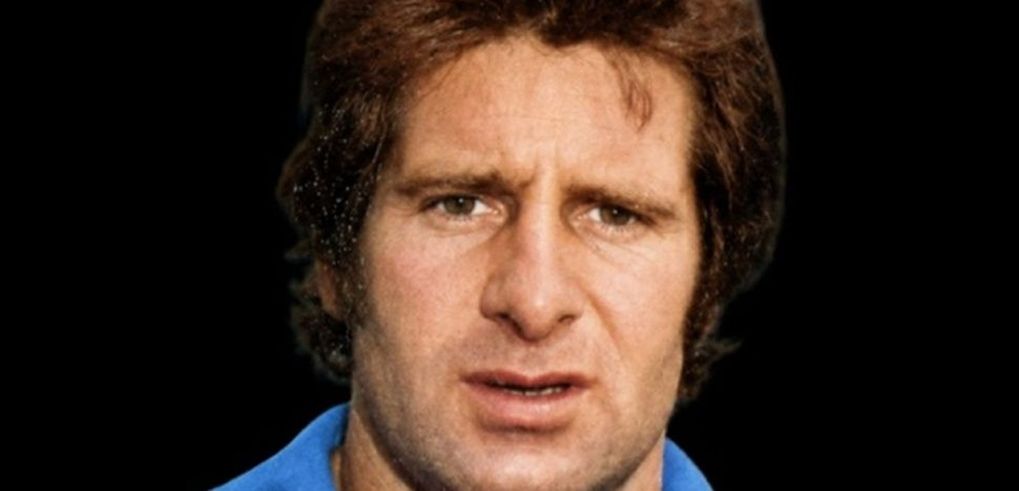
Renato Cappellini, born 9 October 1943, Soncino, Italy.
PART ONE
Renato Cappellini initiated his professional career at Internazionale and made his Serie A debut in a 2-0 win over Mantova at San Siro,on 29 September 1963. Inter were already operating at a level that allowed little room for experimentation, and the 1963–64 season developed into one of enormous domestic and European pressure, with Helenio Herrera’s team finishing level on points with Bologna before losing the championship play-off 2–0 in Rome, while in Europe they beat Real Madrid 3–1 in Vienna to claim the European Cup for the first time.
Cappellini made only four league appearances and did not score, which was hardly a failure for a teenager entering a side containing experienced internationals, but it did make the immediate problem clear: training beside leading players could improve him, though sitting behind them every Sunday could not give him the hard lessons that only competitive football supplied. Inter therefore sent him to Genoa for the 1964–65 season, and the move was sensible for club and player, because Genoa needed goals while Cappellini needed matches, mistakes, difficult afternoons and the responsibility that came when a forward could no longer wait for another man to decide the result.
His first Serie A goal arrived for Genoa in a 1–0 opening-day victory over Lazio, and although the campaign became increasingly hard, he finished it with six goals from 24 league appearances, a useful return in a side struggling near the bottom. The supplied account describes Genoa as narrowly avoiding relegation, but they did not escape: they finished sixteenth in the eighteen-club division and went down alongside Messina and Mantova, so Cappellini’s first full season was not a comfortable apprenticeship but a relegation fight that ended badly for the club, even as it strengthened the forward returning to Milan.
Inter brought him back in the summer of 1965, and he re-entered a dressing room that had just retained the European Cup and would soon reclaim the Italian championship, but the competition remained severe and during 1965–66 he played six Serie A matches, scoring twice. His contribution was limited in volume, though not meaningless, and Inter finished four points ahead of Bologna to win the Scudetto, their tenth Italian title, so at twenty-two Cappellini held a championship medal and had already experienced both ends of Serie A, from relegation with Genoa to first place with one of the finest teams in the world. That contrast mattered because it removed any easy assumptions about top-level football: at Genoa a forward might chase poor service and spend long periods trying to make something from very little, while at Inter he had to remain alert during spells out of the side and then fit immediately into Herrera’s demanding structure whenever selected.
Catenaccio has often been reduced to a lazy description of massed defence, but Herrera’s Inter depended just as much upon the speed and accuracy of the break, with Luis Suárez launching attacks, Giacinto Facchetti advancing powerfully from the left and Mazzola finding space between midfield and attack, so Cappellini’s task was not simply to stand between two centre-halves and wait for a cross. He had to hold the ball, make runs that opened the way for Mazzola and arrive quickly when possession changed hands, and he had to do it while understanding that one missed opportunity could mean another spell among the reserves. The championship season did not make him an automatic selection, but it confirmed that Herrera trusted him enough to use him, and with Joaquín Peiró moving on to Roma in 1966, the younger forward was given the chance to carry a much larger share of the work.
The 1966–67 season became Cappellini’s strongest at Inter and the most memorable of his playing life, for he scored nine goals in 21 Serie A appearances and added three in six European Cup matches, while his form brought him into the Italian national side. Domestic success appeared possible almost until the end, and Cappellini demonstrated that he could score regularly in a team where goals were shared between several attackers, with one of his better afternoons bringing two in a 3–0 victory over Foggia, yet it was Europe that placed him before the widest audience.
Inter had reached the European Cup final in 1964 and 1965, winning both, and their route through the 1966–67 competition began without any great freedom, as Torpedo Moscow were beaten only 1–0 on aggregate before Vasas of Budapest were overcome in the second round, but the quarter-final paired Herrera’s men with holders Real Madrid and demanded something sharper. At San Siro on 15 February 1967, Cappellini scored the only goal of the first leg, and in the return at the Bernabéu on 1 March he struck again as Inter won 2–0, the other goal being an Ignacio Zoco own goal, which completed a convincing 3–0 aggregate victory.
These were not decorative goals added after a tie had been settled; they were the blows that settled it, delivered against the six-time European champions by a forward who had entered the season still trying to establish himself among Inter’s leading attackers. Herrera’s side then drew twice with CSKA Red Flag of Sofia in the semi-final, 1–1 in Milan and 1–1 in Bulgaria, leaving a play-off in Bologna on 3 May, and Cappellini once more scored the only goal, sending Inter into their third European Cup final in four seasons. Inter’s own archive records his complete spell at 65 appearances and 22 goals in all competitions, including three goals from six European matches, and all three came during that exacting run to Lisbon. Inter’s official player archive
International recognition arrived in the middle of that European sequence, and Cappellini made his Italy debut against Cyprus in a European Championship qualifier at the GSP Stadium in Nicosia on 22 March 1967. Italy won 2–0 through goals from Gigi Riva and Sandro Mazzola, and although Cappellini did not score, his presence in the starting side demonstrated how far he had advanced since those four quiet league appearances in 1963–64. Five days later he was back among the squad for a friendly against Portugal at Rome’s Stadio Olimpico, where the visitors carried the powerful attraction of Eusébio, the outstanding player of the 1966 World Cup and a forward already familiar to Inter after Benfica’s defeat in the 1965 European Cup final.
Eusébio converted a penalty after 24 minutes, and Cappellini entered in place of Riva during the second half, with Italy still behind before a crowd recorded at around 80,000. In the 74th minute he equalised, giving Italy a 1–1 draw and himself a goal in only his second international appearance, yet that proved to be his last match in blue, a remarkably brief passage that left him with the uncommon return of one goal from two caps. Italy had abundant attacking choices and the competition would grow still stronger as Ferruccio Valcareggi developed the side that won the 1968 European Championship, while Cappellini’s club opportunities also became less secure after 1967, but his international record remained neat and significant: a winning debut abroad, followed by an equaliser against Portugal in Rome.
PART TWO
The European Cup final on 25 May 1967 offered Renato Cappellini the greatest stage of all, though it also gave Inter one of their hardest defeats, because Celtic’s pace, width and ceaseless attacking wore down Herrera’s side at the Estádio Nacional in Lisbon. Cappellini started at centre-forward and made an immediate contribution, running into the area before Jim Craig challenged him and conceded a penalty, which Mazzola converted after just seven minutes, but the early lead encouraged Inter to retreat and left Cappellini isolated as Celtic drove forward. Following the break, Tommy Gemmell equalised in the 63rd minute and Stevie Chalmers scored with only six minutes remaining on the clock, giving Jock Stein’s side a 2–1 win and making Celtic the first British club to win the European Cup, while Inter were left with the bitter knowledge that a campaign promising both Italian and European honours had collapsed in its closing weeks. Cappellini had nevertheless been essential to their progress, scoring against Real Madrid in each quarter-final leg and then deciding the semi-final play-off.
Four days after Lisbon came another damaging result, as Inter were beaten 1–0 at Mantova on the last day of the Serie A season and Juventus won 2–1 against Lazio, allowing the Turin side to take the championship by a single point, so the team that had stood close to two major prizes finished with neither. Such endings can alter a club’s mood quickly, and although Cappellini remained at Inter in 1967–68 and produced seven goals from 19 league matches, the great Herrera side was beginning to loosen. They finished fifth in Serie A, exited the Coppa Italia during the final group stage and had no European Cup campaign to provide the sharp nights on which Cappellini had made his name, while Herrera’s long reign ended in 1968. Cappellini left as well, moving to Varese after 50 league appearances and 18 goals for Inter, a respectable total made more impressive by the irregular nature of many of those opportunities.
Varese had finished seventh in Serie A the previous year and possessed enough organisation to trouble stronger opponents, but their margin for error remained narrow and Cappellini joined a squad that relied upon discipline more than attacking abundance. He played 25 league matches and scored twice, and while that return fell below his Inter rate, his work could not be judged by goals alone, because a forward in a cautious side was required to contest difficult passes, bring midfielders into play and keep opposing defenders occupied during matches in which clear chances came rarely.
The club finished tenth in the sixteen-team division and their record was nine wins, ten draws and eleven defeats, so they remained comfortably above relegated Atalanta and Pisa without threatening the leading positions. The season therefore served as a bridge between two much longer spells, yet it also showed the limits of describing every transfer as either a rise or a fall, for Cappellini had left a famous club but acquired the week-to-week involvement that Inter could not promise, and his performances were enough to interest Roma.
That move in the summer of 1969 brought a familiar manager back into his working life, because Herrera had taken charge in the capital during 1968 and was trying to lift a club that possessed enormous support but had spent much of the decade away from the championship race. Roma had won the Coppa Italia in 1968–69, although the league campaign produced only eighth place, and Herrera wanted a forward he understood, someone capable of carrying out detailed instructions without requiring the whole attack to be built around him. Cappellini fitted that requirement, and at Roma he found the continuity that had generally escaped him in Milan.
PART THREE
Renato Cappellini´s first appearance for Roma came in the Anglo-Italian League Cup against Swindon Town on 27 August 1969, when the Italian Cup holders met the English League Cup winners over two legs, and Roma won the opening match 2–1 before losing 4–0 in England. It was an uncomfortable beginning to a new period, but Cappellini soon settled into the league side, making 26 Serie A appearances and scoring four goals in 1969–70, with strikes that included equalisers in 2–2 at Fiorentina on 14 December and 1–1 at Bologna on 4 January.
Roma finished eleventh, only three points above the relegation places, and Herrera’s reputation could not disguise the ordinary nature of the campaign, although the team included players of real quality such as Fabio Capello, Sergio Santarini, Francesco Scaratti and captain Franco Cordova. Cappellini’s importance increased in 1970–71, when he scored six times in 20 league matches, his best seasonal return for Roma, but the side still managed only sixth place and remained well short of Inter, Milan and champions Juventus. He was now playing more consistently than during much of his time at Inter, and his value rested in a combination of physical presence and movement rather than sheer scoring volume, because he could operate centrally, move into the channels or make space for companions arriving from deeper positions.
Roma’s football under Herrera did not always match the extravagant expectations created by his arrival, but Cappellini understood the manager’s requirements and he rarely looked uncomfortable within them, while the club´s loyal supporters came to recognise a central attacker who worked honestly and could produce goals in sudden clusters. Besides, the capital brought a different type of pressure from Milan: Inter expected championships because they had recently won them, whereas Roma’s public carried the frustration of a club with great size and irregular achievement, so every promising spell produced noisy hope and every poor result brought an equally strong reaction.
Cappellini made 21 league appearances and scored five goals in 1971–72, while Roma again finished seventh, but the campaign acquired a better ending through the Anglo-Italian Cup, a competition bringing together clubs from the two countries in matches that were sometimes untidy, often fiercely contested and rarely dull. Roma advanced through the group stage and reached the final against Blackpool, the previous year’s winners, at the Stadio Olimpico on 23 June 1972, and for much of the first half the English side resisted before Cappellini broke through shortly after the interval.
His goal in the 49th minute gave Roma the lead, Scaratti added the second in the 75th and Gianfranco Zigoni scored the third in the 86th, while Blackpool’s reply could not prevent a 3–1 home victory. The names of Cappellini, Scaratti and Zigoni remain attached to the occasion because each provided one of the three goals, but the first changed the contest, relieving the tension around the Olimpico and forcing Blackpool to take greater risks, and it gave Cappellini a trophy-clinching moment five years after his goals had carried Inter towards the European Cup final. Roma’s own account rightly places him at the front of the story, and although the Anglo-Italian Cup did not carry the standing of a Scudetto or a major UEFA competition, it mattered to a club that had waited years for a visible success before its own crowd. AS Roma’s account of the 1972 final
The following season brought another five league goals, this time from 17 appearances, but Roma’s position deteriorated badly and they finished eleventh in 1972–73, only three points above the relegation line. Herrera left in April 1973 after nearly five years in charge, and the change removed the manager who knew Cappellini better than any other, having first introduced him at Inter and then brought him to Rome, although the forward remained useful enough to contribute three goals in 13 league matches during 1973–74.
The campaign was unsettled, with Tonino Trebiciani beginning as coach before Nils Liedholm arrived in December 1973, and Cappellini’s final appearance came against Lanerossi Vicenza on 7 January 1974, after which he slipped from the first-team picture. Roma finished eighth, and as Liedholm began reshaping the side around a more patient use of the ball, the thirty-year-old forward’s five-season spell drew to a close. His league figures for Roma were 97 appearances and 23 goals, not the 89 and 21 listed in the supplied account, and the seasonal breakdown is clear: 26 matches and four goals in 1969–70, 20 and six in 1970–71, 21 and five in 1971–72, 17 and five in 1972–73, then 13 and three in 1973–74. He also played extensively outside Serie A, taking his total for the club beyond one hundred competitive matches, and his work included that defining goal against Blackpool. Roma player record and seasonal statistics
Como provided the next opening in the summer of 1974, and the move into Serie B might have looked like a quiet withdrawal after eleven seasons around the top flight, but Cappellini instead became an important part of a promotion side. At thirty, he possessed the experience to manage a long second-division campaign in which matches were tight, pitches could be difficult and older forwards had to conserve their effort without disappearing from the game, and he responded with nine goals from 29 league appearances. Como finished second behind Perugia in 1974–75 and earned promotion to Serie A, ending an absence from the top division that stretched back to 1953, while Cappellini’s goals gave the side an assured point of attack.
This was a different achievement from winning the championship with Inter in 1966, because Como did not possess a squad filled with international names and their success depended upon steady accumulation over 38 matches, yet Cappellini’s part was more central than it had been in that Scudetto. He had moved down a division and helped his new club move up, and the promotion allowed him one more Serie A season at an age when many forwards of that period had already stopped. Como’s return in 1975–76 proved difficult, as the team won only five of 30 league matches and finished fifteenth, one place above bottom club Cagliari but still inside the three relegation positions, although Cappellini scored four goals from 19 appearances. He also made four Coppa Italia appearances and scored once, taking his Como total to 52 competitive matches and 14 goals, while his league record across the two seasons stood at 48 and 13. Museo del Como statistics
Relegation brought the end of Cappellini’s Italian playing years, but not quite the end of his time on the field, because in 1976 he crossed the border to join Chiasso in Switzerland’s Nationalliga B. The move was geographically modest compared with the long foreign transfers made by later generations, since Chiasso stands close to the Italian frontier, yet the football presented a change after thirteen years spent within the Serie A and Serie B structure. At thirty-three he was no longer being asked to chase a place at Inter or satisfy the restless public in Rome, and his role naturally carried more emphasis on experience, positioning and the ability to guide those around him, although he still played 17 league matches. He stopped playing in 1977, leaving a league total of 261 appearances and 64 goals across Inter, Genoa, Varese, Roma, Como and Chiasso.