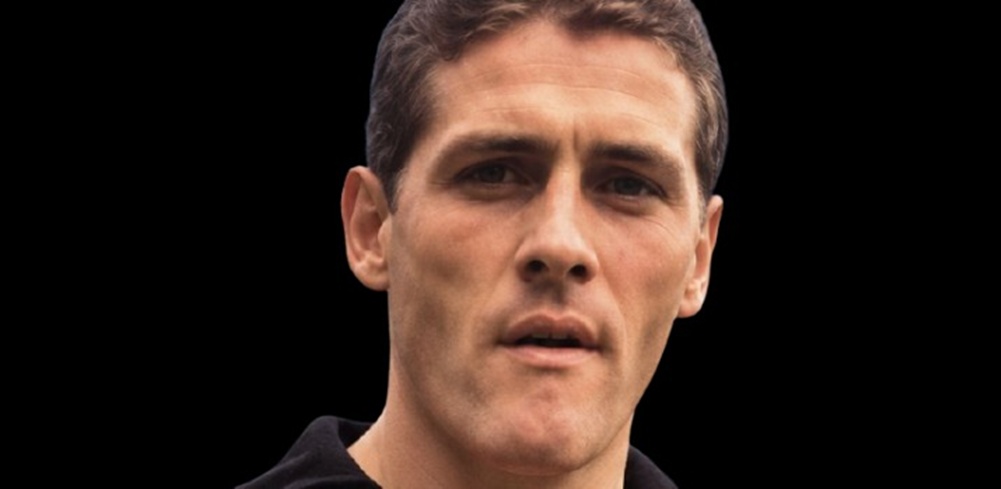
Luigi Radice, born 15 January 1935, Cesano Maderno, Italy.
PART ONE
Luigi Radice entered Milan’s youth system during the early 1950s and emerged at a time when the first team was filled with established internationals and gifted foreign players, so the path from the junior ranks to Serie A was anything but straightforward. Milan had won the championship in 1950–51 and would do so again in 1954–55, while the presence of men such as Cesare Maldini, Nils Liedholm, Juan Alberto Schiaffino, Gunnar Nordahl and Lorenzo Buffon meant that a young defender had to show patience as well as ability. Radice finally made his Serie A debut on 25 March 1956, when Milan drew 0–0 away to SPAL in Ferrara, and although he had taken the first important step, regular football remained difficult to find because the club expected to challenge for major honours every season and could not easily provide time for a developing full-back.
He made only 19 competitive appearances across his first three campaigns, and therefore his contribution to Milan’s Serie A championships in 1956–57 and 1958–59 came from the edge of the side rather than from a settled place within it, but those years still allowed him to train beside outstanding players and understand the demands placed upon a club expected to win. Radice was not especially tall and did not rely upon grace or clever touches to conceal defensive weaknesses, yet he was quick, strong in the challenge and willing to attack from left-back, attributes that would later become central to the teams he coached.
Playing every week mattered more than remaining in comfortable surroundings, so Radice left Milan for Triestina in 1959 and the left fullback amassed 31 league appearances during the 1959–60 season, gaining the uninterrupted senior experience he had been unable to collect at San Siro. Triestina were competing in Serie B after relegation from the top division, and the level may have been lower than Milan’s but the responsibility was greater, because Radice could no longer train as a promising reserve and then wait to learn whether he would be selected; he had to perform consistently, deal with experienced opponents and recover quickly enough to play again seven days later.
Milan briefly brought him back in 1960, although he appeared only twice before moving to Padova, where 24 Serie A appearances during 1960–61 strengthened his reputation and proved that he belonged in the top division. Padova, managed by Nereo Rocco until the summer of 1961, were a hard, tactically disciplined side and represented an ideal setting for a defender who valued organisation without being frightened of physical confrontation, while Rocco’s influence would soon become even more important because the coach left for Milan and Radice returned there at almost the same time. The young player who had struggled to find room during his first spell was now 26, hardened by two full seasons elsewhere and ready to take a proper place in the side, and that difference was quickly apparent as he made 28 Serie A appearances during 1961–62, scoring his only league goal for Milan and helping the club win another championship.
That 1961–62 title was secured with Milan finishing five points ahead of Inter, and Radice’s regular involvement meant far more than the medals he had collected while playing only occasionally earlier in the decade, for he was now a functioning part of Rocco’s team and had earned international recognition as well. Italy selected him five times during 1962, and two of those appearances came at the World Cup in Chile, where he played at left-back in the opening 0–0 draw against West Germany on 31 May before keeping his place for the infamous meeting with the host nation two days later. The match against Chile became known as the Battle of Santiago because of the repeated fouls, punches, confrontations and police interventions, and Italy were reduced to nine men as Giorgio Ferrini and Mario David were sent off before Jaime Ramírez and Jorge Toro scored in a 2–0 Chilean victory.
Radice survived the disorder and completed the match, but Italy’s subsequent 3–0 win over Switzerland was not enough to prevent elimination in the first round, bringing an unhappy end to a tournament that had started with genuine hope. Still, his place in the squad confirmed how far he had travelled since being unable to establish himself at Milan, and the experience of facing international forwards in a deeply hostile stadium added another layer to a football education built upon resilience. His five senior caps formed a modest total, though the competition for defensive positions in Italy was fierce, and his selection for two World Cup matches showed that he had reached a level far beyond that of a useful club reserve.
Milan followed their domestic championship by attacking Europe in 1962–63, and Luigi Radice formed part of the squad that progressed past Union Luxembourg, Ipswich Town, Galatasaray and Dundee before meeting Benfica at Wembley on 22 May 1963. Benfica were the holders and Eusébio gave them an early lead, but two second-half goals from José Altafini turned the match and allowed captain Cesare Maldini to lift the European Cup after a 2–1 victory, making Milan the first Italian club to win the competition. Radice did not play in the final, yet his appearances during the campaign and his work across the season made him part of the group that achieved it, and by then he had collected three Serie A titles as well as European football’s greatest club prize.
PART TWO
Eventually, Luigi Radice´s body was beginning to resist the demands placed upon it, and repeated trouble with his right knee required several operations before finally cutting short his playing days in 1965, when he was only 30. In all, he made 95 competitive appearances for Milan, including 75 in Serie A, and scored once, while his wider league record included the spells with Triestina and Padova and amounted to 128 appearances. The numbers were respectable rather than enormous, but the experience packed inside them was considerable, because he had played under pressure at Milan, learned the value of regular responsibility elsewhere, appeared in a World Cup and trained within sides built by leading Italian coaches. Unable to continue on the pitch, Radice immediately began considering how players should be organised from the touchline.
Monza gave him his opening in 1966, and the appointment made practical sense because the club was close to his birthplace and allowed a young coach to begin without the crushing attention that surrounded Milan, although Radice did not treat it as a quiet apprenticeship. During his first season he led Monza to the 1966–67 Serie C Girone A championship and promotion to Serie B, establishing the direct, highly organised approach that would become increasingly recognisable as his teams played with aggression but also with tactical shape.
He remained until 1968, spent the 1968–69 season with Treviso and then returned to Monza for two more years, gradually developing ideas that went beyond the fixed man-marking common in Italian football. Radice believed defenders had to understand space as well as their direct opponents, midfielders needed to press instead of retreating automatically, and attackers had to participate when possession was lost, so his system blended zonal principles with the familiar security of a spare defender and became known as zona mista, or the mixed zone. The ideas were not revolutionary merely for the pleasure of being different, because Radice wanted movement to serve a clear purpose, and he demanded fierce physical preparation so that his players could maintain pressure rather than talk about it. Cesena appointed him in 1971, and after a season of construction he guided the Romagna club to third place in Serie B in 1972–73, earning the first promotion to Serie A in Cesena’s history and showing that his success with Monza had not been a fortunate accident.
Radice did not lead Cesena into their first top-flight campaign because Fiorentina offered him the chance to manage in Serie A during 1973–74, and his side finished sixth, a sound placing but not enough to turn the arrangement into a long stay. After a brief period away from management he took charge of Cagliari during 1974–75, inheriting a club no longer capable of recreating the championship-winning force built around Gigi Riva in 1969–70, and the experience lasted only part of the season. Torino nevertheless saw something that the short appointment could not hide, and in the summer of 1975 the Turin club selected Radice to take over from Edmondo Fabbri, placing him in charge of an institution still defined by the Superga air disaster of 1949.
The Maroons had won the Coppa Italia in 1968 and 1971 and remained a proud, well-supported club, but the league championship had become an impossible-looking target, for the Grande Torino side had been champions five seasons in succession before the crash and no later team had managed to regain the title. Radice arrived at Torino without empty promises and built around the exceptional scoring partnership of Paolo Pulici and Francesco Graziani, with captain Claudio Sala creating from the right, Renato Zaccarelli bringing intelligence to midfield and Roberto Salvadori, Roberto Mozzini and goalkeeper Luciano Castellini supplying strength behind them. Radice´s players pressed high, marked space, attacked quickly and ran relentlessly, while the old idea that Italian sides had to protect themselves first was turned around, because Torino defended by forcing opponents into hurried decisions.
PART THREE
The 1975–76 title contest developed into a direct fight with Juventus, and the rivalry carried all the weight of Turin’s divided football identity, but Luigi Radice’s side refused to be intimidated and won 18 of their 30 league matches. Pulici notched up 21 goals and finished as Serie A’s leading marksman, Graziani added 15, and their total of 36 accounted for more than half of Torino’s 49 league goals, yet the side was far more than two forwards because Claudio Sala’s delivery and Zaccarelli’s movement allowed the entire formation to operate at a pace opponents found difficult to control. Torino completed the season with 45 points collected, two ahead of Juventus, and the championship was secured despite a 1–0 defeat away to Cesena on the final day because Juventus also lost, going down 1–0 at Perugia.
For the first time since 1948–49, Torino were champions of Italy, and Radice had achieved in his first season what every coach since the Superga tragedy had failed to manage. He received the Seminatore d’Oro as Serie A’s leading coach, though his greatest reward was found in the response of Torino supporters, who had lived for 27 years with memories of the lost team and could finally celebrate champions of their own generation. This was not an imitation of the Grande Torino, nor could it have been, but it was a fast, forceful and modern side created in Radice’s image, and its success placed him among the leading Italian coaches of the 1970s.
Retaining the title in 1976–77 proved agonisingly difficult because Torino were even stronger, collecting 50 points and losing only once in 30 matches, but Juventus gathered 51 and won the championship by a single point, leaving Radice with one of the finest runners-up records Serie A had seen. Torino remained a leading side over the following seasons, finishing seventh in 1977–78 and fifth in 1978–79, but the football was interrupted by a far more serious event on 17 April 1979 when Radice was involved in a car accident on the Autostrada dei Fiori near Imperia. Former Italy international Paolo Barison, who was travelling with him, was killed, as was a 56-year-old man in another vehicle, while Radice suffered severe injuries and required hospital treatment.
He survived and returned to his work, yet an experience of that kind could not simply be left beside the road, and the strain added to an increasingly difficult period at Torino. During the 1979–80 campaign his relationship with the club deteriorated, and in February 1980 his first spell ended after almost five seasons, one championship and the near miss of 1977. Radice moved to Bologna for 1980–81 and faced an unusual task because the club began the season with a five-point deduction arising from the Totonero betting scandal, but his players responded impressively and finished seventh, a placing that would have been considerably higher without the penalty and which again showed his ability to create unity under pressure.
Milan called him home in the summer of 1981, although this was no return to the powerful club he had represented as a player, because the Rossoneri had only just returned from Serie B after being relegated as punishment for their involvement in the same betting scandal. Radice was expected to steady them in Serie A, but results were poor, the side became trapped near the bottom and he was replaced by Italo Galbiati midway through a season that ended in relegation on the field. It was a painful failure at a club closely tied to his name, yet he did not remain unemployed for long and took over Bari in Serie B during 1982–83, replacing Enrico Catuzzi for the final 13 matches before leaving at the end of the campaign.
Inter appointed him for 1983–84, and the move across Milan brought a fourth-place Serie A finish and UEFA Cup qualification, but once again the relationship lasted only one season. Torino then invited him back in 1984, and he instantly demonstrated that the connection still had force because his team finished second in 1984–85, four points behind Osvaldo Bagnoli’s remarkable Verona side and above Inter, Sampdoria, Milan and Juventus. He could not repeat the championship of 1976, but he had restored Torino to the front of the competition nine years later with a different group of players and in a league strengthened by leading foreign imports.
Radice remained with Torino until 1989, guiding the club through five further seasons but finding it increasingly difficult to maintain the early standards as financial and organisational problems grew, and the second spell eventually ended with relegation to Serie B. Roma appointed him for 1989–90 and finished sixth, earning European qualification, but another single-season stay followed before he returned to Bologna for 1990–91, where the campaign ended in relegation. Fiorentina brought him back in 1991, nearly two decades after his first spell in Florence, and during 1992–93 his side began brightly, scoring freely and standing second around the turn of the year, but a damaging dispute with chairman Vittorio Cecchi Gori brought Radice’s dismissal.
The decision produced disastrous consequences for the club, which gathered only 15 points from its remaining 21 games and fell to 16th place, suffering relegation to Serie B despite possessing players of considerable quality. Radice briefly returned to Cagliari in 1993, managed Genoa in 1995–96 and then completed the circle by going back to Monza, where his work had begun 30 years earlier. In 1996–97 he helped the club win promotion to Serie B through the play-offs, providing a fitting final achievement before stepping away in 1998.