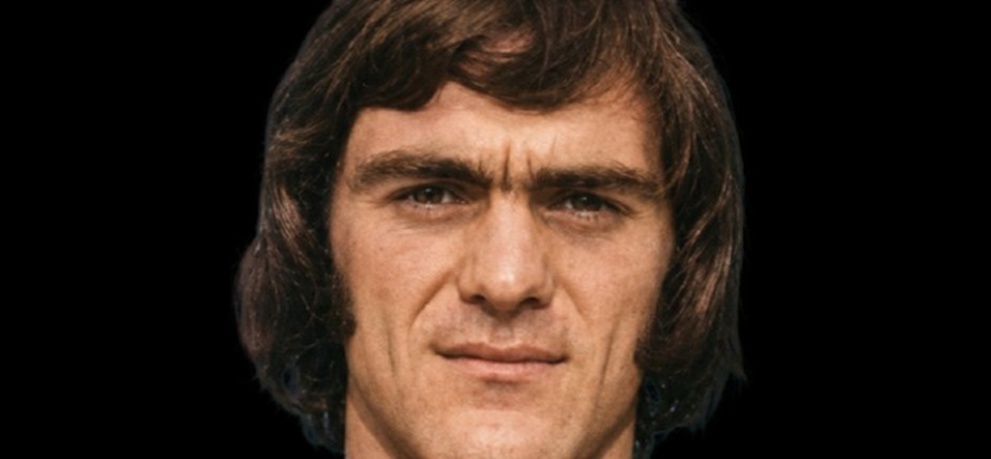
Giuseppe Sabadini, born 26 March, 1949, Sagrado, Italy.
PART ONE
Giuseppe Sabadini joined Sampdoria’s youth system as a boy, coming of age in Genoa during the mid-1960s when Serie A was already the most tactically sophisticated league in the world and the pressure on young players to earn their place was fierce. He did not shrink from it. Instead, he pressed forward, and on 15 May 1966 he made his senior debut in a home match against Napoli. Sampdoria won 1–0, and though Sabadini’s contribution was modest that afternoon, the significance of the occasion was enormous. A teenager from a small town in Friuli had walked out onto a Serie A pitch and held his own, and that was just the beginning.
At that point, Sabadini was being used as a winger, deployed wide to use his pace and his ability to get past full-backs. He showed enough in those early appearances to suggest a promising future in that role, but it was under coach Fulvio Bernardini that something more important happened. Bernardini, one of the most thoughtful managers in Italian football’s post-war history, watched Sabadini carefully and came to a conclusion that would shape the player’s entire professional life: this young man was better suited to defending than to attacking. His speed was there alright, but it was his tenacity, his reading of the game, and his capacity to track opponents and shut them down that truly set him apart. And so, with the wisdom of a manager who understood his players better than they understood themselves, Bernardini moved him to right-back, and Sabadini took to the position like he had always been there.
The transition was not without its challenges, because going from winger to full-back requires an entirely different way of thinking about the game — you are no longer running at people but running alongside them, shepherding them away from danger rather than creating it. But Sabadini was bright enough to make the adjustment and disciplined enough to stick with it, and over six seasons at Sampdoria between 1965 and 1971, he accumulated 104 appearances across all competitions and contributed 5 goals, a respectable tally for a defender in that era. His best season in terms of appearances came in 1968–69, when he played 30 matches and chipped in with a goal, helping the club finish twelfth in the table — no great shakes in terms of position, but solid evidence that Sampdoria, often fighting against relegation during this period, could at least count on their right-back to show up and deliver week after week.
What he was building at Sampdoria, more than anything else, was a reputation. Not a glamorous one — again, that was never really his style — but a solid, dependable, increasingly respected one. Players and coaches throughout Serie A began to notice that this young man from Friuli was someone you wanted beside you in a back four, because he didn’t panic, he didn’t grandstand, and he didn’t let his man get past him without making him work every single inch for it. That reputation, nurtured through six hard seasons in Genoa, would open the door to one of the biggest moves of his life.
In the summer of 1971, Giuseppe Sabadini left Sampdoria and joined AC Milan. It was, by any measure, a leap into a different world. Milan were not merely a big club; they were one of the most storied institutions in European football, with a history stretching back to 1899, a fanatical support base, a trophy cabinet that would make most nations envious, and a culture of expectation that brooked no mediocrity. To arrive there as a right-back from a mid-table Genoese club was to walk into a dressing room where demands were immense and competition for places was relentless. Sabadini walked in anyway, and over the next seven years, he made himself indispensable.
Those seven seasons — from 1971 to 1978 — represent the summit of his playing career, and the statistics tell only part of the story. He made 244 appearances across all competitions for Milan and scored 17 goals, extraordinary figures for a defender, and he did so while functioning as a key cog in one of the most accomplished back lines in Italian football at the time. He formed defensive partnerships with Roberto Rosato and the West German Karl-Heinz Schnellinger, both formidable players in their own right, and together they provided Milan with a structural backbone that could absorb pressure and transition quickly into attack. Schnellinger, a World Cup finalist with West Germany in 1966, brought tremendous experience and composure to the back line, and Sabadini learned from playing alongside him, absorbing lessons about positioning and game management that would shape his later coaching philosophy.
But it was the trophies that truly define this period, and Sabadini was there for all of them. In 1972, Milan won the Coppa Italia, with Sabadini contributing throughout the campaign as a reliable presence at right-back. Then came 1973 and the crown jewel of his time at the club: the UEFA Cup Winners’ Cup, won with a 1–0 victory over Leeds United in the final. Leeds, managed by Don Revie and packed with formidable names like Billy Bremner, Norman Hunter, and Johnny Giles, were considered one of the finest club sides in Europe at the time, and beating them in a European final was no small thing. Sabadini played his part in keeping a clean sheet that night, and the victory cemented Milan’s status as a continental force while giving Sabadini his first — and only — European medal. He would add a second Coppa Italia in 1977, again featuring throughout the run-in, and his consistency across both cup runs spoke to a player who was never content merely to collect a winner’s medal from the stands.
Perhaps the most telling moment of his Milan tenure came during the 1972–73 season, when he scored his first Serie A goal for the club in a Derby della Madonnina — the ferocious cross-city clash between Milan and city rivals Internazionale. There are goals you score in pre-season friendlies, goals you score against sides already relegated, and then there are goals you score in a derby. The last kind carries weight that the others never will, and for a defender to step forward and put the ball in the net in that most pressurised of atmospheres said something significant about Sabadini’s character. He was not a man who shied from the occasion; he was a man who rose to it.
In European competition beyond the Cup Winners’ Cup, he was also a steady presence. Milan’s run in the UEFA Cup in 1971–72 saw Sabadini’s defensive reliability help the club navigate challenging rounds, and while the campaign ultimately gave way to domestic priorities, it further established his credentials as a player capable of performing on the biggest stages in club football. By the mid-1970s, as Milan’s fortunes fluctuated in Serie A — the league table was never quite as kind to them as the cup competitions — Sabadini had become one of the senior figures in the squad, a point of reference for younger players and a symbol of the kind of professionalism the club prided itself upon.
PART TWO
It would have been easy, in the crush of talent that Serie A produced during the early 1970s, for a right-back at even a club as large as Milan to be overlooked by the national selectors. Italy had extraordinary competition at full-back during that era, with Giacinto Facchetti of Internazionale standing as perhaps the finest left-back in the world and a collection of equally accomplished defenders competing for every position at the back. Sabadini, however, had made himself impossible to ignore, and his progression through Italy’s youth teams — five caps for the under-21 side between 1969 and 1971, plus five further appearances for the under-23 squad — set the stage for the recognition that followed.
He made his debut for Italy’s under-21 team on 16 April 1969, a 1–0 friendly win over Romania in Udine, and the significance of playing in his home region was not lost on him. His subsequent under-23 appearances included a 1–0 victory over Sweden on 10 June 1971, and while these results were modest, Sabadini’s performances in them were anything but. By the time he earned his first senior cap in 1973, he had served a thorough apprenticeship at every level of the international game and arrived at the senior team with his eyes open and his technique sharp.
That senior debut came on 31 March 1973, at the Stadio Olimpico in Rome, in a World Cup qualifier against Luxembourg. Italy won 5–0, and Sabadini played all 90 minutes, contributing to a clean sheet that felt almost inevitable given the disparity in quality between the two sides. But if Luxembourg provided limited opposition, the tests that followed were considerably sterner. On 9 June 1973, Italy defeated Brazil 2–0 in Rome — Brazil, who at that time had just won the World Cup three times and were widely regarded as the finest footballing nation on the planet — and Sabadini completed the full match, helping to keep clean sheet against forward lines of extraordinary quality. Five days later, on 14 June, he featured in a 2–0 win over England at the Stadio Olimpico, again playing the full 90 minutes and again contributing to a shutout. Two wins, two clean sheets, two commanding performances against some of the most formidable opposition in world football — it was a statement of intent from a player who had waited patiently for his chance and was determined not to waste it.
His fourth and final cap came on 26 February 1974, a 0–0 draw against West Germany in Rome. He played 72 minutes before being substituted, and though Italy did not win that night, the performance was creditable enough. The difficulty — and this is a truth that characterises many fine players of this era — was that the competition for places was simply too intense, with Facchetti and others of comparable quality always present. Sabadini was named in Italy’s squad for the 1974 FIFA World Cup in West Germany, a genuine honour that confirmed his status as one of the better defenders in the country, but he did not appear in any of the tournament matches as Italy were eliminated in the first round. The disappointment must have been considerable, but the recognition of having been selected — of having been judged worthy of inclusion among the best footballers Italy could assemble — was a validation that would endure long after the tournament itself was forgotten.
When Sabadini left Milan in 1978, he could have coasted. He was 29 years old, with a European medal, two Coppa Italia winners’ medals, and over 200 Serie A appearances to his name. Any number of clubs would have taken him on as a prestigious signing, content to let his reputation do the work. Instead, he joined US Catanzaro, a club from Calabria in the deep south of Italy, and proceeded to give them five seasons of consistent, dependable football at the highest level.
The numbers are quietly remarkable. Across five seasons at Catanzaro between 1978 and 1983, the defensive cornerstone amassed 136 appearances and scored 2 goals, and he did so through a period in which the club maintained their Serie A status before finally succumbing to relegation in 1983. For a region that had historically struggled to keep top-flight football, Sabadini’s presence at the back — his experience, his leadership, and his ability to organise a defence and keep it disciplined through difficult matches — was genuinely valuable. The club would eventually induct him into their Hall of Fame, recognising his 111 appearances and his contribution to their Serie A promotion push during the late 1970s, a tribute that speaks to the esteem in which he was held long after his boots had been hung up.
Building upon his contribution to Catanzaro, Sabadini then spent the final years of his playing career moving between clubs in a measured, professional fashion. In 1983 he moved to Calcio Catania, where he made 21 appearances during the 1983–84 Serie A campaign without scoring, helping the team avoid immediate relegation — though they would drop down the following season regardless. He then moved to Ascoli Calcio 1898, where he made 30 appearances across two seasons in Serie A and Serie B, the gradual reduction in starts reflecting the simple mathematics of age but also the equally simple truth that at his level, even a reduced Sabadini was worth having around. He retired from professional football on 1 June 1987, aged 38, having accumulated 535 appearances and 24 goals across a career spanning more than two decades. Among those 535 outings, 393 came in Serie A — an astonishing total that places him among the most enduring defenders the Italian top flight has ever produced.
PART THREE
Football was not finished with Giuseppe Sabadini when he stopped playing, and he was not finished with football. Even before his official retirement in 1987, he had begun his coaching career, serving as player-coach at Corigliano in the lower Italian divisions from 1986 to 1988. It was a modest beginning, as most coaching beginnings are, but it was revealing, because Sabadini approached the role with the same seriousness he had brought to playing, immersing himself in the tactical and organisational side of the game rather than treating the role as a retirement gift.
After hanging up his boots for good, he moved into assistant management at US Catanzaro for the 1988–89 season in Serie C1, working under two head coaches: Gianni Di Marzio for 31 matches and Tarcisio Burgnich for 12. Burgnich was himself a legendary figure in Italian football, a former Internazionale and Italy defender who had been part of the squad that finished as World Cup runners-up in 1970, and working alongside a man of such stature must have accelerated Sabadini’s development as a coach considerably. The assistant role suited him during this transition period — learning the ropes at close range, understanding what it meant to be responsible for a whole squad rather than just one position, and beginning to develop the tactical language he would need as a head coach.
His first opportunity as head coach came in the 1989–90 season with AC Venezia 1907 in Serie C1, where he took charge from 20 March 1990 to the end of the campaign. Over 10 matches, he averaged 1.40 points per game, a solid return in difficult circumstances and a promising first taste of the top job. The experience told him he was ready for more, and in the summer of 1990, he took charge of US Alessandria in Serie C2 — a decision that would lead to the most celebrated chapter of his managerial career.
There are certain clubs in Italian football that exist beyond the simple metrics of league tables and transfer budgets. Alessandria — formally US Alessandria Calcio 1912 — is one of them, a club with deep roots in the Piedmont region, a passionate and loyal fanbase, and a history that stretches back to the earliest days of Italian football. When Sabadini arrived in the summer of 1990, they were in Serie C2, the fourth tier of Italian football, and the task in front of him was straightforward in its ambition if demanding in its execution: build something, win something, and take the club where it wanted to go.
He did exactly that. Over the 1990–91 season, Sabadini led Alessandria to the Serie C2 Group A title, managing 42 matches at an average of 1.57 points per game and earning the club promotion to Serie C1. The stadiums were full, the supporters were passionate, and the atmosphere around the club crackled with the kind of collective energy that only a successful local football team can generate. For Sabadini, who had spent his career at major clubs and on major stages, there was something particularly satisfying about this kind of success — the intimacy of it, the directness of the connection between the team’s performances and the town’s mood. He had always been a down-to-earth footballer, and this was down-to-earth coaching at its most rewarding.
He was briefly dismissed mid-season during the subsequent campaign — a not uncommon occurrence in Italian football management, where patience is frequently the first casualty of results — but returned in January 1992 for a further spell, managing 17 more matches at a clip of 1.53 points per game. The return, and the points-per-game rate that accompanied it, confirmed what those who watched closely already suspected: that Sabadini’s success at Alessandria had not been a fluke but a product of genuine tactical acumen, rooted in the defensive principles he had absorbed during his playing career and now translated into collective systems that made his teams hard to break down and efficient going forward.
The remainder of his managerial career was characterised by the same qualities that had defined his playing days: resilience, adaptability, and a willingness to go wherever the game asked him to go. In 1994–95 he managed Avezzano in Serie C2, overseeing 34 matches at an average of 1.62 points per game — his best managerial points-per-game ratio for a full season — in a campaign that saw solid performances without ultimately yielding promotion. The following year brought him to AS Messina in Serie C1 for the 1995–96 season, and thereafter he moved through a succession of roles at US Catanzaro in 1996–97, ASD Astrea from 1997 to 1999, Castrovillari in 2000–01, and finally Taranto FC in Serie C2 from 2004 to 2005, where his final spell in management wound to a close after 21 matches.
These later roles were not glamorous, and the points averages — particularly the 0.56 per game at Astrea in 1998–99 and 0.52 at Taranto in 2004–05 — reflect the considerable difficulty of managing clubs at the lower end of their respective divisions, clubs with limited resources and considerable challenges. What they also reflect, however, is a coach who kept going, who remained engaged with the game he had dedicated his life to, who did not disappear into comfortable retirement when the high points of his career were behind him. There is something admirable about that persistence, about the refusal to stop turning up just because the circumstances are humbler than they once were.