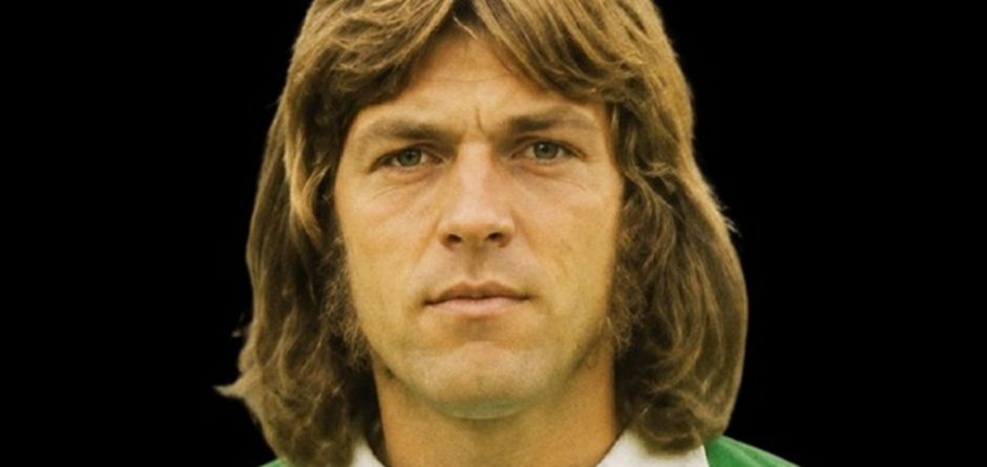
Neil Hague, born 1 December, 1949, Thurcroft, England.
PART ONE
Growing up in the village of Thurcroft naturally shaped Neil Hague’s outlook. Like countless boys across Yorkshire, he spent much of his spare time with a football at his feet, playing wherever there was sufficient space, whether on school fields, patches of waste ground or local recreation areas where goalposts were often improvised and matches continued until darkness made further play impossible.
The football culture of the region was deeply embedded in everyday life, and young players were constantly exposed to stories of local heroes who had risen through the ranks to play professionally. It was hardly surprising that Hague developed a passion for the game, yet what separated him from many others was the speed with which his natural ability became evident. At Thurcroft Secondary Modern School he quickly emerged as one of the standout footballers among his peers, displaying not only physical strength but also a maturity in reading the game that belied his age.
As his reputation spread beyond school football, opportunities naturally followed. Hague represented Rotherham Boys at under-15 level, an important stepping stone for ambitious young players in the area, and his performances suggested that he possessed the qualities required to progress further. At this stage he was developing primarily as a defender, learning the importance of positional discipline while also demonstrating a willingness to compete physically against older and stronger opponents. Those who watched him closely recognised that he combined toughness with intelligence, a combination that frequently distinguishes players capable of making the transition into the professional ranks. Furthermore, the competitive nature of Yorkshire football during the 1960s meant that youngsters were tested constantly, and only those capable of handling both physical and mental demands survived the selection process.
The reward for Hague’s progress came when he joined the youth system at Rotherham United, the club he had supported as a local boy and the club that would provide the platform for his entry into professional football. For any youngster raised in the area, earning an opportunity at Millmoor represented a significant achievement, and Hague approached it with the seriousness expected of someone who understood the value of hard work. The club itself occupied an interesting position within English football. Rotherham were not among the sport’s giants, but they possessed a proud tradition, a loyal fan base and a reputation for developing committed, honest footballers who understood the realities of life in the lower divisions. It was an environment perfectly suited to Hague’s personality.
During his apprenticeship he learned the realities of professional football quickly. The glamour often associated with the game was largely absent at that level. Training sessions were demanding, facilities were modest by modern standards, and young players were expected to earn every opportunity through perseverance. However, those conditions frequently produced resilient footballers, and Hague thrived in the atmosphere. Initially operating as a centre-half, he worked tirelessly to improve his understanding of positioning, timing and defensive responsibility, while coaches also recognised a versatility that would become one of his greatest strengths. Rather than limiting him to a single role, they encouraged him to adapt to different positions across the back line, helping him develop a broader understanding of the game.
The reserve team became his proving ground. Week after week he faced experienced professionals fighting to regain first-team places as well as ambitious youngsters eager to make their own breakthroughs, and those matches provided an invaluable education. Mistakes were punished, weaknesses exposed and lessons learned rapidly. Nevertheless, Hague’s progress remained steady. He displayed the kind of temperament managers admire, remaining composed under pressure and showing a willingness to learn from setbacks rather than becoming discouraged by them. As a result, he steadily moved closer to senior football.
A landmark moment arrived on 1 December 1966, when he signed professional forms with Rotherham United on his seventeenth birthday. For a local lad who had grown up dreaming of wearing the club’s colours, it represented the fulfilment of a cherished ambition. Yet even then Hague understood that signing a contract merely opened the door. Establishing oneself in professional football required far more than youthful promise, and countless talented youngsters had discovered that fact before him. The challenge now was to convert potential into performance.
Fortune often plays a role in football, and Hague benefited from arriving at a time when change was taking place at Millmoor. In November 1967 the club appointed Tommy Docherty as manager, a colourful and highly respected figure whose willingness to trust young players contrasted with the more cautious approach adopted by some of his contemporaries. Docherty quickly assessed the squad and identified Hague as a player capable of contributing immediately. The young defender therefore found himself presented with an opportunity far sooner than many might have expected.
On 25 November 1967, just days before his eighteenth birthday, Neil Hague made his first-team debut against Millwall in the Second Division. The circumstances added extra significance because the match also marked Tommy Docherty’s first game in charge. It was not the easiest environment for a teenager making his introduction to senior football. Millwall were renowned for their competitive spirit and physical approach, while Hague was handed the demanding assignment of helping contain Eamonn Dunphy, one of the most technically gifted players operating outside the top flight at the time. Yet rather than appearing overwhelmed by the occasion, Hague produced a composed display as the match ended in a goalless draw. The result itself may not have generated major headlines, but for the young defender it represented an important first step.
What followed during the remainder of the season confirmed that his debut had not been a one-off opportunity granted merely because of injuries or circumstance. Hague continued to feature and demonstrated an impressive ability to adapt to senior football. Moreover, his progress was recognised beyond club level when he earned selection for England Youth. Winning international honours at any age is a notable achievement, but doing so while still establishing oneself at club level highlighted how highly regarded he had become. His appearances for England Youth came both at centre-half and left-back, further underlining the versatility that coaches increasingly valued.
Those early years at Rotherham coincided with a fascinating period in English football. The national team had recently won the World Cup, attendances remained strong across much of the Football League, and ambitious young players could still realistically dream of rising from modest beginnings to significant achievements within the game. However, competition for places remained fierce. Every season brought new youngsters eager to break through, while experienced professionals fought desperately to protect their livelihoods. Hague therefore had little choice but to continue improving.
Fortunately, improvement became a constant feature of his development. As he gained experience, he began to establish a reputation as a defender who combined physical robustness with intelligence. Opponents quickly discovered that he was difficult to beat in the air and equally difficult to outmuscle on the ground. Yet there was more to his game than simple strength. He possessed good positional awareness and often anticipated danger before it fully developed, qualities that allowed him to intervene effectively without resorting to reckless challenges. Furthermore, he demonstrated an unexpected ability to contribute at the opposite end of the pitch, particularly from set-pieces where his timing and aerial power frequently caused problems for opposing defences.
As the late 1960s gave way to the early 1970s, Hague increasingly became one of Rotherham United’s most dependable performers. The young apprentice from Thurcroft had evolved into a first-team regular, earning the trust of managers, the respect of team-mates and the appreciation of supporters who recognised his commitment to the cause. For local fans there was additional satisfaction in watching one of their own succeed. Football supporters often form special connections with homegrown players because they represent more than simply members of the squad; they embody the relationship between club and community, and Hague’s roots in South Yorkshire strengthened that bond considerably.
Meanwhile, the foundations were being laid for the most significant period of his time at Millmoor. The lessons learned during his apprenticeship, the experience gained through early first-team appearances and the confidence derived from international recognition all combined to accelerate his development. He was no longer merely a promising youngster hoping to establish himself. Instead, he was becoming one of the key figures within the side, and the next phase of his Rotherham years would see him mature into one of the most reliable defenders outside the top divisions of English football.
PART TWO
By the beginning of the 1970s, Neil Hague was no longer viewed as the promising local youngster who had emerged from the youth ranks at Millmoor; instead, he had become one of the first names supporters expected to see on the team sheet, and that transformation had occurred not because of fleeting moments of brilliance or a handful of eye-catching performances, but because week after week he delivered exactly what managers demanded from a defender. Reliability is often an undervalued quality in football, particularly when compared with flair and attacking invention, yet managers who spend their careers building successful teams invariably appreciate dependable players above almost everything else, and Hague was rapidly earning a reputation as someone who could be trusted regardless of the circumstances. Whether Rotherham faced promotion contenders, relegation candidates or fierce local rivals, his level rarely dipped, and that consistency became one of the defining characteristics of his football.
The Third Division during that era was a fiercely competitive environment. There were no easy fixtures, no forgiving opponents and very little room for complacency. Clubs often operated on limited budgets and therefore relied heavily upon team spirit, organisation and resilience rather than expensive signings. Matches were frequently played on difficult surfaces, particularly during the winter months when heavy rain and freezing temperatures transformed pitches into muddy battlegrounds, and defenders had to be mentally and physically prepared for demanding afternoons against powerful centre-forwards who relished aerial contests and physical confrontation. Hague was perfectly suited to such conditions. He was strong, aggressive when required, fearless in the tackle and possessed the kind of durability that allowed him to withstand the relentless demands of lower-division football.
Yet what increasingly distinguished him from many defenders operating at that level was his contribution in attacking situations. Modern supporters have become accustomed to centre-backs scoring regularly from corners and free-kicks, but during the late 1960s and early 1970s such contributions remained comparatively unusual. Hague, however, developed a knack for appearing in dangerous positions when opportunities presented themselves. His timing in the air was excellent and his determination to attack crosses often caught opponents by surprise. Consequently, he became a valuable weapon from set-pieces, providing Rotherham with an additional dimension that few clubs possessed.
As his influence continued to grow, Rotherham themselves were striving to establish stability within the Third Division. Success was often elusive, yet the team remained competitive and difficult to beat, and Hague’s presence played a significant role in maintaining that resilience. Moreover, his performances reflected the mentality of the community from which he had emerged. There was nothing flashy or theatrical about his football. Instead, it was based upon honesty, hard work and a refusal to be intimidated, qualities that resonated deeply with supporters who spent their working lives in factories, workshops and mines.
The 1969-70 campaign provided further evidence that Hague was developing into one of the division’s most dependable defenders. Rotherham eventually finished fourteenth, a position that hardly generated national attention, yet league standings often fail to capture the contribution of individual players. Throughout that season Hague continued to establish himself as a cornerstone of the side, displaying a maturity that seemed remarkable for someone still in his early twenties. Furthermore, his ability to operate in multiple defensive roles gave managers valuable flexibility, enabling tactical adjustments without disrupting the balance of the team.
As the seasons progressed, Hague’s reputation spread beyond South Yorkshire. Opposition managers began taking notice of his performances, scouts increasingly attended matches with his name on their reports, and interest from other clubs started to emerge. Such attention was hardly surprising. Football League clubs were constantly searching for players capable of strengthening their squads without requiring substantial transfer fees, and Hague fitted that profile perfectly. He was experienced despite his relatively young age, physically robust, tactically disciplined and capable of contributing goals. In many respects he represented exactly the type of signing ambitious lower-division clubs sought.
Meanwhile, Rotherham faced the financial realities confronting many clubs outside the top divisions. Revenue streams were limited, wage budgets were tightly controlled and difficult decisions often became unavoidable. While supporters naturally hoped to retain talented players indefinitely, football economics rarely allowed such luxury. Consequently, whenever an attractive offer arrived, clubs frequently found themselves forced to consider the wider financial implications.
For Hague, the early years of the new decade represented the peak of his time at Millmoor. He had developed from apprentice to regular, from prospect to proven performer, and from local hopeful to one of the club’s most respected figures. The statistics alone illustrated his importance. Over the course of his spell with Rotherham he amassed 170 appearances and scored 23 goals, a remarkable return for a defender and evidence of the all-round contribution he provided. However, numbers tell only part of the story. Supporters remembered the commitment, the leadership and the willingness to battle through adversity when results were not going the club’s way.
Perhaps most importantly, Hague had become the sort of footballer every dressing room needs. He was experienced enough to guide younger players, reliable enough to reassure team-mates and competitive enough to maintain standards. Such qualities rarely attract headlines, but they frequently determine whether teams remain cohesive during difficult periods.
As 1971 unfolded, events began moving rapidly. Interest from Plymouth Argyle intensified, and circumstances soon aligned to create one of the more unusual transfer stories of the era. In November that year Rotherham faced Plymouth in a thrilling encounter that produced seven goals. The match ended in a 4-3 victory for Rotherham, and significantly it was Hague who scored the winning goal. Few players could have imagined that the strike would effectively serve as a farewell gift to their supporters, yet that is precisely what happened. Within twenty-four hours of helping Rotherham defeat Plymouth, Hague found himself heading south to join the very club he had just punished.
The transfer fee was £13,000, a respectable amount at the time and one that reflected the esteem in which he was held. For Hague personally, the move represented a major turning point. Until then his entire footballing life had unfolded in Yorkshire. He had grown up there, learned his trade there and established himself professionally there. Plymouth, by contrast, was almost as far from home as one could travel while remaining in England. The distance between Rotherham and Plymouth was not merely geographical. The cultures, accents, landscapes and rhythms of daily life differed enormously. South Yorkshire’s industrial heartlands would soon be exchanged for the coastal environment of Devon.
Such a move inevitably brought uncertainty. Every transfer carries risk. A player may fail to settle, struggle to adapt or discover that expectations prove difficult to fulfil. However, those concerns rarely troubled Hague. The same qualities that had enabled him to progress from a mining village to professional football now helped him embrace change. Moreover, Plymouth believed they were acquiring a footballer entering the prime years of his playing life, someone capable of strengthening the defence while also offering an attacking threat from dead-ball situations.
The timing of the transfer was significant for another reason. Plymouth Argyle possessed ambitions of climbing the Football League ladder, and they viewed Hague as an important piece of that puzzle. His arrival generated optimism among supporters, many of whom were intrigued by reports of a defender who not only excelled in his primary duties but also possessed a remarkable ability to score goals. Expectations were therefore considerable from the moment he arrived at Home Park.
Looking back, it is clear that the move marked the beginning of the most celebrated period of Hague’s footballing life. While he had enjoyed excellent years at Rotherham and established himself as a respected Football League defender, Plymouth would provide the stage upon which his reputation reached its highest point. The club, the supporters and the circumstances all combined to create an environment in which he flourished.
Nevertheless, nothing was guaranteed. Reputation alone never wins over supporters. Players must earn acceptance through performance, and Hague understood that reality better than most. The challenge awaiting him in Devon was therefore straightforward. He had to prove that the qualities displayed so consistently at Millmoor could be replicated hundreds of miles from home in front of a new audience with new expectations. And as events would soon demonstrate, not only would he meet those expectations, but he would exceed them in spectacular fashion.
PART THREE
When Neil Hague arrived at Plymouth Argyle in November 1971, he was already a respected Football League defender with more than enough experience to handle the demands of Third Division football, yet neither he nor the Home Park faithful could have anticipated quite how successful the relationship would become.
Transfers are often difficult to judge in their early stages because players require time to settle into new surroundings, establish relationships with team-mates and adjust to different expectations, but Hague’s transition from South Yorkshire to Devon proved remarkably smooth. From the moment he pulled on the green shirt of Argyle, there was a sense that the club had acquired not merely a dependable defender but a footballer capable of influencing matches in several different ways.
The move itself represented a considerable change in lifestyle. For a man who had spent virtually his entire life in Yorkshire, relocating to the south-west corner of England was no small adjustment. Plymouth possessed its own unique identity, shaped by its maritime heritage and geographical isolation, and football occupied a special place within the local community. Home Park regularly attracted passionate crowds who demanded commitment above all else, and players who demonstrated wholehearted effort were invariably rewarded with unwavering support. Fortunately for Hague, commitment had never been in short supply throughout his footballing life.
As he settled into the side, supporters quickly began to appreciate what he brought to the team. Defensively he was everything a manager could wish for. Strong in the tackle, dominant in the air and calm under pressure, he provided a reassuring presence at the heart of the back line. Furthermore, he displayed an ability to organise those around him, helping create a structure that allowed Plymouth to compete effectively against some of the strongest teams in the division. Yet while his defensive qualities were impressive, it was his attacking contribution that truly captured the imagination of the supporters.
Defenders are generally judged by the goals they prevent rather than the goals they score, but Hague increasingly blurred that distinction. Time and again he emerged as an unlikely attacking weapon, particularly from corners and free-kicks where his aerial power and determination made him exceptionally difficult to contain. Opposing defenders often underestimated the threat he posed, only to discover that he attacked crosses with the hunger and conviction of a centre-forward. Consequently, goals began arriving with surprising regularity.
The remainder of the 1971-72 season provided glimpses of what was to come. Although Hague had joined midway through the campaign, he quickly became an important member of the squad and demonstrated enough quality to convince supporters that the club had secured an outstanding signing. More importantly, he appeared perfectly suited to the style of football Plymouth sought to play. He combined defensive discipline with a willingness to contribute whenever opportunities arose, and that balance made him invaluable. However, it was during the 1972-73 campaign that everything truly came together.
Every footballer experiences periods when confidence, fitness and form align perfectly, and for Hague that season represented precisely such a moment. From the opening weeks he looked assured, commanding and increasingly influential. His defensive performances remained consistently strong, yet it was his remarkable goal-scoring exploits that elevated him into one of the most talked-about players at the club.
By the time the campaign concluded, Hague had scored twelve goals in all competitions, eleven of them in league matches, an astonishing return for a centre-back and a figure that placed him among Plymouth’s leading scorers. Only one player managed more goals for the club that season, a statistic that underlined just how extraordinary his contribution had been.
For supporters, there was something uniquely satisfying about watching a defender produce such numbers. Goals from strikers were expected. Goals from midfielders were welcomed. Goals from centre-halves, however, often carried an additional sense of excitement because they tended to arrive unexpectedly and frequently at crucial moments. Hague’s strikes often changed matches, rescuing points, securing victories or breaking stubborn deadlocks when conventional attacking options had failed.
Moreover, his influence extended far beyond individual goals. He became one of the leaders within the dressing room, setting standards through example rather than grand speeches. Team-mates recognised his professionalism, while younger players benefited from observing the consistency with which he approached every training session and every match. Managers value such individuals enormously because they help establish the culture required for sustained competitiveness.
Plymouth themselves enjoyed a solid season. Although promotion ultimately remained beyond reach, the club mounted a credible challenge and finished eighth in the Third Division, a respectable achievement in a highly competitive league. Throughout that campaign Hague stood among their most important performers, contributing at both ends of the pitch and providing a level of reliability that few players could match. As a result, when supporters were asked to vote for the club’s Player of the Year, there was a clear favourite: Neil Hague.
The award represented recognition not merely for a successful season but for the complete range of qualities he had displayed. Supporters admired his toughness, appreciated his consistency and celebrated his goals. Furthermore, they recognised that he embodied many of the characteristics they valued most highly in footballers. He was committed without being reckless, competitive without being cynical and ambitious without becoming self-important.
Winning Player of the Year strengthened the bond between Hague and the Home Park faithful. Football supporters never forget players who combine excellence with effort, and Hague had delivered both in abundance. Even decades later, many Argyle followers continued to remember him fondly, and subsequent polls ranking the club’s finest defenders frequently included his name among distinguished company.
The atmosphere surrounding Plymouth during those years added another dimension to his success. Home Park was rarely an easy venue for visiting teams. Crowds expected hard work and determination from their players, and when those qualities were displayed, the supporters responded passionately. Hague thrived in that environment. He enjoyed responsibility and never appeared intimidated by expectation. Indeed, there were occasions when the pressure seemed to inspire him further.
One of the most striking aspects of his football during this period was the confidence with which he approached attacking situations. Many defenders remain hesitant when venturing forward, worried that a failed attack may leave their team vulnerable. Hague, by contrast, attacked set-pieces decisively. He trusted his instincts and frequently arrived in dangerous positions at precisely the right moment. Consequently, opposition managers increasingly devoted attention to stopping him, yet even when closely marked he remained a threat.
Another factor behind his success was his versatility. Although primarily deployed in defence, he possessed the technical ability and football intelligence to contribute in several roles if circumstances required. Managers appreciated such adaptability because it offered tactical flexibility, particularly during periods when injuries or suspensions disrupted squad selection. Hague’s willingness to perform wherever necessary further enhanced his value.
As the 1972-73 season gave way to 1973-74, expectations naturally increased. Supporters hoped the club could build upon previous progress, while Hague himself sought to maintain the standards he had established. The campaign began with a setback when injury disrupted his preparations, yet his response once again demonstrated the resilience that had characterised his football from the beginning.
Rather than allowing frustration to affect his performances, he worked his way back into the side and resumed his role as one of the team’s most dependable figures. Although his goal tally did not reach the extraordinary heights of the previous season, he still contributed important strikes and remained a key component of the defence. Managers continued selecting him whenever possible, supporters continued applauding his efforts and opponents continued finding him difficult to overcome.
By 1974, Hague was approaching his twenty-fifth birthday and entering what many regard as the prime years for a defender. His reputation was strong, his performances remained consistent and interest from elsewhere inevitably followed. AFC Bournemouth emerged as the club most determined to secure his services, and before long negotiations gathered momentum. For Plymouth supporters, the prospect of losing such an influential figure was disappointing. They had witnessed some of the finest football of his life and recognised precisely how much he contributed to the side. However, footballers rarely remain in one place forever, and opportunities sometimes arise that prove difficult to ignore.
When Hague eventually departed for Bournemouth in the summer of 1974, he left behind a record that guaranteed his place in Argyle folklore. Across all competitions he had made 113 appearances and scored 17 goals, remarkable figures for a defender and evidence of the impact he had made during his relatively short stay. More importantly, he departed with the respect and admiration of the Home Park faithful, many of whom regarded him as one of the finest centre-backs they had watched during that era.
PART FOUR
Bournemouth during the mid-1970s occupied a difficult position. The club possessed ambition and a loyal following, yet maintaining stability in the Third Division was becoming increasingly difficult. Resources remained limited, competition was intense and the margin between success and failure often proved painfully narrow. Hague arrived alongside fellow Plymouth player Derek Rickard in a combined transfer deal worth £15,000, and supporters hoped the pair would strengthen the side sufficiently to push Bournemouth towards a brighter future. Yet from the outset it became clear that the campaign ahead would be considerably tougher than many had anticipated.
Despite the growing popularity of attacking football during the era, success in the lower divisions often depended upon defensive organisation, determination and resilience, qualities that Hague brought in abundance. Operating primarily at centre-half, he immediately established himself as one of the most dependable figures within the squad. Week after week he confronted powerful centre-forwards, difficult playing surfaces and the relentless physical demands of Third Division football, and while results frequently fluctuated, his own performances remained impressively consistent. Nevertheless, even the most reliable defender cannot single-handedly transform a struggling team.
The 1974-75 season gradually became a difficult and frustrating experience for Bournemouth supporters. Results failed to generate sustained momentum, confidence ebbed away and the club found itself drifting towards danger. Throughout the campaign Hague continued to perform with commitment and professionalism, often helping contain opponents who sensed vulnerability within the side, but defensive resilience alone could not compensate for wider issues affecting the team. Consequently, Bournemouth endured a disappointing season that ultimately ended with relegation from the Third Division.
For any footballer, relegation represents one of the most painful experiences the game can offer. Players spend months battling to avoid it, supporters desperately calculate permutations and managers search endlessly for solutions, yet when the final verdict arrives there is no escaping the disappointment. Hague had enjoyed some of the finest years of his career at Plymouth immediately before arriving at Dean Court, so finding himself involved in a relegation struggle undoubtedly provided a sharp contrast. However, one of the characteristics that repeatedly surfaced throughout his footballing life was an ability to respond positively to setbacks rather than allowing them to define him.
Therefore, instead of dwelling on disappointment, Hague focused upon helping Bournemouth rebuild. The arrival of Trevor Hartley as manager brought renewed optimism, and the 1975-76 season unfolded in a far more encouraging manner. Playing in the Fourth Division inevitably wounded the club’s pride, yet it also offered an opportunity to regroup and restore confidence. Hague’s experience became particularly valuable during this period because many younger players within the squad had never encountered the pressures associated with chasing promotion. His calm presence provided reassurance, while his understanding of the game helped create stability both on the field and within the dressing room.
As the season progressed, Bournemouth gradually improved. Results became more consistent, performances more assured and belief slowly returned. Hague remained a key figure throughout the campaign, contributing reliable defending and occasional goals while helping guide the side towards respectability. By the end of the season Bournemouth had climbed to sixth place, narrowly missing promotion but nevertheless demonstrating significant progress compared with the difficulties of the previous year. Although the campaign ultimately fell short of delivering a return to the Third Division, it represented evidence that the club was moving in the right direction.
For Hague personally, the Bournemouth years served as a reminder that football is not always measured by trophies or individual honours. Sometimes success is found in helping a club navigate adversity, maintaining standards when circumstances are difficult and providing leadership when uncertainty threatens to overwhelm confidence. While his spell at Dean Court may never generate the same affection as his years at Plymouth, it nevertheless highlighted the qualities that made him such a valued professional.
In the summer of 1976, however, another opportunity emerged. Huddersfield Town, one of the great names in English football despite their struggles during that period, sought experienced reinforcements as they attempted to rebuild following a series of disappointing seasons. The club secured Hague’s services on a free transfer, and once again he found himself preparing for a fresh challenge.
Huddersfield’s situation was fascinating. This was a club that had once stood proudly among the elite of English football, winning three consecutive First Division titles during the 1920s under the legendary Herbert Chapman, yet by the mid-1970s those glorious days felt increasingly distant. Successive relegations had left supporters frustrated and eager for signs of recovery. Consequently, every new signing carried a degree of expectation, and Hague arrived as someone expected to strengthen the defence immediately.
Initially, events unfolded encouragingly. Under manager Tom Johnston, Hague quickly established himself within the side and formed a solid defensive partnership with Steve Baines. His experience, positional awareness and strong left foot made him an important component of the team, while his leadership qualities helped organise those around him. Furthermore, he continued to demonstrate his ability to contribute crucial goals.
One particularly memorable moment arrived in November 1976 when his goal secured a valuable 2-1 victory over Workington. Not content with that contribution, he followed it with another decisive strike against Scunthorpe United the following month, earning Huddersfield a narrow 1-0 success. Such moments reinforced the reputation he had built throughout his career. Whenever teams required a defender capable of producing something extra, Hague often answered the call.
For much of the season Huddersfield appeared capable of mounting a genuine promotion challenge. Improved performances lifted the club towards the upper reaches of the table, and by the spring supporters had begun allowing themselves to dream of a return to higher divisions. Hague’s influence during this period was considerable. His consistency provided a platform upon which others could build, while his experience helped maintain composure during crucial matches.
Unfortunately, football can be brutally unforgiving. Just when promotion appeared a realistic possibility, Huddersfield’s form collapsed dramatically. The team failed to win any of their final nine league matches, and a promising campaign gradually unravelled. What had once looked like a potential promotion season ultimately ended with a ninth-place finish, leaving supporters frustrated and disappointed.
Meanwhile, changes within the squad created additional challenges for Hague personally. Competition for places intensified, tactical adjustments altered the manager’s plans and opportunities became less frequent than they had been earlier in the campaign. Although he remained a respected figure within the dressing room, it became increasingly apparent that his future might lie elsewhere. At the conclusion of the season he departed Huddersfield and moved once more, this time joining Darlington.
By 1977 Hague was approaching his thirtieth birthday, an age at which many footballers begin contemplating the final stages of their playing lives. However, there was little indication that his enthusiasm for the game had diminished. Darlington recognised the value of his experience and immediately integrated him into their plans. Operating in the Fourth Division, the Quakers required seasoned professionals capable of helping younger players navigate the demands of Football League football, and Hague fitted that requirement perfectly.
His two seasons at Feethams proved steady rather than spectacular, yet they illustrated once again why managers trusted him so readily. Over eighty league appearances he provided consistency, professionalism and leadership. Darlington were not challenging for promotion. In truth, survival represented their primary objective, and the club finished nineteenth during the 1977-78 campaign before slipping to twenty-first the following year. Yet throughout those difficult seasons Hague remained a reassuring presence.
Supporters often overlook the importance of experienced players in struggling teams. When confidence disappears and defeats accumulate, dressing rooms can become fragile places. Younger footballers sometimes begin doubting themselves, while frustration can easily undermine morale. Veterans such as Hague performed a crucial role during such periods because they understood that difficult spells are an inevitable part of football. Their calmness helped prevent panic, while their professionalism established standards others could follow.
As his second season at Darlington progressed, Hague found himself reflecting upon the future. He had accumulated hundreds of Football League appearances, represented several clubs and earned widespread respect throughout the game. Most players in his position might have considered winding down towards retirement. Yet football has a habit of presenting unexpected opportunities at precisely the moment they seem least likely.
Across the Atlantic Ocean, professional soccer in the United States was experiencing a period of rapid growth and experimentation. New teams were emerging, ambitious investors were attempting to establish the sport in fresh markets and experienced British footballers were increasingly viewed as valuable recruits capable of bringing credibility and expertise. Among those involved in the American game was one of Hague’s former Bournemouth team-mates, Harry Redknapp.
The connection would prove significant. Because while many players approaching thirty would have been content to remain in familiar surroundings, Hague was about to embark upon the most unusual and unpredictable chapter of his footballing life. The coalfields of Yorkshire, the stadiums of Devon and the grounds of the Football League would soon be replaced by desert landscapes, Californian sunshine and the strange, often chaotic world of American soccer. And what followed would be unlike anything he had experienced before.
PART FIVE
By the time Neil Hague walked away from Darlington at the conclusion of the 1978-79 season, he had already achieved more than many professional footballers could realistically expect.
He had emerged from a South Yorkshire mining village, established himself in the Football League, played almost 500 professional matches and earned admiration at clubs spread across England. Yet while many players approaching their thirtieth birthday would have begun contemplating retirement or a gradual move into non-league football, Hague was preparing for something entirely different. The next stage of his footballing life would take him thousands of miles from familiar surroundings and into an environment that bore little resemblance to the football culture he had known since childhood.
The United States was experiencing a fascinating, if often turbulent, period in the development of soccer. During the late 1970s the North American Soccer League had attracted global attention by recruiting famous players such as Pelé, Franz Beckenbauer, Johan Cruyff and George Best, and while the glamour associated with those signings generated headlines around the world, the sport’s foundations in America remained fragile. Investors, entrepreneurs and dreamers saw opportunities everywhere. New clubs appeared with remarkable frequency, ambitious promises were made and money flowed into projects that sometimes seemed built upon optimism rather than practical planning. For experienced British footballers willing to embrace adventure, however, America offered opportunities that simply did not exist elsewhere.
One of the people helping open those doors was Harry Redknapp, a former Bournemouth team-mate of Hague’s who had become involved with an ambitious expansion club called Phoenix Fire. Redknapp believed the project possessed genuine potential and encouraged several British players to join him in Arizona. For Hague, the proposition was intriguing. Rather than drifting quietly towards retirement, he could experience a completely different football culture while extending his playing days. The decision therefore carried obvious appeal.
When Hague arrived in Arizona during early 1980, he entered a world far removed from the muddy pitches and grey skies that had characterised much of his Football League experience. Phoenix offered sunshine, open spaces and an atmosphere of optimism surrounding the new franchise. The club had ambitious ownership, experienced imports and hopes of establishing itself as a significant force within the American Soccer League. On paper, the project appeared promising. Reality, however, proved considerably more complicated.
Preparations for the season immediately revealed signs of instability. Training schedules were rushed, organisational issues emerged and concerns regarding finances gradually surfaced. Nevertheless, the players focused upon football, hoping that matters behind the scenes would eventually settle. Hague participated in a series of pre-season fixtures that provided glimpses of what the team might achieve. Phoenix defeated the Chicago Sting, one of the more established clubs operating within the American game, and also secured victories against other opponents. From a purely footballing perspective there were reasons for optimism. Yet beneath the surface serious problems were developing.
Reports of unpaid bills began circulating. Players discovered wages were arriving late or not arriving at all. Creditors demanded payment and uncertainty spread throughout the organisation. What initially appeared to be temporary administrative difficulties gradually revealed themselves as symptoms of a much deeper crisis. The ownership structure was unstable, financial planning had been inadequate and the club’s foundations were alarmingly fragile.
For Hague and his team-mates, the situation became increasingly frustrating. Professional footballers can tolerate many challenges provided they believe progress is being made, but uncertainty regarding salaries creates anxiety that inevitably affects morale. Players had relocated, signed contracts and committed themselves to the project, only to discover that promises were proving difficult to fulfil. Moreover, many were far from home and dependent upon the club for accommodation and support. The collapse, when it finally arrived, was dramatic.
Only days before the scheduled start of the league season, Phoenix Fire effectively imploded. Salaries remained unpaid, debts mounted rapidly and the American Soccer League eventually terminated the franchise. Suddenly players found themselves unemployed before a competitive match had even been played. Some reportedly faced eviction from hotels while others scrambled to find alternative opportunities. It was a remarkable situation, even by the often chaotic standards of American soccer during that era.
For Hague, who had spent his entire professional life within the relatively structured environment of English football, the experience must have seemed surreal. Throughout his years at Rotherham, Plymouth, Bournemouth, Huddersfield and Darlington he had encountered victories, defeats, promotions and relegations, but he had never witnessed a club simply disappear before the season began. Yet if the episode demonstrated the instability of American soccer, it also highlighted Hague’s resilience. Rather than viewing the collapse as the end of his adventure, he immediately searched for another opportunity. Fortunately, one arrived.
The Columbus Magic, competing in the American Soccer League, offered him a chance to continue playing. Unlike Phoenix Fire, Columbus possessed sufficient stability to complete a season, and Hague therefore relocated once more, eager to make the most of his time in America. The move proved worthwhile. Operating as a central defender, he quickly adapted to the unique characteristics of American soccer. The game differed noticeably from what he had experienced in England. Matches often unfolded at a faster pace, tactical structures were sometimes more open and athleticism frequently played a greater role than the compact, highly organised football common throughout the Football League. Larger playing surfaces created additional space, encouraging counter-attacking football and placing greater demands upon defenders. Many British players struggled to adapt to such conditions. Hague did not.
Drawing upon the experience accumulated across hundreds of professional matches, he adjusted his game accordingly and became an important member of the Columbus side. During the 1980 season he appeared in fourteen league matches, scoring one goal and contributing three assists. Those statistics reflected his continued willingness to contribute in attacking situations while remaining fundamentally committed to defensive responsibilities.
Meanwhile, Columbus enjoyed a respectable campaign. The team finished fourth in the standings and qualified for the playoffs, a notable achievement given the competitive nature of the league. Although their post-season involvement ended with defeat against the eventual champions, Pennsylvania Stoners, the season nevertheless provided Hague with valuable memories and demonstrated that his abilities remained effective despite the dramatically different footballing environment. However, the most glamorous chapter of his American adventure still lay ahead.
Following his performances with Columbus, Hague secured a move to the Los Angeles Aztecs, a club operating within the North American Soccer League. To appreciate the significance of that transfer, it is necessary to understand the unique status enjoyed by the NASL at the time. While the American Soccer League represented a respectable level of competition, the NASL occupied a completely different world. This was the league that had attracted some of the greatest names in football history. Stadiums were larger, crowds often more substantial and media attention considerably greater. Furthermore, clubs actively embraced the entertainment culture that characterised much of American sport. The Los Angeles Aztecs embodied that philosophy perfectly.
Located in a city synonymous with glamour and celebrity, the club operated within an environment unlike anything Hague had encountered previously. Hollywood personalities, business figures and sporting celebrities frequently attended matches. The atmosphere surrounding the team reflected the wider culture of Los Angeles, where spectacle and entertainment often merged seamlessly with professional sport. For a footballer raised in a Yorkshire mining community, the contrast could hardly have been greater.
Yet despite the glamour, football remained football. Managers still demanded organisation. Defenders still needed to stop goals. Matches still had to be won. Hague therefore approached the challenge exactly as he had approached every other stage of his playing life. He concentrated upon performing his role effectively and contributing whenever possible. Although he did not add to his goal tally during his time with the Aztecs, his defensive experience proved valuable within a team that enjoyed a successful season. Los Angeles finished second in the Western Division and qualified for the playoffs, demonstrating considerable consistency across the campaign.
The team’s eventual elimination came in controversial circumstances following a dramatic overtime penalty shootout defeat to Montreal Manic. Although disappointing, the season nevertheless represented a fitting conclusion to Hague’s playing days. After years spent battling through the lower divisions of English football, he had ended his career in one of the most unusual and colourful competitions the sport had ever produced. By 1981, however, the time had come to step away from playing.
Unlike some footballers who struggle to accept retirement, Hague approached the transition pragmatically. Before leaving America he became involved in coaching activities, organising soccer camps in California and helping introduce young players to the sport. Drawing upon more than a decade of professional experience, he shared the knowledge accumulated across hundreds of matches and several countries. Eventually he returned to England.
The transition away from football can be difficult, particularly for players whose identities have been shaped by the game since childhood. Yet Hague once again demonstrated the adaptability that had served him so well throughout life. Rather than dwelling upon the past, he embraced new opportunities. Initially he established a building firm in Yorkshire before making another significant decision in 1984: He relocated permanently to Plymouth. The choice seemed entirely appropriate as Plymouth had provided some of the happiest and most successful years of his footballing life.
Supporters there still remembered Neil Hague´s contributions fondly, and the city clearly retained a special place in his affections. Establishing a property development business, he embarked upon a second professional life that proved every bit as successful as his first. For decades he remained involved in construction and development, contributing to the local economy while maintaining connections with football through former team-mates and fans.