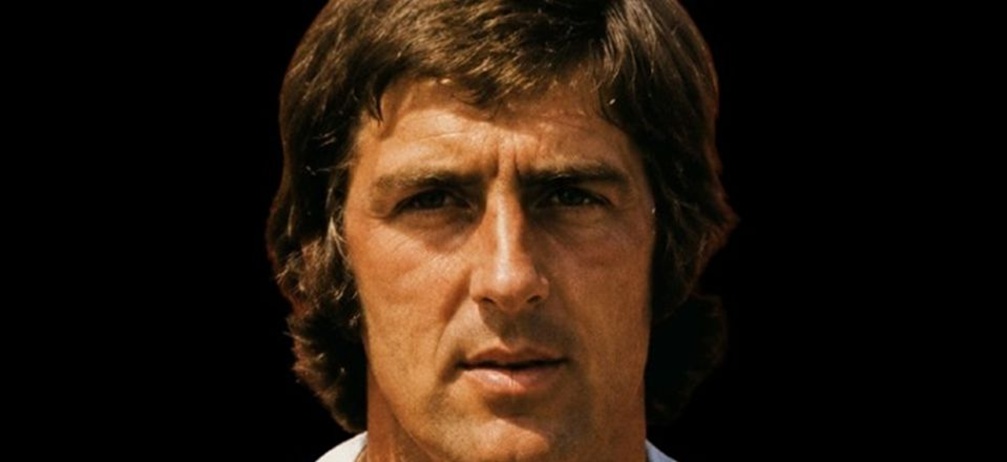
John Saunders, born 2 October,1950, Newport, Wales.
PART ONE
John Saunders first attracted attention as a schoolboy footballer representing Welsh Schoolboys during the mid-1960s, a period when talented youngsters from Wales were increasingly being monitored by clubs across England. Birmingham City moved quickly when they became aware of his potential and, despite competition from four other clubs, succeeded in persuading him to sign in 1966. Their promise that he would be allowed to train as a carpenter alongside his football played a significant part in the decision, giving the teenager both a football opportunity and a trade to fall back on.
At a time when professional football offered few guarantees and young players could disappear from the game as quickly as they entered it, such practical considerations carried considerable weight. Saunders arrived at St Andrew’s as a highly regarded prospect and immediately entered Birmingham´s youth structure, where the sought-after Welshman started the process of adapting from schoolboy football to the far more demanding environment of a professional club.
The standard of competition among Birmingham’s young players was fierce and every training session presented another examination of a youngster’s ability to cope with the physical and technical demands of the professional game. Saunders settled well and became an important member of the side that reached the 1966-67 FA Youth Cup Final. The competition was regarded as one of the best measures of emerging talent in Britain and regularly featured players who would go on to enjoy lengthy Football League careers. Birmingham’s progress to the final represented a significant achievement in itself, although the campaign ultimately ended in disappointment when Sunderland defeated them over two legs. Saunders nevertheless featured in both matches and gained valuable experience from competing in high-pressure fixtures against some of the most promising young footballers in the country. At that stage there was every reason to believe he would eventually break into Birmingham City’s first team, yet football rarely follows a straightforward path and opportunities at senior level proved difficult to secure.
Although he continued working hard and developing his game, Saunders found himself unable to force his way into Birmingham’s first-team plans. Competition for places remained intense and, despite his progress through the youth and reserve ranks, a senior breakthrough never materialised. Many young players in similar circumstances spend years waiting for opportunities that never arrive, but Saunders chose a different route. In 1970 he returned to his hometown by joining Newport County on a free transfer, a move that provided the chance to play regular first-team football rather than remaining on the fringes of a larger club. Newport were operating in the lower reaches of the Football League and offered the young defender something he desperately needed: the opportunity to prove himself in competitive senior matches.
The move quickly justified itself. Saunders settled into Newport’s defence and accumulated thirty first-team appearances, establishing a reputation as a dependable centre-half whose physical presence and reliability made him difficult to overlook. Newport supporters appreciated his consistency, while opposing forwards discovered they were dealing with a defender who rarely gave anything away cheaply. His performances attracted attention beyond South Wales and, although few could have predicted where that attention would come from, events during 1971 would change the direction of his football dramatically. Leeds United, one of the strongest sides in Europe under Don Revie, were searching for defensive reinforcements as they looked towards the future and attempted to identify a long-term successor for the ageing Jack Charlton.
The story behind Saunders’ move to Elland Road remains one of the more unusual transfer tales of the period. Ronnie Radford, a Newport player who would later become famous for his goal against Newcastle United in Hereford United’s celebrated FA Cup victory, was aware that Leeds were looking for defensive cover and reportedly recommended that they watch Newport defender Steve Aizlewood. Circumstances then took an unexpected turn when a Leeds scout attended a Newport match in which Aizlewood was not playing and mistakenly focused his attention on Saunders instead. Whatever confusion existed initially soon became irrelevant because the Newport defender impressed sufficiently to encourage further scouting reports. Leeds watched him repeatedly and concluded that he possessed enough potential to justify a move to one of the strongest clubs in the country. On 19 July 1971, Leeds completed his signing for £10,000, with additional payments included should he earn a Welsh cap or make a specified number of first-team appearances.
For Saunders, the transfer represented an extraordinary opportunity. Leeds United were reigning First Division champions and regular challengers for domestic and European honours. Don Revie had built a formidable squad containing players such as Billy Bremner, Norman Hunter, Paul Madeley, Eddie Gray and Jack Charlton, and merely training alongside those footballers offered an education few young defenders could hope to receive. Saunders himself described the transfer as a great chance and recognised that opportunities to join clubs of Leeds United’s stature did not arrive often. Revie publicly stated that he hoped the Welshman would develop into first-team material, a comment that naturally encouraged optimism about the future.
The early signs appeared promising. Saunders featured in several pre-season matches and, when injuries affected members of the senior squad, he found himself edging closer to first-team contention than many observers expected. During September 1971 he travelled with a seventeen-man Leeds squad to Spain for a match against Barcelona that would determine the permanent holders of the Inter-Cities Fairs Cup trophy. Simply being included in such a travelling party represented an indication that he was held in high regard within the club, and for a brief period there appeared a genuine possibility that his first-team debut might arrive far sooner than anticipated. Unfortunately, he was not selected in either the starting line-up or among the substitutes, and despite remaining at the club for another year, he would never come closer to making a senior appearance.
A setback arrived the following month while playing reserve football against Blackburn Rovers. During a clash of heads, Saunders was knocked unconscious for five minutes and required hospital treatment. He underwent X-rays and spent the night under observation suffering from concussion. Fortunately, no serious long-term damage was discovered and he recovered fully, but the incident interrupted his progress at a time when he was attempting to strengthen his claims for first-team consideration. Even so, there remained reasons for optimism. Jack Charlton was approaching the end of his playing days and opportunities could potentially emerge as Leeds gradually refreshed their squad.
Those hopes remained alive for a while, particularly after John Faulkner departed for Luton Town in March 1972, but Leeds soon moved decisively in the transfer market. Revie signed Roy Ellam and Gordon McQueen, both of whom immediately altered the defensive picture at Elland Road. Their arrivals pushed Saunders further away from first-team contention and made it increasingly difficult to imagine a route into one of the strongest defences in the country. Competition at elite clubs is often unforgiving, and while Saunders possessed ability, he found himself competing against established internationals and highly regarded signings. The reality became impossible to ignore and, on 2 October 1972, his twenty-second birthday, he left Leeds United without making a first-team appearance and joined Third Division Walsall in a transfer worth £10,000.
PART TWO
The move to Fellows Park finally provided the stability and regular football that had eluded him since leaving Newport. Walsall quickly recognised the value of their new defender and installed him as a key figure within the side. Saunders responded by becoming a regular presence at the heart of the defence and, over the next three years, established himself as one of the club’s most dependable performers. Week after week he faced the physical demands of Third Division football and rarely failed to meet them. Supporters came to appreciate his reliability, while managers valued the consistency he brought to the back line. Some defenders earn praise through spectacular tackles or dramatic moments; Saunders built his reputation through steady, dependable performances delivered over an extended period.
As the seasons passed, his appearance total continued to rise and he became one of the first names considered for selection. Walsall were not among the wealthiest clubs in the division and therefore relied heavily upon players capable of producing consistent performances over long periods. Saunders fitted that description perfectly. His understanding of the game improved with experience, and he provided the type of defensive assurance every side requires if it is to compete successfully across a long season. By the beginning of the 1974-75 campaign he was an established member of the team and preparing for what would become the most memorable season of his time at the club.
The FA Cup has a habit of producing stories that remain vivid decades after league results have faded from memory, and Walsall’s 1974-75 run provided exactly that. Drawn against Manchester United in the Third Round, the Saddlers entered the tie as clear outsiders. United were rebuilding after their recent promotion back to the First Division and possessed far greater resources and national attention. Nevertheless, Walsall produced a disciplined display at Old Trafford and earned a 0-0 draw, bringing the tie back to Fellows Park for a replay. The result alone represented a significant achievement, but events in the replay elevated the occasion into one of the most celebrated nights in the club’s history.
Fellows Park was packed as supporters sensed the possibility of an upset. Walsall rose to the occasion magnificently and defeated Manchester United 3-2. Young striker Alan Buckley scored twice, while the victory sent shockwaves through English football and secured the club’s place in the Fourth Round. Saunders played an important role in a defence that had faced considerable pressure from United’s attack, and his contribution helped ensure that one of the competition’s most famous results became reality. Cup victories over major clubs are treasured because they are rare, and Walsall supporters had every reason to celebrate.
The reward was a Fourth Round meeting with Newcastle United, whose attack contained one of the most feared centre-forwards in the country, Malcolm Macdonald. Newcastle entered the tie expecting their superior status to prevail, but Walsall once again produced a performance full of determination and organisation. Saunders was assigned the difficult task of helping contain Macdonald, and he carried out the responsibility impressively. Newcastle struggled to create clear opportunities and, when George Andrews scored the only goal of the match, Walsall secured another famous victory. The giant-killing run continued and national attention increasingly focused on the Third Division side from the West Midlands.
Their progress eventually ended in the Fifth Round against Birmingham City, the club where Saunders had begun his professional football almost a decade earlier. Birmingham won 2-1 and brought Walsall’s adventure to a close, yet the cup run remained one of the highlights of the season and one of the most memorable episodes in the club’s history. Unfortunately, far more serious concerns soon emerged. A severe injury suffered a few months later changed everything. Details of the problem varied in reports from the period, but its consequences were clear. The injury was serious enough to force Saunders into a decision no footballer wishes to make.
In November 1975, at only twenty-five years of age, he retired from playing football. His final record at Walsall stood at ninety-nine league appearances and two goals, figures that reflected three seasons of dependable service at the heart of the defence. The timing felt particularly harsh because he remained in his mid-twenties and had established himself as a reliable defender, yet the injury left him unable to continue. His playing football therefore ended after spells with Newport County, Leeds United and Walsall, having begun nearly a decade earlier when Birmingham City persuaded a promising Welsh schoolboy to sign professional forms.