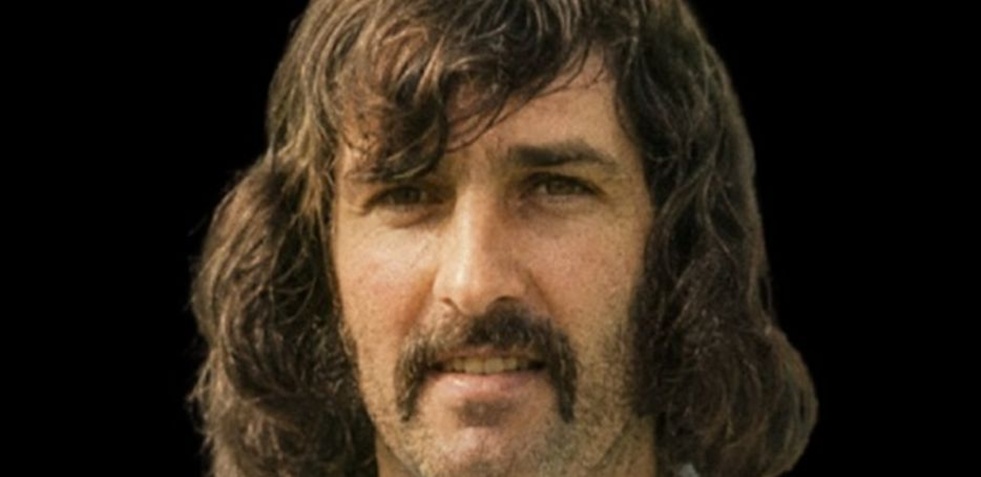
Clinton William Boulton, born 6 January, 1948, Hanley, England.
PART ONE
Clinton Boulton´s path toward professional football began formally in 1963, when he joined Port Vale as an apprentice at the age of 15. Port Vale, who play their home matches at Vale Park in Burslem, were a club with a proud if occasionally turbulent history, and they occupied a significant place in the region’s footballing imagination. For a young lad from Hanley, signing on at Port Vale was not merely a job prospect but something closer to a calling, and Boulton took to the club’s junior ranks with the kind of seriousness that would define his entire career. His progression through the youth system was rapid enough to catch the eye, and by Boxing Day of 1964, when he was just 16 years and 364 days old, he had forced his way into the senior squad for a Football League match against Hull City, lining up not in some peripheral role but as a half-back, in the thick of things, exactly where you would want to see a teenager who means business.
That appearance against Hull City was significant for more reasons than one. It made Boulton Port Vale’s youngest-ever player in a Football League match at the time, a record that was eventually surpassed years later but which stands as a marker of quite how precociously he had announced himself. There are plenty of teenagers who make one early appearance, never quite recapture the moment, and fade back into the reserve team, but Boulton was not that kind of player. He had come to stay, and the evidence arrived the following spring when, in April 1965, still only 17 years and 110 days old, he scored his first senior goal against Walsall, a milestone that remains, to this day, Port Vale’s record for the youngest goalscorer the club has ever produced. It is a record that has stood for six decades and counting, which tells you everything you need to know about quite how special those early contributions were.
Turning professional in August 1965 was merely the formality of confirming what everyone in the club already knew: Boulton was the real article. He was strong, he was reliable, he covered the ground with the kind of purposeful efficiency that makes a manager’s life comfortable, and he was rarely hurt, which in the hard-tackling, energy-sapping world of lower-league football in the 1960s was almost as valuable as any technical gift. Furthermore, and perhaps most remarkably, his leadership qualities were so evident, so unmistakable even at that early stage, that when Sir Stanley Matthews took charge at Port Vale and cast his eye over the young players at his disposal, he saw in Boulton something that went well beyond competence; he saw a captain.
To be appointed club captain by Sir Stanley at the age of 18 is one of those biographical facts that deserves a moment’s pause, because Matthews was not a man who handed out such responsibilities lightly. He had, after all, seen rather a lot of good footballers in his time, having played at the highest level well into his fifties and graced pitches alongside men of genius throughout a career that spanned four decades. That he looked at an 18-year-old from Hanley and decided this was the boy to lead the dressing room tells you something profound about Boulton’s character and bearing, and it became yet another Port Vale record, the youngest player to wear the captain’s armband, that Boulton added to his growing collection.
The years that followed were years of steady, accumulated excellence, the kind that does not generate tabloid headlines but which, seen whole, adds up to something genuinely impressive. Boulton made himself a fixture in Port Vale’s defence, operating with equal comfort at right-back or in central defence or, when required, further forward in midfield, a versatility that made him the sort of player every manager cherishes because he solves problems rather than creating them. He made 267 senior appearances for the club across all competitions and scored 12 goals, which is a very decent return for a defender in any era, but it was the 1969-70 season that represented the absolute summit of his Port Vale years.
Under manager Gordon Lee, a no-frills, results-oriented man who understood exactly what kind of football would get Port Vale out of Division Four, Boulton was one of just five players to appear in all 52 matches that season, across the league and cup competitions, missing not a single game in a campaign that ended with the side lifting the Fourth Division championship and earning promotion to the Third. Six of those 267 appearances yielded goals that season, which from a right-back was a notable contribution, and the fact that he was never absent while those around him inevitably succumbed to knocks and niggles and the general wear of a long season spoke volumes about his physical resilience and his commitment. Lee did not have a squad of stars at his disposal; he had solid professionals who turned up and did the job, and Boulton was the most solid of the lot.
Port Vale are not and have never been a club where supporters tick off the weeks to a League Cup final or expect to find their players on the back pages of the national press on a Monday morning. They are a club that demands and rewards loyalty, and Boulton gave them eight years of it, from his 1963 apprenticeship to his departure in November 1971. However, all things eventually come to their end, and the opportunity that arrived in the autumn of 1971 was one that made obvious sense for all parties. Torquay United, a Third Division club based on the English Riviera in Devon, came in with a £10,000 offer, a fee significant enough that Port Vale used part of the proceeds to install new floodlights at Vale Park, and Boulton headed south.
PART TWO
In many ways, the transfer move to Torquay United represented a leap into the unknown. Devon was a long way from the Potteries in every sense, geographically, culturally, and certainly in terms of the football culture, and Torquay United in 1971 were a club navigating the lower reaches of the Football League with the kind of modest ambition that was common enough at the time. Plainmoor, their compact and unpretentious ground, was not Vale Park, and the rolling landscape of Torbay bore no resemblance to the industrial skyline of Stoke-on-Trent. But Boulton adapted quickly, as he always did, and within a short time he had made himself as indispensable to the Gulls as he had ever been to the Valiants.
What unfolded over the next eight seasons was, frankly, extraordinary in its range. Boulton accumulated 286 appearances for Torquay United and scored 36 goals, a simply remarkable return for a player who was, at his core, a defender, but the raw statistics only hint at the full picture. He played centre-back, he played right-back, he played in midfield, and when managers needed someone to solve a particular problem in a particular match, he was deployed up front. On two separate occasions, such was the emergency that confronted his team, he even pulled on the goalkeeper’s gloves and stood between the sticks, and on both occasions he did so without any apparent difficulty, which is the kind of thing that causes grown men in football press boxes to put down their pies and actually pay attention.
But if there is a single afternoon that captures everything essential about Boulton as a footballer, it is in August 1976, under manager Malcolm Musgrove, in a Fourth Division league fixture against Doncaster Rovers. Deployed in the unusual role of centre-forward on that particular day, Boulton did not merely do a job, he grabbed a hat-trick in a 4-0 victory. It is the kind of thing that, if you put it in a novel, the critics would call it implausible, and yet there it is in the record books, as real and permanent as anything in football gets. It was not a fluke, and it was not a freak; it was the expression of a player with sufficient intelligence, sufficient technique, and sufficient sheer will to succeed at whatever the game demanded of him on any given afternoon.
That 1976-77 season proved to be the high point of his time with Torquay in terms of individual recognition, as Boulton collected the club’s Player of the Year award, a tribute from the supporters who had watched him week in and week out and understood exactly what they were looking at. There is a difference between supporters who can name the flashy, glamorous players and those who can identify the ones who make everything work, and the Torquay faithful showed with that vote that they were the second kind. He also received a testimonial match in recognition of his service, a tradition that the football calendar used to extend to those who had served long and faithfully, and it was richly deserved.
Teammates who played alongside Boulton during his Torquay years later spoke of him in terms that any professional would be proud to hear: tough, dependable, totally reliable, the kind of presence who made every five-a-side session as competitive as a cup final and every league match as focused as though the title itself was at stake. He was, in the language that footballers use among themselves, a man you wanted in your dressing room, not because he was easy company or because he told the best jokes, but because you knew that whatever was happening on the pitch, Boulton would be giving every last ounce of what he had.
His final act in a Torquay shirt came in November 1979, in an FA Cup first-round tie at Gravesend and Northfleet, which the Gulls won 1-0. It was a fitting last appearance in many ways, a professional result, a clean sheet, a win in a knock-out competition, because Boulton’s entire career had been built on exactly those qualities: professionalism, defensive solidity, and a determination to come out on the right side of the result. He departed Torquay shortly after that match, drawing to a close an eight-year association that had seen him become one of the most respected and best-loved players in the club’s history.
The transition to non-league football came next, as it does for most professionals who still have legs and lungs and an unwillingness to stop playing entirely. Boulton decided to join Minehead AFC in the Southern League Premier Division, where he linked up with a number of former Torquay colleagues, Willie Brown was serving as player-manager, while Terry Lee and Peter Darke were also in the squad, and he contributed his considerable defensive experience to the club’s efforts in a competitive regional environment. For a player of Boulton’s calibre and knowledge of the game, the step down to the Southern League was in many ways a gift to the club rather than a compromise on his part, and he gave Minehead the same professionalism he had always given to Port Vale and Torquay.
But even Minehead proved not to be the final chapter, because the love of playing did not diminish with the miles or the years. By the mid-1980s, Boulton was turning out for Galmpton United in the South Devon League, serving as a key defender for a side that was, in March 1985, sitting in second place in the table, unbeaten in league play, and chasing a championship. That Boulton, a man who had captained Port Vale at 18 under Stanley Matthews, was still committed enough to grassroots football in Devon to be missed from a vital match against Newton Abbot Spurs because he was away on a business trip is touching in the extreme. The business trip, incidentally, involved the window blinds and awnings company he had by then established in South Devon, a successful enterprise that would sustain him into full retirement, but there is something wonderful about the fact that even then, even in those closing years of competitive play, his absence from a Saturday afternoon league match was considered notable enough to be reported in the local press.
It is worth stepping back at this point and considering what, in total, Boulton’s football amounted to. He played 267 games for Port Vale, scored 12 goals, won a Fourth Division championship, was appointed the club’s youngest-ever captain, and set the record for the club’s youngest-ever goalscorer that has never been beaten. He then played 286 games for Torquay United, scored 36 goals, won the club’s Player of the Year award, earned a testimonial, scored a professional hat-trick as an emergency centre-forward, stood in as an emergency goalkeeper on two occasions, and became one of the most versatile and highly regarded players in the Gulls’ history. He followed that with stints at Minehead and Galmpton United, playing into his late thirties in the honest, unadorned football of non-league Devon. The total is over 550 professional and semi-professional appearances, 48 goals, and a career spanning something in the region of 20 years of active competition.
In retirement, having eventually hung up his boots after those final years with Galmpton United, Boulton settled permanently in South Devon, the landscape that had become his home during those eight years at Torquay, and built the window blinds business that kept him occupied until full retirement. He remained a well-known and popular figure in the Torbay area, connected to the football community through the relationships he had built over nearly a decade of playing for the local club, and he took to golf with the kind of enthusiasm that former athletes often bring to a sport that offers competition without the physical punishment of a corner-kick contest on a frozen pitch in January.