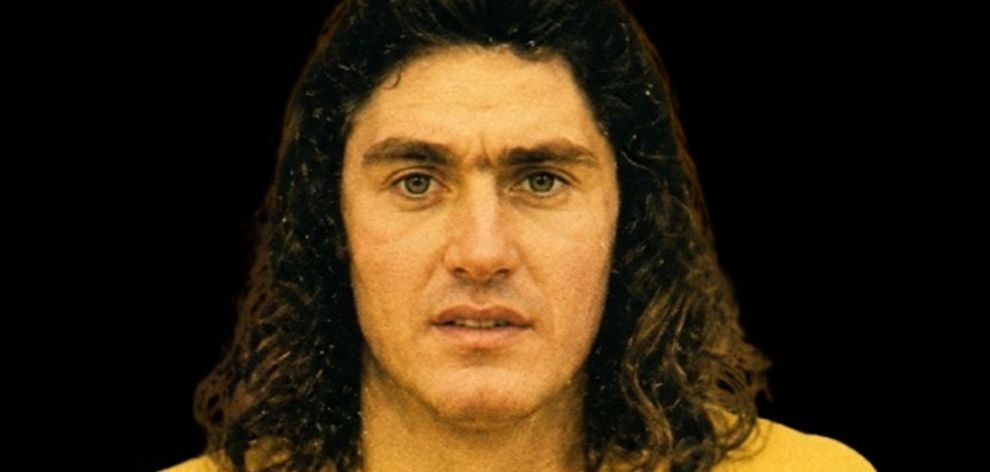
Lawrence McGettigan, born 25 December 1952, London, England.
PART ONE
When Larry McGettigan signed professional forms with Watford in 1970, he entered a club whose history had been shaped not by glamour, wealth or sustained success, but by determination, resilience and an ability to survive when many others might have disappeared altogether, and although the young winger could scarcely have imagined it at the time, his own experiences in football would ultimately mirror many of the qualities that had defined the Hornets throughout their long and often turbulent existence.
Originally formed as Watford Rovers back in 1881, the club had spent their formative decades building a reputation within regional football, gradually developing support across Hertfordshire and the surrounding districts, and by the early years of the twentieth century they had become a respected force within the Southern League, one of the strongest competitions outside the Football League itself. The greatest achievement of that early period arrived during the 1914-15 season when manager Harry Kent would guide them to the Southern League championship, a triumph which should have acted as a springboard towards even greater things, yet history intervened in the cruellest possible fashion as the outbreak of the First World War brought competitive football to a halt. For five years Watford remained Southern League champions simply because no football was being played, and when the nation finally emerged from the conflict and attempted to rebuild, they found themselves facing an entirely different future.
The post-war football authorities sought to expand the Football League, and Watford took the opportunity to join the newly created Third Division in 1920, a move that represented both an exciting opportunity and a daunting challenge. The decades that followed proved difficult, though, as promotion ambitions repeatedly faded, seasons drifted by without significant progress and the club frequently found itself looking over its shoulder rather than upwards. Indeed, between 1922 and 1934 Watford failed to finish inside the top six, and matters became particularly worrying in 1926-27 when they finished twenty-first in a twenty-two team division and were forced to seek re-election to maintain their Football League status. Thankfully for Watford, fellow clubs voted to retain them, but the episode underlined how fragile life could be in the lower reaches of English football.
Yet even during those challenging years there remained a stubborn refusal to surrender, and gradually that determination began producing results as managers Neil McBain and Bill Findlay helped establish a more competitive side during the 1930s. Between 1934-35 and 1938-39 Watford achieved five successive top-six finishes and lifted the Third Division South Cup in 1937, giving supporters genuine optimism that the club might finally be moving towards a brighter future. Once again, however, events beyond football’s control intervened. The outbreak of the Second World War halted all momentum, suspended league competition and forced clubs throughout the country into survival mode, meaning that when peace eventually returned in 1945, Watford were effectively required to begin all over again.
The post-war years offered little immediate reward. Like many clubs operating outside football’s elite, Watford found progress frustratingly slow and consistency difficult to achieve. Crowds returned, football resumed and hopes were renewed, but results frequently disappointed and there were moments when the club’s future within the Football League remained uncertain. A twenty-third-place finish in the Third Division South during the 1950-51 season resulted in another application for re-election, and although Watford survived comfortably, the reality was that they remained trapped in football’s lower divisions while others appeared to be moving ahead.
Nevertheless, the foundations for future improvement were slowly being laid. McBain returned in 1956 and helped steady the ship before a major restructuring of the Football League in 1958 placed Watford in the Fourth Division, an outcome that might have appeared discouraging on paper but ultimately became the catalyst for change. The appointment of Ron Burgess proved particularly significant because he brought ambition, organisation and a determination to move the club forward. During the 1959-60 campaign Watford achieved promotion from the Fourth Division, driven largely by the astonishing goalscoring exploits of Cliff Holton, whose forty-two league goals established a club record that immediately secured his place in their folklore.
PART TWO
Watford continued their development under Bill McGarry, who succeeded Burgess in 1963 and promptly navigated the club towards what was then their highest ever league finish. Although McGarry departed for Ipswich Town in 1964, his successor would prove even more influential. Ken Furphy arrived from Workington as player-manager and inherited a club searching for direction. Furphy possessed both patience and vision, qualities that would serve him well during the years ahead. He rebuilt methodically, assembling a side capable of challenging for promotion while simultaneously creating an atmosphere of optimism around Vicarage Road.
Players like Keith Eddy and Dennis Bond became central figures in his plans, and although setbacks inevitably occurred, including the sale of the latter to Bill Nicholson´s Tottenham Hotspur after Watford narrowly missed promotion in 1966-67, Furphy remained committed to his long-term strategy. The manager understood that success rarely arrived overnight, particularly at clubs operating with limited financial resources, and he continued searching for the missing ingredients that could transform a promising team into a successful one.
There was renewed belief among supporters, growing confidence within the dressing room and a feeling that the club might finally be on the verge of something special. The arrival of striker Barry Endean proved particularly important. A natural goalscorer with an instinctive understanding of where opportunities would arise, Endean added a cutting edge that elevated Watford from promotion hopefuls to genuine contenders. Following Christmas during the 1968-69 campaign, the Hornets embarked upon an unbeaten run that steadily carried them towards the Third Division championship. The climax arrived in April 1969 when Watford secured the Third Division title against Plymouth Argyle at Vicarage Road, triggering celebrations that were among the most memorable in the club’s modern history.
For established professionals it represented the reward for years of hard work. And for ambitious youngsters such as Larry McGettigan it provided inspiration. Here was a club climbing the ladder, competing in higher divisions and creating opportunities for talented young players. Consequently, McGettigan dedicated himself to progressing through the ranks, determined to make the most of whatever opportunities emerged. He developed into a right winger with a strong work ethic and a willingness to contribute both offensively and defensively, attributes that managers valued enormously during an era when wide players were expected to cover significant ground and shoulder considerable responsibility.
And as the 1960s gave way to the 1970s, McGettigan´s progress became increasingly noticeable. Coaches recognised his commitment, teammates respected his attitude and eventually Watford rewarded his development by offering him professional terms in 1970. Signing professional forms remains one of the defining moments in any footballer’s life because it transforms a dream into reality, yet for McGettigan it also represented the beginning of an entirely new challenge. Breaking into a successful first team is rarely straightforward, particularly at a club competing in the Second Division where standards are high and opportunities limited. But he approached the task with enthusiasm, fully aware that patience would be required. Watford, meanwhile, were attempting to establish themselves at a level they had worked incredibly hard to reach, and although optimism remained strong following the achievements of recent years, they were about to discover that life in Division Two could be unforgiving.
Watford entered the early 1970s hoping to consolidate their position and continue progressing under Furphy’s guidance, but football has a habit of humbling even the most ambitious clubs and the challenge awaiting the Hornets proved considerably greater than many had anticipated. The Second Division featured experienced sides, larger budgets and opponents capable of punishing mistakes with ruthless efficiency, meaning every match demanded concentration, resilience and consistency. For young players attempting to establish themselves, it was an environment that provided both opportunity and danger.
McGettigan spent much of this period continuing his development, learning from experienced professionals and waiting for the chance to demonstrate his abilities at senior level. Training sessions became increasingly important because competition for places remained fierce, while reserve football offered valuable lessons about the physical and tactical demands of the professional game. Yet despite the challenges, there was a growing sense that his opportunity would eventually arrive. Watford’s squad was evolving, injuries created openings and managers were always searching for players capable of injecting fresh energy into the side. Consequently, as the 1971-72 season approached, McGettigan found himself edging ever closer to the first-team picture.
PART THREE
From the very beginning of the 1971-72 campaign there were signs that trouble lay ahead. Watford, now managed by former Halifax Town gaffer George Kirby, failed to win any of their opening six league matches, and although there remained plenty of football to be played, supporters who packed into Vicarage Road every fortnight could already sense that this season was likely to become a battle rather than an adventure. Away from home the situation was particularly alarming. Defeats at Fulham, Charlton Athletic, Carlisle United and Queens Park Rangers arrived without a single Watford goal being scored, leaving the club desperately short of both points and encouragement.
Then, on 28 September 1971, Kirby´s men travelled to St Andrew’s to face Birmingham City, a club pursuing promotion and capable of attracting crowds that dwarfed those regularly seen at Vicarage Road. More than 28,000 spectators filled the stadium, creating an atmosphere that reminded young players exactly how significant football could become when large clubs sensed success within their grasp. The Brummies ultimately demonstrated why they were among the division’s stronger sides by securing a convincing 4-1 victory, yet amid the disappointment there was a moment that Larry McGettigan would undoubtedly remember with satisfaction because he scored Watford’s first away goal of the season.
The defeat at Birmingham formed part of a dreadful sequence that saw Watford lose each of their first nine away league fixtures. During those nine away defeats, Watford scored just five times while conceding twenty-three goals, numbers that explained precisely why the club remained rooted near the foot of the table. Nonetheless, there were isolated moments that provided supporters with something to celebrate. Local rivalry matches always carry additional significance, regardless of league position, and on 13 November Watford managed to defeat Luton Town 2-1 at Vicarage Road thanks to goals from Keith Eddy and Colin Franks.
As autumn gave way to winter, Watford finally produced a small measure of encouragement when they played Norwich City on 11 December and earned themselves a 1-1 draw at Carrow Road, collecting their first away point of the season after months of frustration. The goal came from Pat Morrissey, making his debut following an £8,000 move from Chester City, and for one afternoon there was a sense that perhaps the tide might be turning. Football often thrives on momentum, and even a single positive result can transform the mood around a struggling club. Unfortunately for Watford, the optimism generated by the Norwich draw proved temporary. Heavy defeats followed at Blackpool and Hull City, dragging the club back towards familiar territory and reinforcing the belief that relegation would remain a genuine threat throughout the campaign.
On 4 March, Watford travelled to Kenilworth Road in hopes of another victory against Luton but they could only manage a goalless draw, one of just four away league points collected during the entire campaign. By this stage, the mathematics were becoming increasingly difficult to ignore. Every missed opportunity carried greater significance, every defeat reduced the margin for recovery and every passing week increased the likelihood that Watford would be returning to the Third Division. The inevitable became reality at the end of the season when Watford finished bottom of the Second Division and suffered relegation, bringing an end to a campaign that had promised far more than it delivered. Relegation affects every aspect of a football club. Supporters feel disappointment, directors reassess priorities and managers begin examining which players can help rebuild and which players might need replacing.
PART FOUR
The Watford that emerged from the 1971-72 season was not the same Watford that had entered it. Expectations changed, ambitions were recalibrated and competition for places intensified as the club attempted to chart a course back towards respectability. For Larry McGettigan, the years that followed proved increasingly challenging and although he remained involved and continued contributing whenever called upon, opportunities became less frequent as Watford reshaped their squad.
McGettigan remained a committed member of the Watford squad, though, and he accumulated fifty-five appearances in all competitions during his time at Vicarage Road, a respectable figure that reflected both his perseverance and his usefulness to the club. Yet football careers are often a rollercoaster ride, and by 1975 it had become increasingly clear that McGettigan’s future might lie elsewhere. Watford were moving in a different direction, while the winger himself required fresh opportunities if he was to continue progressing. Therefore, when Barnsley expressed an interest in signing him ahead of the 1975-76 season, the move appeared to offer precisely the fresh start that he needed.
At first glance, the transfer to Oakwell seemed full of promise. The Tykes paid an undisclosed fee, demonstrating that they believed McGettigan could contribute to their plans, and for the player himself it offered the chance to escape the frustrations that had gradually developed at Watford. New clubs bring new managers, new teammates and new opportunities, and many footballers have revitalised their careers through such moves. Unfortunately, the reality proved far less encouraging.
Throughout the entire 1975-76 season, McGettigan failed to make a single first-team appearance for Barnsley. Week after week he trained, maintained his fitness and waited for an opportunity that never arrived. For professional footballers, inactivity can be among the most difficult experiences imaginable because careers are short and opportunities precious. Every match missed is a chance gone forever, and every passing month increases uncertainty about the future. Barnsley themselves were experiencing a period of transition, searching for consistency and attempting to build a squad capable of improvement, yet for whatever reason McGettigan never became part of their plans.
Whether circumstances, competition or managerial preference played the decisive role hardly mattered. The outcome remained the same. When the season ended, he was released. It would have been understandable had disappointment turned into bitterness because football can sometimes appear brutally unfair. Players devote years to reaching professional level, only to discover how quickly fortunes can change. But McGettigan was not prepared to abandon the game without one final effort. Brentford offered another opportunity, signing him on a non-contract basis in January 1976, and although the arrangement lacked the security of a full contract, it nevertheless provided a possible route back into first-team football. Once again, however, events refused to cooperate. He failed to break into the Brentford side and soon departed, bringing his Football League career to a close while still only twenty-three or twenty-four years of age.
After leaving Griffin Park, McGettigan joined Emeralds, a club operating within Hertfordshire’s local football scene, and began a new chapter far removed from the pressures of the Football League. Although crowds were smaller and facilities more modest, there remained something deeply satisfying about continuing to play simply for the love of the game. Throughout the late 1970s and into the early 1980s, he continued turning out regularly for the club, keeping morale high and maintaining the connection to football that had been such an important part of his life since his youth.