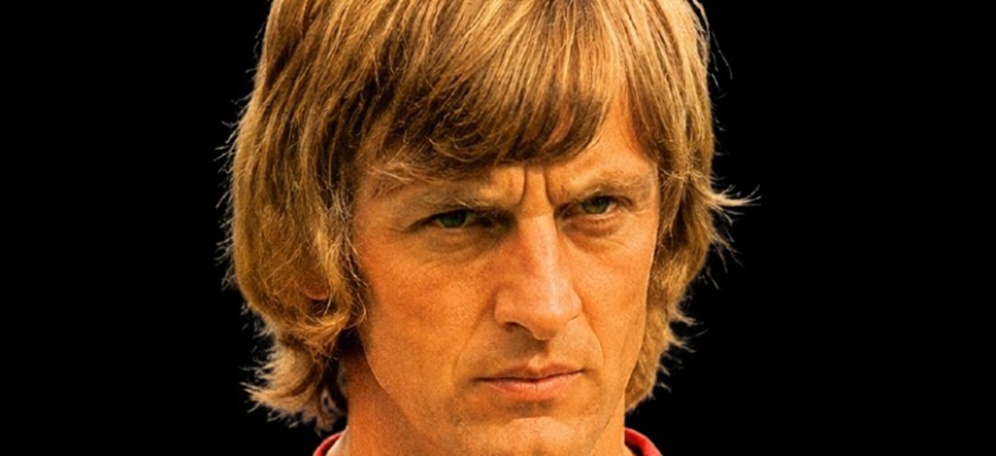
Thomas Ernest Jenkins, born 2 December 1947, Bethnal Green, England.
PART ONE
Tommy Jenkins was brought up in Bethnal Green, and like half the East End in those days he grew up kicking a ball on bomb-site pitches before graduating to East London Schoolboys, where the scouts first clocked his pace. Leyton Orient signed him up, and in January 1966 he put pen to paper on his first professional contract, having already turned out for England’s FA youth sides that same season — a mark of real promise for a teenager from the O’s own patch. But football has a cruel habit of making promises it doesn’t keep, and for all the youth-team fanfare, Jenkins got precisely one senior chance at Orient: a number 11 shirt and eighty-odd minutes of frustration in a 2–1 defeat at Bristol City on 30 April 1966. One game. That was his lot at Brisbane Road, and though nobody could have known it then, it would take him three and a half years and two changes of employer before he properly arrived.
Orient let him go, and in December 1967 West Ham United picked him up on the say-so of Ron Greenwood’s scouting network, only for the young winger to find the queue at Upton Park longer than he’d bargained for. He trained daily alongside the World Cup winners — Moore, Hurst, Peters, the lot — yet never once forced his way into a matchday squad, because breaking into a team stuffed with 1966 heroes was never going to be straightforward for a kid still finding his feet. So towards the end of January 1968, on Greenwood’s own recommendation no less, Jenkins dropped into non-league football with Margate, initially just for a month’s trial. It was, on paper, a step down. In practice, it was the making of him.
Southern League football in the late sixties was no place for the faint-hearted, all mud and elbows and long midweek trips on rattling coaches, but Jenkins took to it as though he’d been playing on Kent’s pitches his whole life. Across the 1967–68 and 1968–69 seasons he made 76 appearances for Margate and scored 13 goals, and while the raw numbers tell you something, they don’t tell you everything — because what really caught the eye was the way this gifted, pacy, left-footed attacker could glide past a full-back and leave him grasping at thin air. Word travels fast in football, even from the non-league fringes, and by the summer of 1969 Third Division Reading had seen enough.
Reading paid a modest £500 to prise Jenkins away from Margate in July 1969, though the Kent club had shrewdly inserted a sell-on clause: an extra £1,000 the moment Jenkins reached ten first-team appearances for the Royals, plus a slice of any future transfer fee. It didn’t take him long to trigger that bonus. Playing week in and week out in the Third Division, Jenkins racked up 24 appearances and 5 goals in the 1969–70 season, and his darting runs down the flank soon had lower-division defenders wishing they’d stayed in bed. Then, on 24 November 1969, he produced the afternoon that changed everything: a hat-trick in Reading’s 5–1 demolition of Tranmere Rovers, a performance so eye-catching that Southampton manager Ted Bates, watching from the stands, decided there and then that he simply had to have this player.
Bates wasn’t shy about pursuing his man either. He offered Reading their choice of Denis Hollywood, Frank Saul, Dave Thompson or John Sydenham as makeweights, plus a cash sum, before the deal eventually settled at a straight £60,000 — a startling fee for a 22-year-old who had played only half a season of Football League football. “The most outstanding player I have seen in the lower divisions,” Bates told The Times, and though managers are prone to a bit of hyperbole when they’ve just signed somebody, in this instance he wasn’t far wrong.
Jenkins signed for Southampton on 13 December 1969, and true to Bates’s impatience he was thrown straight into the action that same afternoon, replacing John Sydenham on the left wing in a 2–1 home win over Nottingham Forest. Over the next three seasons he became a fixture in a Saints side holding its own in the top flight — Southampton finished 12th in 1969–70, 10th in 1970–71 and 16th in 1971–72 — and Jenkins made 95 appearances in all competitions, 84 of them in Division One, chipping in with 6 goals across the various competitions.
What made him such box-office watching, though, wasn’t the goal tally so much as the manner of him: a jink-and-glide winger with uncanny ball control, the sort who liked to launch his runs from deep inside his own half and simply keep going. And there was no finer illustration of that than 31 August 1970, when Southampton travelled to Upton Park to face West Ham. In the eighth minute Jenkins picked up possession near his own penalty area, set off on a mazy solo run, and proceeded to leave four West Ham defenders — Billy Bonds, Peter Bennett, Alan Stephenson and, for good measure, Bobby Moore himself — trailing in his wake before rifling a shot past goalkeeper Peter Grotier. The home crowd, no less, applauded him off the pitch that day, and it remains the single moment for which older Saints supporters still remember him fondly.
He lined up alongside the experienced Jimmy Gabriel in midfield during those Dell years, a partnership that would resurface, unexpectedly, on the other side of the Atlantic later on. But football management doesn’t stand still for sentiment, and as Bates gradually reshaped his forward line around the pace of Mick Channon rather than the aerial threat of Ron Davies, there was steadily less room for a traditional outside-left, however skilful. Jenkins himself has since reflected that had Lawrie McMenemy arrived at The Dell a little sooner, he might well have found a home there — McMenemy’s type of player, by his own admission. Instead, on 1 November 1972, Southampton cashed in, selling him to Second Division Swindon Town for £50,000, a fee that set a new club record for an outgoing transfer at the time.
Brought to the County Ground specifically to fill the boots of the departing Don Rogers, Jenkins made his Swindon debut just ten days after signing, in a 1–1 draw at home to Huddersfield Town on 11 November 1972. His first season in Wiltshire colours was a stop-start affair — only 16 appearances as Swindon scrapped to preserve their Second Division status — yet by 1973–74 he had settled into a more productive rhythm, featuring in 36 league matches and 5 cup ties, and contributing 4 goals along the way. One display in particular stood out: the FA Cup third round at Fratton Park on 5 January 1974, where Jenkins was among the scorers in a thrilling 3–3 draw against Portsmouth, only for Swindon to fall 0–1 in the replay back home.
Despite his own individual brilliance, Swindon’s collective form told a bleaker tale, and the club slid into the Third Division at the end of that 1973–74 campaign. Manager Danny Williams, for his part, never lost faith in the winger’s ability, publicly rating him the most skilful player at the club even as results elsewhere unravelled around him. Over four seasons at the County Ground, from 1972 to 1976, Jenkins totted up 100 league appearances and 4 goals, or 114 and 5 once cup football is folded in, and though injuries increasingly nibbled away at his effectiveness, there remained a soft spot among Swindon fans for a player who had brought genuine flair to a struggling side. A brief loan-style spell with Portuguese outfit Lusitano followed in the summer of 1975, a sort of European interlude before the bigger change of scenery still to come. By 1976, with his time at Swindon drawing to a close, Jenkins turned his gaze west, towards America.
PART TWO
The North American Soccer League in the mid-seventies was football’s Wild West, all razzmatazz and imported talent and crowds that had barely heard of the offside rule but turned up in their thousands regardless, and it was into this curious, thriving circus that Tommy Jenkins stepped in 1976, signing for the Seattle Sounders under manager John Best. Over the next three seasons, up to 1979, he made 42 appearances for the club, scoring 2 goals and laying on 8 assists — modest figures, perhaps, but ones that undersell the creative spark he brought to a young franchise still finding its identity.
The reunion nobody quite predicted came in 1977, when Jimmy Gabriel — his old Southampton and Swindon teammate — took charge of the Sounders. Under Gabriel, Jenkins featured in 16 games as Seattle advanced all the way to Soccer Bowl ’77, the NASL’s grand final, and though he had to settle for a place among the substitutes against the New York Cosmos on the biggest night of the American season, simply being there spoke to how far he’d travelled since that lone appearance at Leyton Orient over a decade earlier. A persistent groin injury, though, gradually eroded his effectiveness: just 5 appearances in 1978, a solitary outing in 1979, and by the time the Sounders released him in December of that year he had already begun easing into coaching, taking on an assistant’s role alongside his playing duties.
Rather than hang up his boots entirely, Jenkins drifted into the curious world of indoor soccer, a game of enclosed arenas, boarded walls and frenetic, pinball-style attacking football that suited fading legs rather better than the wide-open spaces of the NASL. He joined the Pittsburgh Spirit of the Major Indoor Soccer League for the 1979–80 season, making 10 appearances without troubling the scoresheet himself but contributing 7 assists, before moving on to the Phoenix Inferno after his previous club, the American Soccer League’s Phoenix Fire, folded during preseason in 1980. Across two seasons with the Inferno he found the net 7 times and set up a further 13 goals in 47 outings, though the relentless stop-start intensity of the indoor game only aggravated the groin trouble that had dogged him since Seattle. All told, his indoor totals read 57 appearances, 7 goals and 20 assists, and by the end of the 1981–82 season he had called it a day as a player, turning his full attention to the sideline.
When the NASL itself collapsed in 1984, leaving American soccer with a gaping hole where its top division used to be, Jenkins didn’t retreat from the game — he set about rebuilding it, locally at least. He took charge of the newly formed amateur outfit FC Seattle, a squad averaging just 22 years of age and drawn largely from local high schools, colleges and the reserve ranks of the old Sounders. Working alongside his former teammate Jimmy Gabriel, now the club’s coaching director, and assistant Pepe Fernandez, Jenkins steered the side through the Challenge ’84 exhibition series, a set of high-profile friendlies against NASL survivors and touring national teams designed to keep the sport alive in the Pacific Northwest.
The results were startling for a side of relative unknowns: a 2–2 draw followed by a 2–1 away win over the Vancouver Whitecaps, a competitive showing against the New York Cosmos, and an appearance in front of 8,000 fans against the U.S. Olympic team. Jenkins’ approach leaned heavily on encouragement and player freedom rather than rigid instruction, an approach that suited a young, hungry squad still learning its trade, and though few of that group had any real professional experience, the exhibition series proved there was still an appetite for the game in Seattle even with the top division gone.
By 1988, FC Seattle had been rebranded as the Seattle Storm, competing in the Western Soccer Alliance, and Jenkins succeeded Gabriel as head coach. What followed was, by some distance, the finest managerial spell of his time in America: a 10–2–0 regular season, a run through the play-offs, and finally a 5–0 demolition of the San Jose Earthquakes in the championship final on 30 July at Memorial Stadium — the Storm’s first, and as things turned out only, WSA title. It was proof, if any were needed, that the pupil who had once dazzled Bobby Moore at Upton Park had learned plenty about the game since.
The following season brought a comedown, as the Storm finished fourth with a 10–6–1 record and missed the play-offs entirely, and at the end of that 1989 campaign Jenkins announced his resignation on 31 July, citing the need to spend more time with his family after his son was diagnosed with cystic fibrosis — a decision that says rather more about the man than any of the trophies he collected. Stuart Lee took over from him that November.
Jenkins wasn’t done yet, though. He returned to coaching in the mid-nineties, taking charge of the Seattle SeaDogs in the Continental Indoor Soccer League for the 1995 and 1996 seasons. The SeaDogs finished fourth in the Western Division in their debut campaign with a 12–16 record at Mercer Arena, and while 1996 brought no great improvement in the standings, Jenkins spent those two seasons doing what he had always done best since crossing the Atlantic: nurturing young, local talent and coaxing them towards the demands of a fast, unforgiving format. After the 1996 season he stepped back from professional head-coaching altogether, channelling his experience instead into youth and developmental programmes across the Pacific Northwest, a role that eventually saw him coaching Seattle United’s under-16 side as late as 2009, by which stage he had spent well over four decades wrapped up in the sport.