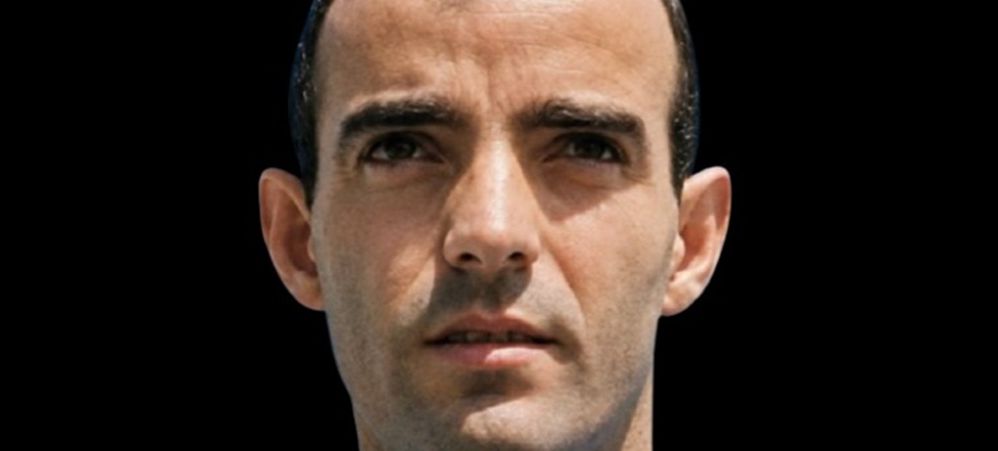
Mario Corso, born 25 August 1941, Verona, Italy.
PART ONE
Mario Corso joined Inter’s youth academy in 1957, and although the move took him away from home, it placed him inside one of the most sophisticated development systems in Italian football, where technical refinement was treated with the same seriousness as tactical discipline. On 20 June 1958, Corso put his signature to his first professional contract, a deal worth 9 million lire in transfer terms and 70,000 lire a month in wages, signed alongside two other Inter prospects, Mario Da Pozzo and Claudio Guglielmoni.
Within Inter’s youth ranks, Corso worked at sharpening the tools that would define him: ball control drilled until it became instinct, dribbling honed against older, sturdier opponents, and crossing precision refined through hour after hour of repetition, all designed to prepare the club’s brightest talents for the unforgiving reality of senior football. The transition, when it came, was almost seamless. The flank forward had already tasted first-team action in the 1957–58 Coppa Italia, a taste that whetted his appetite rather than satisfied it, and by the 1958–59 season he had become a fixture, making eighteen appearances in Serie A and scoring four goals in the process. On 30 November 1958, in a match against Bologna, he became the youngest goalscorer in the club’s history, seventeen years, three months and five days old, a record that stood as an early marker of just how precocious this particular teenager was.
By the 1959–60 campaign Corso was no longer a promising newcomer but a regular first-team presence. But the shape of his footballing life, and indeed the shape of Inter Milan’s, changed decisively with the arrival of Helenio Herrera in the early 1960s. Herrera, the Argentine-born coach whose name would become synonymous with catenaccio, built around Corso rather than in spite of him, installing the young Veronese as the left winger in a system that prized defensive solidity as its foundation yet relied on devastating, surgical counter-attacks to win matches. It might have seemed, on paper, an odd marriage: a coach obsessed with structure, and a player whose gifts leaned toward improvisation and flair. Yet it worked, and it worked spectacularly, because Corso supplied precisely the width, the precision of delivery, and the dead-ball expertise that turned Herrera’s carefully organised side into a team capable of destroying opponents in a matter of seconds.
The player and the system found each other just as Italy came calling. Corso earned his first cap for the national team in 1961, a reward for the consistency and craft he had shown in Inter’s colours, and he made his debut on 24 May of that year in a friendly against England at the Stadio Olimpico in Rome, playing the full ninety minutes as Italy went down 3–2 to a strong English side. It was not the ideal beginning, but it was only a beginning, and what followed offered a much truer picture of his ability.
In the 1962 World Cup qualifiers, on 15 October 1961, Corso scored his first international goals in dramatic fashion, netting a late brace away in Tel Aviv as Italy came from behind to beat Israel 4–2. He was not finished with Israel: on 4 November 1961, in the return leg in Turin, he struck again as Italy ran out 6–0 winners, and he added a further international goal on 10 May 1964 in a 3–1 friendly victory over Switzerland in Lausanne. Between 1961 and the middle of 1965, Corso amassed fourteen caps and four goals for his country, a run that represented the vast majority of what would eventually be a twenty-three-cap international career.
Domestically, meanwhile, the Herrera revolution was gathering pace, and Corso stood at its heart. Italy’s qualifying campaigns for the 1962 World Cup and the 1964 European Championship saw him line up against opposition as varied as Turkey, the Soviet Union, Finland and Poland, though frustratingly for a player of his gifts, Italy failed to reach the latter tournament, and Corso, despite his contribution to the qualifying effort, was controversially left out of the squad for the 1962 World Cup finals altogether. It was a strange quirk of a national team that so often seemed unsure what to do with one of the most naturally talented players it possessed. There was, however, no such uncertainty at club level. On 12 May 1963, Corso played his part in a 3–0 friendly victory over Brazil at the San Siro, helping alongside team-mates such as Sandro Mazzola to blunt the visitors’ famed attack, and the following season, 1962–63, he made thirty league appearances and scored eight goals as Inter claimed their first Serie A title in fourteen years.
If 1962–63 had been the campaign in which Corso and his Inter team-mates re-established their dominance of Italian football, then 1963–64 was the season in which they conquered Europe as well. Corso made twenty-eight appearances in Serie A that campaign, scoring six goals, but it was in the European Cup that he truly announced himself on the continental stage, appearing in eight matches and finding the net four times, contributions that ran right through the knockout rounds and into the final itself, where Inter defeated Real Madrid to be crowned champions of Europe.
Twelve months later, in the semi-final of the 1965 European Cup against Liverpool, Corso produced one of the signature moments of his footballing life, curling home a free kick in the second leg at the San Siro to help Inter to a 3–0 victory that overturned their first-leg deficit and sent them through to the final, where they retained their European crown. It was around this period that Corso’s trademark set-piece, a free kick that seemed to hang in the air before dipping viciously at the last possible moment, earned its own nickname among Inter supporters, who came to know it as the foglia morta, or dead leaf, because of the way it drifted and fell like an autumn leaf spiralling to the ground.
The trophies kept coming. Inter retained their Serie A title in 1964–65, a campaign in which Corso made thirty appearances and scored eight goals, and repeated the feat again in 1965–66, when he featured thirty times and scored three goals, while the club also lifted the Intercontinental Cup in both 1964 and 1965, completing a period of dominance that few sides in the history of Italian football have matched. Corso, by now recognised as one of the most gifted left-sided players in the world, wore the number 11 shirt with a swagger that Inter’s fans adored, and he would go on to captain the club for three seasons, a mark of the trust and affection in which he was held by team-mates and supporters alike.
PART TWO
Mario Corso’s later international appearances, spanning 1966 to 1971, told a rather different story from the goal-laden early years, for during this stretch he added nine caps to his tally without finding the net once, appearing in friendlies against France, which finished goalless on 19 March 1966, Austria, won 1–0 on 18 June 1966, the Soviet Union, won 1–0 on 1 November 1966, and Portugal, drawn 1–1 on 27 March 1967, as well as in European Championship qualifiers against Romania, won 3–1 on 26 November 1966, and Cyprus, won 2–0 on 22 March 1967. There followed a lengthy gap in his international career before he returned for a late flourish of appearances in 1971, featuring in qualifiers against Mexico, won 2–0 on 25 September, Ireland, won 2–1 on 10 May, and finally Sweden, defeated 3–0 in Milan on 9 October, a match that turned out to be his last appearance for Italy, bringing the curtain down on his international involvement at the age of thirty.
During his time with the Azzurri, Corso collected twenty-three caps and four goals, every one of those goals scored in the early, prolific years between 1961 and 1965. It remains one of the odder footnotes of Italian football history that a player of such standing at club level never once featured at a major tournament, missing the 1966 World Cup, the 1968 European Championship, which Italy hosted and won, and the 1970 World Cup, in which Italy reached the final. The reasons were varied and layered: fierce competition for attacking places during a transitional era for the national side, Italy’s own failure to qualify for the 1966 finals, successive changes of coach, and, by the early 1970s, the emergence of younger talents and shifting tactical fashions that gradually squeezed Corso out of the international picture, even as he remained a central figure at club level, where Inter secured the Serie A title again in 1970–71.
That 1970–71 title, Corso’s fourth Scudetto with Inter, came in a season in which he made twenty-nine league appearances and scored three goals, a solid if unspectacular return for a player then approaching thirty years of age, but a meaningful one nonetheless, since it capped off a period at the club stretching back to boyhood. In the seasons either side of that triumph, his output had remained steady rather than spectacular: thirty-two appearances and four goals in 1966–67, for instance, as the emphasis on his game gradually shifted from the pure explosiveness of his younger years toward a wiser, more measured contribution built on experience and craft rather than raw pace.
Across his entire spell at Inter Milan, from 1957 to 1973, Corso made 413 appearances in Serie A alone, scoring 75 goals, and when cup and European fixtures are added to that tally, the figures climb to 502 matches and 94 goals in all competitions, numbers that placed him among the most decorated and admired figures the club has ever produced. Alongside his two European Cups and two Intercontinental Cups, he added four Serie A titles to his collection, a haul that few Italian footballers of his generation could rival. In 1973, at the age of thirty-two, Corso’s long association with Inter finally came to an end, and he moved across Italy’s northern coastline to Genoa, bringing to a close sixteen seasons in the black and blue of the Nerazzurri. The transfer allowed him to keep playing at the highest level even as his role at Inter had begun to diminish with age, and it was a chance, too, to test himself in unfamiliar surroundings after so many years rooted in Milan. The reality of life at Genoa, however, proved considerably tougher than anything he had known before.
In the 1973–74 Serie A season he made twenty-three appearances and scored three goals, but the team around him struggled badly, finishing eighteenth in the table and suffering relegation to Serie B, a bitter conclusion to Corso’s first campaign away from Inter. The following season, 1974–75, brought only fleeting involvement in the league itself, with Corso making just three Serie B appearances without scoring, though he was more heavily involved in cup competition, playing five matches and scoring three goals there, for a combined total across all competitions of thirty-one games and six goals during that final full season. Genoa finished seventh in Serie B that year, missing out on an immediate return to the top flight, and for Corso, now in the twilight of his effectiveness, the writing on the wall was becoming difficult to ignore.
His time at Genoa was, in truth, a period of adjustment to a club in the middle of rebuilding itself, a world away from the glittering successes of the Grande Inter years, though the experience and know-how he carried with him from Milan offered a certain steadying influence to team-mates around him even as his own powers waned. In 1975, at the age of thirty-four, Mario Corso retired from playing professional football, bringing to a close a footballing story that had begun on the modest pitches of San Giovanni in Valle and had, over the better part of two decades, taken him to the very summit of the European game, without adding any further honours to the trophies he had already won during his years in Milan.