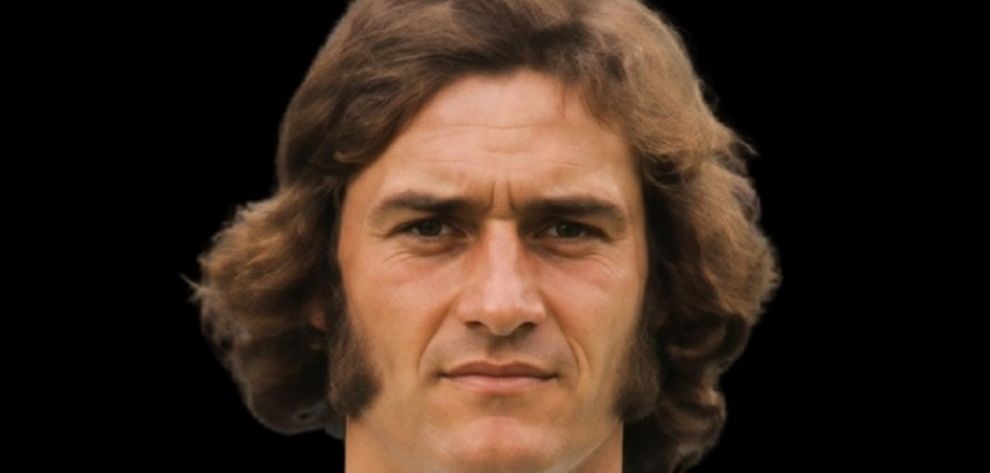
Roger George Cross, born 20 October 1948, London, England.
PART ONE
Roger Cross learned his football in east London, but it was several miles to the west, in the red and white stripes of Brentford, that he found the regular place and steady supply of goals which had been denied him at his boyhood club. Born in East Ham on 20 October 1948, Cross grew up close to West Ham United and joined the Hammers as an apprentice in July 1964, entering Upton Park at an exceptional time in the club’s history because Ron Greenwood’s side had just won the FA Cup and would add the European Cup Winners’ Cup the following May, while Bobby Moore, Geoff Hurst and Martin Peters were moving towards their decisive roles in England’s 1966 World Cup victory.
Cross belonged to the same youth intake as Trevor Brooking, who had been born only a few weeks earlier, and both young men received an education shaped by Greenwood’s belief that football should be played with intelligence, composure and care for the ball. The standard around them was demanding, for Cross trained in the company of players he had admired from the terraces, and he listened closely when Hurst discussed the finer points of forward play, while Moore’s calm authority left an equally deep impression. Cross became the reserve team’s leading scorer in two successive seasons, showing that he possessed the strength and finishing ability required of a centre-forward, but West Ham already had proven First Division attackers and breaking into the senior side was never going to be straightforward.
His chance finally arrived on 26 August 1968, when West Ham faced Burnley at Upton Park and Cross replaced John Sissons during a thumping 5–0 victory, a result which briefly lifted Greenwood’s team to the top of the First Division table after a fine opening to the season. It was an encouraging entrance, yet an ankle injury interrupted his progress soon afterwards, and while Cross recovered, the powerful Bermudian forward Clyde Best moved ahead of him in the manager’s plans and began to establish himself beside Hurst.
West Ham therefore sent Cross on loan to nearby Leyton Orient in October 1968, initially for two months, and his spell at Brisbane Road brought two goals from six league appearances, giving him useful senior experience without taking him far from the streets where he had grown up. Even so, the loan did not lead to an extended run when he returned to Upton Park, and Cross had to wait until the beginning of 1969–70 before receiving another proper opening. He made his first full home appearance against Arsenal on 6 October 1969, and although nerves were inevitable, Moore reassured him before the match and told him that the opposition would not be as formidable as he imagined. West Ham drew 1–1, and Cross scored his only goal for the club after Billy Bonds drove down the line and delivered a fine cross, allowing the forward to dart towards the near post and glance the ball into the far corner.
That Arsenal goal might have offered the start of something substantial, but Cross’s run ended almost as soon as it had begun, and after eight league appearances and one goal for West Ham, Greenwood told him that Brentford had made an offer and asked whether he would consider leaving. Cross understood that Best had overtaken him and that regular first-team football was unlikely to come quickly at Upton Park, so he agreed to the £10,000 transfer and met Brentford manager Frank Blunstone, who persuaded him that Griffin Park would provide the opportunity he needed.
PART TWO
Although some records place the move in October 1969, Cross himself recalled joining Brentford in March 1970, and the playing record supports the later date because he appeared 11 times during the closing weeks of 1969–70, scoring four goals as the Bees finished fifth in the Fourth Division, only three points short of the automatic promotion positions. Life at Brentford was very different from the carefully ordered surroundings he had known under Greenwood, and on his first morning he waited in the away dressing room with Alan Hawley and Gordon Phillips, wondering why training had not started, only for Blunstone to burst through the door and tell them that the rest of the squad were already outside. Cross nevertheless settled quickly, and Griffin Park gave him the platform he had wanted, along with a manager who encouraged him to prove that West Ham had been mistaken in allowing him to leave.
During his first full Brentford season in 1970–71, Cross played 52 matches in all competitions and scored 15 goals, a respectable return even though the Bees could finish only fourteenth in the Fourth Division. He was a strong centre-forward who could lead the attack, but he was not interested merely in waiting inside the penalty area for the final pass, because he liked receiving possession, joining the build-up and bringing colleagues into play, and that willingness to move away from goal may have reduced his personal total while making him valuable to the side as a whole.
Cross also possessed an unusually long throw, helped by the upper-body strength he had developed and his schoolboy experience with the javelin, and Brentford used that weapon to create chances from positions which most teams regarded as routine throw-ins. His white boots made him equally conspicuous, although they had first been bought out of necessity when he left his normal pair behind before a match at Northampton and the team coach had to stop at a sports shop, where a pair of white Hummel boots happened to be available. Cross knew that wearing them would attract attention at a time when only a few players, notably Alan Ball, were using white footwear, but he played well enough to retain them and they became closely associated with him. His performances also attracted attention from a higher division, and in September 1971, only about 18 months after his arrival at Griffin Park, Second Division Fulham offered £30,000 for him.
The transfer caused disappointment among Brentford supporters, but Cross had reached an understanding with Blunstone that he would be allowed to leave if a larger club came for him, and the £30,000 fee represented a considerable return on the £10,000 Brentford had paid. Fulham offered a higher level and a distinguished group of players, yet Cross’s time at Craven Cottage never developed as he had hoped, and after struggling with an iron deficiency during the early months of Alec Stock’s management, he found it difficult to produce his best form consistently. Even so, he scored eight times in 40 league appearances and ten in 45 matches in all competitions for Fulham, which was far from a wasted contribution, but after approximately 16 months away he returned to Brentford in early 1973.
The club he re-joined was fighting a very different battle from the promotion near-miss of 1970, because Brentford had risen to the Third Division in 1971–72 but were now trying to stay there, and Cross could not prevent their relegation at the end of 1972–73. Nonetheless, the return placed him back in familiar surroundings where he was trusted to lead the attack, and although the Bees had dropped into the Fourth Division, the following season brought some of his strongest football. Brentford struggled badly through 1973–74, but Cross scored 17 of their 48 league goals and helped them finish two points above the re-election positions, making his output central to the club’s continued Football League membership.
November 1973 supplied the most concentrated burst of scoring, as Cross struck two hat-tricks in successive home matches, first during a victory over Mansfield Town and then in another win against Chester, giving him six goals within a matter of days. Those performances showed why he mattered so much to a Brentford side lacking an abundance of reliable scorers, and while the overall league position was poor, his strength, willingness to take responsibility and ability to convert difficult chances gave supporters something worth watching. Cross continued leading the line in 1974–75 and reached ten goals in all competitions, with one of the most memorable coming in the League Cup against Liverpool at Anfield, where Brentford briefly threatened a major upset. Jackie Graham sent him through behind Phil Thompson, Ray Clemence came out to narrow the angle, and Cross reached the ball first before sliding it beneath the England goalkeeper to put the Fourth Division visitors ahead, although Liverpool recovered to win 2–1.
Another favourite came away to Darlington when Gordon Phillips kicked long from the Brentford goal, the ball was flicked onwards and Cross ran behind the defence before striking a first-time volley over the goalkeeper without the ball touching the ground during the entire move. Brentford remained in the Fourth Division throughout these years, but Cross kept supplying goals and played with sufficient consistency to become one of the leading figures at Griffin Park, even though the promotion he wanted never arrived during either of his two spells.
PART THREE
By January 1977, Cross was 28 and Brentford needed the money which another transfer could provide, while Second Division Millwall offered him a return to a higher standard and a move closer to his home in Barking. Lions manager Gordon Jago approached him in characteristically direct fashion by appearing near Brentford’s dressing room and asking what he was doing that weekend, and Millwall completed the signing for £9,500. However, his debut against Crystal Palace brought immediate trouble when he raised a leg to lift the bouncing ball over young defender Kenny Sansom and suffered a serious hamstring injury, leaving him unable to establish himself before the end of the season.
Cross had already arranged to spend the summer of 1977 with Seattle Sounders in the North American Soccer League, so he underwent treatment and travelled to the United States despite not being fully fit, but the injury became far worse during his eighth appearance when an opponent caught his heel as he ran with the ball. His hamstring pulled away from the pelvis and took a piece of bone with it, forcing him to undergo major surgery in America, while Seattle Sounders reached the Soccer Bowl against New York Cosmos without him and lost 2–1 before a huge crowd in Portland. Cross had scored two goals in eight appearances, but instead of facing Pelé and Franz Beckenbauer in the final, he remained in hospital while his team-mates brought him a photograph signed by both sides.
After recovering sufficiently to return to England, Cross made only a handful of further appearances for Millwall, and he retired from playing at the age of 30 following the 1978–79 season, having completed 18 league matches without scoring for the Lions. His Football League record stood at 279 appearances and 81 goals, with another six appearances and two goals for Leyton Orient during his loan and eight matches with two goals for Seattle, but the figures which best represented him were those compiled at Brentford. Across his two spells he played 228 times and scored 79 goals in all competitions, including 72 goals from 207 league appearances, and although the Bees did not win promotion while he was leading their attack, he provided a dependable source of goals through several difficult Fourth Division seasons.
Cross was never simply a penalty-box finisher, because his hold-up play, long throws, physical strength and willingness to involve himself in the construction of attacks gave his team more than the final touch, yet his scoring remained the quality by which Brentford followers remembered him most warmly. His best days as a player had unquestionably come at Griffin Park, where he had been given the chance West Ham could not offer and had responded by becoming a firm favourite, while his brief move to Fulham and later switch to Millwall never produced the same sense of belonging.
Cross moved immediately into coaching and became Millwall’s youth-team manager in 1979, beginning a lengthy second working life in football which drew heavily on the education he had received from Greenwood, Hurst, Moore and the other experienced figures at West Ham. He later joined the coaching staff at Queens Park Rangers, and when Gerry Francis left QPR for Tottenham Hotspur in November 1994, Cross followed him to White Hart Lane, where he worked as reserve-team manager and later served as Francis’s assistant.
His duties were no longer centred upon scoring goals himself, but on developing players, preparing teams and assessing what was required at senior level, and the knowledge gathered across every division of the Football League gave him a broad understanding of the game. In the summer of 2001, more than three decades after his last first-team appearance for the club, Cross returned to West Ham as reserve-team coach, bringing his working life back to the place where it had begun in July 1964. He later became the club’s chief scout and held the role until April 2011, when West Ham dismissed him as part of a cost-cutting programme, but he remained within football and subsequently worked as a scout for Charlton Athletic.
In February 2018, Cross joined Chris Powell’s staff at Southend United as head of recruitment, extending an involvement in professional football which had already lasted more than half a century, and a few months later Brentford gave formal recognition to his contribution at Griffin Park by inducting him into the club’s Hall of Fame. He entered alongside Wally Bragg, Ian Dargie and George Poyser, and the honour was an appropriate acknowledgement of 228 matches and 79 goals across two spells, particularly because many of those goals had been scored when Brentford were struggling rather than sweeping opponents aside.
Brentford’s detailed account of his years with the club underlines both his scoring record and the affection he retained for Griffin Park, and Cross himself made clear that he had loved wearing the red and white stripes even though promotion had eluded him. His beginnings belonged to West Ham, where he trained beside World Cup winners and scored his solitary first-team goal against Arsenal, but his fullest expression as a forward came at Brentford, where he was allowed to play regularly, involve himself in the football and score the goals which turned an east London apprentice into one of the Bees’ most dependable attackers of the 1970s.