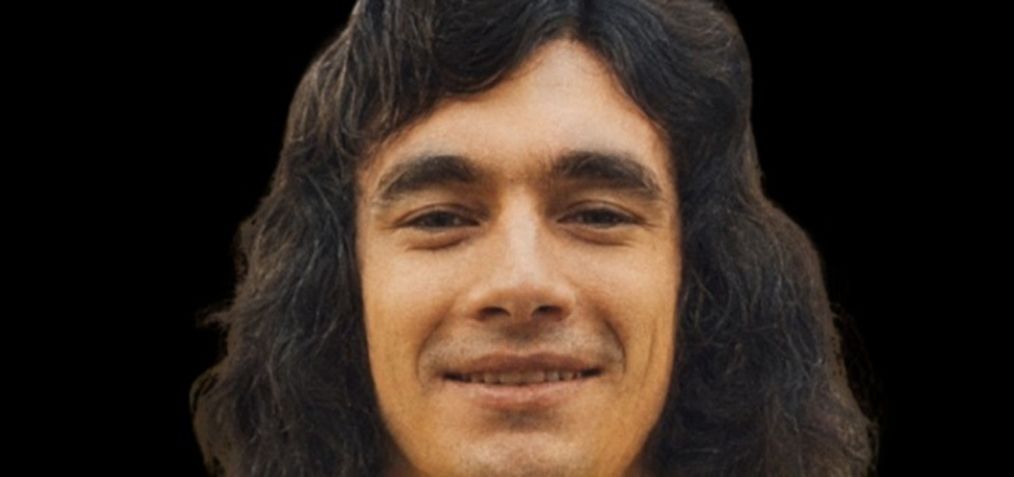
Roy Vincent Baker, born 8 June 1954, Bradford, England.
PART ONE
Roy Baker was born and brought up in Bradford in West Yorkshire, and it was in that same city, playing his early football for the local non-league outfit Eccleshill United, that he first caught the eye of the club he had supported since boyhood. Bradford City eventually signed the promising youngster as a professional in 1972, bringing him home in every sense of the word, and for someone raised on the terraces of Valley Parade there could hardly have been a more fitting way to begin.
The Bantams themselves carried plenty of history by that point, even if recent decades had not been kind. Founded in 1903, Bradford City had been elected straight into the Football League Second Division and clinched the Division Two title in the 1907–08 season, before going on to win the FA Cup final in 1911 with a narrow 1-0 victory against fellow First Division side Newcastle United in the replay at Old Trafford — a triumph that, remarkably, remains the only major honour that the club have ever won. Relegation followed in 1921-22, and again in 1926-27, though City bounced back with the Third Division North title in 1928–29.
A further relegation in 1937 was somehow followed by the Third Division North Cup in 1939, before yet another drop, this time in 1962, left the club marooned in the newly formed Fourth Division. Promotion arrived again in 1969, but by the time Baker signed his first professional forms, Bradford City had just tumbled straight back down in 1971–72. It was, in short, a club used to lurching between hope and disappointment, and the young forward was walking into a dressing room that badly needed some good news.
Manager Bryan Edwards, who had taken charge of Bradford City in November 1971 with the Yorkshiremen already sliding towards the foot of the Third Division table, oversaw Baker’s early years at Valley Parade, guiding the club through the 1972–73 and 1973–74 campaigns in the basement division before results began to slip again in the 1974–75 season. Baker, deployed as a striker relying on pace and a nose for goal, worked his way into the first-team picture during this period, sharing forward duties with the likes of Allan Gilliver and Gerry Ingram and playing alongside midfielders such as Ian Cooper and Johnny Johnston as City tried to find some stability in the lower reaches of the Football League.
Baker was handed his Fourth Division debut for Bradford City by Edwards in a hard-fought 1-0 win over Torquay United at Valley Parade on 17 March 1973. He scored his first goal for City in a morale-boosting 3-1 victory against Gillingham at Valley Parade on 31 March and proceeded to hit a consolation in a 3-1 loss to Stockport County at Edgeley Park on 21 April, before grabbing his third and final goal of the campaign in a 4-3 triumph over Yorkshire neighbours Doncaster Rovers at Valley Parade just a mere two days later. The next season he went on to net his first brace for his team in a 4-3 victory against Reading on 10 November 1973 and followed up by scoring one of the goals in a convincing 4-2 win over Bury on 29 December.
PART TWO
Roy Baker enjoyed a run of games the following campaign and registered a second-half brace as Bradford City defeated Stockport County by 2-0 at Valley Parade on 28 September 1974. He then produced a first-half winner in a close 1-0 victory against Brentford on 23 October and netted his fourth goal of the season in a 1-1 draw with Darlington on 18 January 1975. One of his more notable contributions came on 29 January, when he found the back of the net in a much-needed and comprehensive 3–0 win over Ken Hale´s Hartlepool United at Valley Parade — a result that helped nudge Bradford City a little further from the relegation places and towards the relative safety of mid-table. It came at a curious moment for the club, since Bryan Edwards himself resigned that same January, worn down by two and a half years of scrapping in the Fourth Division, with former Manchester City favourite Bobby Kennedy eventually installed as his successor later that year. Baker, whatever the upheaval behind the scenes, simply kept doing his job in front of goal.
Across his time at Bradford City, Baker made 46 Football League appearances and scored 11 times, a record that places him comfortably among the more productive fringe forwards of that mid-1970s Bradford side, even if he never quite established himself as a first-choice, week-in-week-out starter. His finishing, allied to genuine pace, gave City an option who could stretch tired Fourth Division defences, and though the team around him was never anything close to promotion contenders during his stay, Baker’s goals contributed to spells of respectability that a struggling club valued highly. It says something for the churn of lower-league football in that era that a player scoring roughly a goal every four appearances could still find himself moving on within a few years, but that is precisely what happened.
By the summer of 1975, Baker had left Bradford City and dropped into non-league football, a well-worn path for young professionals who had shown promise without quite forcing their way into a settled first team. He joined Guiseley AFC of the Northern Counties East League, contributing to their efforts through the middle years of the decade, before moving on to Thackley AFC. At Thackley, playing in the Yorkshire League, Baker managed to establish himself as a key performer, turning out in the Dennyfield club’s line-ups through the late 1970s alongside teammates including Robert Dover, John Hall and John Myers. It was solid, unglamorous non-league football, played in front of modest crowds on modest pitches, but it kept Baker in the game that he loved and gave him the chance to remain a recognisable figure around Bradford’s football community even after his Football League days were over.
His playing days wound down towards the close of the 1970s, and rather than chasing one final move elsewhere, Baker returned to his native city and settled into private life away from the professional and semi-professional game that had occupied him for the best part of a decade. Unlike some contemporaries who moved into coaching or management once their playing days finished, Baker’s story after going into retirement is a quieter one, with comebacks at clubs like Bradford Park Avenue, Bridlington Town and Farsley Celtic.
Baker was never on the fringes of full international recognition, never came close to a major honour with Bradford City, and never made the leap that some of his contemporaries managed into the higher divisions. What he did do, though, was represent his hometown club as a local product breaking through from an amateur side just up the road, score goals in the unforgiving environment of the old Fourth Division, and then continue playing at a decent non-league standard for several more years once his time at Valley Parade had ended.