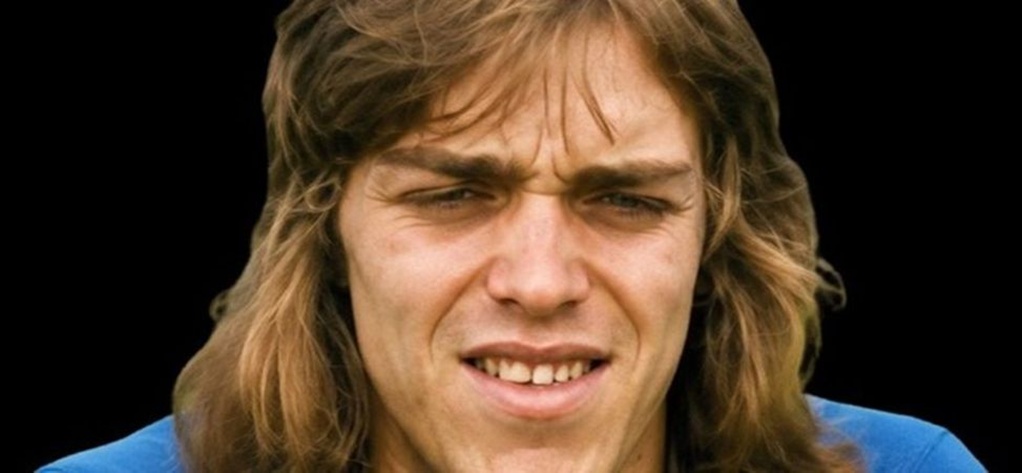
David Harry Gregory, born 6 October 1951, Peterborough, England.
PART ONE
David Gregory started out playing local football for Peterborough Rovers and Chatteris Town as a youngster. Peterborough United signed him up, and by the 1973/74 season he was involved in something rather special: a Fourth Division Championship winning campaign that saw the Posh romp home as champions. Gregory made just 13 appearances that season, mostly coming off the bench as he found his feet in the unforgiving world of professional football, where reputations built in the parks count for nothing once the whistle blows. Yet those substitute cameos were the making of him, and Gregory used every minute to soak up lessons that no amount of Sunday morning football could ever teach.
The goals started to flow the following season, and they came at exactly the moments that mattered. On 2 October 1974, Gregory struck a first-half winner against Southend United at London Road, sending the Posh faithful home happy with a slender 1-0 victory. It was his maiden league goal for the club, and though nobody quite knew it at the time, it was the first note of a tune that would be hummed around London Road for years afterwards. He was back among the goals on 7 December, notching the only strike in a 1-0 win over Walsall at Fellows Park, a result that underlined his growing importance to Peterborough’s forward line. Then, on 18 January 1975, he truly announced himself with his first brace for the club, helping himself to two goals in a rampant 3-1 victory over Port Vale at Vale Park. Peterborough were building something, and Gregory, still learning his craft, was becoming central to it.
The 1975/76 campaign, however, was the one that etched Gregory’s name into the memory of every Posh supporter who was there, because it brought Manchester United to Old Trafford and Peterborough United along for the ride. Before that, though, Peterborough had to negotiate the earlier rounds, and they did so with no shortage of grit. In the third round they were paired with Nottingham Forest, then managed by a certain Brian Clough and plying their trade in the Second Division, and the Cambridgeshire club went to the City Ground and held their hosts to a goalless draw. Back at London Road for the replay, Peterborough edged out Forest by a single goal, with former Notts County favourite Jon Nixon on the scoresheet, and suddenly the Third Division side found themselves in the fourth round proper, dreaming of bigger things.
Manchester United, for their part, had squeezed past Oxford United 2-1 in the previous round courtesy of two penalties dispatched by the reliably ice-cool Gerry Daly, and Tommy Docherty’s side, packed with attacking talent and playing with real swagger that season, were installed as overwhelming favourites when the draw paired them with Noel Cantwell’s Peterborough on 24 January 1976. Some 56,000 supporters packed into Old Trafford that afternoon, and the atmosphere alone might have been enough to unsettle a Third Division outfit more accustomed to crowds a fraction of that size.
Manchester United made the perfect start, and it came with an element of misfortune for the visitors. In only the eighth minute, Scottish international defender Alex Forsyth let fly with a powerful effort that took a cruel deflection off the unfortunate Peterborough defender Chris Turner’s shoulder, wrong-footing the goalkeeper completely and flying into the roof of the net. Barely three minutes had passed before Northern Ireland international midfielder Sammy McIlroy doubled the advantage, rising to meet an excellent cross from Gordon Hill with a close-range header that left Peterborough staring down the barrel of a hiding. Two goals down inside eleven minutes at Old Trafford is the sort of situation that can break a lesser side, and few would have blamed Cantwell’s men had they wilted there and then.
But Peterborough, roused rather than rattled, refused to fold, and it was here that Gregory came into his own alongside a classy midfield display from Peter Eustace and the willing running of John Cozens, both of whom posed United’s defence problems they had not bargained for. Cozens, who as it happened had been Cantwell’s very first signing for the club, pulled a goal back on the half-hour mark, coolly capitalising on a slip by Brian Greenhoff to reduce the arrears and give the travelling supporters something to shout about. Moments later he almost added a second, heading straight at goalkeeper Alex Stepney after continuing to press home the advantage his side had wrestled back.
Peterborough came out for the second half full of belief, and early on both Cozens and Nixon had chances in the same raid that might have thrown the tie back into the melting pot entirely. It was not to be, however, and Gordon Hill settled matters with some seventeen minutes remaining, hammering a blistering effort from outside the eighteen-yard box beyond the reach of Eric Steele and into the top corner to make it 3-1 and end any lingering hopes of an upset. If there is glory to be found in defeat, then Peterborough United found it that January afternoon in one of English football’s great cathedrals, and they left the pitch with their heads held high rather than hanging in shame.
Gregory himself was ever-present and the club’s leading scorer throughout that 1975/76 season, form that earned him a richly deserved place in the PFA’s Third Division Team of the Year, no small honour for a player who had begun his time at London Road warming the substitutes’ bench. Across three seasons in the Third Division he plundered 40 goals for Peterborough, a return that inevitably caught the eye of clubs operating at a rather higher level, and in the summer of 1977 Stoke City moved to secure his signature under the stewardship of the great George Eastham.
PART TWO
There were high hopes at the Victoria Ground that Gregory might make the step up in class, but the transition from the Third Division to Second Division football proved a good deal harder than anyone had anticipated, and he managed just four goals during the 1977-78 season for the Potters. Stoke, disappointed with the return on their investment, sold him on to Blackburn Rovers in August 1978. Gregory showed flickers of his old sharpness in Lancashire, scoring four goals in his first six matches for Rovers, yet even that promising start was not enough to save him from another move, and he was soon on his way to Bury.
It was at Gigg Lane that Gregory rediscovered the scoring touch that had made his name at Peterborough, banging in 16 goals during the 1978-79 campaign and following up with seven more in 1979-80 as he re-established himself as a reliable source of goals in the third tier of English football. His performances persuaded Portsmouth to take a chance on him, and he arrived at Fratton Park where his six goals played a significant part in helping Pompey secure promotion to the Third Division. The goals kept coming in 1980-81, when he struck 15 times for the south coast club, though the following campaign brought a lean spell in which he failed to find the net at all, and Gregory subsequently departed for Welsh football and a fresh challenge with Wrexham.
His first season at the Racecourse Ground brought only five goals as Wrexham suffered the disappointment of relegation to the Fourth Division in 1982-83, a difficult period for a club accustomed to better things. Yet Gregory, ever the fighter, responded in the best way he knew how. The 1983-84 season saw Wrexham struggle badly in the league, finishing a disappointing 20th, but Gregory produced the finest form of his time in senior football, scoring 20 goals, a career-best haul that stood as testimony to his enduring hunger for goals even as he approached his thirties. Better still, he helped fire Wrexham to the final of the Welsh Cup, a competition which in those days still carried the prize of entry into European football for the winners.
That run into Europe brought Gregory face to face with continental opposition of genuine pedigree, and few could have predicted quite how it would unfold. Fourth Division Wrexham, against all reasonable expectation, overcame Portuguese giants FC Porto over two legs, with Gregory involved in both matches as the Welsh side produced a display that belonged to romance rather than logic. It was, by any measure, a remarkable feat for a club fighting relegation battles domestically to be mixing it with one of Europe’s more storied names, and it spoke to the spirit that Gregory and his teammates had rediscovered after the setbacks of the previous campaign. However, the run could not continue indefinitely, and Italian side AS Roma, boasting far greater resources and continental experience, proved simply too strong for Wrexham in the next stage, bringing the European adventure to a close.
Gregory remained a fixture at Wrexham until the summer of 1986, giving the club several more years of committed service before the pull of home proved too strong to resist. He returned to where it had all started, spending a final season with Peterborough United and bringing his time in the professional game full circle at the club that had first given a park footballer from Chatteris his chance. Across two spells at London Road he made 204 appearances in total and scored 49 goals for the Posh, a body of work that earned him a place in the club’s Hall of Fame decades later, in 2023, when supporters and officials alike recognised a player who had given everything for the shirt he first pulled on as a teenager plucked from local football.