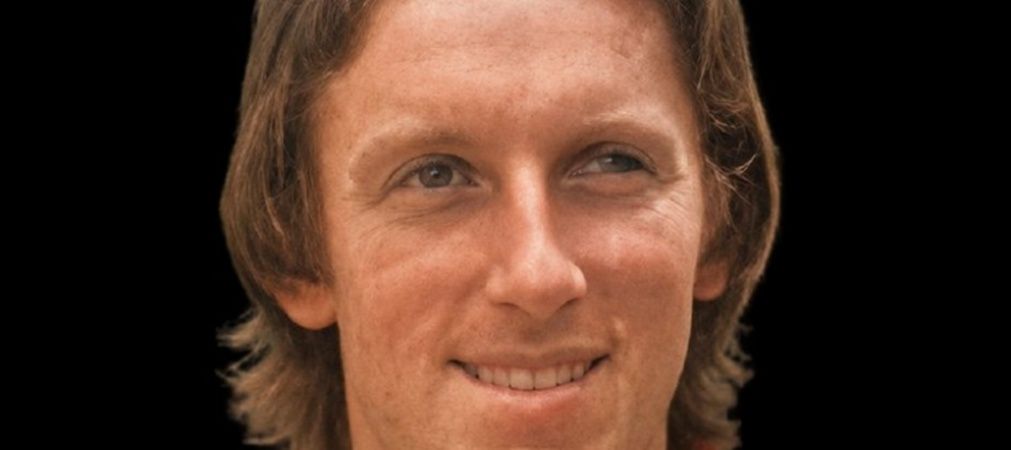
Michael Walter Elwiss, born 2 May 1954, Doncaster, England.
PART ONE
Born in Doncaster, Mike Elwiss grew up in a town that lived and breathed Doncaster Rovers, and it was there, on the local youth circuit, that he first caught the eye. Playing for Tech College in the Doncaster youth league from the age of fifteen, he regularly banged in more than twenty-five goals a season, and one former teammate who shared a pitch with him for three years later recalled that Elwiss simply had an extra yard of pace that nobody else on that circuit could live with. Scouts noticed. Rovers noticed. And by 1971, having progressed through the club’s junior ranks, the teenager was ready for senior football.
He did not keep anyone waiting. Elwiss made his Football League debut for Doncaster Rovers in October 1971, and in the manner that would come to define so much of what followed, he marked the occasion with two goals in a comfortable 3–1 triumph over Newport County. It was an emphatic way to announce himself, and it set the tone for three seasons in which the young centre-forward established himself as the most dangerous thing Doncaster possessed. He was named the club’s top scorer in his first full season of 1972–73, then repeated the feat the following year, and by the time Preston North End came calling in February 1974 he had racked up 34 goals from 108 appearances in all competitions for the club that had raised him. Preston paid £70,000 for his signature, a club-record fee at the time, and given how modest the transfer market was for a Third Division forward in the mid-1970s, it told you everything about how highly he was rated.
What happened next at Deepdale has passed into North End folklore, not least because of who was standing in the home dugout. Bobby Charlton, the World Cup winner turned rookie manager, picked Elwiss to make his debut on 2 March 1974 against Carlisle United, and the teenager repaid the faith with both goals in a closely contested 2–2 draw. Years later, reflecting on that afternoon in an interview with the Lancashire Evening Post, Elwiss admitted he had been staggered to see the great man’s hands shaking with nerves before kick-off, unable quite to square the legend of 1966 with the anxious figure reading out the team sheet in front of him. It is a lovely image, and it says something rather touching about how green the game still felt to a nineteen-year-old lad freshly arrived from Doncaster, even as he went out and scored twice against seasoned professionals.
Preston found themselves relegated to the Third Division that season regardless of his heroics, but rather than sulk about it, Elwiss simply set about the business of getting them straight back up, and it took him the best part of four years to finish the job. Between 1974 and 1978 he accumulated 192 appearances for the club and scored 60 goals, and along the way he was voted Preston’s Player of the Year twice, in 1974–75 and again in 1977–78. The engine room of that promotion push, however, was the strike partnership he built with Alex Bruce, a pairing so effective that by their own reckoning the two of them scored 121 goals between them from 142 starts across their time together at Deepdale.
Bruce himself would later describe playing alongside Elwiss as pure enjoyment, insisting he never once saw his partner’s head drop and calling him the bravest, most complete forward he ever lined up with. Whether it was Elwiss holding the ball up so Bruce could run beyond him, or Bruce dragging defenders wide so Elwiss could finish through the middle, defences in the old Third Division simply could not work out an answer, and in 1977–78 the pair combined for 47 goals as Preston finished third in the division on 56 points, edging out Peterborough United on goal average to secure the club’s return to Division Two. Along the way there were moments that stuck in the memory of everyone connected with the club, not least a late winner Elwiss grabbed in an FA Cup tie against Lincoln City that arrived at precisely the moment Preston’s promotion challenge needed a lift.
PART TWO
Success of that kind rarely goes unnoticed, and by the spring of 1978 several First Division clubs, Norwich, Aston Villa and Coventry among them, were said to be casting an interested eye over the Preston captain. But it was Terry Venables, newly installed as manager of Crystal Palace, who moved decisively, tracking Elwiss down on holiday in Spain to get his signature in person. Palace paid £200,000 that summer, a club-record fee, and Elwiss later admitted that at twenty-four he had simply been impatient to push on, drawn by Venables’ energy and by a Palace side already boasting emerging talents such as Kenny Sansom and Vince Hilaire, not to mention a production line that had just delivered back-to-back FA Youth Cup triumphs in 1977 and 1978.
Life in south London, though, was not the seamless transition he might have hoped for. Elwiss initially struggled with the change of pace, finding a flat in Herne Hill a world away from the northern towns he had grown up around, and it was only once he relocated to Coulsdon, on the leafier fringes of the city, that he began to feel settled. By his own admission it took roughly six months for him to adapt fully to both his new surroundings and to Venables’ more expansive, fluid style of play, a stark contrast to the direct, partnership-based football he had thrived on at Preston. Even so, there were flashes of the old magic: on 14 October 1978 he scored a deflected winner against his former club at Deepdale, a narrow 1–0 victory that kept Crystal Palace’s undefeated run at the top of the Second Division ticking over, and the following spring the club duly won the title, sealing promotion to the First Division as champions.
It was there, agonisingly, that the story turned. During that 1979–80 season, in the promotion campaign itself, Elwiss picked up a serious knee ligament injury in a match against Burnley, and in an era before arthroscopic surgery and modern physiotherapy had transformed the treatment of such damage, the setback proved close to catastrophic. He underwent an operation in an attempt to save his sharpness, but the surgery could not restore him to anything like his old level, and his final tally for Palace was reduced to 20 league appearances and seven goals, a cruelly slim return set against the scale of what he had promised when Venables signed him. Determined not to let the injury have the final word, Elwiss returned to Preston on loan in March 1980, and there was something fitting about the fact that he scored in what turned out to be his last game as a professional, managing 10 appearances and three goals during that brief final stint at Deepdale. But the knee would not hold up, and that summer, at the age of just twenty-seven, he announced his retirement.
Across a decade in the professional game, split between Doncaster Rovers, Preston North End and Crystal Palace, Elwiss finished with a genuinely outstanding scoring record: roughly 319 league appearances and around 100 goals, a return that places him firmly among the most productive forwards to have come out of South Yorkshire in that period. Given the modern game’s obsession with data and analytics, it is worth pausing on that figure, because a strike rate of close to one goal every three games, sustained across three different clubs and three different divisions, is the sort of thing that would command a substantial fee in any era. And yet Elwiss never got the opportunity to test himself in the top flight, his career curtailed by an injury that, treated today, would very likely have kept him playing for several more years.
Life after football took him back to the north-west rather than home to Doncaster, and there was a certain neat symmetry to how his personal life intertwined with the club that had made him. He married Olive Leeming, daughter of Keith Leeming, who was Preston North End’s chairman during Mike Elwiss’s playing days there, cementing a connection to Deepdale that went well beyond the pitch. Settling in Lancashire, he ran a dairy business just outside Preston, trading the roar of the terraces for the quieter rhythms of agricultural life, though he never drifted far from the club in spirit, remaining a committed supporter who continued watching Proud Preston from the stands long after his boots had been hung up for good.