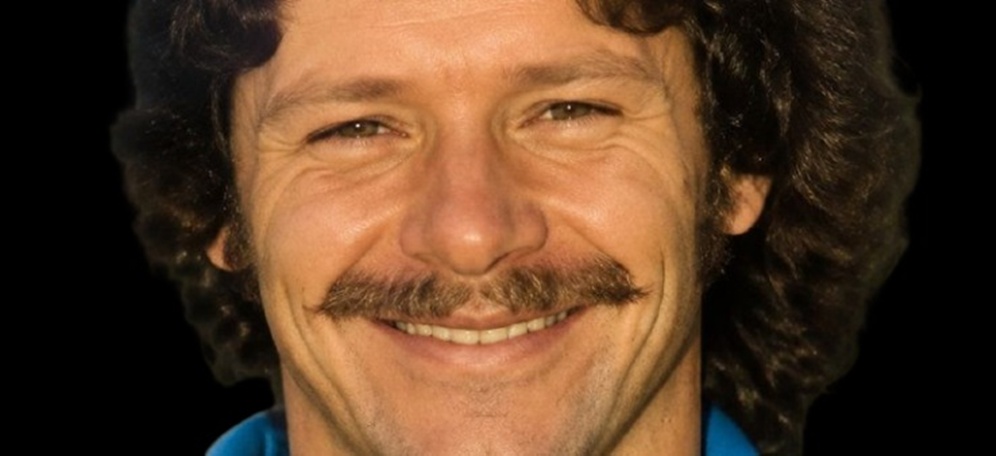
Andrew McKelvie Hughes Provan, born 1 January 1944. Greenock, Scotland.
PART ONE
Greenock born Andy Provan grew up in a shipbuilding town where hard work was part of ordinary life, and after leaving school at 15 he became an apprentice engineer in the local shipyards, although football was already offering him another direction because he had joined Port Glasgow Rangers while attending Mount Street School and soon attracted attention beyond the district. During the 1960–61 season he represented Scotland at youth level against England and Wales, earning two caps and gaining a taste of representative football before he had properly begun to establish himself in the senior game, and at 16 he joined St Mirren as an amateur before signing professional forms in 1961. He was quick, direct and comfortable on the left wing, but senior opportunities at Love Street were limited, and eight Scottish League appearances without a goal provided only a brief opening before he was released on a free transfer at the end of the 1962–63 season.
The lack of a transfer fee gave Provan the freedom to look south, and in May 1963 he signed for Barnsley, where he hoped regular football would help him turn youthful promise into something more substantial, but almost immediately his progress was checked by a serious knee injury that kept him out for six months and left him fighting simply to recover his fitness. He made only three League outings for Barnsley and failed to score, so the move that had appeared to offer a fresh beginning instead threatened to finish almost before it had started, yet he did not retreat to Scotland or accept that his chance had passed, and when York City offered him a month’s trial in 1964 he took it with the urgency of a player who knew there might not be another invitation.
York quickly saw the qualities Barnsley had barely been able to use, for he could carry the ball at pace, change direction without losing control and deliver from the flank, while his willingness to work made him useful even on afternoons when space was scarce, and his trial was extended into a contract for the season. That decision changed everything, because the injury-hit reserve from Barnsley became an ever-present member of a York side challenging for promotion from the Fourth Division, and his attacking contribution helped turn a short examination into the first sustained and productive spell of his senior football.
York’s 1964–65 side finished third in the Fourth Division and secured promotion alongside Tranmere Rovers, Luton Town and champions Brighton and Hove Albion, and Provan played throughout the campaign while finishing as the club’s second-highest scorer, a notable achievement for a footballer still regarded primarily as a winger. His small frame could invite a full-back to become overconfident, but Provan was difficult to pin down because he could move outside, cut infield or arrive near goal before a defender had decided which route to block, and his first season at Bootham Crescent demonstrated that he belonged in the Football League.
Promotion brought harder opposition and York could not retain their Third Division place, finishing bottom in 1965–66 and returning immediately to the Fourth Division, but Provan remained and continued producing goals as well as chances during the rebuilding that followed. Although the club did not repeat its promotion success while he was there, he developed into one of its most dependable attackers, appearing in 160 League matches and scoring 49 goals between 1964 and 1968, and those figures reflected both his durability after the damaging knee trouble at Barnsley and his growing ability to contribute from positions beyond the traditional winger’s patch. Four seasons at York had given him a secure Football League standing, yet by the summer of 1968 a change was needed, and Chester provided the next opening when they signed him in August.
Chester were another Fourth Division club trying to find the consistency required for a promotion challenge, and Provan entered a side that could score freely on its better afternoons but could not turn those flashes into a place among the leading teams, while the winger himself continued to bring pace and movement to an attack that required invention. His first season at Sealand Road ended with Chester in mid-table, and the following campaign followed much the same course, yet his individual contribution remained sound as he accumulated 82 League appearances and scored 18 goals in less than two full seasons. By then Provan was no longer the young Scot seeking a second chance after injury, for he had played well over 200 League matches in England and understood the rough demands of the lower divisions, where pitches became heavy, tackles arrived early and wide men were expected to get up immediately rather than wait for sympathy.
In April 1970 Wrexham took him across the border into North Wales, and his competitive record at the Racecourse Ground eventually amounted to 64 first-team appearances and 14 goals in all competitions, including 51 appearances and ten goals in the League. Wrexham were attempting to climb out of the Fourth Division and Provan remained a useful attacking presence, but his position weakened during his second full season, and after falling out of favour he was placed on the transfer list at £5,000, a valuation that initially discouraged interest before its reduction presented Southport manager Jimmy Meadows with an opportunity.
PART TWO
Southport signed Andy Provan in July 1972, and although the deal appeared modest beside more expensive lower-division transfers, it became one of the most important pieces of business completed by the club during that period because Meadows saw possibilities in the 28-year-old that went beyond his established role on the wing. At only five feet five inches, Provan hardly matched the conventional picture of a central forward, but Meadows recognised that his pace, anticipation and control could be more dangerous near goal, particularly if he played beside the powerful Jim Fryatt, whose aerial strength and ability to occupy centre-halves created the gaps his smaller partner needed.
The conversion gave Provan renewed purpose, and the understanding between the pair developed quickly because Fryatt could challenge for high balls, hold off defenders and provide knock-downs, while Provan read his movements, attacked loose possession and finished chances before opposing defences had recovered their shape. Southport supporters warmed to him because he was lively, brave and capable of spectacular goals as well as close-range finishes, and he supplied the scoring flair that had been missing since Tony Field’s departure. Frank Lee also improved markedly as both creator and scorer, David Hughes brought speed on the flank after arriving from Preston North End for £4,000, and with John McPhee organising the side and Brian Green assisting Meadows as trainer-coach, Southport possessed a balanced team rather than merely a productive front pair.
The 1972–73 season became the outstanding campaign in Southport’s Football League history, and Provan stood at the centre of it as the Sandgrounders won the Fourth Division championship, their first title of its kind and their first major divisional honour since topping the Lancashire League in 1903. Southport never fell below third place, although their progress was not entirely smooth because three consecutive defeats in November included an FA Cup elimination at Port Vale, where the visitors’ better football was undone by a more physical approach, but the return of Alex Russell from Tranmere Rovers on 30 November restored imagination to the midfield and helped produce an eight-match unbeaten League run.
The defining change came on 6 January 1973, when Southport went top by destroying Darlington 7–0 away from home in a match threatened by fog, and the home side were dismantled before a crowd of only 1,088 as Fryatt scored four successive goals and Provan’s pace helped stretch a defence unable to cope with the movement around him. Southport retained first place for the rest of the season and completed seven League doubles, collected a club-record 62 points under the two-points-for-a-win system and secured 26 victories, three more than their previous best, while their away form included seven successive matches without defeat and four consecutive games after New Year without conceding a goal.
Southport´s championship was built at their Haig Avenue fortress, where only eight League points were surrendered, and it was strengthened by a series of away performances in which Southport showed that the leaders could play with freedom as well as discipline, although a 3–3 draw to Mansfield Town at Field Mill after two late concessions and a disputed last-second equaliser against them in a 2-2 draw with Hereford United at Edgar Street on Boxing Day demonstrated how easily commanding football could produce less than it deserved. In the League Cup, Third Division outfit Walsall were defeated 4–1 at Haig Avenue before Southport went out at Notts County after mounting a spirited recovery from three goals behind, and while the cup runs were brief, the League campaign never lost its direction.
The title was finally secured in dramatic fashion against Hartlepool when Russell drove a free kick into the net for an injury-time equaliser before 6,533 spectators, Southport’s largest home crowd of the season, and the celebrations carried particular meaning because the regular support had been surprisingly low, with an average attendance of only 3,577 despite the quality of the football. Meadows was named Fourth Division Manager of the Year, having previously guided Stockport County to the 1966–67 championship, while Provan’s performances brought the Whitbread Fourth Division Player of the Year award and confirmed that the winger Wrexham had been prepared to sell had become one of the division’s most effective forwards.
PART THREE
Before Southport began life in the Third Division, Andy Provan, Jim Fryatt and defender Chris Dunleavy travelled across the Atlantic on loan to the newly formed Philadelphia Atoms, whose English coach Al Miller had assembled a hard-working squad for the 1973 North American Soccer League season. The surroundings were different, the distances were greater and many of the crowds were new to the sport, but Provan and Fryatt carried their Southport understanding straight into the Atoms’ attack, where their contrasting qualities soon earned them the nickname “Batman and Robin”.
Philadelphia lost their opening match 1–0 to the St Louis Stars, yet they then went 12 games undefeated and finished the regular season with nine victories, eight draws and only two defeats, taking the Eastern Division ahead of clubs that included the New York Cosmos. Provan and Fryatt combined for 18 goals and nine assists, while a defence nicknamed the “No Goal Patrol” provided the security behind them, and the Atoms defeated Toronto Metros 3–0 in the semi-final before meeting the Dallas Tornado in the championship match at Texas Stadium on 25 August. Philadelphia won 2–0, with Fryatt heading the opening goal after only five minutes and Dallas defender John Best scoring an own goal during the second half, and the expansion club therefore became North American champions in its first season, while Provan, Fryatt and Dunleavy were all selected for the NASL’s first All-Star team.
That American triumph came at a cost because Provan returned to Southport for the 1973–74 English season without a proper rest, and the effects of playing almost continuously for 12 months began to show as the speed and sharpness that had illuminated the championship campaign became harder to sustain. Southport also found the Third Division a far more punishing environment, while Meadows lost his job before the year was out despite the title he had recently delivered, and the side that had moved together so confidently only months earlier struggled to reproduce its best form.
Provan still contributed and later returned to Philadelphia for the 1974 NASL season, when he began brightly and registered six goals during the Atoms’ strong opening run, but the defending champions lost their attacking momentum as the summer developed and failed to reach the play-offs. Across his two American seasons he made 39 League appearances and scored 20 goals, figures that underlined how well his game suited the NASL, yet his future remained in England. Following 83 League appearances and 28 goals for Southport between 1972 and 1974, he teamed up with Torquay United on the south coast where the pace of life may have differed from Greenock, York, Chester or Wrexham, but Fourth Division football remained as demanding as ever and Provan, now past 30, had to adapt once more.
Torquay were operating near the lower reaches of the League and could not offer the excitement of a championship challenge, but Provan gave them experience, width and goals during three seasons in Devon, and one afternoon in particular showed that his eye for an opening remained intact. On 23 April 1975 he scored a hat-trick against Rochdale, becoming the first Torquay player to achieve that feat in a Football League match since Mike Trebilcock against Workington in September 1972, and although such explosive displays were now less frequent, he remained a valuable member of the side.
Provan´s Torquay League record reached 91 appearances and 14 goals before he moved out of the Football League in 1977, by which time his totals in the English competition had reached 471 appearances and 119 goals. There was no reason for him to stop, however, because Bath City head coach Brian Godfrey signed him only a few weeks into the 1977–78 Southern League season, and the move proved inspired as Provan amassed 21 goals in 54 appearances while the Romans won the Southern League championship. He marked his League debut for Bath by scoring in a 3–1 victory over Worcester City on 27 August 1977, and his combination of experience and movement added an important cutting edge to a side that maintained its challenge through a demanding campaign.
Andy Provan eventually settled in Torquay and worked at a local hospital, but football continued to draw him back long after his professional playing days in the Football League and the NASL had ended, and he appeared for smaller clubs around Devon before finally finishing at the age of 46 years in 1990. Even then he did not abandon the ball, for he kept himself fit through five-a-side football into his fifties and later took up golf, retaining the appetite for competition that had carried him from a Greenock school team and the shipyards to championship medals on both sides of the Atlantic.