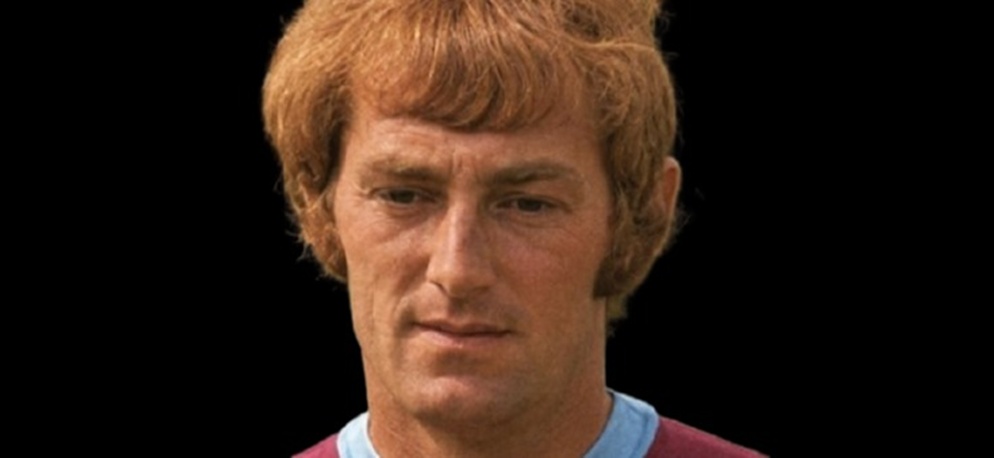
Arthur Bellamy, born 5 April 1942, Blackhill, England.
PART ONE
Arthur Bellamy was discovered by Jack Hixon while playing for the Consett Iron Company works team and was offered a trial at Turf Moor in 1958, at the age of fifteen. The trial went well enough that Burnley kept hold of him, though nothing was rushed in those days. Bellamy spent the best part of two years working his way through the junior sides before he finally put pen to paper on his first professional contract in June 1959, on his seventeenth birthday, and even then there was no fast track into the first team.
Burnley in the late fifties and early sixties were a genuinely strong side, packed with internationals and experienced professionals, and a teenage inside-forward from the North East had to be patient. So Bellamy played his football in the ‘A’ team and the reserves, learning his trade, and by the 1961/62 campaign that patience had brought some reward: he was part of the side that won the Lancashire League with the ‘A’ team, while also contributing to a reserve side that lifted the Central League title in the same season. Two honours in a single year, then, though neither of them came with a first-team cap attached, and Bellamy’s path to Burnley’s senior side was blocked by one man in particular.
That man was Jimmy McIlroy, the great Northern Irish inside-forward who had made the position his own for the best part of a decade, and as long as the Ulsterman was fit and playing there was precious little room for anybody else to get a look in. But football has a habit of opening doors at unexpected moments, and when McIlroy departed Turf Moor in 1963 it was Bellamy who finally got his chance. He was handed his debut by manager Harry Potts against Manchester City at Maine Road in March 1963, just a fortnight or so before his twenty-first birthday, and he could hardly have asked for a kinder introduction: Burnley won the match by a 5–2 margin, and Bellamy himself got on the scoresheet with the fifth goal. He kept his place for most of what remained of that campaign, a solid enough return for a young man finally let off the leash.
Yet if anyone assumed the door was now permanently open, the following season proved otherwise, because regular football wasn’t handed to him lightly and he made just thirteen appearances in 1963/64. Still, within those thirteen games came the afternoon that Burnley supporters of a certain vintage still talk about. Bellamy was selected to play at Goodison Park against an Everton side that had not lost at home in over two years, a daunting record for any visiting team, let alone one fielding a young inside-forward with barely a season’s senior experience behind him. It was September 1963, and Bellamy simply tore the game apart. By half-time Burnley led 4–1, with Bellamy claiming a hat-trick and Brian Miller adding the other, and although Everton rallied and made a nervous finish of it, the Clarets held on to win 4–3 and ended that long undefeated home run in some style. It was the first of two hat-tricks Bellamy would score in Burnley colours, and it remains, by any measure, the outstanding individual performance of his time at the club.
Bellamy was never a prolific goalscorer, and he would have been the first to admit as much, but the 1963/64 campaign turned out to be the most productive season of his career in front of goal: eight strikes from seventeen league appearances, a fine return for a player who spent much of his time creating rather than finishing. Regular selection, though, continued to elude him across the following campaigns, and it wasn’t until the 1967/68 season that he enjoyed his busiest campaign, appearing in something approaching forty matches across league and cup as Burnley used him in a variety of roles.
That adaptability was, in truth, the real hallmark of Bellamy’s game. Nominally an inside-forward by trade, he was versatile enough that when Burnley began experimenting with new tactical systems in the mid-sixties, it was Bellamy who was trusted to play as an auxiliary sweeper, dropping deep to help shore up the defence, a job that demanded intelligence and positional sense rather than a natural instinct for goal. Managers value that sort of player even when supporters do not always notice them, and across nine years in and around Burnley’s first team, Bellamy accumulated 250 appearances in all competitions and registered 29 goals, a record built on reliability rather than spectacle.
PART TWO
By the turn of the new decade Bellamy was the elder statesman of a Burnley side going through its own transition, and in 1971/72 he produced his second hat-trick for the club, this time against Orient, a reminder that even in the twilight of his Turf Moor years he retained the knack of finding the net when the occasion demanded. But time catches up with every player eventually, and his Burnley career drew to its close that same season in circumstances that, for a Sunderland-supporting Co Durham lad, carried a certain poetic symmetry. His final appearance for the club came at Roker Park against the very team he had followed as a boy. Burnley led 3–1 and looked to be cruising, only for Sunderland to storm back and win 4–3, and Bellamy was left out of the six games that remained that season. It proved, in hindsight, to be his last outing in Burnley colours.
That summer, with Jimmy Adamson now in charge and looking to freshen up his squad, Bellamy was sold to Chesterfield for a fee of £10,000. He was reluctant to go, by his own admission, having spent the better part of his adult life at Turf Moor, but he understood the realities of professional football well enough not to make a fuss about it. He made his debut for Chesterfield on 12 August 1972 in a 4–1 home win over Oldham Athletic, and whatever frustrations he’d felt at Burnley over irregular selection evaporated almost immediately at Saltergate, because Chesterfield used him as a first-team regular throughout his four seasons there. He went on to make 133 league appearances for the club, scoring 12 goals, a period of consistent, unspectacular service that suited a player now well into his thirties. In the summer of 1976, at the age of thirty-four, he was released, and Bellamy decided the time had come to hang up his boots for good.
Retirement from playing didn’t mean retirement from work, of course, and Bellamy did what plenty of ex-professionals did in that era: he found himself an ordinary job. He ran a milk round for a while, and then took on a fish and chip shop on Briercliffe Road in Burnley, the sort of unglamorous, hands-on trade that kept him rooted in the town even after his playing days were done. But football, and Burnley Football Club in particular, was never far away, and in 1979 Harry Potts, the man who had first taken him on as a fifteen-year-old back in 1958, came calling again, this time offering him a coaching role with the club’s young players. Bellamy accepted, and so began a second chapter at Turf Moor that would eventually run even longer than his playing career had done. He worked under a succession of managers through the early eighties, and for a spell in the middle of the decade he even lent a hand alongside the groundsman, a job that would, much later, become his own.
The mid-eighties brought fresh responsibility. When Brian Miller returned to Turf Moor as manager in the summer of 1986, he turned to Bellamy and offered him the role of assistant manager, and it was in that capacity that Bellamy shared in one of the most fraught afternoons in the club’s history. Burnley found themselves fighting to preserve their Football League status, and when they beat Orient to stay up, Miller’s anguish on the touchline was etched into supporters’ memories for years afterwards, and Bellamy was stood right alongside him throughout that ordeal. A year on, there was a rather happier occasion to enjoy together, as Bellamy took his place on the bench once more when Burnley met Wolves at Wembley in the Sherpa Van Trophy Final.
When Miller eventually stood down as manager and Frank Casper took the reins, bringing in Mick Docherty as his own assistant, Bellamy returned to youth coaching duties rather than stepping away from the club altogether. Not long afterwards he moved on from coaching entirely and joined the ground staff, working his way up to become head groundsman, a role that saw him tend the pitches at both Turf Moor and the Gawthorpe training ground, and by then he was as much a fixture of the place as the stands themselves.
Arthur Bellamy remained head groundsman until his retirement at the end of the 2006/07 campaign, bringing down the curtain on very nearly fifty years of continuous outstanding service to Burnley Football Club in one capacity or another: player, coach, assistant manager, and finally groundsman, a combination of roles that few men anywhere in English football can claim to have filled at a single club. In recognition of that extraordinary span of loyalty, the Burnley Supporters’ Clubs presented him with their Special Achievement Award, handed over by the then manager Steve Cotterill, a fitting tribute from a fanbase that understood exactly what Bellamy had meant to the Turf Moor club long after his footballing boots had been put away. Later, at Gawthorpe, a media centre built close to the old training ground bungalow where Bellamy and his family had once lived came to be affectionately nicknamed “Arthur’s Bungalow” by those who remembered him best, a small but telling detail of how deeply he had burrowed into the club’s affections.