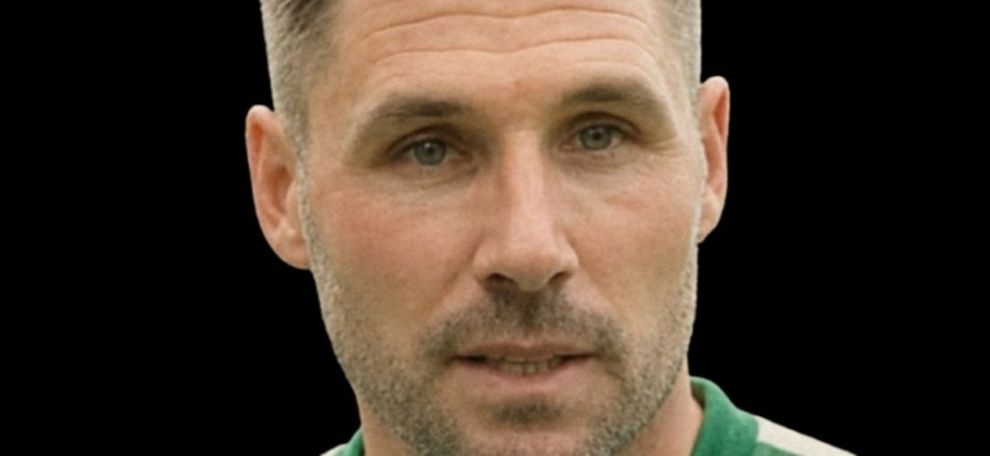
Gary Hooper, born 26 January 1988, Harlow, England.
PART ONE
Gary Cooper joined Tottenham Hotspur’s youth set-up at the tender age of seven, a fact that speaks to the kind of raw promise scouts spot in a boy long before anybody can say with certainty what he will become, and for the best part of a decade he wore the famous cockerel on his chest as he progressed through the club’s ranks. Yet football, as anyone who has followed it for any length of time will tell you, cares little for sentiment or for the length of an apprenticeship already served, and when Hooper turned 14 he was handed just 20 minutes in a trial match before Tottenham released him without ceremony. It is the sort of moment that finishes a great many footballing dreams before they have properly begun, but Hooper’s was only just starting, however painful that first setback must have felt to a boy still finding his feet in the game.
Trials followed at Northampton Town and at Luton Town, both proving fruitless, and so the teenager found himself doing what thousands of hopefuls before him had done: playing Sunday league football, turning out for whoever would have him, and trying to keep the flame alive while the bigger clubs looked elsewhere. It is worth pausing on that period, brief as it was, because Sunday league football asks different questions of a young player than an academy set-up ever can; there are no cones laid out with geometric precision, no sports scientists monitoring every sprint, only muddy pitches, unforgiving pitches, and grown men who will not think twice about putting a teenager on the seat of his shorts if he strays too close to the ball. Hooper came through that experience toughened rather than discouraged, and it is not too fanciful to suggest that the resilience he would need in the years ahead, through loan moves and rejections and continent-hopping later in his footballing life, was first forged on those unforgiving Essex Sunday mornings.
A short spell at Maldon Town gave him a taste of a slightly higher standard, though it was his move to Isthmian League Premier Division outfit Grays Athletic in the 2003–04 season that properly set him on his way. He was still only 15 when he was named as an unused substitute for an Essex Senior Cup tie against Braintree Town on 11 November 2003, a fixture in which he eventually replaced Edward Erekosima, and though nobody watching that night could have predicted where the boy’s finishing would eventually take him, the seeds had been sown. Non-league football, for all that outsiders sometimes dismiss it as a lesser stage, has a habit of hardening young players quickly, and Grays Athletic, based just off the Thames Estuary and playing in front of crowds who knew the game inside out even if the surroundings were modest, proved the perfect environment for a raw teenager still working out what kind of forward he wanted to become.
His proper debut arrived the following season, and it could scarcely have gone better, for Grays were promoted into the newly formed Conference South, with Hooper contributing 12 goals in 30 league appearances as the Essex club claimed the title outright. He also started for Grays in the 2004–05 FA Trophy Final against Hucknall Town, a match that went the distance and beyond, running through 90 minutes and extra time locked together before a penalty shoot-out was required to separate the sides; Hooper was substituted late in extra time, and though he did not see the shoot-out through to its conclusion, Grays held their nerve to win it 6–5 and lift the trophy. The following campaign, now competing in the Conference National having climbed a division, Hooper found the net eight times in 40 league outings, a more modest return but useful experience nonetheless against tougher opposition, and he was again involved in cup glory when Grays defeated Woking by a 2–0 margin in the final of the 2006 FA Trophy, though on that occasion he had to be content with a place among the substitutes rather than a starting berth.
By the summer of 2006, though, the young striker had grown restless. He felt, not unreasonably, that he was being restricted to fleeting substitute appearances in the closing minutes of matches rather than being given a proper chance to prove himself over 90 minutes, and he made no secret of his desire to move on. Grays, for their part, released him at the end of that season, closing the book on a spell that had nonetheless given Hooper his grounding in senior football, taught him how to score goals under pressure, and put two FA Trophy medals in his collection before he had even turned 19.
Grays Athletic’s own supporters have never forgotten the young Hooper, and rightly so, for the club’s rise through the leagues in the mid-2000s coincided precisely with his emergence as a genuine goal threat, and it is a period still spoken about fondly around the Recreation Ground whenever his name comes up. Few could have guessed, watching a slight teenager scampering around a non-league pitch in front of a few hundred hardy souls, that within a decade he would be lifting Scottish Cups in front of tens of thousands and testing himself against some of the finest defences on the continent, yet that is precisely the trajectory his finishing would take him on.
PART TWO
Released and unattached, Hooper went first to League Two side Barnet for a trial, but it was a second trial, this time at Championship club Southend United, that proved decisive; manager Steve Tilson liked what he saw and handed the young striker a one-year contract in August 2006. Hooper wasted little time announcing himself in cup competition, scoring twice in a 3–1 League Cup victory over Leeds United on 24 October, though breaking into the Championship side on a regular basis proved a taller order, and he was limited to 18 appearances that season, only two of them starts. Recognising that the young forward needed regular football rather than fleeting cameos, Tilson sanctioned a loan move to League One club Leyton Orient on 16 March 2007, a switch designed both to test Hooper against sterner opposition and to help the club decide whether he merited a fresh contract come the summer.
The loan spell brought Hooper instant reward, for he scored in each of his first two matches for Orient, first in a 2–2 draw with Oldham Athletic after coming off the substitutes´ bench, and then a week later against League One’s pace-setters Scunthorpe United, another game that finished 2–2. Two further appearances followed before Southend, exercising a 24-hour recall clause written into the loan agreement, brought him back to Roots Hall on 1 May, just five days before their final match of an already-relegated season against Southampton, a game in which injuries elsewhere forced Hooper into the starting line-up for a match Southend went on to lose 4–1. Orient’s manager Martin Ling spoke warmly of the young striker’s contribution during his time on loan and made clear he would keep an eye on his progress thereafter, a mark of the impression Hooper had made in a short spell away from his parent club.
Back at Southend for the first half of the 2007–08 campaign, now playing in League One following relegation, Hooper managed to make 18 appearances and scored twice for the Shrimpers, and on 28 January 2008 he signed a new 18-month contract to extend his stay with the Roots Hall outfit. That very same day, though, he also agreed to a one-month loan move to League Two team Hereford United, a switch that would prove to be the making of him as a genuine goalscoring threat.
He made his debut for Hereford two days after putting pen to paper, starting in a 2–1 defeat at Barnet, but he was off the mark in his very next outing, scoring the only goal in a 1–0 win over Rotherham United. Five further matches brought four more goals, and with the initial month-long loan due to expire on 28 February, Hereford manager Graham Turner persuaded Southend to extend the arrangement through to the end of the season, a request Tilson granted despite having two strikers of his own sidelined through injury at the time. It turned out to be a shrewd piece of generosity on Southend’s part, for Hooper’s 11 goals in 19 appearances helped fire Hereford to third place in League Two and secure promotion, a rich reward for a player who, barely two years earlier, had been surplus to requirements at Grays Athletic.
Across his full two seasons at Southend, Hooper scored just four goals in 44 appearances for the parent club itself, a modest return that belied the promise he had shown whenever loaned elsewhere, and it was that promise, rather than his numbers for Southend directly, which had clubs sitting up and taking notice heading into the summer of 2008. At the start of the 2008–09 season, with Tilson looking to rebuild his forward line, Hooper was among four strikers placed on the transfer list at Southend. Hereford, buoyed by his successful loan spell, had a bid accepted but simply could not compete financially with the larger offers arriving from elsewhere, and several League One clubs circled with genuine interest. Cheltenham Town also had a bid accepted, yet Hooper turned down the move to Gloucestershire, choosing instead to join Scunthorpe United, who completed the signing on 14 July 2008 for a fee reported at £125,000, rising to £175,000 depending on appearances, with Hooper putting his name to a three-year contract at Glanford Park.
PART THREE
The impact was almost immediate. Hooper scored in Scunthorpe’s opening league match of the season, a 2–1 defeat to Leeds United, then struck his first hat-trick in professional football against Brighton on 6 September, and by the time he had netted in seven of his first seven matches for the club, Scunthorpe found themselves firmly in the thick of the promotion race. There was a scare on 28 October, when league leaders Scunthorpe suffered their first defeat in 12 matches, going down 3–0 to Oldham Athletic in a game that saw Hooper forced off with what was initially feared to be a broken foot that might have kept him sidelined for up to six months; scans thankfully revealed nothing worse than heavy bruising, and Hooper was soon back among the goals, netting both in a win over promotion rivals Millwall on the final day of January 2009. By now the newspapers had taken to describing him as merely the latest product off Scunthorpe’s celebrated production line of talented young forwards, a lineage that had already produced several players who went on to bigger things.
Scunthorpe’s exceptional season carried them all the way to the final of the Football League Trophy, where they met League Two side Luton Town in front of a crowd of 55,000 at Wembley Stadium. Hooper put his side ahead with a superb low shot across goal in the 14th minute, only for Chris Martin to level matters just past the half-hour mark after running on to a cross from Tom Craddock. Craddock, fortunate to escape a red card earlier for an off-the-ball incident involving Cliff Byrne, then restored Luton’s lead with a crisp half-volley in the 70th minute, before Grant McCann struck a spectacular equaliser with the clock almost run down. It fell instead to substitute Claude Gnakpa to settle matters in extra time, the Frenchman running on to a long pass and lifting the ball over the advancing Joe Murphy to seal victory for the Hatters and deny Hooper and his teammates the silverware their season had otherwise merited.
Disappointment on the biggest stage aside, Hooper’s individual season could hardly have gone better. He was named Scunthorpe’s Player of the Year, having scored 24 league goals to help the Iron secure promotion, and 30 in all competitions once cup football was accounted for, a return just three shy of Billy Sharp’s club record of 33 in a single campaign. He spoke afterwards of his delight at the team’s overall performance and set himself the ambitious target of 15 Championship goals for the following season, evidence of a striker with no shortage of self-belief. Promotion itself, achieved via automatic qualification rather than the lottery of the play-offs, was a considerable achievement for a club of Scunthorpe’s modest resources, and much of the credit landed squarely at the feet of a forward who, barely three years earlier, had been playing his football in front of a few hundred spectators in the Isthmian League.
What made Hooper’s form at Glanford Park all the more striking was the manner of his goals rather than merely their quantity. He was not, by any stretch, a target man in the traditional English lower-league mould, all elbows and knock-downs; instead he possessed a sharpness of movement in and around the penalty area, and a coolness in front of goal, that marked him out as a different kind of finisher altogether, one who could ghost beyond a defender’s shoulder as easily as he could turn a half-chance into a clinical strike. Scouts from further up the football pyramid, and eventually from north of the border too, had started to take serious note.
That belief was not misplaced. Queens Park Rangers had a £1 million bid rejected for Hooper at the start of the 2009–10 campaign, and Coventry City were also rumoured to be interested, but Scunthorpe held firm and Hooper repaid their faith. He scored twice in a 3–2 win over Derby County in mid-August, prompting manager Nigel Adkins to admit publicly that he feared other clubs would try to prise his prized striker away before the transfer window closed, and by late February, after a goal in a 2–2 draw with Watford took his tally to 13 for the season, captain Cliff Byrne was describing Hooper as the sort of forward who could conjure something out of nothing, adding that while he hoped his teammate would stay, any departure would only come for a substantial fee.
Returning from a groin injury on 17 April 2010, Hooper marked the occasion in style with a hat-trick in front of more than 5,000 spectators at Glanford Park as Scunthorpe beat Bristol City 3–0; he forced the ball over the line for his 14th league goal of the season inside the first quarter of an hour, doubled the lead with a brilliant turn and finish ten minutes into the second half, and completed his treble by rounding goalkeeper Stephen Henderson with 20 minutes remaining. A week later he added two more against Doncaster Rovers, and by season’s end Hooper had scored 20 goals in 39 appearances across all competitions, 19 of those coming in 35 league outings, leaving him third among the division’s leading marksmen behind only Peter Whittingham and Nicky Maynard, who each finished with 20. Such was the affection Scunthorpe’s supporters retained for him that, when the club later polled fans in 2012 on the greatest player in its history, it was Hooper’s name that topped the list.
PART FOUR
Hopper´s performances had, by the summer of 2010, made a move to a bigger stage inevitable, and on 26 July that year Scottish Premier League giants Celtic completed his signing for a transfer fee of £2.4 million, handing the 22-year-old the sort of platform which his talent had long deserved. He marked his debut in style, scoring against Portuguese side Braga in a Champions League third qualifying round tie on 4 August, though joy quickly turned to frustration four days later when he tore a calf muscle in a friendly fixture against Blackburn Rovers, an injury that ruled him out for the best part of six weeks.
Hooper returned to action on 22 September, scoring in a 6–0 Scottish League Cup thrashing of Inverness Caledonian Thistle, and made his Scottish Premier League debut three days later in a hard-earned 2–1 win over Hibernian at Celtic Park. His first league goal followed on 2 October in a 3–1 victory over Hamilton Academical, and he was among the goals again a fortnight later, scoring twice at Dundee United’s Tannadice ground, before opening the scoring in a 3–1 defeat to bitter enemies Rangers back at Celtic Park a week after that.
Then came 6 November and a result that would live long in the memory of every Celtic supporter present that day, as Hooper and strike partner Anthony Stokes each helped themselves to a hat-trick in a 9–0 demolition of Aberdeen, a club-record scoreline built on two early red cards for the visitors and a rampant home team performance that saw Stokes convert twice from the penalty spot either side of Hooper twisting Zander Diamond inside out for one goal and pouncing on a deflected cross for another; Hooper rounded out his own treble with a back-post header, sandwiched between further goals from Joe Ledley and a McCourt penalty that rubbed salt into Aberdeen’s wounds.
Eight days later Hooper struck the winner in stoppage time as Celtic beat St Mirren 1–0, and after recovering from an injury that had kept him sidelined over the Christmas period, he returned to open the scoring in a 3–0 win over Hibernian on 15 January 2011. He was on target again in a further 3–0 victory over Aberdeen on 1 February, netted twice as Celtic beat Rangers 3–0 on 20 February, and grabbed another brace in a 3–1 win over Hibernian on 6 April. A fortnight later he produced a man-of-the-match display against Kilmarnock, scoring once and setting up three further goals in a 4–0 win, before rounding out the campaign with a goal in a 4–1 victory over Dundee United, a brace against Hearts, and the opener in a 4–0 defeat of Motherwell in Celtic’s final league match of the season.
Such consistency saw Hooper nominated for the PFA Player of the Year award, ultimately losing out to teammate Emilio Izaguirre, though he was named in the PFA Scotland Team of the Year and collected his first piece of silverware at the club when Celtic beat Motherwell 3–0 in the Scottish Cup final on 21 May 2011. His strike rate that season, 20 goals in just 26 matches, was the best of any player in Britain and the fourth best across the whole of Europe, trailing only Cristiano Ronaldo, Lionel Messi and Antonio Di Natale, rarefied company indeed for a striker who had been playing non-league football only six years earlier.
The 2011–12 campaign opened with a rare miss, Hooper having a penalty saved by Graham Stack in a 2–0 win over Hibs on 24 July, but he was soon back among the goals, scoring in a 5–1 victory over Dundee United on 13 August. An ankle injury picked up around that time ruled him out for a couple of matches, and although interest from Premier League clubs Queens Park Rangers and Wolverhampton Wanderers surfaced on transfer deadline day that summer, Celtic rejected any enquiries about his availability without hesitation. He scored in a 4–2 defeat to fierce rivals Rangers on 18 September, his fourth goal in seven Old Firm meetings, and was among the goals in cup competition too, netting in a League Cup win over Ross County and again in a quarter-final victory over Hibernian, while European football brought its own rewards: a late substitute’s goal against Rennes in the Europa League on 3 November, followed three days later by another goal off the bench, this time the winner in a 2–1 league victory over Motherwell.
On 26 November, Hooper scored a hat-trick in a 5–0 rout of St Mirren, Georgios Samaras opening the scoring before Hooper struck first from close range and then twice more early in the second half, with substitute Dylan McGeouch completing the rout with a fine solo goal. Five goals in the month of November earned Hooper the SPL Player of the Month award, and he continued to find the net regularly through the winter, scoring in a 2–1 win over Dundee United on 14 January and again in a resounding 4–0 victory at Hearts on 8 February. By late April he had struck again in a 3–0 win over Rangers, a match in which Charlie Mulgrew’s headed opener was followed by a Kris Commons pass that Hooper found before threading it through to the winger, who nutmegged Kyle Bartley and chipped home; Hooper then completed the scoring himself with a rasping 20-yard drive after being found by Samaras, capping a thoroughly dominant Celtic performance in front of their own supporters.
If that had been impressive, what followed a fortnight later, on 13 May 2012, bordered on the extraordinary, for Hooper scored all five goals himself as Celtic thrashed Hearts 5–0 in their final league fixture of the season. He pounced first on a spilled Kris Commons drive, then converted a tap-in after brilliant work from Samaras, added a third from the penalty spot after Novikovas had fouled Ledley in the box, latched onto a stray pass to round the goalkeeper for his fourth, and rounded off his personal collection by converting a Samaras cross for his fifth. In doing so he took his season’s tally to 29, enough to secure the Scottish Premier League’s Golden Boot outright with 24 league goals to his name.
Talk of a return south of the border resurfaced at the start of the 2012–13 season, with newly promoted Southampton reportedly ready to offer as much as £7 million, but Hooper repeatedly stated his contentment at Celtic and his eagerness to test himself in the Champions League. He opened his account for the campaign with a goal in a 2–1 win over HJK Helsinki in a Champions League qualifier on 1 August, and on 25 September produced one of the most eye-catching individual performances of his time in Scotland, scoring all four goals in a 4–1 League Cup win over Raith Rovers. Dylan McGeouch teed him up for the opener after 12 minutes, and though Raith equalised through a deflected effort from Allan Walker, Hooper restored Celtic’s lead just before the half hour when he converted a James Forrest cross, completed his hat-trick with a fine finish after a move involving McGeouch and Adam Matthews, and added a fourth from close range on the hour mark after Beram Kayal’s effort lacked the power to trouble the goalkeeper himself.
Hooper’s goal in a 2–0 win over Motherwell on 29 September sent Celtic to the top of the table, and he continued his rich vein of scoring form into Europe, netting in a famous 3–2 win away at Spartak Moscow that represented Celtic’s first ever away victory in the Champions League proper. January brought further reward, with braces against both Hearts and Dundee United at home and a solitary winning goal away at Motherwell earning Hooper the SPL Player of the Month award once again.
Celtic wrapped up back-to-back league titles on 21 April 2013 with a 4–1 win over Inverness Caledonian Thistle, Hooper contributing two of the goals himself, and just over a month later he struck twice more as Celtic beat Hibernian 3–0 in the Scottish Cup final. Stokes crossed for the opening goal, which Hooper side-footed home in the eighth minute; he then ran between two Hibs defenders to finish a second cross from the same source in the 31st minute, and although a chance to complete his hat-trick went begging late on when he mis-kicked a gilt-edged opportunity created by Mikael Lustig, Joe Ledley finished the job himself with a powerful strike to seal the victory and the domestic double.
By June 2013, with English Premier League club Hull City having an undisclosed bid of around £4.5 million rejected by Celtic, it was clear Hooper’s time at Parkhead was drawing to a close. His final appearance for the Bhoys came on 23 July, a substitute’s cameo against Cliftonville in a Champions League qualifier that nearly yielded one last goal, an overhead kick that struck the upright. Manager Neil Lennon later reflected that Hooper had been Celtic’s finest striker since Swedish international Henrik Larsson, a considerable compliment given the calibre of forwards who had worn the Hoops in the intervening years, and one that speaks to just how prolific Hooper’s three seasons in Scotland had been.
PART FIVE
On 26 July 2013, Gary Hooper signed a three-year contract with Premier League club Norwich City for an undisclosed transfer fee believed to be around £5 million, with the deal including an option for a further year. He was handed his competitive debut on 21 September, coming on as a 63rd-minute substitute in a 1–0 home defeat to Aston Villa, and in his first start for the club he scored twice to secure a 3–2 League Cup victory over Watford on 24 September. His first Premier League goal followed on 9 November, converted from the penalty spot to level matters at 1–1 against West Ham United, with Norwich going on to win 3–1 and Hooper collecting the man-of-the-match award for his troubles; that goal made him, remarkably, the first player to have scored in the top four divisions of the English league, in the top division of the Scottish league, in two separate cup competitions in each country, and in both the Champions League and the Europa League besides, a record that speaks to the breadth of his footballing education.
Further goals followed against Crystal Palace on 30 November and West Bromwich Albion on 7 December, the latter a first-time angled finish after a Leroy Fer through ball, and Hooper’s rich vein of form continued through the middle of December, with a superb 25-yard volley levelling the scores against a side featuring Johan Elmander among the assists, before a deflected effort on Boxing Day against Fulham made him the first Norwich player to score in four successive Premier League matches at Carrow Road. The marksman finished that debut season as the club’s leading scorer with eight goals, though it was not enough to prevent Norwich’s relegation back to the Championship.
A calf injury cost Hooper the opening months of the following campaign, and he did not find the net until 22 November, in an entertaining 3–3 draw at Brighton and Hove Albion. Once fit, though, the goals began to flow again, and he struck twice in a 6–1 hammering of Millwall at Carrow Road on Boxing Day, a performance manager Neil Adams later described as outstanding, with Hooper netting Norwich’s third goal of the afternoon after Bradley Johnson and Cameron Jerome had already put the visitors in trouble, and adding a fifth late on after being played through by substitute Wes Hoolahan, before rounding out the scoring in stoppage time.
On 7 February 2015, dropped from the starting eleven only to be recalled, Hooper marked his return with a hat-trick in a morale-boosting 4–0 triumph over Blackpool, sliding home a Jonny Howson pass for the opener, doubling the lead with an emphatic finish after a fine passing move, and completing his treble from the penalty spot after Peter Clarke had fouled Lewis Grabban in the area, with Nathan Redmond adding a fourth in stoppage time. Hooper finished that season with 12 league goals as Norwich secured third place, though he was restricted to substitute appearances during the promotion play-off semi-final against old rivals Ipswich Town and remained an unused substitute in the final itself, a 2–0 win over Middlesbrough at Wembley that carried Norwich straight back to the Premier League.
Restored to the top flight, Hooper found regular starts hard to come by, managing only ten minutes against Crystal Palace on the opening day of the 2015–16 season and an 89th-minute cameo against Southampton by September. A proposed loan move to Sheffield Wednesday collapsed despite the Yorkshire club agreeing to pay Norwich £500,000 and match Hooper’s reported £32,000-a-week wages, and press reports at the time suggested the deal had fallen through over Hooper’s supposed demand for a VIP box at Hillsborough for his family and friends, claims he flatly denied.
It was an unwelcome distraction for a player whose reputation had, up to that point, been built almost entirely on the strength of his finishing rather than any off-field controversy, and Hooper made clear his frustration at seeing his professionalism questioned in the press over a deal that had, in truth, simply fallen through for reasons never fully explained in public. He remained at Norwich a few weeks longer, sustaining an ankle injury in training in the meantime, before Sheffield Wednesday returned with a fresh offer, and on 27 October 2015 Hooper finally agreed to join the Owls on loan until January 2016.
Hooper made his first appearance for Sheffield Wednesday on 31 October, coming off the bench late in a 1–0 win over Nottingham Forest, and although goals were initially hard to come by, he broke his duck in his seventh appearance for the club, scoring in a 2–1 defeat at MK Dons on 15 December. In the two matches immediately before his initial loan expired, Hooper scored four goals between them, contributing significantly to wins over Bolton Wanderers and Leeds United, form emphatic enough to persuade Wednesday to make his move permanent. On 22 January 2016 he signed a three-and-a-half-year contract worth an undisclosed fee believed to be in the region of £3 million, and he went on to spend the remainder of that decade at Hillsborough, eventually released at the end of the 2018–19 season having scored 31 goals in 89 appearances for the club, a solid return that, while never quite matching the extraordinary heights of his Celtic years, kept him a regular fixture in the Championship for the best part of four seasons.
PART SIX
Having spent virtually his entire prior spell within the English and Scottish leagues, Hooper’s next move took him considerably further afield. On 17 October 2019 he signed for Wellington Phoenix of the A-League as a marquee striker, and he marked his starting debut with a headed goal against Melbourne City on 3 November. Working his way back to full match fitness over the following weeks, Hooper featured largely from the bench, though he also turned out once for the Phoenix reserve side in New Zealand’s domestic competition, playing the first half and scoring in a 2–2 draw with Eastern Suburbs on 21 December. He made his starting debut in New Zealand’s top flight itself against Central Coast Mariners, opening the scoring in the process, and thereafter started almost every remaining fixture, becoming the spearhead of Wellington’s attack until the season was cut short by the pandemic; by that point he had scored six goals and set up a further four, helping the Phoenix to what was, at the time, the best season in the club’s short history.
A rather different challenge awaited next, as Hooper signed a one-year deal with Indian Super League club Kerala Blasters, the move announced on 12 September 2020. He opened his account for the Blasters with a penalty in a 2–2 draw against NorthEast United, and on 21 February 2021 he reached a notable landmark, scoring the 200th league goal of a long and well-travelled playing life, again from the penalty spot, in a match against Chennaiyin FC. Kerala Blasters confirmed his departure on 11 June 2021, but Hooper’s association with Wellington Phoenix was not yet finished, and just four days later, on 15 June, the New Zealand club announced his return on a fresh two-year contract. That second spell, however, was ended prematurely, with Wellington Phoenix announcing on 25 March 2022 that his deal would be terminated a year early.
Undeterred, Hooper took his talents to Cyprus, signing for AC Omonia on 2 September 2022 and reuniting with Neil Lennon, his old manager from Celtic, who was by then in charge at the club. That partnership lasted only until 10 February 2023, when Hooper left by mutual consent, the club stating that he had asked to leave for personal reasons and that his wish had been respected. On the very same day, still on the UAE’s transfer deadline day, he signed for Second Division club Gulf United, though that spell in the Emirates was also to prove short-lived, with Hooper departing later in 2023.
The wanderer returned to English football on 3 October 2023, signing for National League club Barnet, subject to international clearance. Hooper found the onion bag twice in his first 14 appearances after signing, but did not feature for the club again beyond December and was released at the end of the season. His next move took him a further step down the pyramid, as he joined Southern League Premier Division Central club Kettering Town on 17 October 2024, marking the occasion with a goal just five minutes after coming off the bench as a substitute in a league fixture against local rivals Stourbridge. From Kettering, Hooper moved on to Isthmian League North Division outfit Maldon & Tiptree, a club with a certain symmetry attached given that Maldon Town had briefly been home to him as a teenager, back before Grays Athletic had first given him his chance in senior football more than two decades earlier.
Despite everything he achieved at club level, Hooper never represented England at any level, a curious footnote given the breadth of his goalscoring record. His paternal grandfather, William Hooper, was raised in the Scottish Borders, and this fuelled hope in some quarters that the striker might yet qualify to represent Scotland instead. Then Scotland head coach Craig Levein sought clarification over exactly where his grandfather had been born, only for the trail to lead to a hospital in the English border town of Berwick-upon-Tweed, and the possibility was finally closed off once it was confirmed that his grandfather appeared in the English Births Index rather than any Scottish equivalent.
There were, nonetheless, brushes with representative football along the way. On 13 March 2011, Stuart Pearce named Hooper in a 31-man England Under-21 squad for matches against Denmark and Iceland, though injury forced him to withdraw before he could add to his tally of caps at any level. He was named again in a 40-man provisional squad for the 2011 UEFA European Under-21 Championship that May, but did not make the final cut. The following February, the Football Association of Wales even looked into his eligibility, a line of enquiry that came as news to Hooper himself, who was unaware of possessing any Welsh ancestry whatsoever.
Gary Hooper later declared his desire to represent Great Britain at the 2012 Summer Olympics, though he was ultimately overlooked for a squad place, and in November of that year he seemed set to link up with his Celtic teammate Fraser Forster in an England squad assembled for a friendly against Sweden in Stockholm, only for Celtic’s own medical staff to deliver a bleak prognosis on his fitness that ruled him out through injury before he could win a first senior cap.