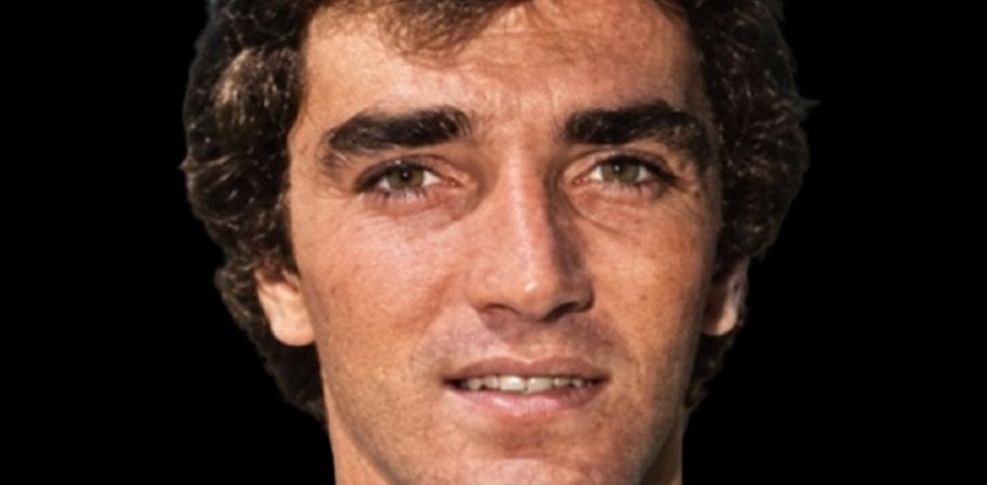
Ferdinando Viola, born March 14 1951, Rome, Italy.
PART ONE
Ferdinando Viola came through the ranks at Juventus at a time when earning a place in the first team was a considerable task for any young player, since the side had internationals in almost every position, but his chance eventually came during the closing stages of the 1971-72 season. On 12 March 1972, he made his Serie A debut against Bologna at the Stadio Comunale, entering a side managed by Čestmír Vycpálek and competing for the championship, and although one appearance could not establish him immediately, it placed him inside a squad that finished the campaign as champions. Juventus won 43 points from 30 league games, one more than Milan and Torino, and Viola therefore gained his first Scudetto before he had been given the sustained first-team football he required. There was no disgrace in that, because Juventus were not a club inclined to hand places away, but sitting among established players could take a youngster only so far, and by the summer of 1972 it was clear that he needed weekly matches rather than occasional afternoons on the substitutes’ bench.
The answer was a loan to Mantova in Serie B, where the surroundings were less comfortable and the football was far less forgiving, but the 1972-73 season gave Viola the education Juventus could not provide. Mantova were in trouble for much of the campaign, and the instability was clear from the dugout as Renzo Uzzecchini was replaced by former goalkeeper William Negri, who in turn gave way to the vastly experienced Alfredo Foni, yet none of the three could prevent the club from dropping into Serie C.
Amid that confusion, Viola became a regular, playing virtually the entire league programme, scoring twice and appearing four more times in the Coppa Italia, while every week brought a fresh test of temperament as much as technique. He had to ask for the ball when team-mates were hiding, keep his head when supporters became impatient and fight for possession on heavy pitches where a neat touch meant little unless it was followed by strength and determination, and although Mantova went down, the young midfielder returned to Turin as a more complete player. Relegation was a painful way to learn, but those months gave him the toughness that later allowed him to survive events far more serious than a poor run of football results.
Back at Juventus in 1973, Viola found Vycpálek still in charge and the champions determined to retain their title, but the 1973-74 season belonged to Lazio, whose bold and unpredictable side under Tommaso Maestrelli held off Juventus to claim the first Scudetto in the Roman club’s history. Viola remained on the edge of the Turin first team, taking his opportunities when they arrived but unable to dislodge the established men ahead of him, and the same problem continued after Carlo Parola replaced Vycpálek in 1974.
Juventus recovered strongly, finishing two points above Napoli to win the 1974-75 championship, which gave Viola his second league medal at the age of twenty-four, but medals could not alter the plain truth that he needed a permanent place. Across his two seasons after returning from Mantova he made 17 league appearances and scored once, and although he was respected as a useful squad member, he possessed too much energy and ability to spend his best years waiting for another man to be injured. Therefore, in the summer of 1975, after four seasons in and around a club accustomed to winning, he left Juventus for Cagliari and the prospect of becoming an established Serie A midfielder in his own right.
Cagliari still carried the pride of their 1969-70 championship triumph, but by the time Viola arrived the side had slipped a long way from the team built around Luigi Riva, and the 1975-76 season soon developed into a struggle. Luis Suárez began the campaign as manager, yet poor results brought Mario Tidda back in an attempt to save the Sardinians, and although there were occasional signs of improvement, Cagliari finished bottom of Serie A with only 19 points and were relegated alongside Como and Ascoli.
Viola nevertheless made his presence felt, appearing in 28 league games and scoring three goals, as well as playing four times in the Coppa Italia, and those numbers showed that he could hold a regular place at the highest level even when everything around him was going badly. It was the second relegation of his young playing life, but just as he had done at Mantova, he came out of a failing team with his own standing enhanced, because clubs could see a midfielder who continued to run, compete and accept responsibility when easier characters might have disappeared. Lazio had denied him a championship with Juventus two years earlier, and now the Roman club wanted him for themselves, so in the summer of 1976 Viola moved to the capital and entered the part of his life by which he would be remembered most warmly.
Lazio were no longer the champions of 1974, and the departures of Giorgio Chinaglia and Mario Frustalupi had removed two major figures from Maestrelli’s side, but Brazilian coach Luís Vinício was prepared to trust young footballers and build a quicker, more mobile team. Bruno Giordano, Lionello Manfredonia and Andrea Agostinelli were emerging from the youth ranks, while Viola was asked to provide intelligence, running power and control in midfield, and the combination worked better than many expected.
PART TWO
Ferdinando Viola amassed 19 league appearances for during 1976-77 and registered two goals, while Lazio finished fifth with 31 points and qualified for the UEFA Cup, a fine outcome for a side going through considerable change. The two Rome derbies produced one victory apiece, and on the field there was a sense that Lazio might be moving towards brighter days, but away from it the club was struck by two deaths that overwhelmed everything football could offer. Maestrelli died from serious illness on 2 December 1976, and only six weeks later, on 18 January 1977, Luciano Re Cecconi was shot dead in a jeweller’s shop during a prank that ended in tragedy. Viola had been at Lazio for only a matter of months, yet he was suddenly sharing the grief of a team that had lost its much-loved manager and one of its championship heroes, and those who knew him remembered a quiet, considerate man who supported the people around him without seeking attention for doing so.
Despite his contribution, Viola was loaned to Bologna for the 1977-78 season, and the move brought him back to northern Italy for a year in which survival mattered more than entertainment. Cesarino Cervellati began as coach before Bruno Pesaola returned to steady the team, and Bologna eventually finished twelfth, only two points above relegated Genoa, after a campaign in which victories were difficult to find and caution became unavoidable. Viola played 18 league matches and scored once, against Perugia, while adding four Coppa Italia appearances, and although it was not a spectacular season, it was another useful body of work from a midfielder who could be trusted in difficult circumstances.
His team-mates included Franco Nanni, Stefano Chiodi and the young Giuliano Fiorini, three men whose paths would also become connected with Lazio, and by the summer of 1978 Viola was ready to return to Rome. This time it was not intended as a brief stay, because Lazio brought him back to become a settled part of the side, yet the first season of his second spell was disrupted by a serious injury that limited him to 13 league appearances and two in the Coppa Italia. Bob Lovati’s team finished eighth in the standings, and Viola at least experienced a satisfying derby victory when Lazio defeated Roma 2-1, with Aldo Nicoli settling the match in the final minute of action, but a footballer whose game depended on movement and stamina could only find frustration in spending so much time unable to play.
He was fit again for 1979-80 and appeared 28 times in Serie A, plus five in the Coppa Italia, but no account of that season can begin with formations, results or league positions, because Lazio were hit by two events that changed the club. On 28 October 1979, before the derby at the Stadio Olimpico, a flare fired from the Roma end travelled across the ground and struck Lazio supporter Vincenzo Paparelli, who was sitting with his wife in the Curva Nord, and the thirty-three-year-old father died from his injuries.
The game went ahead, ending 1-1, but football suddenly looked small and ugly, while the shock remained with everyone who had entered the stadium expecting nothing more dangerous than a local rivalry. Then came the Totonero betting scandal, which broke in March 1980 and led to the arrest of several players at football grounds across Italy, including four from Lazio. Viola was not implicated, but he and his innocent team-mates were forced to live through the consequences, and although Lazio finished safely enough on the field, the sporting courts relegated the club to Serie B. He had been one of their most regular players, doing his work while disorder gathered beyond his control, yet once again he found himself going down with a team whose wider failings did not belong to him.
Many established Serie A players might have left immediately, but Viola stayed, and under Ilario Castagner he produced the finest season of his footballing life. Lazio had to rebuild with reduced resources and a bruised reputation, while every away ground treated them as a major attraction and every opponent took pleasure in making life difficult, but Viola accepted a larger role and drove the team from midfield. During the 1980-81 Serie B campaign he played 37 of the 38 league matches and scored seven goals, striking against Rimini, Bari, Lecce, Pisa, Catania, Monza and Cesena, and he also appeared six times in the Coppa Italia.
It was not merely the number of goals that mattered, because he was now being allowed to break forward, arrive around the penalty area and use the shooting ability that had sometimes been restrained by more cautious duties, while his experience helped a shaken side regain some order. Lazio remained in the promotion race until the final weeks and finished fourth on 46 points, level with Cesena and Genoa, but missed promotion through the complicated ranking rules then in use, and the regret centred heavily on Stefano Chiodi’s missed penalty against Vicenza in the penultimate match. One successful kick might have changed the outcome, but there was no second opportunity, and Viola’s strongest personal season ended with Lazio still trapped in Serie B.
The failure left marks, and 1981-82 became a very different struggle, because a team that had gone close to promotion began badly and never recovered enough to mount another serious challenge. Castagner departed after twenty matches and Roberto Clagluna took charge, but Lazio spent much of the campaign worrying about the bottom rather than looking towards Serie A, eventually finishing eleventh with 37 points. Viola made 24 league appearances and scored three times, with another four outings in the Coppa Italia, but at thirty-one he could reasonably wonder whether the club was capable of recovering while he still had football left in his legs.
Across his two spells he had given Lazio six seasons, had played through bereavements, injury, the death of a supporter, a betting scandal, forced relegation and two gruelling years in the second division, and he had rarely complained or allowed his standards to fall. Still, there comes a point when loyalty and common sense pull in different directions, and in the summer of 1982 he left Rome for Genoa, closing his Lazio years with 121 league appearances and 12 league goals, or 141 outings and 13 hits when the cup competitions were included.
PART THREE
Genoa offered Viola an immediate return to Serie A, and under Gigi Simoni the 1982-83 side approached the season with enough discipline to keep clear of the worst danger. The Grifone finished twelfth with 25 points, and although they scored only 27 league goals, they proved hard enough to beat at home and recorded a notable 1-0 victory over the Old Lady, a result that must have given their former Juventus midfielder particular satisfaction. Viola played in 22 league matches and scored once, bringing composure and experience to a team whose first requirement was survival, and by the spring the move looked to have worked exactly as intended.
The following campaign was far more painful, because Genoa again collected 25 points but were relegated after finishing level with Lazio, the club Viola had left two years earlier, and their inferior record in the direct meetings sent them down. He made 19 league appearances during the 1983-84 season, completing a total of 41 in Serie A for Genoa, but at thirty-three another relegation effectively ended his time in the top division. There was a harsh symmetry to it: Lazio, the club with which he had endured forced demotion in 1980, survived at the expense of his new side, and a player who had so often performed steadily amid other people’s chaos was again left to accept the punishment.
Viola did not stop, because Barletta gave him the chance to continue in Serie C1 during the 1984-85 campaign, and he responded with a full and committed season rather than treating the move as an easy closing engagement. The Apulian club went through its own changes on the bench, with former Lazio defender Mario Facco giving way to Giovanni Meregalli before returning, but the team finished eighth and avoided serious trouble. Viola played 32 league games and scored three goals, an impressive workload for a thirty-four-year-old midfielder operating far from Turin and Rome, and his willingness to run had survived after more than a decade of physically demanding football.
He then spent 1985-86 with Subiaco in the amateur ranks, among the hills to the east of Rome, where the surroundings and crowds were far removed from Juventus and the Stadio Olimpico but the game itself remained the same, and he continued because he still enjoyed playing. Only at thirty-five did he finally stop, having accumulated more than 300 league appearances across Serie A, Serie B and Serie C1, while experiencing almost every kind of season Italian football could provide, from championships with Juventus to relegation battles, promotion heartbreak and the emotional turmoil of Lazio’s darkest period.
There was far more to Viola than football, though, for he studied seriously while playing and earned degrees in Languages and Law, achievements that required discipline when training, travelling and matches already occupied much of his week. After he stopped playing, he worked for a period as an intermediary involved in transfers between Italian and foreign clubs, using both his knowledge of the game and his ability with languages, before practising as a lawyer and specialising in claims arising from road accidents. Former team-mates described him as a gentleman, an overused word in sport but an appropriate one in Viola’s case, because he carried himself with modesty and treated people decently whether he was playing for the champions of Italy or a small amateur club outside Rome.
Then, with appalling cruelty, his life ended in the kind of incident with which his legal work had made him so familiar. On 5 February 2001, while riding his scooter along Viale Parioli in Rome, he collided with a car and was killed, only five weeks before his fiftieth birthday. The news struck Lazio particularly hard, because Viola had remained closely associated with the city and was remembered not simply as a former player but as one of the good men who had stayed beside the club when staying was hardest.