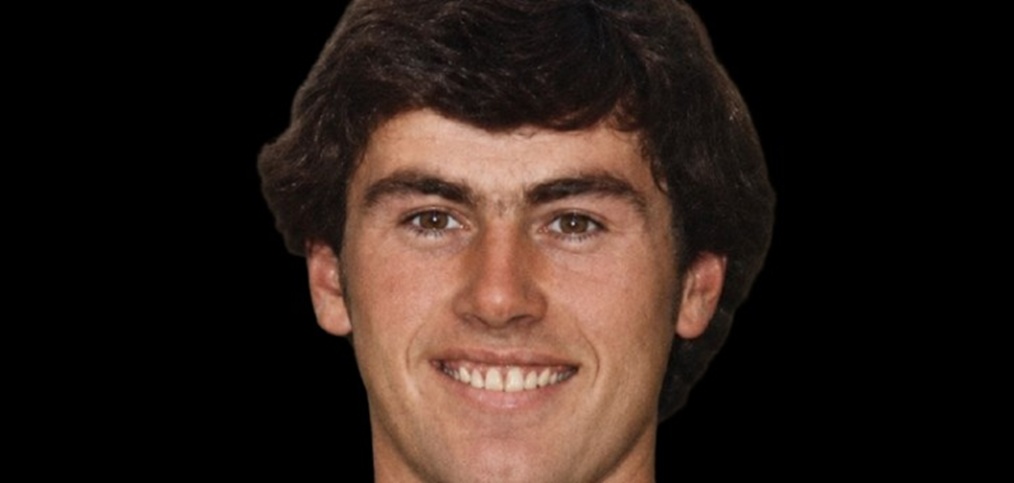
David Thomas, born 5 October 1950, Kirkby-in-Ashfield, England.
PART ONE
Dave Thomas agreed to join Burnley as a schoolboy during the summer of 1966, although Leeds United made an extraordinary attempt to change his family’s decision before the arrangement was completed. Turf Moor manager Harry Potts considered Thomas ready for senior football before his seventeenth birthday, and the opportunity arrived against Everton at Turf Moor on 13 May 1967, the final match of the First Division season, when the youth was only 16 years and 220 days old and became Burnley’s youngest player in a top-flight fixture, establishing a club record which has endured.
The match ended in a 1–1draw, and although neither club entered the afternoon fighting for the championship or attempting to avoid immediate relegation, the occasion was far from comfortable for someone confronting established First Division opponents, because tackles arrived more quickly, available space disappeared sooner and every poor touch gave possession to players capable of turning it into an attack within seconds. Burnley had not selected Thomas as a ceremonial gesture, however, and he attempted to play in the same direct manner that had brought him through the younger teams, using his pace whenever possession reached him and learning at first hand how much faster his decisions had to become.
The Clarets finished fourteenth in the League Division One table and Thomas’s appearance remained his only league outing of the campaign, so there was no sudden elevation into the regular side and no assumption that a record-breaking debut had completed his development, because the flank forward returned to training, youth matches and reserve football while the coaching staff continued strengthening the parts of his game which senior defenders would attempt to expose.
His first-team involvement remained limited during 1967–68, when he made three league appearances and Burnley again finished fourteenth, but the season still brought an important achievement as the club defeated Coventry City over two legs to win the FA Youth Cup, confirming that Turf Moor continued to produce gifted young players even while the senior side was gradually losing the strength that had made it champion of England in 1959–60 and runner-up two years later. Thomas had received his first taste of the highest level, but the patient handling of those opening seasons prevented a promising schoolboy from being burdened with responsibilities beyond his experience, and when his full opportunity arrived, he was better prepared to keep his place rather than merely attract attention through one exciting afternoon.
The breakthrough came during 1968–69, when Thomas appeared in 39 of Burnley’s 42 league matches and scored four goals, moving within a single season from the edge of selection to a position of genuine importance in the senior side, while opposing defenders quickly learned that allowing him several yards in which to accelerate created a problem that could not easily be repaired. His first league goals arrived against Chelsea at Turf Moor on 28 September 1968, when he scored both during a 2–1 victory, and he also found the net when Burnley defeated reigning champions Manchester City 2–1 on 4 March 1969, with Dave Merrington providing their other goal.
Thomas’s speed attracted immediate attention, but supporters also recognised the courage required to play his way every week, because each successful run encouraged the next opponent to challenge him earlier and harder, and he repeatedly had to collect himself from the ground before moving back towards the touchline and demanding another pass. Burnley finished fourteenth for the third successive season after recording fifteen victories, nine draws and eighteen defeats, and although they scored 55 league goals, the 82 conceded revealed a defensive weakness that no amount of attacking invention could entirely overcome.
Alongside his increasingly regular club football, Thomas progressed into the England youth team and made eight appearances across 1968 and 1969, including the 3–1 victory over Wales at Bridge Meadow, Haverfordwest, on 15 March 1969, while those matches allowed the national selectors to follow his development beyond the schoolboy level and exposed him to opponents whose methods differed from those he faced each week in the First Division. Thomas was still learning when to remain wide and when to move inside, but he was no longer simply a quick teenager whose selection depended upon potential, because 39 league appearances had shown that his body could withstand a full senior campaign and that his attacking ability could trouble defenders throughout the division.
Burnley began 1969–70 with a 3–0 home victory over Sunderland on 16 August, when Frank Casper scored twice and Steve Kindon added the third, but the match that first displayed the full excitement and uncertainty of their attacking football came a week later at Anfield, where they recovered from two goals behind before drawing 3–3 with Liverpool. Tommy Smith converted a penalty for the home side in the first half and Bobby Graham increased the lead shortly after the interval, yet Thomas reduced the deficit in the fifty-fifth minute, Casper equalised five minutes later and Martin Dobson then placed Burnley ahead, only for Smith to rescue Liverpool with thirteen minutes remaining.
Thomas’s goal carried particular importance because it began the recovery and encouraged Burnley to attack a strong Liverpool side on its own ground, but the performance also showed that the winger was developing enough confidence to influence difficult away matches rather than reserving his best football for Turf Moor. Burnley possessed several mobile and inventive attackers, with Ralph Coates, Kindon, Casper, Dobson, Doug Collins, Arthur Bellamy and Thomas capable of combining at speed, although their willingness to commit players forward could leave openings behind them and contributed to the uneven results that prevented a challenge near the top.
Thomas scored in a 3–2 home victory over West Ham United on 31 January 1970, when Kindon and Coates also found the net, but his finest scoring performance came at Old Trafford on 17 March, where Burnley drew 3–3 with Manchester United before 38,337 spectators. Kindon placed Burnley ahead in the third minute, Thomas scored two minutes later and struck again in the twenty-eighth, while Pat Crerand, Denis Law and George Best replied for United, with Best equalising only two minutes from time. Thomas completed the league campaign with 36 appearances and four goals as Burnley finished fourteenth once more, winning twelve matches, drawing fifteen and losing fifteen, while their 56 goals scored and 61 conceded accurately reflected a side capable of attractive attacking football but unable to control enough games defensively.
PART TWO
The opening weeks of 1970–71 supplied Thomas with goals but also brought early warning of the trouble awaiting Burnley, for he scored when Liverpool won 2–1 at Turf Moor on 15 August and struck again three days later during a 1–1 draw at Everton, yet the side soon became trapped near the bottom of the First Division as victories became increasingly difficult to find. Thomas, Coates and Kindon could still carry possession forward at speed, but a winger depends upon the players behind him recovering the ball and finding him before the opposing defence has settled, and Burnley were too often chasing matches after conceding first, which forced Thomas to receive possession deeper and left several defenders between him and the penalty area.
The club’s gradual weakening could no longer be hidden by occasional excellent performances, and although Thomas continued attacking full-backs with the same determination, the supporting movement around him became less reliable as the pressure increased. He appeared in 34 league matches and scored three goals, but Burnley won only seven of their 42 fixtures, drew thirteen and lost twenty-two, while 29 goals scored and 63 conceded left them twenty-first and brought relegation after twenty-four consecutive seasons in the First Division.
Thomas’s personal progress continued despite the team’s decline, because he made his England under-23 debut in a 3–1 victory over West Germany at Filbert Street on 14 October 1970, played in a 2–0 win against Sweden at Boothferry Park on 11 November and appeared during a goalless draw with Wales at the Racecourse Ground on 2 December, while the selections demonstrated that national recognition would not necessarily disappear if Burnley remained outside the top division. Thomas was only twenty when relegation was confirmed, yet he had already completed more First Division matches than many players managed during their entire playing lives, and Burnley now required him to use that experience during an immediate attempt to return.
The Second Division presented a different challenge during 1971–72, because grounds were often tighter, midfields more crowded and defenders less willing to retreat before Thomas had gathered speed, while Burnley entered most matches expected to attack rather than waiting for opportunities on the counter. Leighton James was emerging as an exciting winger on the left, which gave Jimmy Adamson’s team natural width on both sides, while Dobson provided authority through midfield and Paul Fletcher offered movement in the centre, but the side remained inconsistent despite scoring freely. Burnley demonstrated their attacking strength by beating Orient 6–1 at Turf Moor on 28 September, when Bellamy scored a hat-trick and Thomas, Fletcher and James supplied the other goals, yet Sunderland won 1–0 on the same ground four days later, and that contrast followed Burnley through much of the campaign.
Thomas made 33 league appearances and scored four times, while Burnley collected twenty victories and scored 70 goals, more than every club except champions Norwich City, but sixteen defeats and only six draws left them seventh with 46 points, three behind third-placed Birmingham City and five behind promoted Millwall. Thomas also continued appearing for England under-23s, playing in a 1–1 draw against Switzerland at Portman Road on 24 November 1971, another 2–2 draw with Scotland at the Baseball Ground on 16 February 1972 and a 2–2 match against East Germany in Magdeburg on 1 June, and by the summer he had developed into a highly experienced winger despite being only 21.
Burnley approached 1972–73 with a better-balanced side and immediately showed that their second promotion attempt would be stronger than the first, beating Carlisle United 2–1 at Turf Moor on 12 August and Nottingham Forest 1–0 at the City Ground three days later before draws against Blackpool and Millwall preserved their unbeaten beginning. Aston Villa were defeated 4–1 on 26 August, Oxford United lost 3–1 three days later, Burnley won 2–0 at Preston North End and then beat Sheffield Wednesday 4–0, while Thomas contributed four goals during his eleven league appearances and remained one of the division’s most dangerous wide players.
Burnley were moving towards the championship they would eventually win, but Thomas had reached a point at which wealthier clubs were prepared to make substantial offers, and Queen’s Park Rangers emerged with a proposal that reflected both his proven ability and their own ambition. Rangers manager Gordon Jago had already added Givens from Luton Town and Bowles from Carlisle United to a side containing Parkes, Clement, Francis, Leach and Terry Venables, and he believed Thomas could provide the natural width required to connect those gifted central players, while chairman Jim Gregory was prepared to pay £165,000, a record fee for a Second Division club. Thomas made his final Burnley appearance at Luton Town on 30 September 1972, when Geoff Nulty replaced him, and the transfer was completed on 19 October, ending six senior seasons at Turf Moor in which he had made 157 league appearances and scored 19 goals.
Thomas left Burnley without bitterness and at a time when the club was moving strongly towards promotion, but the opportunity at Loftus Road appealed because Rangers were building an attacking team around players whose methods suited his own, and the record fee demonstrated that he was being purchased as a central figure rather than a useful addition. Burnley had taken him from West Auckland as a 15-year-old, resisted the temptation to promote him too rapidly, given him his First Division debut at sixteen and developed him into an England under-23 international, while Thomas had repaid that work through six years of direct running, repeated effort and 19 league goals. His next match would place him immediately into a QPR side fighting for promotion, and although the surroundings, teammates and expectations would be different, the fundamental task remained unchanged, because Thomas would collect the ball near the touchline, face the defender and begin running.
PART THREE
Thomas made his Queen’s Park Rangers debut against Sunderland at Loftus Road on 21 October 1972, only two days after completing his £165,000 transfer from Burnley, and Gordon Jago placed him directly into the number seven position because the manager had not spent a record Second Division fee to allow his new winger several weeks of gentle adjustment. Rangers won 3–2 through one goal from Don Givens and two from Stan Bowles, while Thomas immediately provided the width Jago had wanted and allowed the gifted players in the centre to operate with more room than they had enjoyed during the opening months.
Loftus Road offered very different surroundings from Turf Moor, because the stands were pressed closely around the playing area and the spectators appeared almost on top of the touchline, but that tight setting suited a winger whose first forward run could increase the noise and draw the crowd into the match. Thomas still needed time to understand the movements of his new colleagues, particularly Bowles, who could move towards the right wing, drift behind the centre-forward or drop into midfield without warning, but the basic arrangement was clear enough from the first afternoon, because Givens wanted crosses delivered into the penalty area, Gerry Francis possessed the strength to arrive from midfield and Bowles needed defenders to be drawn away from the central spaces in which he caused the greatest damage.
Thomas could remain wide and force the opposing left-back to follow him, but he could also move inside when Dave Clement advanced from right-back, and the variety immediately made Rangers more difficult to contain. The promising beginning was followed by a 2–0 defeat at Blackpool on 28 October, while a 1–1 home draw against Hull City and a goalless match at Bristol City showed that Jago had not assembled a completed team simply by spending heavily, yet the manager continued with his attacking plan and allowed the understanding between Thomas, Bowles, Givens and Francis to develop through competitive matches.
Thomas gradually learned that Bowles rarely approached the game like an orthodox forward, because the former Carlisle United player wanted the freedom to search for the ball wherever he believed the defence looked weakest, and the winger therefore had to judge whether to remain near the touchline, exchange positions with him or attack the central space Bowles had vacated. Givens presented a more familiar target because his movement was directed towards the penalty area, although he demanded accuracy rather than hopeful crosses, and Thomas worked quickly towards a point where he could recognise whether the centre-forward wanted a low ball across the six-yard box, a higher delivery towards the far post or a pass pulled backwards for Francis or Mick Leach.
Clement’s willingness to overlap created another useful partnership, for the full-back could run outside Thomas whenever the winger moved infield, and defenders who attempted to confront both players with one man were quickly forced to choose which route they intended to protect. Rangers moved towards the end of 1972 in a strong position, although their progress was not entirely smooth, and the record fee continued to place Thomas under attention whenever his crosses failed to reach their target or a defender stopped him, but he possessed enough First Division experience to understand that a winger’s effectiveness could not be judged through one isolated afternoon. His method depended upon persistence, because a full-back who stopped four runs might still be defeated by the fifth, and the willingness to try repeatedly without hiding after failure made Thomas valuable during tight matches when the centre of the pitch had become crowded.
PART FOUR
The FA Cup almost brought embarrassment in January 1973 when Southern League Barnet earned a 0–0 draw at Loftus Road, but Rangers recovered to win the replay 3–0 at Underhill through goals from Leach, Bowles and Terry Mancini, before the promotion contest returned to the centre of their attention. Burnley visited Loftus Road on 27 January in a meeting between the division’s strongest sides, and 22,518 spectators, QPR’s highest home attendance of the season, watched Thomas face the club he had left only three months earlier. Burnley won 1–0 and strengthened their position at the top, demonstrating the defensive control which would ultimately carry them to the Second Division championship, while Thomas discovered that familiarity with his former teammates did not make them easier to defeat.
Rangers responded during February by beating Cardiff City 2–0 at Ninian Park, defeating Carlisle United 2–1 and overwhelming Swindon Town 5–0 at Loftus Road, although First Division champions Derby County ended their FA Cup involvement on 24 February with a 4–2 victory at the Baseball Ground. Promotion remained the main requirement, and a 1–0 home success against Aston Villa on 10 March, secured by a Leach goal shortly after half-time, strengthened QPR’s position by directly damaging one of their principal rivals.
Thomas then began his most productive scoring period since the transfer, finding the net when Blackpool were beaten 4–0 at Loftus Road on 24 March, with Bowles, Francis and a John Hatton own goal completing the total, and scoring again seven days later as Portsmouth were defeated 5–0. His contribution remained greater than his personal figures because his pace created central space for others, but the goals showed that he could move inside and finish rather than remaining permanently beside the touchline as a supplier.
A 2–0 defeat at Oxford United on 7 April interrupted the momentum at an awkward time, but Rangers recovered by beating Luton Town 2–0 through Mancini and Givens, drawing 0–0 at Cardiff City and winning 1–0 away to Millwall through Bowles, while victories over Brighton and Hove Albion and Fulham carried promotion within reach. Sunderland still possessed matches in hand because their extraordinary FA Cup run had crowded the final weeks of their league programme, so QPR could not celebrate immediately, but the Rokerites´ defeat at Cardiff City on 5 May guaranteed the Hoops second place.
Jago’s side completed the campaign at Roker Park on 9 May, four days after Sunderland had defeated Leeds United in the FA Cup final, and before a crowd of 43,265 QPR won 3–0 through two Bowles goals and another from Thomas. Rangers finished with 61 points after winning 24, drawing thirteen and losing only five of their 42 league matches, while Burnley became champions with 62 points, and Thomas had therefore left one promoted club to join the other without sacrificing the return to the First Division he wanted.
He contributed six goals from 28 league appearances for Rangers, giving him ten Second Division goals across his combined season with Burnley and QPR, while Givens scored 23 league goals, Bowles seventeen, Leach ten and Francis nine. Those figures reflected an attack containing several threats rather than one isolated scorer, and the 81 league goals recorded by QPR exceeded Burnley’s total by eleven, although Jago understood that First Division opponents would punish defensive mistakes more severely and that the side needed greater authority behind its gifted forwards.
Chairman Jim Gregory addressed that weakness in June 1973 by paying Arsenal £25,000 for Frank McLintock, who had captained the north London club to the League and FA Cup double two years earlier and brought the leadership, positional knowledge and competitive discipline Rangers required. McLintock did not possess the speed he had enjoyed earlier in his playing life, but his reading of danger allowed him to organise those around him, while Parkes, Clement, Mancini, Tony Hazell, Ian Gillard and Ian Evans gave Jago several defensive options. The signing also benefited Thomas, because a properly organised defence allowed the winger to remain in attacking positions for longer rather than continually retreating to repair gaps, while McLintock’s ability to pass forward meant QPR could move the ball towards the wing before the opposing full-back had received support.
PART FIVE
Queens Park Rangers opened their First Division programme with a 1–1 draw against Southampton at Loftus Road on 25 August, Givens scoring their goal, and a goalless match at Norwich City was followed by a 2–1 defeat at Manchester United, with Francis finding the net at Old Trafford. Another 0–0 draw against West Ham United and a 3–3 match with Stoke City left QPR without a victory after five games, but they ended the wait by beating West Ham 3–2 at Upton Park on 10 September, where Ron Abbott scored once and Givens twice. Thomas required no introduction to the standard because he had already completed more than one hundred First Division matches for Burnley, but his role was different within a side entering most fixtures with an intention to attack, and the movement of Bowles, Givens and Francis gave him far more targets whenever he reached a crossing position.
His first league goal of the season came at Newcastle United on 29 September, when Francis and Leach also scored during a 3–2 victory, but the emotionally difficult return to Turf Moor two weeks later ended in defeat, even though Thomas scored against his former club. Burnley won 2–1 on 13 October and left QPR fourteenth, but Jago’s side responded by winning 4–2 at Wolverhampton Wanderers, beating Arsenal 2–0 at Loftus Road through Givens and Bowles and defeating Derby County 2–1 at the Baseball Ground through Bowles and Francis. Thomas scored in a 2–2 draw against unbeaten leaders Leeds United at Elland Road on 1 December, where Bowles supplied QPR’s other goal, and although Don Revie’s side recovered to preserve the sequence which would carry them to the championship, Rangers had shown that their attacking football could trouble the strongest team in the country.
They entered Christmas sixth after beating Newcastle United 3–2 through Clement, Givens and Bowles, and although a goalless draw at Tottenham Hotspur was followed by a 4–1 defeat at Stoke City, they opened 1974 by defeating Manchester United 3–0 at Loftus Road, with Givens scoring once and Bowles twice. The results remained uneven, but QPR had moved beyond the limited ambition of survival and were beginning to consider European qualification, while Thomas continued providing the width that prevented opponents surrounding Bowles and Givens in the centre.
Thomas scored again in a 2–2 draw at Southampton on 19 January, and Rangers climbed as high as fourth after Francis scored the only goal at Coventry City on 23 March, but their league challenge lost momentum during the closing weeks as the physical demands of the season affected a relatively small squad. Leicester City also ended QPR’s FA Cup run by winning 2–0 at Loftus Road in the quarter-final on 18 March, and although Thomas found the net at Anfield on 6 April, Liverpool won 2–1, while defeats against Ipswich Town, Birmingham City and Leeds United contributed to a sequence of only one victory from the final nine league fixtures.
Rangers nevertheless finished eighth after thirteen wins, seventeen draws and twelve defeats, scoring 56 goals and conceding 52, which represented an impressive first season back in the First Division even if their late decline prevented the higher position that had appeared possible during March. Thomas played in 41 of the 42 league matches and scored six goals, while also appearing throughout the domestic cup programme, and his reliability became particularly valuable because Jago possessed no direct replacement capable of providing the same speed, crossing and ability to operate from either wing. Bowles finished as the leading league scorer with nineteen goals, Givens contributed ten, Francis eight and Leach six, but those central players benefited repeatedly from the room Thomas created, because an opponent attempting to send additional defenders towards Bowles left the winger free, while a second defender moving wide opened the centre again.
PART SIX
The Super Hoops headed into the 1974–75 campaign expecting to improve upon eighth place, but the opening weeks brought poor results and growing uncertainty over Jago’s position, despite a 1–0 victory against reigning champions Leeds United at Elland Road on 21 August. Stoke City won at Loftus Road, Birmingham City and Leicester City defeated Rangers, and Newcastle United’s victory in London dropped the side towards the relegation places, while the attacking movement that had looked so natural during the previous season became less reliable.
Jago resigned on 27 September, Stan Anderson briefly took responsibility for the team and Gregory appointed Dave Sexton on 16 October, bringing in a manager who had won the FA Cup and European Cup Winners’ Cup with Chelsea. Sexton believed attacking freedom could be sustained only when players understood the structure behind it, and his work concentrated upon distances, movement and the correct positions to occupy whenever possession changed hands, while Thomas remained encouraged to attack but was required to recognise exactly when Clement was overlapping, Francis was moving towards the right or Bowles had drifted into the same area. The detailed coaching did not remove Thomas’s instinctive qualities, but it connected his running more closely to the work of his teammates, and the arrangement would eventually help Rangers rise from the lower half into a championship challenge.
Thomas’s club performances had also moved him into Don Revie’s England plans, and he was selected for the new manager’s first match, a European Championship qualifier against Czechoslovakia at Wembley on 30 October 1974. England remained goalless beyond the hour and Thomas was prepared to replace Mick Channon, but Colin Bell suffered an injury during the attempted change, which meant Bell left the field while Channon remained, and the unusual alteration soon worked in England’s favour.
Thomas attacked directly from the right, drew two fouls in quick succession and then received a rolled free-kick from Paul Madeley before crossing accurately towards the far post, where Channon rose unmarked and headed beyond Ivo Viktor in the seventy-first minute. Bell returned after treatment and scored twice during the closing stages to complete a 3–0 victory, but Thomas had changed the direction of the match by providing the width and pace England had previously lacked. The appearance made him the 901st player to represent England and completed a steady progression through schoolboy, youth and under-23 football, while Revie, who had attempted to sign him for Leeds as a 15-year-old, now found himself using the winger to unlock a difficult international qualifier.
Rangers improved gradually under Sexton rather than immediately, and a 2–0 victory over Coventry City was followed by a 5–2 defeat at Derby County, but Thomas scored when Carlisle United were beaten 2–1 at Loftus Road on 16 November and QPR then won 3–1 at Middlesbrough. Thomas found the net again in a 4–2 home victory over Leicester City on Boxing Day, and two days later Rangers produced one of their strongest performances by defeating Chelsea 3–0 at Stamford Bridge through Francis and two Givens goals. Sexton’s training-ground work was beginning to make the team more difficult to counterattack against, while Thomas benefited from receiving the ball in areas where he could face the defender rather than collecting it with his back towards goal.
PART SEVEN
Queens Park Rangers entered 1975 in the middle of the table, but an outstanding 4–1 home victory over league leaders Derby County on 1 February revealed the level they could reach, with Givens scoring a hat-trick and Thomas driving into the penalty area before beating Colin Boulton at the near post. Derby would finish the season as champions, yet QPR stretched them across the pitch, drew defenders towards Bowles and repeatedly created room for Givens, while Thomas’s goal demonstrated that his attacking contribution extended beyond crossing.
Thomas made his second England appearance as a substitute when the reigning world champions West Germany were defeated 2–0 at Wembley on 12 March, with Bell scoring both goals, and four days after Rangers beat Manchester City 2–0 through two Rogers goals, he scored after only three minutes against Chelsea to secure a 1–0 victory at Loftus Road. He found the net again at Birmingham City four days later but QPR lost 4–1, and that sudden change from a disciplined win into a heavy defeat showed why Sexton still regarded the team as unfinished.
England’s European Championship qualifier against Cyprus on 16 April gave Thomas another substitute appearance, and after Malcolm Macdonald had scored a hat-trick, the winger entered with England leading 3–0 and immediately crossed for the Newcastle United centre-forward to head his fourth, before creating the fifth as Macdonald became the first England player to score five times in a match at Wembley. Thomas had therefore made important attacking contributions during his first three internationals, supplying the cross that opened the scoring against Czechoslovakia and creating two goals against Cyprus, while his direct running gave Revie an effective way of increasing the pace against tiring defenders.
QPR completed the league season in eleventh place after thirteen victories, twelve draws and seventeen defeats, scoring 54 goals and conceding the same number, while Thomas appeared in 41 league matches and scored six times before adding another goal during six domestic cup appearances. The final position was lower than the eighth achieved under Jago, but Sexton had inherited a side near the bottom and spent much of the campaign reconstructing its defensive habits, while the improvement became clearer during individual performances than in the final table.
Thomas joined England after the domestic programme and gained his fourth cap as a substitute during a 1–0 European Championship qualifying victory over Cyprus in Limassol on 11 May, with Kevin Keegan scoring the only goal, before making his first international start when England drew 0–0 against Northern Ireland at Windsor Park four days later. He retained his place for the 2–2 draw with Wales at Wembley on 21 May, where Keegan and Bell scored, and then returned to the bench before entering during the 5–1 victory over Scotland three days later, when Francis struck twice and Keegan, Channon and David Johnson supplied the remaining goals.
Thomas made his eighth and final England appearance in Lisbon on 19 November 1975, when he completed the entire European Championship qualifier against Portugal, but Channon’s penalty was cancelled out by Rui Rodrigues and the 1–1 draw eliminated both sides after Czechoslovakia defeated Cyprus. His senior international record ended with eight appearances, three starts, five substitute outings and no goals, but the figures did not reflect the crosses which changed matches against Czechoslovakia and Cyprus, while the conclusion of his England involvement at only 25 was surprising because Thomas was about to complete the finest club season of his playing life.
Sexton had used the summer of 1975 to settle the structure around him, Hollins had arrived from Chelsea for £85,000, Masson had become increasingly important in midfield and Francis had accepted greater responsibility as captain, while Parkes, Clement, Gillard, McLintock, Webb, Bowles and Givens completed a side in which every movement connected with another. Liverpool would provide the opposition at Loftus Road on the opening day of 1975–76, and Rangers were ready to reveal how far Sexton’s work had carried them.
PART EIGHT
Queen’s Park Rangers began 1975–76 with a settled team, a manager who had spent almost a year teaching his methods and a group of players whose different qualities fitted together far more naturally than their eleventh-place finish in the previous season suggested, but even Dave Sexton could not have known how close they would come to winning the First Division championship. Phil Parkes provided assurance in goal, Dave Clement and Ian Gillard were full-backs willing to support the attack, Frank McLintock and David Webb brought experience and strength to the centre of defence, Don Masson passed with intelligence, Gerry Francis supplied power and leadership, Stan Bowles moved between midfield and attack with an imagination defenders found difficult to read, Don Givens occupied the centre-halves and Thomas stretched the pitch from the right, while John Hollins and Mick Leach gave Sexton experienced alternatives whenever he needed to adjust the midfield.
Rangers did not possess the largest squad in the division, and injuries to two or three important players could have damaged them severely, but their strongest side had reached the stage at which movements appeared instinctive, because Clement understood when Thomas wanted support on the outside, Francis recognised the correct moment to advance into the space behind the winger and Givens adjusted his run according to the angle from which Thomas approached the penalty area. Sexton had not removed their individuality, but he had placed it inside a clear structure, and when Liverpool arrived at Loftus Road on 16 August 1975, Rangers were ready to show that the improvement achieved during the previous months extended far beyond their final league position.
Liverpool had finished runners-up behind Derby County in 1974–75 and were expected to challenge strongly under Bob Paisley, but Rangers attacked them with confidence and took the lead shortly before half-time through a move that contained everything Sexton wanted from his team. McLintock passed forward to Bowles, whose clever flick released Francis, and after exchanging passes with Givens, the QPR captain drove a low shot beyond Ray Clemence, while Leach added the second goal in the seventy-second minute to complete a 2–0 victory. Thomas did not appear among the scorers, yet his positioning remained essential because Liverpool could not surround Bowles, Francis and Givens in the centre while leaving an England winger unattended on the right, and every time the visitors narrowed their defence, Rangers could move the ball towards Thomas and force them to turn towards their own goal.
Aston Villa earned a 1–1 draw at Loftus Road three days later, with Francis again scoring, but that temporary interruption was followed by the result which forced the rest of the First Division to take Rangers seriously, because on 23 August Sexton’s side travelled to the Baseball Ground and defeated reigning champions Derby County 5–1. Thomas opened the scoring, Bowles struck a hat-trick, including one from the penalty spot, and Clement supplied the fifth, while Rangers repeatedly drew Derby’s defenders towards one area before moving the ball quickly into another, and the sight of a club promoted only two years earlier dismantling the champions on their own ground transformed QPR from an interesting attacking side into possible title challengers.
Rangers remained unbeaten through the rest of August but surrendered leads during two draws, finishing 2–2 at Wolverhampton Wanderers after Givens scored twice and drawing 1–1 at home to West Ham United after the centre-forward placed them ahead, while Thomas then scored in another 1–1 result at Birmingham City on 6 September. Three days later he found the net again as QPR recovered from a goal behind to beat Shrewsbury Town 4–1 in the League Cup, with Webb, Masson and Leach providing the other goals, and the victory maintained the attacking rhythm before Manchester United arrived at Loftus Road on 13 September with a perfect league record following promotion from the Second Division.
Webb headed Rangers into the lead after only three minutes when Gillard’s effort struck the crossbar and rebounded towards him, and the home side continued attacking rather than immediately retreating to protect the advantage, while Thomas drove into the penalty area shortly after half-time and was brought down by Martin Buchan. Bowles could not make the match safe because Alex Stepney saved the penalty, and Rangers therefore had to defend the narrow lead until the final whistle, but the 1–0 victory ended United’s winning beginning and confirmed that QPR could defeat leading opponents without requiring an afternoon of continuous scoring. A goalless draw at Middlesbrough followed, and then consecutive 1–0 home victories over Leicester City and Newcastle United, both secured by Leach, carried Rangers to the top of the First Division at the end of September, while the run of clean sheets showed that Sexton’s defensive work had become as important as the movement of his forwards.
Leeds United inflicted the first league defeat at Elland Road on 4 October, winning 2–1 despite a Bowles penalty, but Rangers responded seven days later with one of their most complete attacking performances, beating Everton 5–0 at Loftus Road and overwhelming a side which would improve considerably as the season developed. Givens scored in the first minute, Masson added the second after half an hour, Francis struck twice during the second half and Thomas scored in the sixty-eighth minute, while Everton were repeatedly pulled across the pitch by a Rangers team capable of changing the direction and speed of an attack without losing control.
Thomas then opened the scoring when QPR defeated Charlton Athletic 3–0 in a League Cup replay at The Valley on 13 October, with Masson and Bowles completing the result before 31,583 spectators, but his return to Turf Moor five days later ended in a 1–0 defeat against Burnley. Rangers recovered by beating Sheffield United 1–0 through Givens and returned to first place, although November brought a succession of draws which prevented them establishing a clear advantage, as Coventry City held them 1–1 at Highfield Road, Tottenham Hotspur earned a goalless result at Loftus Road and Ipswich Town drew 1–1 at Portman Road, with Givens scoring in both away matches. Newcastle United also ended QPR’s League Cup involvement by winning 3–1 at Loftus Road on 11 November, and Thomas’s final England appearance came eight days later during the 1–1 draw with Portugal in Lisbon, after which he returned entirely to club business with Rangers still involved in a crowded championship contest.
Bowles scored the only goal when Burnley visited Loftus Road on 22 November, giving Rangers a measure of revenge for the October defeat, and they followed that victory by beating Stoke City 3–2 through goals from Masson, Clement and Webb before a goalless draw at Manchester City returned them to the top of the table. Derby County arrived in London on 13 December with the clubs level on 27 points after twenty matches, but Rangers could not reproduce the 5–1 victory achieved at the Baseball Ground and required a goal from substitute Phil Nutt to secure a 1–1 draw. Liverpool then defeated QPR 2–0 at Anfield on 20 December, and although Sexton’s side beat Norwich City 2–0 on Boxing Day through Masson and Bowles, they lost 2–0 at Arsenal the following afternoon, beginning a damaging sequence in which four defeats from six league fixtures caused them to fall from first to fifth.
PART NINE
Newcastle United also removed Queens Park Rangers from the FA Cup by winning 3–0 at St James’ Park on 3 January 1976, and Manchester United defeated them 2–1 at Old Trafford a week later before 58,312 spectators, despite Givens putting QPR ahead after ten minutes. Gordon Hill equalised five minutes later with a powerful shot from outside the penalty area and Sammy McIlroy scored the winner during the second half, and although Rangers responded by beating Birmingham City 2–1 through two Masson goals, a 1–0 defeat at West Ham United on 24 January left them fifth and encouraged the belief that the championship challenge had begun to fade.
The recovery started at Villa Park on 31 January without any great announcement, because the match remained goalless for more than seventy-five minutes and Rangers had to resist the temptation to become impatient, but Hollins eventually broke the deadlock and Francis added a second near the end to secure a 2–0 victory. The performance was controlled rather than spectacular, yet it restored confidence and began an extraordinary closing sequence, while Wolverhampton Wanderers were beaten 4–2 at Loftus Road seven days later in a far more open match, with Givens scoring twice, Francis converting a penalty and Thomas finding the net in the twenty-first minute.
On 14 February, Tottenham Hotspur were defeated 3–0 at White Hart Lane through a Givens goal and two from Francis, and three successive victories had carried QPR from apparent outsiders back into third place, close enough to Liverpool, Manchester United and Derby County for the title to become a realistic subject again. Ipswich Town provided another demanding test at Loftus Road on 21 February, but Rangers won 3–1 through a John Wark own goal, Webb and Thomas, and four days later Thomas scored the only goal at Leicester City, completing a sequence in which he had found the net three times in four matches.
A goalless draw at bottom club Sheffield United on 28 February appeared disappointing, but the point left QPR second and only a fraction behind Liverpool on goal average, while the unbeaten sequence remained intact and the defence completed another match without conceding. On 6 March, Coventry City were beaten 4–1 at Loftus Road, with Thomas opening the scoring before Francis, Givens and Masson added further goals, and the victory carried Rangers back to first place. A week later Sexton’s side travelled to Goodison Park and defeated Everton 2–0 through Bowles and Leach, completing a league double over the Merseyside club without conceding.
On 20 March, Webb registered the winning goal in a tough-fought 1-0 win against Tony Waddington´s Stoke City at Victoria Ground. Rangers had now won seven of their previous eight league matches, and their consecutive away victories at Tottenham, Leicester, Everton and Stoke demonstrated that the side could combine fluent attacking football with the discipline required to protect narrow leads on unfamiliar grounds. Manchester City resisted for most of the match at Loftus Road on 27 March, but Webb scored nine minutes from time to give QPR another 1–0 victory, and the defender’s ability to contribute important goals became particularly valuable because opposing sides were devoting so much attention to Givens, Bowles, Francis and Thomas.
PART TEN
On 3 April, Queens Park Rangers travelled to Newcastle United with their winning run and championship position under severe pressure. McLintock scored after twenty minutes before the home side equalised, but Rangers continued searching for another goal rather than accepting a useful draw and Bowles supplied it in the final minute to secure a 2–1 victory. Middlesbrough arrived at Loftus Road seven days later and held the hosts goalless through the first half, yet Francis converted a penalty in the fifty-ninth minute and Givens increased the lead shortly afterwards. Francis scored again in the 80th minute and Bowles completed a 4–2 success during the closing stages.
Beginning with the victory at Aston Villa, QPR had collected ten wins and one draw from eleven league matches, scoring 25 goals and conceding only seven, and they stood first with 55 points, one ahead of Liverpool, while only three fixtures remained. Thomas had scored five league goals during that run and continued supplying chances from the right, but his physical reliability was equally important because he had missed only one league match during eight months of demanding football, and Sexton possessed no replacement capable of reproducing his combination of speed, crossing and experience.
The first of QPR’s final three fixtures took them to Norwich City on 17 April, where more than 31,000 spectators packed Carrow Road and the afternoon developed into the most damaging of the season. Thomas struck the post during the opening stages and Francis attempted an inventive chip which cleared goalkeeper Kevin Keelan but landed on the roof of the net, yet Norwich scored twice and forced Rangers to chase a match they could not afford to lose. Thomas reduced the deficit and gave QPR renewed hope, while news spread around the ground that Stoke City had equalised against Liverpool at Anfield, which meant Rangers could preserve their advantage if they recovered a point. Sexton’s players committed additional men forward in search of another goal, but Norwich used the exposed space to score a third, and although Duncan Forbes later put through his own net to reduce the final score to 3–2, Rangers could not escape with the draw they required.
Liverpool, meanwhile, responded to Stoke’s equaliser by scoring three times during the closing stages and winning 5–3, and a single afternoon had transferred control of the championship from London to Merseyside. Rangers had only two days to recover before Arsenal visited Loftus Road, and the position became more difficult when Brian Kidd gave the visitors a first-half lead, but McLintock scored against his former club and Francis converted a penalty to complete a 2–1 victory. QPR now possessed 57 points from 41 matches, while Liverpool had 56 from 39, and Paisley’s side continued winning as the remaining fixtures were completed, beating Manchester City 3–0 at Maine Road on 20 April before defeating Burnley 1–0 at Anfield three days later.
Rangers therefore entered their final match against Leeds United on 24 April knowing that victory would return them to first place but would not secure the championship, because Liverpool would still have two matches from which to collect the three points required to finish above QPR on superior goal average. A crowd of 31,002, Rangers’ largest attendance of the season, filled Loftus Road, and the tension remained throughout a goalless first half as Leeds defended firmly and the home side attempted to avoid the rushed football that pressure could produce. Thomas had spent the season creating opportunities for others and scoring important goals of his own, and in the sixty-second minute he struck the goal that placed Rangers provisionally at the top of the First Division, before Bowles added another eight minutes from time to complete a 2–0 victory.
The final whistle left QPR with 59 points from 42 matches after 24 victories, eleven draws and seven defeats, while their home programme had produced fifteen wins, six draws and no losses, but the players could not celebrate because Liverpool stood on 57 points from forty games and possessed the stronger goal average. Paisley’s team met Manchester City at Anfield on 1 May and won 2–1 through goals from Kevin Keegan and John Toshack, moving level with Rangers and taking first place on the mathematical calculation then used to separate clubs with the same number of points, which meant Liverpool required only a draw from their final fixture at Wolverhampton Wanderers on 4 May.
Wolves needed to win to avoid relegation, and when Steve Kindon gave them the lead after fifteen minutes, QPR’s hopes rose again, while the 1–0 score remained through half-time and into the final quarter of an hour. If Wolves protected the advantage, Rangers would become champions without kicking another ball, but Keegan equalised in the seventy-sixth minute and placed Liverpool back on top, before Toshack and Ray Kennedy scored during the closing stages to complete a 3–1 victory. Liverpool finished with 60 points, QPR with 59, Manchester United with 56 and Derby County with 53, while Wolves were relegated alongside Burnley, and the championship had been settled ten days after Rangers completed their own programme.
Thomas finished the league season with 41 appearances and nine goals, his highest scoring total in any Football League campaign, and he also struck twice in five League Cup matches to give him eleven goals from 46 appearances in all competitions. His league goals came against Derby County, Birmingham City, Everton, Wolves, Ipswich Town, Leicester City, Coventry City, Norwich City and Leeds United, and several arrived during the decisive closing months when Rangers were chasing Liverpool, but those figures still captured only one part of his importance.
PART ELEVEN
Queen’s Park Rangers entered 1976–77 carrying the disappointment of losing the championship by one point, but their second-place finish also created a demanding new responsibility because the club had qualified for the UEFA Cup and now had to balance European ties, two domestic cup competitions and another First Division programme with a relatively small group of senior players. The title challenge had depended upon a settled side whose leading men appeared almost every week, yet that continuity became far more difficult to preserve once travelling, rearranged fixtures and repeated midweek matches began to accumulate, while opponents had also spent a full season studying the movements that had made Dave Sexton’s team so difficult to contain.
The campaign opened against Everton at Loftus Road on 21 August, and any hope of beginning with another statement victory disappeared during a 4–0 defeat in which the visitors scored through a Phil Parkes own goal, two Bob Latchford strikes and a Mick Bernard penalty, before West Ham United won 1–0 at Upton Park two days later and left Rangers bottom without a point or a goal. A 2–2 draw at Ipswich Town, where Masson and Givens scored, brought the first point, and Rangers then defeated Cardiff City 3–1 in the League Cup on 1 September through goals from Bowles, Thomas and Clement, before earning their first league victory by beating West Bromwich Albion 1–0 through Gillard’s goal after only two minutes. Aston Villa were defeated 2–1 at Loftus Road on 11 September through Masson and Clement, and the two victories helped restore confidence before QPR entered European competition for the first time.
Brann of Bergen came to Loftus Road on 15 September for the first leg of the UEFA Cup first round, and although the Norwegian side operated with fewer resources and less professional experience, Sexton demanded that Rangers approach the occasion with the same organisation they would use against a leading First Division opponent. Masson opened the scoring and Bowles completed a hat-trick as QPR won 4–0, while Thomas held the width on the right and repeatedly gave the home side a route around Brann’s compact central defence. Rangers drew 2–2 at Leicester City three days later through Givens and Hollins, beat Bury 2–1 in the League Cup after McLintock and Givens scored, and then defeated Stoke City 2–0 at Loftus Road through Bowles and Givens before travelling to Bergen with a four-goal advantage.
Sexton could have instructed his team to protect the aggregate lead, slow the match and avoid unnecessary risks, but Rangers attacked from the opening minutes and produced the largest European away victory in the club’s history. Webb scored in the second minute, Givens added the second before half-time and Bowles found the net in the sixty-eighth minute, while Givens struck again two minutes later, Thomas made it 5–0 in the eighty-first and Bowles completed his hat-trick with two goals during the closing minutes. The 7–0 result gave QPR an 11–0 aggregate victory and Thomas his first goal in European football, while the performance demonstrated how effectively Rangers’ style could operate against continental opposition unfamiliar with the directness of an English winger who attacked from the touchline but could also move inside and finish.
Domestic inconsistency remained, however, and Thomas scored his only First Division goal of the season when QPR lost 3–2 at Arsenal on 2 October, with McLintock providing their other goal, before Norwich City won by the same score at Loftus Road despite efforts from Webb and Masson. A goalless draw at Manchester City left Rangers fifteenth, while their next European assignment took them to Czechoslovakia for a second-round meeting with Slovan Bratislava on 20 October. Bowles scored twice and Givens once during a 3–3 draw before approximately 40,000 spectators, and although Slovan’s attacking quality made them far more dangerous than Brann, the three away goals placed QPR in a strong position.
Sunderland were beaten 2–0 in the league through McLintock and Bowles, West Ham United lost 2–0 in the League Cup after Bowles and Clement scored, and Slovan then arrived at Loftus Road for the return match on 3 November, where Rangers won 5–2 through a Givens hat-trick and goals from Bowles and Clement. Thomas supplied the cross from which Bowles scored, while QPR advanced 8–5 on aggregate and confirmed that the attacking football which had become less reliable in the First Division remained highly effective in Europe.
The different results were partly explained by the injuries beginning to disturb Sexton’s structure, because Francis, whose forward running, strength and leadership had been central to the previous season, suffered persistent back trouble and made only eleven league appearances, while Bowles also missed a substantial part of the domestic programme, and Thomas therefore received fewer early passes into open space and more possession after the opposing defence had already settled.
The UEFA Cup third round brought 1. FC Köln to Loftus Road on 24 November, and the West German side contained several internationals and players with World Cup experience, but Rangers produced an outstanding first-leg performance and won 3–0 through goals from Givens, Webb and Bowles. The result appeared to provide a comfortable advantage, yet Köln attacked with far greater speed and confidence in the return match on 8 December and won 4–1 before approximately 50,000 spectators, with Masson scoring the goal which allowed QPR to advance on the away-goals rule after the aggregate score finished 4–4.
PART TWELVE
European progress could not prevent the league position deteriorating, because Liverpool beat Rangers 3–1 at Anfield on 11 December, where Peter Eastoe scored for QPR, and after severe winter weather caused several postponements, Norwich City won 2–0 at Carrow Road on 27 December. Rangers entered 1977 in eighteenth place and defeated Tottenham Hotspur 2–1 through Clement and Bowles on 11 January, while their FA Cup programme began with a 2–1 home victory over Third Division Shrewsbury Town before Manchester United ended the run by winning 1–0 at Old Trafford on 29 January. The fixture list remained crowded because QPR had also reached the League Cup semi-final, where Aston Villa earned a 0–0 draw at Loftus Road on 1 February and then drew 2–2 after extra time at Villa Park fifteen days later, with Francis and Eastoe scoring for Rangers, before Villa finally settled the tie by winning a second replay 3–0 at Highbury on 22 February.
Thomas had played in all three League Cup semi-final matches and experienced the physical and mental strain of more than five hours of football without reaching Wembley, but Rangers had little time to recover because AEK Athens arrived at Loftus Road for the first leg of the UEFA Cup quarter-final on 3 March. Bowles scored once and Francis twice as QPR won 3–0, and the return of the captain for such an important match restored some of the power and forward movement that had been missing from midfield, while Thomas repeatedly stretched the Greek defence from the right.
The advantage appeared substantial, particularly because Rangers had not conceded an away goal, but AEK attacked with far greater aggression in Athens on 16 March and scored three times without reply, levelling the aggregate result and forcing the tie into extra time. Thomas entered as a substitute but could not provide the away goal which would have rescued QPR, and AEK eventually won the penalty shoot-out 7–6, ending a European campaign in which Rangers had scored freely, Bowles had become the tournament’s leading scorer with eleven goals and Thomas had made seven appearances while scoring once. The winger had confronted defenders from Norway, Czechoslovakia, West Germany and Greece, and his direct approach had remained effective outside England, but the accumulated workload contributed to a league season in which QPR never rediscovered the consistency required to challenge near the top.
Once Rangers had left all three cup competitions, they could concentrate upon securing their First Division position, and results improved during April as the pressure of repeated midweek ties began to ease. Manchester United were beaten 4–0 at Loftus Road on 19 April, QPR’s largest league victory of the season, and the performance briefly recalled the fluency of 1975–76, but winter postponements forced Sexton’s tired team to continue playing deep into May. Liverpool won 1–0 at Loftus Road on 7 May and secured the championship, but Rangers then beat Leeds United 1–0 at Elland Road through Eastoe, defeated Ipswich Town 1–0 through Givens, drew 1–1 at Aston Villa through Ron Abbott and completed the programme with a 2–2 home draw against Birmingham City on 23 May, when Webb and Masson scored.
QPR finished fourteenth after thirteen victories, eleven draws and eighteen defeats, scoring 47 goals and conceding 52, while Thomas made 30 league starts and one substitute appearance, scoring once, and ended the season with three goals from 45 appearances across all competitions. His reduced figures reflected the disruption around him as much as any personal decline, because the absence of Francis removed the midfielder best able to release him quickly, Bowles’s missing matches weakened the connection between the wing and central attack, and opponents could send additional defenders towards Thomas without leaving the same danger elsewhere.
The season also brought the end of the side Sexton had carefully constructed, because the manager accepted the Manchester United position during the summer of 1977 after Tommy Docherty’s dismissal, while Frank Sibley succeeded him at Loftus Road and inherited a squad already beginning to change. Gordon Lee, who had taken charge of Everton in January, wanted a winger capable of providing more accurate service to Latchford, and the 4–0 opening-day victory at QPR had already shown Thomas the strength Everton possessed when their centre-forward received useful deliveries. Ronnie Goodlass offered skill and unpredictability from the flank, but Lee wanted the greater experience and consistency Thomas could provide, and Everton agreed to pay £200,000 for him on the eve of the 1977–78 campaign.
Thomas left QPR after five seasons, 182 league appearances and 27 goals, while his record across all senior competitions amounted to 220 appearances and 33 goals, and those figures covered a period in which he had helped the club win promotion, earned all eight of his England caps, played 41 league matches during the championship challenge and appeared in QPR’s first European campaign. He had entered Loftus Road as an expensive Second Division signing and departed as one of the most recognisable wingers in England, while the relationships formed with Clement, Francis, Bowles, Givens and the other Rangers players had helped produce the finest team in the club’s history.
PART THIRTEEN
Dave Thomas made his Everton league debut against newly promoted Nottingham Forest at Goodison Park on 20 August 1977, but Brian Clough’s visitors won 3–1 and offered an early indication that they were capable of far more than survival, while the defeat forced Lee’s side to recover quickly from a disappointing beginning. Everton won 2–1 at Aston Villa a week later and then began to gather momentum, while Thomas formed an immediate understanding with Latchford because the centre-forward attacked crosses with power, timed his movement well and trusted the winger to deliver the ball into dangerous areas. Thomas was not required to alter the essentials of his game, but Goodison Park provided a different challenge from Loftus Road, where Bowles, Francis and Givens had shared the attacking responsibility, because Everton’s forward play was more clearly directed towards giving Latchford opportunities inside the penalty area.
Everton began September with victories over Arsenal and Manchester United, and on 10 September they travelled to Leicester City, where Thomas and Latchford combined during a 5–1 success which gave the winger his first league goal for the club. Latchford scored early after receiving service from Thomas, and Thomas then found the net himself as Everton attacked a Leicester side unable to contain their movement, while the result strengthened the belief that Lee’s team could challenge near the top.
Thomas returned to Loftus Road on 8 October and faced Queens Park Rangers less than two months after leaving, and Everton won 1–0 through a Latchford goal, while the winger’s knowledge of the ground and former teammates did not prevent the afternoon carrying an emotional difficulty. The move had not resulted from a dispute with Rangers, but professional football demanded immediate loyalty to the new side, and Thomas concentrated upon supplying the forward whose scoring form was beginning to dominate Everton’s season.
The partnership became increasingly productive as autumn developed, and one of its most striking afternoons came against Coventry City at Goodison Park on 26 November, when Everton won 6–0 and Latchford scored a hat-trick. Thomas created the opening goal for Dobson after eight minutes and continued stretching Coventry from the wing, while the centre-forward repeatedly attacked the deliveries arriving from wide areas and moved steadily towards an unusual target.
The Daily Express had offered £10,000 to the first First Division player to score thirty league goals during the season, a considerable prize at the time, and although Latchford had not been regarded as the obvious favourite before the campaign, the service supplied by Thomas gave him the most productive period of his Everton years. Contemporary reports and surviving footage have credited Thomas with assisting twelve of Latchford’s thirty league goals, ten of them through headers, while seven came directly from set-piece deliveries, including six corners and one free-kick, and those figures demonstrated the accuracy and variation of the winger’s crossing rather than a simple dependence upon repetition.
Everton’s championship challenge continued through the winter, although Nottingham Forest established a lead which proved increasingly difficult to reduce, while Lee’s side also suffered early cup disappointments. Coventry City eliminated them from the League Cup in the fifth round after a replay, and Fulham ended their FA Cup involvement in the fourth round, but the absence of a long cup run allowed Everton to concentrate upon the league and gave Latchford repeated opportunities to pursue the thirty-goal target.
Thomas scored only twice in 38 league appearances, but his value could not be judged through his personal total because Everton had purchased him primarily to create, and the relationship with Latchford became one of the most productive winger-and-centre-forward combinations in the division. The winger’s willingness to keep crossing after an earlier delivery had been cleared suited a striker who remained alert inside the penalty area, while Everton could also use Thomas’s pace to turn defence into attack and force opponents backwards before Dobson or King joined the move.
Latchford entered the final league match against Chelsea at Goodison Park on 29 April 1978 with 28 goals and therefore needed two to win the £10,000 prize, while 39,500 spectators attended and Dixie Dean watched from the Main Stand. Dobson opened the scoring inside the first ten minutes, Jim Pearson added the second before half-time and Neil Robinson made it 3–0 during the second period, but the crowd remained focused upon Latchford, whose first goal finally arrived in the seventy-second minute when he headed in a corner delivered by Thomas.
The centre-forward then scored again to reach thirty, and Everton completed a 6–0 victory, while the partnership between Thomas and Latchford had produced the moment everyone inside Goodison Park had been waiting to see. Everton finished third with 55 points after winning 22, drawing eleven and losing nine of their 42 league matches, while champions Nottingham Forest collected 64 and Liverpool finished second with 57, and although the gap to first place remained substantial, Lee’s team had improved considerably from ninth.
Thomas completed his first Everton season with 38 league appearances and two goals, while he added one goal during five League Cup matches and played once in the FA Cup, giving him three goals from 44 appearances in all competitions. Those figures appeared modest beside Latchford’s thirty league goals, but the centre-forward’s total had been supported repeatedly by Thomas’s crosses, corners and free-kicks, and Everton had received precisely the service Lee expected when he paid £200,000. Thomas had moved from the elaborate attacking movement of Sexton’s QPR side into a more direct partnership with one outstanding centre-forward, but his adaptability allowed him to remain effective, and the next campaign would bring another challenge near the top of the First Division as Everton attempted to move closer to Liverpool and Nottingham Forest.
PART FOURTEEN
Everton went into the 1978–79 campaign encouraged by their third-place finish and by the productive partnership between Thomas and Bob Latchford, but Gordon Lee understood that closing the gap upon Nottingham Forest and Liverpool required greater consistency throughout the entire season rather than another strong collection of individual performances. Thomas had spent his first year at Goodison Park supplying crosses, corners and free-kicks to Latchford, and although the winger had scored only two league goals himself, the accuracy of his delivery had contributed substantially to the centre-forward reaching thirty, while his repeated running provided Everton with a direct attacking route whenever midfield became congested.
Lee retained the basic structure around Latchford, Thomas, Andy King, Martin Dobson and Mick Lyons, while goalkeeper George Wood, defender Billy Wright and the experienced Colin Todd gave the side strength through the centre, and Everton began the new league programme with an unbeaten sequence which quickly placed them among the championship challengers. Chelsea were beaten 1–0 at Stamford Bridge on 19 August, Derby County lost 2–1 at Goodison Park three days later and Arsenal were defeated 1–0 on 26 August, while a 1–1 draw at Manchester United maintained the encouraging beginning before Middlesbrough were beaten 2–0 in Liverpool.
Everton’s return to the UEFA Cup began against Finn Harps of Ireland, and the difference between the teams became clear during two 5–0 victories which produced a 10–0 aggregate result, while Thomas appeared throughout the European programme and scored during the campaign. The domestic sequence also continued as Everton drew 1–1 at Aston Villa, defeated Wolverhampton Wanderers 2–0 at Goodison Park and earned a 2–2 result away to Bristol City, where Thomas’s willingness to attack the full-back prevented the home side pressing too aggressively from the opposite direction. A goalless draw against Southampton and a 1–0 victory at Ipswich Town meant Everton had remained unbeaten through their opening ten league fixtures, and they then drew 1–1 at Queen’s Park Rangers on 21 October before Liverpool arrived at Goodison Park seven days later.
The Merseyside derby carried particular weight because Liverpool had won the previous two First Division championships and had also lifted two European Cups, while Everton’s promising beginning would be judged more seriously if they could defeat the strongest side in England. Lee’s team won 1–0 and completed another clean sheet, while Thomas worked tirelessly along the flank and helped prevent Liverpool taking control through the width of their own attacking play. The result strengthened Everton’s challenge and gave supporters reason to believe that the balance of power within the city might finally be narrowing, although Liverpool’s experience, squad depth and ability to collect victories during difficult periods remained considerable.
The UEFA Cup second round placed Everton against Dukla Prague, and the first leg at Goodison Park on 18 October ended in a 2–1 victory, but the margin left the tie dangerously open before the return in Czechoslovakia on 1 November. Dukla won 1–0, and the aggregate score of 2–2 carried them through on away goals, ending Everton’s European involvement after only four matches despite three victories. The elimination removed one possible demand from the fixture list, but the League Cup also ended earlier than Lee wanted when Nottingham Forest won 3–2 at Goodison Park on 7 November, and Sunderland later removed Everton from the FA Cup at the third-round stage by winning 2–1 at Roker Park on 10 January 1979.
Those defeats left the championship as the only available competition and might have helped a settled group conserve energy, but Everton’s form began to fluctuate after Christmas, when injuries, difficult away fixtures and the increasing pressure of pursuing Liverpool began to reduce the fluency visible during the opening months. Before that decline, however, Lee’s side continued producing strong results, beating Chelsea 3–2, drawing 2–2 at Arsenal and defeating Manchester United 3–0 at Goodison Park on 21 November, while a 1–0 victory at Norwich City and a 3–1 success at Birmingham City kept them close to the top.
Thomas netted two league goals during the season, and one came as Everton defeated Leicester City 5–0 in September through goals from King, Latchford, Thomas and Mick Walsh, with the scoring shared across a side capable of attacking through several routes. The Evertonians remained undefeated in the league until 23 December, when Coventry City won 3–2 at Highfield Road in their twentieth fixture, and the length of that opening sequence demonstrated both the defensive strength of Lee’s team and the scale of the opportunity they possessed. Manchester City were beaten 1–0 at Goodison Park on Boxing Day, Tottenham Hotspur earned a 1–1 draw four days later and Aston Villa left Liverpool with the same result on 31 January.
On 3 February 1979, Wolves defeated Everton 1–0 at Molineux and began a run of damaging results. Bristol City were beaten 4–1, yet Southampton won 3–0 at The Dell and Ipswich Town took a 1–0 victory from Goodison Park, while wins against QPR and Middlesbrough were followed by draws with Nottingham Forest, Liverpool, Derby County and Norwich City. Everton had become difficult to defeat again, but the two-points-for-a-win system still punished repeated draws during a championship pursuit, because four level matches produced the same return as two victories, and Liverpool continued moving ahead. Thomas remained involved as Everton attempted to preserve their European qualification position, but the sharp attacking rhythm of August and September had disappeared, while the side’s early cup eliminations meant there was no alternative competition through which the campaign could be transformed.
The closing weeks brought further inconsistency, because Bolton Wanderers beat Everton 3–1 and West Bromwich Albion won 1–0 before a 3–3 home draw against Coventry City, while a goalless result at Manchester City and a 1–0 victory over Bolton briefly steadied the side. Leeds United won 1–0 at Elland Road, Everton defeated Birmingham City by the same score and West Bromwich Albion then took a 2–0 victory from Goodison Park before a 1–1 draw at Tottenham Hotspur completed the programme on 5 May.
Liverpool won the championship with 68 points, Nottingham Forest finished second with 60, West Bromwich Albion collected 59 and Everton ended fourth with 51 after seventeen victories, seventeen draws and eight defeats, while their 52 goals scored and 40 conceded reflected a side that remained competitive but drew too many matches to sustain its early challenge. Thomas completed 33 league appearances and scored twice, added one FA Cup outing, played twice in the League Cup and appeared in all four UEFA Cup matches, scoring once in Europe, and his season therefore ended with three goals from forty appearances in all competitions. Across two years at Goodison Park he had made 71 league appearances and scored four times, while his total record stood at 84 appearances and six goals, but those figures did not include the repeated assists supplied to Latchford and the importance of his crossing during the thirty-goal season.
PART FIFTEEN
Everton opened 1979–80 with Dave Thomas still at the club, but Gordon Lee was reshaping the Goodison Park side and the winger found his opportunities reduced, while the relationship between player and manager became less secure as the early results failed to produce a clear role for him. Thomas had spent the previous season appearing regularly and had not suddenly lost the ability to cross or run at defenders, but football decisions are often determined by timing and selection rather than a simple measurement of ability, and Lee was prepared to accept a substantial offer when Wolverhampton Wanderers expressed interest.
Wolverhampton supremo John Barnwell wanted greater attacking quality in a side containing John Richards, Andy Gray, Kenny Hibbitt, Willie Carr and Mel Eves, and Molineux appeared capable of giving Thomas another opportunity to play near the top of the First Division, while Manchester United were also associated with him and could have offered a reunion with Dave Sexton. Thomas chose Wolves, a decision he would later regard with considerable regret, and the transfer was completed in October 1979 for a fee commonly recorded as £420,000, a large amount for a 29-year-old winger and more than twice the price Everton had paid Queens Park Rangers only two years earlier.
The move appeared attractive because Wolverhampton possessed ambitious players, strong support and a manager building towards success, while Thomas’s experience at Burnley, Queens Park Rangers and Everton seemed likely to fit a side attempting to compete for European qualification. He made his league debut against Derby County at Molineux on 9 October, when the match ended 0–0, and four days later he appeared in a 1–0 home victory over Norwich City before Wanderers lost 1–0 at Middlesbrough on 20 October.
The Black Country outfit were enjoying a strong season despite Thomas’s personal difficulties, and they eventually finished sixth in the First Division after winning nineteen of their 42 matches, while their League Cup campaign developed into the club’s greatest opportunity for a trophy. Thomas appeared as Wolverhampton defeated former club Queens Park Rangers across the two-legged semi-final, but he did not play in the Wembley final on 15 March 1980, when Andy Gray scored the only goal against Nottingham Forest after a misunderstanding between goalkeeper Peter Shilton and defender David Needham.
The medal-winning afternoon therefore belonged to teammates with whom Thomas had trained and played, but he remained outside the side, and the contrast between Wolverhampton´s success and his own position made the transfer still more frustrating. He completed only ten league appearances without scoring, and although some records place his Wolves association across 1979–80, he remained attached to the club beyond the end of that season while first-team opportunities effectively disappeared. A move intended to extend his top-flight years had instead halted his momentum, and the player who had been a regular for Everton only months earlier found himself attempting to restore fitness and confidence without a settled place.
Thomas’s difficulties at Molineux were not caused by a lack of effort or an unwillingness to adapt, but the physical demands of his style had always left little room for compromised acceleration, while Wolves possessed several attacking players in better form and Barnwell had no reason to disturb a winning side simply because one reserve had arrived for a large fee. The transfer market could place an unfair burden upon a footballer because the selling and buying clubs agreed the price while the player carried the public expectation, and every quiet appearance by Thomas was compared with £420,000 rather than with the actual circumstances surrounding his fitness.
He had spent more than a decade beating defenders through speed, but the hamstring trouble encouraged hesitation, and a winger who pauses before committing himself gives the full-back the extra moment required to close the space. Thomas later described the move as disastrous and believed he should have chosen Manchester United, although there could be no certainty that Old Trafford would have produced a happier outcome, because Sexton was also under pressure and United possessed considerable competition for attacking places.
By the end of 1980, Thomas was approaching thirty and needed a fresh beginning away from Molineux, but the conventional English transfer market offered fewer attractive opportunities than it might have done two years earlier, and the North American Soccer League provided an alternative. Vancouver Whitecaps had won the Soccer Bowl in 1979 and operated in a competition which attracted experienced players from Europe and South America, while the wider pitches, summer schedule and less familiar defenders offered Thomas a setting in which his crossing and movement could remain valuable. The move would take him away from English football for the first time, but after the frustration of Wolves, distance carried less risk than remaining inside a squad where he no longer played.
PART SIXTEEN
Vancouver Whitecaps announced the signing of Dave Thomas in December 1980 as they rebuilt for the 1981 North American Soccer League season, and the move offered him an opportunity to escape the frustration of Wolverhampton Wanderers while continuing at a competitive level in a tournament containing experienced internationals, established European players and ambitious North American clubs. Vancouver had won the Soccer Bowl in 1979 but were attempting to recover from a more difficult defence of the title, while former Republic of Ireland international Johnny Giles took responsibility for coaching a squad expected to challenge again.
The surroundings differed greatly from English football, because the season was played through the North American summer, the distances between away matches could be enormous and the NASL’s points system rewarded attacking play in a manner unfamiliar to a footballer raised inside the traditional English league structure, but the wider pitches and less familiar defenders gave Thomas room in which to use the speed and crossing ability that had been restricted during his unhappy period at Molineux. He appeared in sixteen regular-season matches, scored twice and recorded eight assists, while Vancouver finished with 21 victories and eleven defeats and qualified for the play-offs before losing in the opening round.
Then, during the closing months of the 1981–82 campaign, Bobby Murdoch brought Thomas to Middlesbrough and placed an experienced winger inside a side fighting desperately to remain in the First Division. Boro´s position had become increasingly difficult after a season containing too few victories and too many matches in which an isolated attack received inadequate service. Thomas made his debut in a goalless draw against Manchester City at Ayresome Park on 27 March 1982, and a week later he was involved as Middlesbrough beat Sunderland 2-0 at Roker Park, a result which offered temporary hope in the relegation struggle.
Aston Villa defeated Boro 1–0 on 17 April, and Thomas scored his only goal for the club when they lost 3–1 at Ipswich Town on 1 May, while the defeat left little possibility of survival as the programme approached its conclusion. Middlesbrough finished twenty-second and bottom after winning only eight of their 42 league matches, drawing fifteen and losing nineteen, while 34 goals scored and 52 conceded confirmed that the side had lacked the attacking strength required to escape. Thomas made thirteen First Division appearances and scored once, and although he could not prevent relegation, the spell had returned him to regular English football after the long interruption which followed his move to Wolverhampton, while his performances showed that he still possessed enough control and crossing ability to help another club at a lower level.
Portsmouth signed Thomas during the summer of 1982, and the move placed him inside a Third Division club whose support, ground and ambitions were larger than its position suggested, while manager Bobby Campbell was assembling a team capable of challenging for promotion. Fratton Park offered a noisy, tightly enclosed setting which suited Thomas in much the same way as Loftus Road had, because the crowd stood close enough to respond immediately whenever the winger received possession and attacked the full-back, although he now used experience and variation more often than pure acceleration. Portsmouth began the 1982–83 campaign determined to escape a division they had entered after relegation in 1978, and Thomas became one of the senior players around a side containing Alan Knight, Steve Aizlewood, Billy Gilbert, Mick Tait, Kevin Dillon, Neil Webb and Alan Biley, while Campbell expected his older winger to provide composure as well as crosses.
Thomas appeared in thirteen league matches during the championship season and did not score, but his value could not be reduced to the absence of a goal, because he offered knowledge gained through more than four hundred Football League appearances, eight senior England caps, a First Division title contest and European football. Portsmouth finished first with 91 points under the three-points-for-a-win system, recording 27 victories, ten draws and nine defeats from 46 matches, while Cardiff City and Huddersfield Town followed them into the Second Division, and Thomas therefore collected the first senior divisional success of his playing life after earlier helping QPR win promotion as runners-up and finishing one point short of the First Division championship.
The step into the Second Division during 1983–84 proved difficult for Portsmouth, because promoted teams frequently discover that the qualities which overwhelm Third Division opponents are no longer sufficient when the speed of passing, strength of defending and quality of finishing increase, while Campbell’s side struggled to reproduce the authority of the championship campaign. Thomas appeared in fourteen league matches and again remained without a goal, but his responsibilities extended beyond his own performances as younger players benefited from training beside someone who had worked under Potts, Adamson, Jago, Sexton, Lee and several other managers with contrasting methods.
Portsmouth won enough matches to remain clear of immediate relegation danger but finished sixteenth, and the campaign marked another reduction in Thomas’s playing time as he approached his thirty-fourth birthday, because the body which had carried him through repeated sprints, heavy tackles and more than fifteen seasons of senior football no longer recovered as quickly between matches. He remained registered for 1984–85 and made three further league appearances as Portsmouth improved dramatically and finished fourth in the Second Division, narrowly missing promotion, but those outings brought his Football League playing days to an end. Thomas therefore finished with 30 league appearances for Portsmouth spread across three seasons rather than retiring in 1984 after only two campaigns, and he was 34 when his final senior involvement concluded during 1984–85.
PART SEVENTEEN
Across Burnley, Queens Park Rangers, Everton, Wolverhampton Wanderers, Middlesbrough and Portsmouth, Dave Thomas completed 463 Football League appearances and registered 51 goals, while the sixteen NASL matches for Vancouver increased his recognised senior league total to 479 outings and 53 hits. After leaving the professional game, Thomas settled into a very different daily routine and worked as a physical education teacher at Bishop Luffa School in Chichester for nearly twenty years, where his experience allowed him to explain football and fitness without treating his former status as a substitute for teaching. A man who had played before enormous crowds at Wembley, Old Trafford, Anfield and Goodison Park now worked with pupils whose understanding of him began with the person in front of them rather than the winger from the 1970s, and the change offered structure after the weekly pressures of selection, training and results had disappeared.
Thomas remained connected with his former clubs and continued to be welcomed particularly warmly by Queens Park Rangers, Burnley and Everton supporters, while the Loftus Road side of 1975–76 retained a special place because of the quality of its football and the narrowness of its failure. Reunions with Phil Parkes, Gerry Francis, Ian Gillard and other former teammates allowed the players to discuss a season whose importance had grown with time, but Thomas did not need to exaggerate its achievement, because the league table, undefeated home record and final one-point margin provided enough evidence.
A far more serious challenge emerged when Thomas was diagnosed with glaucoma, and the gradual loss of his sight altered ordinary activities which had once required no thought, particularly moving through crowded public places where the fear of colliding with people reduced his confidence. The condition progressed until he became registered blind, but the arrival of Hannah, a golden Labrador guide dog, gave him greater independence and removed much of the anxiety that had made unfamiliar and crowded surroundings so difficult.
Thomas spoke openly about the difference Hannah made, explaining that the dog allowed him to move with confidence because other people recognised what was happening and created room, while the bond also drew him into fundraising for Guide Dogs. The willingness to discuss his sight loss carried importance beyond football, because a former England player associated with fearless running was admitting that he had become frightened by ordinary movement and explaining how accepting assistance improved his life, while the honesty offered encouragement to others facing similar conditions.
Thomas later directed royalties from his autobiography “Guiding Me Home and Away”, towards helping train guide dogs, while fundraising appearances and support from former clubs allowed him to turn personal difficulty into practical assistance for other visually impaired people. The book’s title connected his football life with the guidance he received after losing his sight, but the story remained grounded in the same qualities visible throughout his playing years, because Thomas responded to changing circumstances by adapting rather than withdrawing.