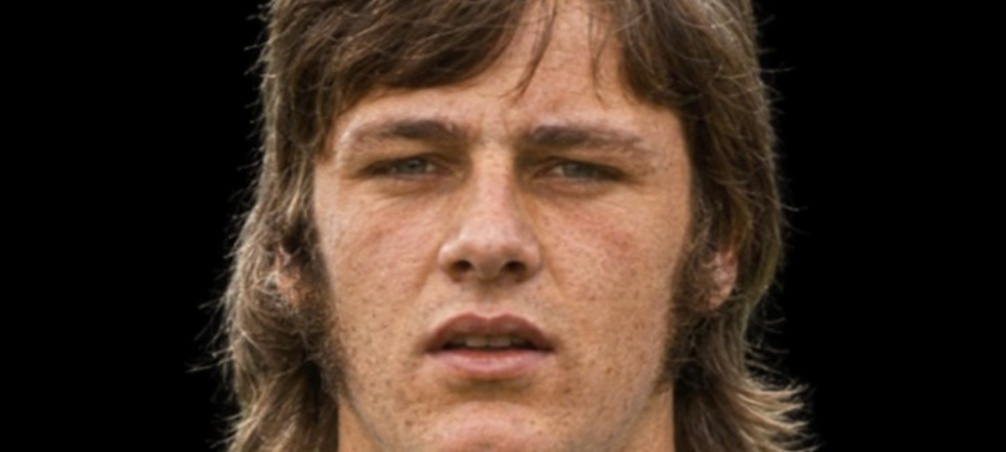
Andrew George Proudlove, born 15 January 1955, Buxton, England.
PART ONE
Andy Proudlove began life as a professional at Reading, signing for the Biscuitmen in 1971. It was there, in the 1971–72 season, that the winger made his first five league appearances after making his debut in a 1-1 draw to Scunthorpe United at the Old Show Ground on 27 November. It was a modest start, and a brief one at that, for his stay with the Royals did not extend beyond that single campaign; nevertheless, it gave him a taste of League football that he would spend the rest of the decade chasing in fits and starts. Having left Reading, he returned to his home town and signed for Buxton, and the timing could hardly have been better.
Even so, those five outings mattered because they put Proudlove into a League side while he was still learning the senior game, and although he did not remain with the Royals beyond that campaign, he had crossed the first important line by showing that he could be trusted in professional football. There was no instant breakthrough and no run of matches long enough to establish him at Elm Park, but players released at that age were not necessarily finished, particularly if they had pace and could create openings, and Proudlove returned to his home town knowing that he had already experienced a standard of football that many young players never reached. Buxton offered him regular involvement and familiar surroundings, while the club itself was moving into one of the most successful periods in its history, which meant that his departure from Reading did not lead to a dead end but instead placed him inside a side with something substantial to play for.
Buxton won the Cheshire County League championship in 1972–73 and secured promotion to the Northern Premier League, and for Proudlove the timing was ideal because he had arrived at Silverlands just as the Bucks were putting together a title-winning campaign. There was also an interruption to his first spell, for in September 1972 he joined Mossley and made ten appearances before returning to Buxton two months later, a short move which showed how unsettled his early playing years could be but also how quickly he was welcomed back by his home-town club. Once restored to the Buxton side, he was part of a season which ended with the championship and promotion, and the move into the Northern Premier League brought a stronger weekly test against clubs with solid support, experienced players and ambitions of reaching the Football League.
Buxton found the higher level difficult, finishing 18th in 1973–74 and 16th in 1974–75, although those positions should not disguise the value of surviving and adjusting after promotion, nor the opportunity the division gave Proudlove to demonstrate that his five Reading appearances had not been a misleading glimpse. He was now facing good semi-professional opposition on a regular basis, and his performances evidently persuaded observers that he remained capable of playing at League level, because Sheffield Wednesday subsequently brought him back into the professional game. It was a major change in surroundings, from Silverlands and Northern Premier League football to Hillsborough and a club accustomed to far bigger stages, but Wednesday were no longer a top-flight powerhouse. Proudlove arrived when the name of the club and the state of the team stood in sharp contrast and the days when they challenged for honours in the league as well as in cup competitions were long gone.
Sheffield Wednesday had just completed a dreadful 1974–75 season in the Second Division, winning only five League matches and falling into the Third Division for the first time in their history, and the damage caused by that relegation had not disappeared when Proudlove joined them. Confidence was low, results had collapsed and the club needed players prepared to work through a difficult rebuilding period, so the winger was not stepping into a successful side where he could be carried along by established performers, but into one struggling to halt a serious decline.
Proudlove made his Wednesday debut as a substitute in a 4–0 win over Grimsby Town at Hillsborough on 20 September 1975, a rare bright note amid otherwise threadbare form. But results did not improve quickly enough to save manager, Steve Burtenshaw, who was sacked shortly afterwards and replaced by Len Ashurst as the board acted to prevent the club’s slide from becoming still worse. A former England U23 international, Ashurst arrived with a considerable pedigree, having made well over 400 appearances as a defender for Sunderland before moving on to Hartlepool United, where his playing days wound down. From there, however, he had already begun to make his name in the dugout, first as player-manager of Hartlepool and subsequently in full-time charge at Gillingham, before Sheffield Wednesday came calling in their hour of need.
Proudlove, for his part, made his first Sheffield Wednesday start on 4 October, when Peterborough United, led by ex-West Ham United and Manchester United defender Noel Cantwell, visited Hillsborough and drew 2–2, and from that point he was given enough opportunities to finish the season with 15 Third Division appearances, a respectable return for someone who had started the year in non-League football but not enough to make his place secure once the Yorkshire club began planning beyond the emergency in front of them.
The 1975–76 campaign remained alarming to the end, for Sheffield Wednesday went into their final League match still requiring a point to stay out of the Fourth Division, and that fact alone explains the atmosphere surrounding every player used by Ashurst during those months. Proudlove had returned to the Football League believing that he could make progress, yet he found himself playing in a side whose first duty was simply to protect the club from another humiliation. Flair had to be balanced against the need for discipline, physical effort and dependable work without the ball, and Proudlove’s 15 outings came in precisely those testing circumstances. Wednesday survived, avoiding the further relegation that had seemed possible for much of the season, while Proudlove had done enough to remain in the professional game and earn a move to Norwich City, where John Bond had produced a progressive First Division team.
It was, on paper, a significant step upward, because he was leaving a club fighting near the bottom of Division Three for one competing among the country’s leading sides, and the move suggested that his ability had been noticed despite Sheffield Wednesday’s problems. The difficulty was that Norwich, who had players like Graham Paddon, Colin Suggett, Martin Peters, Jimmy Neighbour, Ted MacDougall and Phil Boyer on their books, possessed stronger competition for places and could not afford to give extended opportunities merely to discover whether a player might settle, so although Proudlove had climbed two divisions in one move, the chance to prove himself became narrower rather than wider.
His time at Carrow Road during 1976–77 brought just one First Division appearance, and that solitary outing placed Proudlove among the relatively small number of footballers who reached the top level of English football without ever being allowed a sustained run there. Norwich had developed well under Bond and were no longer simply trying to survive among wealthier clubs, while the manager’s approach demanded attacking movement, technical confidence and competition throughout the squad, which left little room for a newcomer who could not immediately dislodge those ahead of him. The one appearance nevertheless represented the highest divisional level Proudlove reached, and it completed a remarkable rise from the Northern Premier League to the First Division within a short period, even if the stay did not develop in the way he would have wanted.
PART TWO
A player can spend years trying to regain an opportunity after leaving the League, as Andy Proudlove had done following Reading, but reaching the top flight presented a different problem because merely getting there offered no promise of remaining there, and he soon needed another club where first-team football appeared more attainable. Hereford United provided that opening in 1977, although circumstances again placed him inside a team facing severe trouble, and the contrast with Norwich City could scarcely have been stronger. Hereford had been elected to the Football League only five years earlier and had made swift progress, but relegation from Division Two in 1976–77 sent them back into Division Three, where the hope of rebuilding quickly gave way to a season of departures, uncertainty and another battle near the bottom.
The 1977–78 season became a hard one for everybody at Edgar Street, because chairman Frank Miles and manager John Sillett resigned, leading scorer Dixie McNeil was sold to Wrexham, and a club already weakened by relegation struggled to regain its balance. Hereford lost five of their first six League matches before producing an encouraging nine-game unbeaten sequence containing seven clean sheets, and that improvement briefly suggested that the opening weeks had been misleading, but the recovery did not last and a run of only one win in 19 matches dragged the Bulls back towards danger. Proudlove made 11 League appearances during the campaign, although attacking players could hardly flourish in a side which found goals especially difficult to obtain, and Hereford’s problems became even clearer away from Edgar Street, where they failed to win a League game and scored only six times throughout the season.
McNeil managed three goals in seven League appearances before leaving in January, yet that small total remained enough for him to lead the scoring figures deep into the month, which revealed how rarely the team was finding the net and how little margin there was for any defensive mistake. Even the cup competitions supplied no relief, with early elimination in both domestic tournaments and a particularly damaging FA Cup defeat against Wealdstone, who won 3–2 in a replay at Edgar Street and became the first non-League club to knock Hereford out of the competition since the Bulls had entered the Football League. Four victories in six matches during March under caretaker manager Tony Ford renewed hope, but three draws and seven defeats from the closing ten fixtures completed a second successive relegation and returned United to Division Four.
For Proudlove, another struggling League spell had ended without the stable place he needed, and he went back to Buxton once more, returning to the club which had already taken him in after Reading and again after other moves. There was a practical sense to those returns because Buxton knew exactly what sort of player they were getting, while Proudlove knew the ground, the people and the standard, but each return also kept him visible to Football League managers searching the non-League game for affordable reinforcements.
That was how another opportunity arrived in November 1978, when Port Vale manager Dennis Butler signed him from Buxton for £1,000, taking the winger back into Division Four more than six years after his first appearances for Reading at the same level. Vale were enduring their own difficulties during 1978–79 and were not in a position to offer an easy route back, but the transfer fee showed that Butler considered Proudlove worth bringing into a club operating under tight financial pressure. He played five consecutive Fourth Division matches in midfield, a brief sequence which at least gave him more than an isolated appearance, although it did not lead to a permanent place. Vale eventually finished 16th with 42 points from 46 games, while their FA Cup hopes ended against Bradford City at the first stage and Chester removed them from the League Cup, leaving the side with little beyond a modest League position to show for a trying campaign.
Vale’s season contained occasional flashes of better form, most notably a 5–1 win over local rivals Crewe Alexandra, but heavy defeats against Darlington and York City, both by 4–0, and a 6–2 loss to Barnsley showed why consistency remained beyond them. Butler publicly complained about the abuse directed at his players by dissatisfied supporters, attendances fell to an average of 3,287 and the club reported a record loss of £52,000 despite useful commercial income, so Proudlove had again joined a League club at a moment when results, finances and confidence were all causing concern. The largest Vale Park crowd of the season was 5,226 for Barnsley’s visit on 14 April 1979, whereas only 2,160 attended the match against Hereford United on 1 May, a particularly relevant fixture for Proudlove given his recent spell at Edgar Street.
He could not force his way into the side beyond those five successive appearances, however, and in May 1979 the Staffordshire side released him on a free transfer, bringing his Football League playing days to an end after spells with Reading, Sheffield Wednesday, Norwich City, Hereford United and Port Vale. The total number of appearances was modest, but the range was striking: he had appeared in the First Division with Norwich, played in the Third Division with Wednesday and Hereford, and operated in the Fourth Division with Reading and Vale, while repeatedly rebuilding his position through non-League football whenever one professional opening had closed. Few players move through all those settings in such a short period, and fewer still keep finding their way back after being overlooked.
Proudlove then joined Stafford Rangers, who were entering the newly formed Alliance Premier League for the 1979–80 campaign, and the move kept him at a strong national level of non-League football rather than sending him immediately into local competition. The Alliance brought leading clubs from the Northern Premier League and Southern League together in one division, creating a more organised route beneath the Football League, and Stafford were an established non-League name with experience of prominent FA Cup runs and major matches. Although Proudlove’s Football League opportunities had ended, the demands remained substantial, with long journeys, experienced opponents and the pressure of playing for clubs whose supporters expected them to compete near the top.
He later represented Macclesfield Town and Matlock Town, continuing a pattern which had taken him around Derbyshire, Cheshire, Staffordshire and Yorkshire, and then returned yet again to Buxton, the one club which remained a constant throughout his playing years. His connection with the Bucks had begun after Reading released him, had included the 1972–73 Cheshire County League championship and promotion, and had twice helped him earn another League chance, first with Sheffield Wednesday and later with Port Vale. Buxton was therefore more than a convenient stop between professional contracts, because it was the place where he played some of his most regular football and repeatedly restored his name after short or difficult stays elsewhere.
There was still one unusual move left, as Proudlove eventually left the familiar grounds of English football and crossed the North Sea to play for KuPS Kuopio in Finland, taking his game into a different country and a different football culture. It was a fittingly unexpected final turn for someone whose playing days had rarely followed a straight line, beginning with five Division Four appearances at Reading and then passing through a championship season at Buxton, ten games with Mossley, a return to the League with Sheffield Wednesday, one appearance at the highest level for Norwich City, relegation struggles with Hereford United, another professional recall at Port Vale and further non-League service with Stafford Rangers, Macclesfield Town, Matlock Town and Buxton.