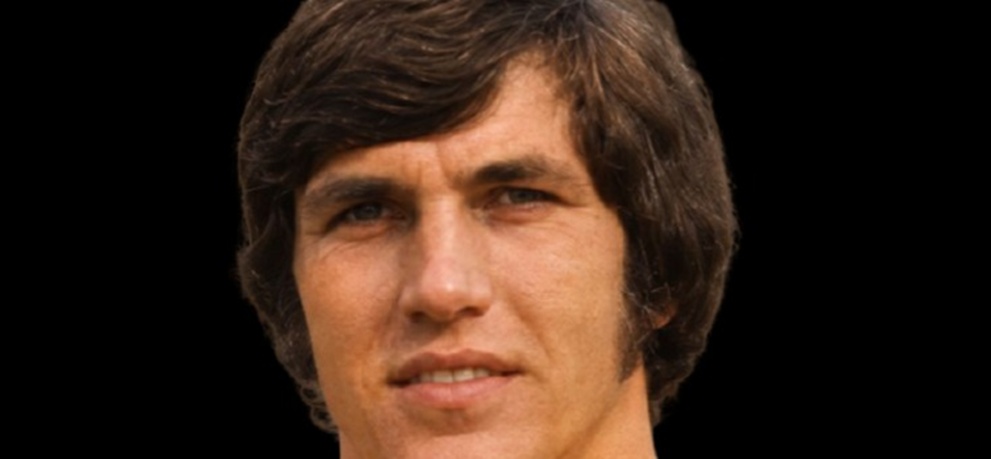
Roger DeVries, born 25 October 1950, Hull, England.
PART ONE
Roger DeVries was noticed early working his way through Hull City’s schoolboy ranks during the mid-1960s before he finally put pen to paper on his first professional contract in September 1967. Yet there was nothing instant about his rise, and for three long years the teenager was kept firmly out of first-team reckoning, his development instead taking place in the relative obscurity of the Central League Reserves. Above him, Londoner Dennis Butler and Scotsman Don Beardsley shared the left-back duties throughout this period, and while the Cliff Britton era wound slowly towards its close, City settled into life as a respectable if unspectacular Second Division outfit, neither pushing hard for promotion nor sliding towards the trapdoor. It was, in other words, exactly the kind of unremarkable footballing climate in which a young defender might easily be forgotten, and DeVries would have been forgiven for wondering whether his chance would ever come.
Everything changed in the summer of 1970. Terry Neill, the former Arsenal captain still only in his twenties himself, arrived at Boothferry Park as player-manager, and almost immediately he took a shine to the young full-back who had been quietly impressing in the lower ranks without ever quite forcing the issue. It was, in its way, a bold decision for a young manager barely settled into his own new surroundings to make, handing a first-team shirt to a defender who had not so much as sniffed senior football before, but Neill evidently liked what he saw in training, the composure on the ball, the timing of the tackle, and he was not a man given to sentiment when it came to picking his side.
Beardsley was nudged aside, DeVries was thrust suddenly into the first-team picture, and on 1 August 1970 the nineteen-year-old made his senior debut in the opening round of the Watney Mann Invitation Cup against Peterborough United at London Road, a comfortable 4–0 victory that offered the first small hint of what Neill’s revitalised side might be capable of that season, and a debut that, on the face of it, looked like nothing more than a routine pre-season fixture but would soon be followed by something altogether more memorable. Four days later came an afternoon that DeVries would never forget, even if his own part in it was largely that of a watchful full-back doing his job while history unfolded around him. Hull City had been drawn against Manchester United in the semi-final of that same Watney Cup, and on 5 August 1970 a crowd of just over 34,000 squeezed into Boothferry Park for what the locals were already calling, with a mixture of excitement and disbelief, the visit of George Best, Bobby Charlton and Denis Law to East Yorkshire.
Neill’s players stormed ahead when Chris Chilton beat United’s Alex Stepney with a header inside eleven minutes, the ball arriving from a cross swung in by Butler, and Butler himself so nearly turned scorer a second time when his effort cannoned back off the crossbar shortly after the interval. But United, gradually finding their rhythm as the second half wore on, drew level in the seventy-eighth minute through a headed goal, the ball delivered from the flank by Willie Morgan, and the Boothferry Park crowd howled in vain for a penalty when Ken Wagstaff appeared to be brought down inside the area with barely two minutes of normal time remaining. No spot-kick was given, extra time yielded nothing further, and so the tie went to a shoot-out, the very first occasion on which a professional match in England had been settled in such fashion.
Manchester United held their nerve to win it 4–3, and while it was Derby County rather than Hull who would go on to lift the trophy itself at the Baseball Ground, the DeVries name was now, in its own small way, attached to a genuine piece of footballing history. Few of those inside Boothferry Park that Wednesday evening, and fewer still of the players out on the pitch, could have grasped quite how significant the shoot-out would become in the decades that followed, a novelty dreamt up to settle a pre-season friendly and now, half a century on, the accepted method of deciding some of the biggest matches the game has ever produced; but for a teenaged left-back only days into his time as a first-team regular, it must simply have felt like an extraordinary way to begin.
That, though, was merely the prelude. What followed was a full decade as City’s first-choice left-back, a run so consistent that four different managers, each arriving with his own ideas and his own favoured players, nonetheless found themselves relying on DeVries match after match, season after season. He was never the most eye-catching of defenders, and there were certainly afternoons when a hurried clearance sailed into the back rows of the West Stand rather than finding a team-mate downfield, yet he remained, all the same, a steadying influence at the heart of a defence that few opposing wingers ever got the better of for long.
PART TWO
During the 1970/71 campaign, Roger DeVries missed only a single fixture, and it says a good deal about how quickly he had established himself that Terry Neill kept faith with him almost without interruption thereafter. The following campaign brought a brief wobble, Don Beardsley restored to the side in late September 1971, though the recall lasted barely a month before DeVries reclaimed his place and settled back into the rhythm of first-team football as though he had never been away.
Then, in something of a reversal, the pendulum swung the other way during 1972/73, Beardsley starting the majority of that season’s matches while DeVries found himself pushed into a supporting role, watching on from the sidelines more often than he would have liked and no doubt wondering whether his moment had already passed. That arrangement, however, did not last. In the 1973 close season Beardsley was sold on to Grimsby Town, and from that point forward DeVries became City’s undisputed first-choice left-back for the best part of the next seven years, a position he would not relinquish easily to anybody.
By now well into his mid-twenties and established as one of the more experienced heads in a young Hull side, DeVries had settled into the sort of rhythm that only comes from having played the same position, week in and week out, for the best part of four years, and it showed in the calm way he read the game, rarely caught square, rarely dragged out of position by a winger’s feint. It was in October 1973, specifically on the eighth of that month, that DeVries scored the only goal of his time at Boothferry Park, and it arrived in memorable fashion, a long-range drive that opened the scoring away at Filbert Street in a League Cup tie against Leicester City, a match that would eventually finish 3–3.
For a defender so rarely associated with attacking adventure, it was a moment worth savouring, and those who were there still speak of the shock on the away end’s faces as the ball flew beyond the Leicester goalkeeper. The rest of that 1973/74 season saw DeVries miss eleven of the club’s fifty-two fixtures, with midfielder Jimmy McGill deputising at left-back on each occasion, though DeVries was soon restored to his habitual place in the side once fit again. Change arrived at the top of the club early in the following campaign, 1974/75, when the experienced half-back John Kaye took over team affairs from Neill, who had by then departed for Tottenham Hotspur, and for most of that season DeVries again proved almost undroppable. His only real interruption came courtesy of an injury sustained on Boxing Day 1974, after which another promising product of the club’s own youth system, Peter Daniel, filled in capably at left-back until DeVries was fit once more.
That opening burst of drama, however, was very much the exception rather than the rule for a player whose entire method was built on the avoidance of drama. DeVries was not blessed with searing pace, nor did he possess the trickery that turns a full-back into a winger in all but name; what he offered instead was positional sense, a willingness to put his head or his boot wherever it needed to be, and above all a temperament that seemed entirely unbothered by the ebb and flow of a struggling club’s fortunes. Managers came and went at Boothferry Park across the decade, and the team around him rose and fell with them, yet DeVries himself rarely seemed to have a poor run of form, which is precisely the quality that supporters, if not always headline writers, learn to treasure most in a defender.
PART THREE
Restored to full fitness for the start of 1975/76, Roger DeVries missed just six games all season, and it was during this campaign that he struck up a full-back partnership with Daniel that would go on to endure for close to three years, the pairing becoming a genuine fixture of City’s rearguard right up until Daniel himself was eventually sold to Wolverhampton Wanderers. Throughout this period DeVries’s consistency never wavered, and even as the team around him began to slide gradually from the promotion-chasing heights of Neill’s opening season into a more modest, mid-table sort of existence under Kaye’s stewardship, he remained one of the few genuine constants that supporters felt able to rely upon whatever else was happening at the club.
The slide was gradual rather than sudden, the sort of decline that creeps up on a football club over several seasons rather than announcing itself in a single disastrous campaign, and by the time relegation was finally confirmed there could have been few inside Boothferry Park genuinely surprised by it, even if the sense of disappointment was real enough. When relegation to the Third Division was finally confirmed in May 1978, after Bobby Collins and then Ken Houghton had both, in turn, failed in their attempts to arrest the club’s slow decline, DeVries stayed on rather than seeking a way out elsewhere, lending his experience willingly to a rebuilt City squad that Houghton assembled for life in the lower division.
It would have been easy enough, at twenty-seven and with a decade of Second Division football already behind him, for DeVries to have sought a fresh start at a club still competing at the level he had grown used to, yet he chose instead to remain among familiar faces and stay loyal to the shirt he had worn since boyhood, a decision that says as much about the man as any single match report ever could. There were times, too, when he was asked to switch flanks entirely and cover at right-back in order to keep his place in an evolving side, a small but telling illustration of the adaptability that had kept him so central to the club’s plans for so long, and of a professionalism that placed the team’s needs comfortably ahead of his own settled habits.
Injury robbed him of playing time during the closing months of the 1978/79 season, yet DeVries returned in good health for the 1979/80 campaign and went on to play the bulk of that campaign at left-back, even filling in occasionally further forward in midfield whenever City’s situation on a given afternoon demanded it. It therefore came as something of a surprise to supporters when, in the 1980 close season, the club handed him a free transfer, bringing to an end a full decade of near-uninterrupted service that had begun with such promise under Neill a full ten years earlier.
His final appearance for Hull City came on 19 April 1980, in a Third Division fixture away at Wimbledon, by which point he was twenty-nine years and 177 days old, and he departed the club having made 362 appearances in all competitions and having scored that single, long-remembered goal against Leicester City back in October 1973. It was, in truth, an unglamorous team that DeVries had spent the greater part of his prime years serving, one that hit few real heights beyond Neill’s opening promotion push, but its defensive solidity across the better part of a decade owed no small amount to his reliability at the back, match after unspectacular match.
DeVries did not hang up his boots immediately, however, and in June 1980, still only twenty-nine and evidently believing he had a further season or two of useful football left in his legs, he moved on to Second Division Blackburn Rovers, where he began well enough, making nineteen appearances for the Lancashire club in the early weeks of the season. But he lost his place in the side from around mid-October onwards, and try as he might, he was unable to force his way back into regular contention thereafter.
DeVries left Ewood Park at the end of that campaign, and the summer of 1981 brought a short, month-long trial period at Scunthorpe United, during which he started six matches for the Iron. It was in one of those games, a 2-1 defeat against Wigan Athletic, that DeVries scored the second and final goal of his playing days, recorded as the 385th of some 387 senior appearances across his time in the professional game. By November 1981, with his trial at Scunthorpe concluded and no further offers forthcoming from elsewhere, DeVries decided that the moment had come to retire from playing altogether, quietly and without any great fuss, much as he had conducted himself throughout the ten years that had gone before, slipping out of the professional game with none of the fanfare that greets a more celebrated player’s final bow, and none, either, of the bitterness that so often accompanies a lesser talent’s slow fade from the game.