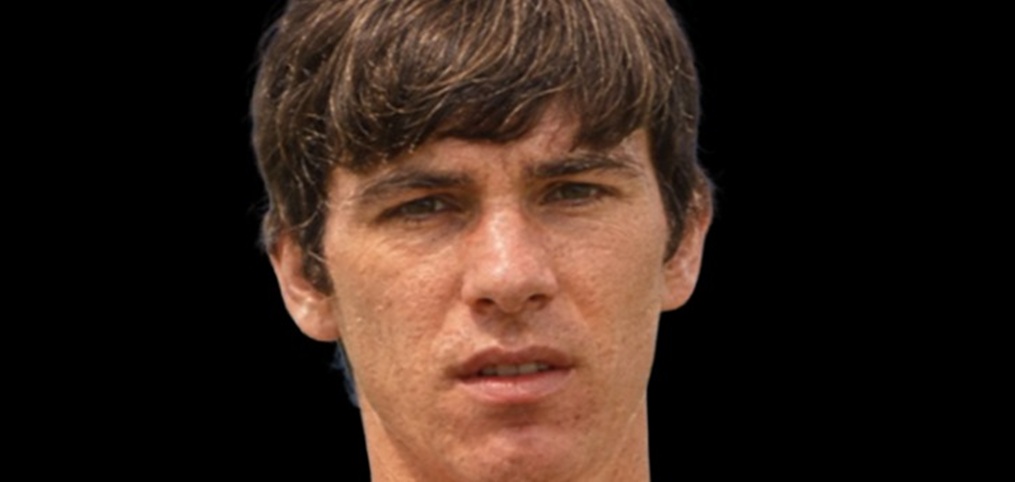
Frank Charles Barlow, born 15 October 1946, Mexborough, England.
PART ONE
Frank Barlow signed amateur forms with Sheffield United as a fourteen-year-old before turning professional in 1965 at the age of nineteen, joining a Blades dressing room stocked with senior professionals who would have offered the teenager little in the way of sympathy and a great deal in the way of education. Barlow would spend seven years as a Sheffield United player, and yet for much of that time he was never quite able to nail down a regular place in the first team, being used instead as a versatile squad man, ready to be summoned whenever illness or injury or suspension thinned out the ranks ahead of him. It was only in the 1969–70 season that Barlow finally became a fixture in the Football League side, a defensive midfielder — some called him a wing-half in the old parlance, others simply an anchor — whose game was built on positioning and reading of play rather than any great flourish.
Nevertheless, by the time he departed Bramall Lane he had made 121 appearances for the Blades and scored twice, a modest tally for a defensive man but a solid one all the same, and along the way he had also found time to complete a Bachelor of Arts degree in sociology, a detail that tells you something about the sort of thoughtful, unshowy character United had on their books — a footballer, in other words, who was never going to be content simply kicking a ball about and collecting his wages, but who wanted to understand the world beyond the touchline as well as the one within the white lines. It was a combination of patience, application and intelligence that would serve him rather better in the long run than raw natural talent alone might have done, and it was a combination that Sheffield United, for all that they never quite gave him a settled run in the side, evidently valued enough to keep him on their books for the best part of a decade.
In 1972, with seven years of service behind him, Chesterfield came calling, and paid what was then a club record fee of £15,000 to take him to Saltergate. It proved to be shrewd business on the Spireites’ part. Barlow settled quickly into the anchor role in Chesterfield’s midfield, and was soon being talked of as a more thoughtful player than most who occupied that position, a consistent and honest performer whom supporters warmed to almost immediately. Along the way he even sampled life on the other side of the Atlantic, spending part of 1974 on loan with the Boston Minutemen in the fledgling North American Soccer League, where he made twenty appearances without troubling the scoresheet, a curious American interlude in an otherwise thoroughly English footballing story.
Back at Saltergate, over four years on Chesterfield’s books, he went on to make 140 appearances and scored three goals, and it was during this Chesterfield spell that his thoughts first began to turn towards coaching, an interest that would soon come to define the remainder of his working life. Unfortunately a long succession of knee injuries eventually caught up with him, and by 1976 the damage had become too severe to play on, forcing him into premature retirement at a stage of his life when many players of his type, unspectacular but reliable, might have expected several more good seasons in the legs. There was to be no lingering sentimentality about it, either; Barlow was not the sort of man to spend months feeling sorry for himself once the diagnosis was clear, and instead the same application that had carried him through nine years of professional football was quickly redirected towards a new challenge altogether.
PART TWO
Chesterfield, recognising the coaching aptitude Frank Barlow had already begun to display while still a player, moved swiftly to appoint him First Team Coach in July of 1976, and he did not have to wait long before management came calling too, albeit not in circumstances of his own choosing. When Joe Shaw was sacked later that same year Barlow was installed as caretaker manager, a temporary arrangement that gave the club a taste of what he could offer even though, at that stage, the job was not made permanent.
Instead it was Arthur Cox who took the reins on a lasting basis, and Barlow reverted to his coaching duties beneath him, seemingly content to remain in a supporting role rather than push for the top job himself. Cox, a demanding and driven operator who would go on to build a considerable reputation of his own further up the leagues, found in Barlow a coach he could trust implicitly on the training ground, freeing him to concentrate on the wider running of the club while his number two dealt with the daily grind of fitness work, tactical drilling and man-management that so often goes unnoticed by supporters but which shapes a team’s fortunes as much as anything that happens on a Saturday afternoon.
That contentment, however, would be tested again in September 1980, when Cox left Saltergate for Newcastle United and the Chesterfield board turned once more to their loyal coach. Barlow, so the story goes, protested several times throughout the ensuing three years that management was not a position he actually wanted, insisting that he had always felt far more comfortable as a coach working alongside a manager than as the man who had to carry the can himself. Despite those reservations he took the job regardless, and despite them too he made an instant and considerable success of it. In his very first season in sole charge, 1980–81, Chesterfield lifted the Anglo-Scottish Cup, beating Notts County 2–1 in the final, and Barlow was named the Third Division’s manager of the month for March 1981, a rapid vindication of the faith the board had placed in him.
Supporters, moreover, appreciated more than simply the results; they appreciated the honesty with which Barlow spoke to them. After a limp home performance against Charlton Athletic in January 1981 he told fans bluntly that the club had asked for their backing at the start of the campaign and that they had kept their side of that bargain, whereas the team, he admitted, was finding it rather harder to keep theirs — the sort of plain-speaking that tabloid readers and terrace regulars alike have always warmed to, and which set Barlow apart from managers who preferred platitudes to candour.
He kept Chesterfield in touch with the promotion picture throughout that first season despite an increasingly worrying financial position behind the scenes, but the money troubles could not be held at bay forever, and by the end of his second full season in charge, 1982–83, with the club’s finances in genuine crisis, Chesterfield were relegated, a decline that had rather more to do with unpaid bills and boardroom upheaval than with anything happening on the training pitch, though it was nonetheless the manager whose name would forever be attached to it in the record books.
A change of ownership followed swiftly, and with it a clean sweep of the coaching staff; Barlow himself was offered a role within the incoming regime, but rather than accept a job that his own backroom colleagues were not being offered, he turned it down out of simple loyalty to the men who had worked alongside him, and left Saltergate with his reputation, if not his job, wholly intact, carrying remarkably little of the blame for a relegation that had far more to do with the boardroom than with his own management.
Barlow was not out of work for long. Scunthorpe United appointed him almost immediately as assistant manager to Allan Clarke, the former England international, and when Clarke resigned a year later Barlow again found himself thrust unwillingly towards the manager’s chair, protesting once more — much as he had at Chesterfield — that it was not a role he particularly craved. Once again, though, he made a fair fist of it: Scunthorpe steered clear of relegation trouble in 1984 and maintained a respectable position in the table the following season as well, evidence that Barlow’s methods, whatever his own private reluctance about titles and status, produced tangible results on the pitch.
He left the Iron in 1987, and remarkably would not sit in a manager’s chair again for almost twenty years, choosing instead to build a long and varied second act purely in coaching and assistant roles up and down the leagues. Whether this was simple contentment with life a rung or two below the top job, or a genuine wariness born of two difficult experiences of carrying sole responsibility, only Barlow himself could truly say; either way, the pattern that would come to define the rest of his working life — steady, useful, largely unheralded service to a succession of managers rather than any pursuit of the limelight for himself — was now firmly set.
That second act began at Barnsley, where Barlow took up a post as youth and reserve team coach, before moving on a year later to Sheffield Wednesday, a club with which he would enjoy a long and fruitful association stretching, across two separate spells, over the best part of a decade. He remained at Hillsborough as a coach until 1996, at which point he followed Trevor Francis to Birmingham City, spending two years at St Andrew’s before circumstances drew him back to Wednesday, this time as assistant manager under Danny Wilson, a partnership forged then that would resurface, tellingly, many years later.
PART THREE
From Hillsborough the Wilson–Barlow axis moved on together to Bristol City, where Barlow stayed until 2004, at which point he parted ways with Wilson and instead linked up with Paul Merson, newly appointed as manager of Walsall, serving as his assistant at the Bescot Stadium. That particular posting proved short-lived: after a heavy 5–0 defeat away to Colchester United left Merson’s own position under serious threat, Barlow resigned from his role in January 2005.
He did not have to look far for his next opportunity. That same month, January 2005, Nottingham Forest’s newly installed manager Gary Megson brought Barlow to the City Ground as his assistant, and for a while the pairing seemed to offer Forest genuine hope of arresting a worrying decline. Megson, however, could not prevent Forest’s relegation into League One, and when a promotion push subsequently stalled he departed the club by mutual consent, leaving Barlow — alongside Forest’s reserve team coach Ian McParland — to take charge jointly as caretaker manager, a position Barlow had hoped, after Scunthorpe, he would never occupy again.
Yet what followed was arguably the most eye-catching passage of his entire time in the dugout: Barlow and McParland sparked a remarkable revival on Trentside, guiding Forest to an unbeaten run that stretched to ten matches and included six consecutive victories, agonisingly close to equalling the club’s all-time record of seven straight wins before a 3–2 defeat at Hartlepool United ended the sequence. For their efforts the pair were jointly named League One Manager of the Month for March 2006, a fitting reward for a man who had spent so long insisting he had no interest in management, only to prove himself rather good at it whenever the responsibility landed on his shoulders regardless.
When Colin Calderwood was subsequently appointed as Forest’s permanent manager, Barlow and McParland stepped back down into coaching roles beneath him, and it was not long before Barlow’s restless footballing life took him elsewhere again. Hull City, in the midst of protracted negotiations to prise their preferred managerial target Phil Parkinson away from Colchester United, turned to Barlow as a stop-gap, naming him caretaker manager on 28 June 2006. The appointment lasted precisely two days: Parkinson was duly confirmed as Hull’s new manager on 30 June, and Barlow reverted once more to an assistant’s role beneath him.
That posting, too, proved short in duration, for a reshuffle of the Tigers’ coaching staff following a disappointing start to the 2006–07 season saw Barlow leave East Yorkshire in October 2006. He moved on almost immediately to Bradford City, working as assistant to caretaker manager David Wetherall at Valley Parade, one more short but useful engagement in a career that by now resembled less a single steady path than a map criss-crossed with the fortunes of half the clubs in Yorkshire and beyond.
By June 2007, Wigan Athletic had identified Barlow, by then sixty years old, as the ideal man to assist their new manager Chris Hutchings, with Hutchings himself explaining the appointment in terms that left little doubt as to Barlow’s standing within the English game: he wanted, he said, someone he could trust implicitly when it came to football knowledge, adding that nobody possessed more experience than Barlow and that he knew players inside-out. That trust would be tested within months, however, as Hutchings was sacked in November 2007 after a difficult start to the Premier League campaign, and Barlow — inevitably, by this point in his story — was again asked to step up as caretaker manager.
When Steve Bruce arrived to take permanent charge, bringing his own assistant Eric Black across from Birmingham City, Barlow moved sideways rather than out of the door, taking up the role of first-team coach at the JJB Stadium and remaining a fixture of the Wigan backroom staff for some considerable time. From Wigan he moved into scouting, serving as Chief Scout at Sunderland from 2009, a quieter but no less significant contribution to a club’s fortunes than anything achieved from the touchline; identifying the players who might strengthen a squad two or three years down the line is unglamorous work, rarely reported and even more rarely praised, yet it draws on precisely the same judgement and experience that had made Barlow such a trusted lieutenant to so many managers before, and it suited a man who had never much cared for being the centre of attention in the first place.
The old Wilson–Barlow partnership was finally reunited in June 2011, when Danny Wilson, newly appointed manager of Sheffield United, brought Barlow back to Bramall Lane as his assistant, more than four decades after a fourteen-year-old boy from Mexborough had first walked through the club’s doors. The reunion bore almost immediate fruit: in their first season together the Blades reached the League One play-off final, only to be beaten on penalties by Huddersfield Town in a match that would go down as one of the longest and most dramatic shoot-outs English football has seen. Sheffield United mounted a fresh promotion challenge the following season too, but a poor run of results after Christmas proved costly, and in April 2013 both Wilson and Barlow were relieved of their posts,