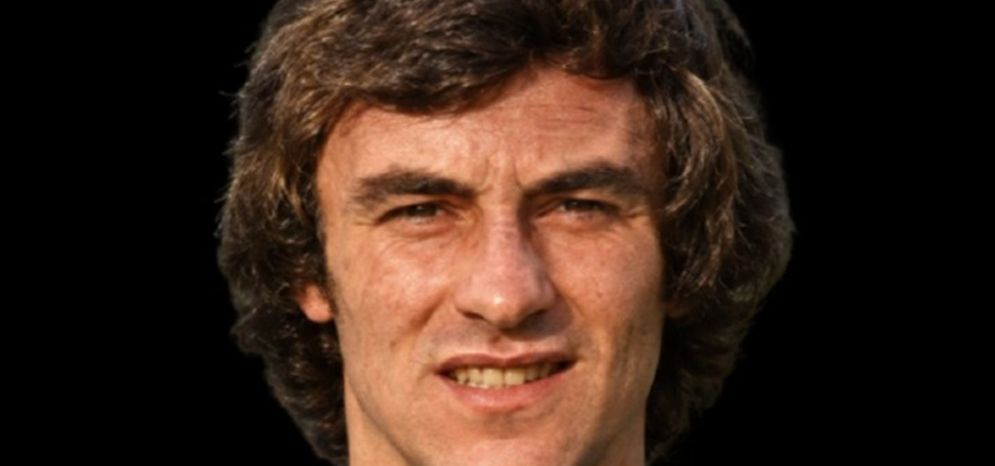
Philip Ernest Summerill, born 20 November 1947, Birmingham, England.
PART ONE
Phil Summerill joined Birmingham City straight from school, signing amateur and then apprentice forms as a teenager, and by 1964 he had done enough in training and in the reserves to earn a first-team debut and, shortly afterwards, a professional contract. Summerill’s early seasons at St Andrew’s Stadium were spent learning his trade in a Birmingham side that fluctuated between promotion hope and mid-table anonymity, and it took him until the back end of the decade to nail down a regular place as first-choice striker. Once he did, however, he barely relinquished it. Over nine years on the Blues’ books he made 118 league appearances and scored 46 goals, and although those numbers alone might not leap off the page at a modern reader raised on inflated Premier League statistics, they tell only half the story, because it was the manner in which he delivered them, in short, furious bursts of form, that made him such a valuable presence up front.
Indeed, it was between 1968 and 1971 that Summerill truly made his name at St Andrew’s, finishing as Birmingham City’s leading marksman in three successive campaigns, a feat that placed him alongside the club’s most dependable forwards of any era. In the 1968–69 campaign he shared top-scoring honours with the veteran Fred Pickering, the pair finishing level on seventeen goals in all competitions, though it was Summerill who contributed the greater share in the league alone with sixteen.
The following season, 1969–70, was a difficult one for Birmingham as a whole, Stan Cullis departing partway through amid a relegation scrap that eventually saw the caretakers Don Dorman and Bill Shorthouse hand over to the incoming Freddie Goodwin, but through all of that upheaval Summerill remained the one constant, finishing as outright top scorer with thirteen goals, every single one of them struck in league competition. He followed that with an even more prolific effort in the 1970–71 season, registering sixteen goals in the league and twenty-one across all competitions as the Black Country team settled into ninth place in the Division Two table under Goodwin, a return that confirmed him, beyond any argument, as the club’s most reliable finisher of the period.
Along the way there were afternoons that stuck long in the memory of anyone who saw them, and none more so than the December 1968 fixture against Hull City at St Andrew’s, when Summerill reportedly tore the visiting defence apart with a hat-trick scored inside a span of only seven minutes as Birmingham ran out 5–2 winners. It was the sort of spell that turns a useful forward into a cult figure overnight, the crowd roaring him on with every touch, and it remains, by most accounts, the single most explosive burst of finishing produced by a Birmingham City player throughout that whole era.
Nor was Summerill merely a goalscorer in a vacuum; he was also present, and contributing, when the club finally achieved what it had been chasing for six long years. Birmingham City won promotion back to the First Division at the end of the 1971–72 campaign, edging into the top two of the Second Division, and although injuries and the emergence of younger forwards such as Bob Latchford meant Summerill’s role by that stage was rather more peripheral than it had been at his peak, he still turned out in a handful of league matches and struck a goal in a home win over Carlisle United that helped push the Blues over the line. For a player who had given the best of his goalscoring years to the club during its Second Division wanderings, there was a certain satisfaction in being on the pitch, even briefly, when the promotion was finally sealed.
PART TWO
In the middle of the 1972-73 season, Phil Summerhill was transferred to Division Two outfit Huddersfield Town, ending almost a decade of association with the only professional employer he had ever known. It cannot have been an easy wrench, leaving the ground where he had scored 46 goals and captured the supporters’ affection with those bursts of predatory finishing, but professional football rarely allows for sentiment, and Summerill duly reported for training at Leeds Road ready to prove himself in unfamiliar surroundings. His time in West Yorkshire, spanning some twenty-one months between January 1973 and November 1974, produced 54 league appearances and 11 goals for the Terriers.
Seeking a fresh challenge, Summerill moved on again in November 1974, this time to Millwall, and it was at The Den that he rediscovered something of his old sharpness in front of goal. Over three seasons in south-east London, running from 1974 to 1977, the striker notched up 87 league appearances and found the back of the net on 20 occasions, and although he later admitted that he was never quite the fans’ favourite at Cold Blow Lane, there were moments when the Millwall crowd took him thoroughly to their hearts.
One such moment came in the closing weeks of the 1975-76 campaign under Gordon Jago, when, having been relegated the previous season, Millwall bounced straight back towards the Second Division, and Summerill’s goal at Swindon Town, his tenth of the campaign and enough to make him the first Lions player into double figures that season, proved pivotal. He was mobbed by supporters who spilled onto the pitch in celebration, an experience he later described as feeling like being trapped at the bottom of a ruck, and Millwall held on to secure promotion after local rivals Crystal Palace failed to make good on their games in hand. It was, by his own telling, a funny old campaign, full of good runs and bad ones, but one that ended with the club he had joined almost as an afterthought climbing back up the divisions.
By September 1977, however, Summerill was on the move once more, this time on a free transfer to Wimbledon, a club then taking its very first steps in League football following election to the Fourth Division. Under manager Allen Batsford he became part of a squad determined to establish itself among the professional ranks, and although his appearances were limited to 31 across two seasons with 4 goals to show for them, he played his part in laying the foundations of what would become one of English football’s most remarkable rises.
He contributed to the 1978–79 campaign that saw Wimbledon finish third in the Fourth Division and win automatic promotion to the Third Division, the club’s first such achievement since joining the League, even though he moved on to non-League Tooting & Mitcham United partway through that promotion-winning season and therefore did not see the job through to its conclusion. Either way, by the time the celebrations came, Summerill’s contribution earlier in the campaign had already been banked.
From Tooting & Mitcham, Summerill drifted through several more years of non-League football with various clubs in the Midlands, still turning out on Saturday afternoons for the pleasure of it long after the bright lights of the Football League had faded from view, before finally hanging up his boots in the early 1980s. Retirement, though, did not mean he turned his back on the game that had given him his identity. Instead he returned to his native Birmingham and took up a post as a football development officer for Birmingham City Council, a role in which he threw himself into grassroots coaching and community initiatives, helping to establish Little League programmes that gave youngsters across the city their first taste of organised football.