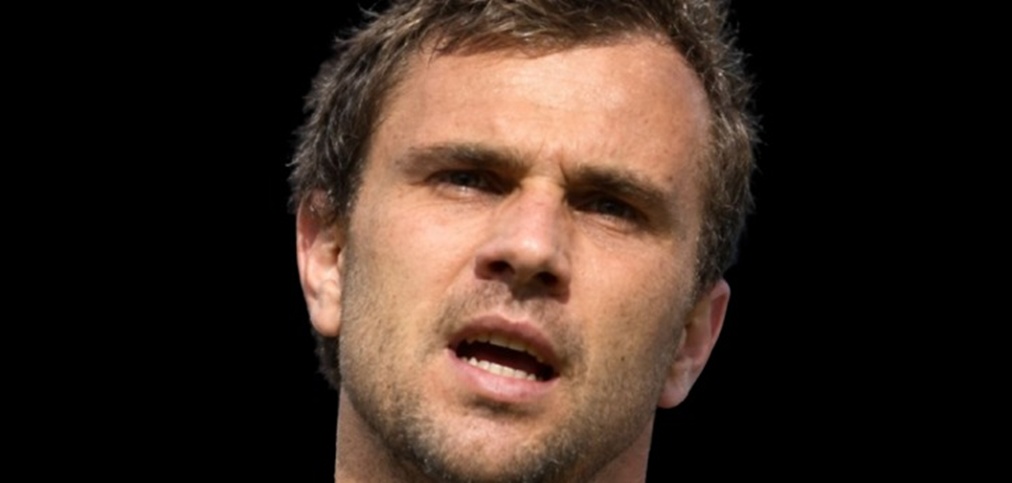
Carl Neil Fletcher, born 7 April 1980, Camberley, England.
PART ONE
Brought up in Poole, Carl Fletcher played football for Oakdale Middle School before progressing through AFC Bournemouth’s youth ranks. Fletcher’s first appearance for Bournemouth came in February 1998, when he was a 17-year-old trying to establish himself at a club playing in the old Second Division, and although his introduction brought no immediate flood of first-team football, it gave him the opportunity from which everything else would develop. As his involvement increased, Fletcher became an important member of Bournemouth’s team, and under Sean O’Driscoll he developed within a side encouraged to pass the ball with purpose, where the willingness to work had to be matched by the ability to make sensible decisions in possession.
During 2000–01 he appeared in 43 league matches and scored six league goals, figures that reflected both his growing importance and his capacity to contribute beyond the defensive duties that occupied much of his football, because he could also recognise an opening and provide a finish. Nevertheless, Bournemouth’s progress was interrupted by relegation at the end of 2001–02, which placed Fletcher and his teammates in the Third Division and confronted them with the task of recovering from disappointment without allowing it to govern another season.
For a young player becoming accustomed to greater responsibility, this was an education in the difference between performing well individually and helping a team achieve enough collectively, because a useful contribution meant less when the final table still sent the club down. Bournemouth therefore entered 2002–03 needing a response, and Fletcher’s captaincy placed him among those expected to keep the side focused, maintain its standards and help turn the demand for an immediate return into results across the months ahead.
That response carried Bournemouth to fourth place and into the play-offs, where victory over Bury in the semi-finals earned a meeting with Lincoln City at Cardiff’s Millennium Stadium on 24 May 2003, and Fletcher approached the final as a 23-year-old captain with the outcome of a whole season resting on one afternoon. Lincoln had earned their place by overcoming Scunthorpe United, and their strong defensive record gave Bournemouth good reason to expect a difficult contest, although the final eventually produced seven goals and a performance from Fletcher that directly influenced the result.
Steve Fletcher, who was no relation to Carl, put Bournemouth ahead before Ben Futcher equalised for Lincoln, leaving the match level as the first half moved towards its conclusion, but Carl Fletcher then headed in Garreth O’Connor’s delivery during stoppage time to restore Bournemouth’s advantage. Playing in central defence, he had already been involved in helping the team manage Lincoln’s threat, and his goal added a different kind of authority to the captaincy, because he had supplied the finish that allowed his teammates to begin the second half ahead. The interval consequently arrived with Bournemouth having answered Lincoln’s equaliser rather than having to dwell upon it, and Fletcher’s intervention became the first of two scoring contributions that would help settle the promotion contest.
With the lead restored, Bournemouth increased their advantage through Stephen Purches and O’Connor, taking the score to 4–1 before Mark Bailey pulled a goal back for Lincoln, but Fletcher headed in Bournemouth’s fifth soon afterwards and removed the prospect of a late recovery. The 5–2 victory returned the club to the Second Division after a single season away, and their captain finished the afternoon with two goals as well as the satisfaction of having helped organise the side through a match of considerable pressure. His contribution mattered because the goals came at useful moments, the first recovering the lead before half-time and the second answering Lincoln’s attempt to make the closing stages uncomfortable, so the significance lay as much in their timing as in the unusual sight of a central defender scoring twice in a final.
Bournemouth’s attacking players had done their share, but Fletcher had supplied finishes when the game required them, and his performance offered evidence that responsibility did not prevent him from taking an opportunity when it appeared. For the club, promotion restored ground lost the previous year; for Fletcher, it meant returning to a higher division with a memorable afternoon behind him and another season ahead in which to demonstrate that his football could stand up to stronger opposition.
The following campaign brought further recognition, and on 18 February 2004 Fletcher was handed his senior debut for Wales in a 4–0 friendly fixture victory over Scotland at the Millennium Stadium, returning to the ground where he had helped Bournemouth win promotion less than nine months earlier. Selection by Mark Hughes placed him among players operating at higher club levels, but his everyday work remained at Bournemouth, where continued involvement in the Second Division gave interested clubs the chance to judge whether he could make another step.
PART TWO
West Ham United were among those seeking reinforcements as Alan Pardew attempted to restore Premier League football after the club’s relegation in 2003 and defeat in the following year’s play-off final, and on 31 August 2004 they signed Fletcher for £275,000. The move took him from a club where he had developed gradually and become captain to one where promotion carried considerable urgency, with the larger following and stronger expectations increasing the attention attached to each performance. He arrived with international experience and a promotion already behind him, yet neither guaranteed a place in Pardew’s midfield, so the challenge was to establish his usefulness quickly and show that the qualities Bournemouth had relied upon could serve a team under pressure to return to the top flight.
During his first season at West Ham, Fletcher made 32 Championship appearances and scored two league goals, contributing to a campaign in which Pardew’s side had to keep working through inconsistent results before securing another opportunity through the play-offs. The midfield demanded competition for places, and Fletcher’s role required the same readiness to take on practical duties that had made him useful at Bournemouth, although the balance of the team and the presence of experienced teammates meant that responsibility was now shared differently.
West Ham reached the final against Preston North End on 30 May 2005 and won 1–0 through Bobby Zamora, earning promotion at the Millennium Stadium and giving Fletcher a second successful play-off campaign in three seasons. His personal involvement in the decisive match differed from 2003, however, because Shaun Newton was selected in the starting side and Fletcher was among the substitutes, making this promotion the reward for his contribution across the season rather than for a commanding display in the final itself. That distinction belongs in the account, since footballers can help a club achieve its objective without occupying the centre of its most celebrated afternoon, and Fletcher’s league appearances had formed part of the work that brought West Ham to the point where one victory could restore their Premier League place.
Promotion opened the possibility of top-flight football, but Fletcher had to wait for opportunities, and during the autumn of 2005 he spent a short period on loan at Watford, making three Championship appearances before returning to West Ham and resuming the competition for selection. For a player who had been a captain and a regular elsewhere, the situation demanded acceptance without allowing acceptance to become complacency, because being outside the starting team still required him to train properly and remain capable of contributing when called upon.
He eventually made 12 Premier League appearances during 2005–06, with his final league match for West Ham arriving against Tottenham Hotspur at the Boleyn Ground on 7 May 2006, when the visitors needed victory to secure fourth place and Champions League qualification. Several Tottenham players had been affected by illness before the match, but West Ham still had their own performance to produce, and Fletcher struck the opening goal before Jermain Defoe equalised and Yossi Benayoun supplied the winner in a 2–1 home victory. It was Fletcher’s only Premier League goal, giving a clear personal distinction to a season in which much of his involvement had required patience, and it came just six days before another opportunity placed him in the starting side for the FA Cup final.
With Hayden Mullins suspended, Pardew selected Fletcher against Liverpool at the Millennium Stadium on 13 May 2006, and West Ham came close to winning a final that repeatedly changed direction before being settled by a penalty shoot-out. Jamie Carragher’s own goal put the east London side ahead and Dean Ashton doubled the advantage, only for Djibril Cissé to reduce the deficit before the half-time break and Steven Gerrard to equalise after the interval, leaving West Ham to recover from seeing a two-goal lead disappear. Paul Konchesky’s delivery then found the net to make it 3–2, and Fletcher was subsequently replaced by Christian Dailly as Pardew attempted to protect the advantage, but Gerrard struck from distance in stoppage time to force extra time. The score remained 3–3 through the additional half-hour, after which Liverpool won the shoot-out 3–1, leaving Fletcher and his teammates with runners-up medals after an afternoon in which victory had been close enough to make defeat particularly painful.
For Fletcher, the match demonstrated the importance of remaining prepared during a season of limited opportunities, because an absence elsewhere in the squad had opened a place in a major final and he had been required to fill it immediately. It also proved to be his final competitive appearance for West Ham, bringing his time at the club to an end with an occasion whose result offered little comfort despite the team’s efforts. After the final, Fletcher moved to Crystal Palace in the summer of 2006 for £400,000, and Peter Taylor appointed him captain straight away, giving him a more prominent responsibility within another Championship team. The appointment drew upon the experience he had gathered at Bournemouth, but it also required him to establish his standing among new teammates, because an armband could be handed over immediately while the confidence needed to lead a side had to be earned through the daily work.
His circumstances changed when Neil Warnock replaced Taylor in October 2007 and Mark Hudson took over the captaincy, yet Fletcher continued representing Wales and gained a personal reward on 6 February 2008 by scoring his only senior international goal in a 3–0 friendly victory over Norway at Wrexham’s Racecourse Ground. He opened the scoring before Jason Koumas added two goals, providing the breakthrough on an evening when his contribution extended beyond the midfield duties usually associated with his appearances for his country. Then, on 28 May 2008, Fletcher captained Wales against Iceland in Reykjavík, although the honour was interrupted after 41 minutes when an ankle injury forced him off, with his replacement Ched Evans scoring the only goal in a 1–0 victory. The captaincy therefore arrived during his Palace spell, but the injury prevented him from seeing out the match in which he had been entrusted to lead the side.
PART THREE
While Fletcher`s international involvement continued, his club opportunities became less satisfactory, and in August 2008 Palace made him available for transfer alongside Paul Ifill, leaving him to seek the regular football that had become increasingly difficult to obtain under Warnock. A loan to Nottingham Forest followed in October, bringing him into a Championship side dealing with injuries, but he made only five appearances before a troublesome back problem interrupted the spell, so the arrangement failed to provide the sustained run of matches he needed. Another opening came on 20 February 2009, when Plymouth Argyle signed him on an emergency loan, and his introduction the following day against Sheffield United offered an immediate demonstration of his usefulness.
Fletcher put Argyle ahead early in the second half at Home Park, Danny Webber equalised for the visitors, Paul Gallagher restored Plymouth’s advantage and Greg Halford brought Sheffield United level again, producing a 2–2 draw in which the newcomer had supplied the first goal. The result did not give Plymouth the full reward they wanted, but Fletcher had made a positive first impression, and his subsequent performances persuaded the club to extend the loan until the end of the season, turning a temporary opportunity into a more substantial involvement at a time when he needed continuity.
Following his release by Palace, Fletcher signed a two-year contract with Plymouth in 2009, and Paul Sturrock made him captain, placing him in a role that suited his experience but would soon demand considerably more than ordinary responsibility on the pitch. Argyle were relegated from the Championship in 2010 and then suffered another relegation in 2011, with administration and a ten-point deduction adding to the difficulties of a club whose financial problems affected players, staff and supporters alike. Fletcher’s job within that period involved trying to sustain standards and togetherness while the security normally taken for granted in a professional dressing room had become uncertain, and the captain’s position carried particular weight because teammates needed someone who understood the pressures they were facing.
He extended his contract during the summer of 2011, remaining as Plymouth prepared for League Two football, but the new season began badly and the team failed to win any of its opening league matches under Peter Reid. When Reid was dismissed in September, Fletcher was appointed caretaker manager on 19 September, suddenly moving from leading teammates within the side to making decisions about their selection and preparation, with little opportunity to ease himself into a job that already required urgent improvement.
His first weeks in charge of Plymouth brought an important encouragement on 24 September 2011, when the Pilgrims beat Macclesfield Town 2–0 at Home Park to record their first league victory of the season, although the result could only begin the recovery rather than complete it. Following the takeover led by James Brent and the club’s emergence from administration, Fletcher was confirmed as permanent manager on 1 November, giving him the continuing task of gathering enough points to preserve Plymouth’s Football League place. He was only 31, and the circumstances demanded that he learn quickly, because the side’s position left little room for prolonged experiments or repeated mistakes, while the recent financial crisis meant that restoring confidence was necessary alongside improving results.
During the spring of 2012, a six-match unbeaten run between 17 March and 11 April helped Argyle move towards safety, and they eventually finished 21st in League Two, avoiding a third successive relegation and remaining in the Football League. Survival brought no trophy, but it stopped a decline that had already carried the club through two divisions, and Fletcher had helped achieve the immediate objective after taking over a team whose opening results offered little encouragement. He then agreed a new rolling contract and retired from playing so that management could receive his full attention, acknowledging through that decision how demanding the responsibility had become.
The following season showed how little protection an earlier achievement could provide once results deteriorated again, and Fletcher’s Plymouth side struggled to build on survival, with eight defeats in 13 league matches leaving them close to the relegation places. On 1 January 2013, after a 2–1 defeat against Bristol Rovers at the Memorial Stadium, he was dismissed, ending a period in charge that had begun in crisis and included the considerable satisfaction of keeping the club up, but had not produced the improvement required to secure his position. His emotional response reflected the strain of his involvement at Argyle, where he had been captain and manager through difficult circumstances, although he also recognised that a manager ultimately needed victories to remain employed.
A brief return to playing followed at Barnet, who signed him on 18 October 2013, but after six appearances in all competitions, including three in the Conference Premier, he left in January 2014 and was appointed Bournemouth’s youth-team manager on 15 January. His later Bournemouth duties included development-team coaching and overseeing loan players before Leyton Orient appointed him head coach on 16 October 2019, offering another chance in senior management, but the spell lasted only 29 days and five matches without a victory, ending with his dismissal on 14 November. The brevity of that appointment stood beside the longer and more demanding period at Plymouth, where Fletcher had accepted responsibility in September 2011 and helped keep a struggling club in the Football League before results eventually cost him his job.