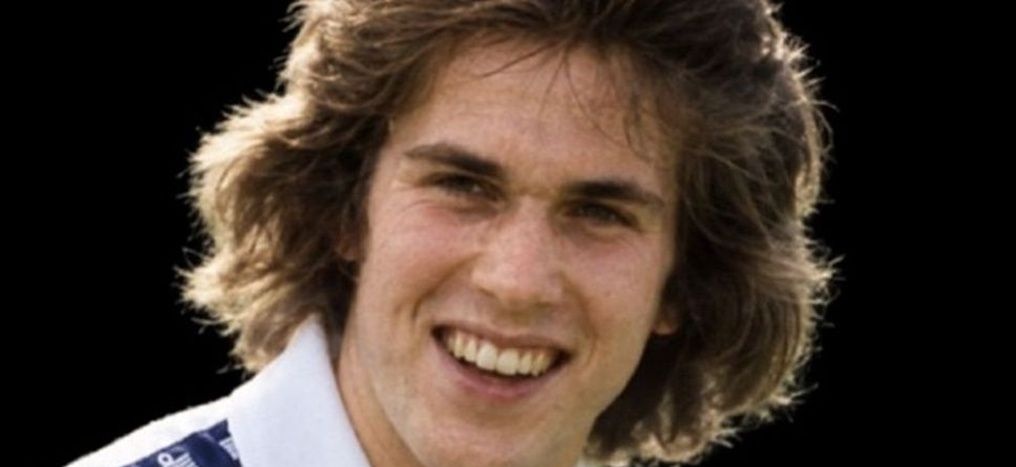
Colin Lee, born 12 June 1956, Torquay, England.
PART ONE
Colin Lee grew up in Buckfastleigh where his early football with Buckfastleigh Rangers preceded the move into Bristol City’s youth system in 1972, a move which put him among boys trying to turn Saturday football into paid employment. He became a professional in July 1974, but a contract did not bring a place in the first team, and the forward had to look beyond Ashton Gate for the senior matches that would show whether he could make the next step. In November that year he joined Hereford United on loan, making nine league appearances without scoring before returning to Bristol City and the reserves, where the wait for an opening continued.
Torquay United signed him in January 1977, and under Frank O’Farrell he began putting together the run of matches and goals that had been missing at Bristol City, scoring ten times in 23 league appearances before the end of the 1976–77 season. Plainmoor supplied a regular place in a Fourth Division side and the chance to be judged on what he did against experienced defenders, rather than on what he might eventually do if a vacancy appeared elsewhere, and Lee made enough of that opportunity to attract attention from clubs above Torquay.
He added four goals in twelve league matches at the start of the following season, taking his total to fourteen in 35, and by October his stay in Devon was approaching its end after less than a year. Tottenham Hotspur, relegated from the First Division the previous spring and trying to return immediately under Keith Burkinshaw, paid £60,000 for him on 20 October 1977, giving the 21-year-old a considerable change of surroundings and a place in a club whose season would be judged by promotion. He had come to Torquay needing games and left with a transfer to Spurs, and there were only two days between completing that move and discovering just how quickly a new player could command attention at White Hart Lane.
On 22 October 1977, Bristol Rovers arrived for a Second Division match which ended with Tottenham winning by a 9–0 margin, Lee scoring four times and Ian Moores contributing three, an extraordinary afternoon which also demands a little care when the goals are described. Lee scored the first two, Peter Taylor supplied the third and Moores the fourth, before Lee completed his hat-trick to make the score 5–0; Moores then added his second and third, Lee scored Tottenham’s eighth and his own fourth, and Glenn Hoddle completed the scoring.
Through the rest of the 1977–78 campaign, Lee’s contribution became part of the broader business of getting Tottenham out of the Second Division, and his eleven league goals helped Burkinshaw’s side secure promotion at the first attempt. The opening four had made the headlines, but the other seven belonged to the work of a full campaign, when points accumulated over months decided whether Spurs would return to the division they had left. Promotion also changed the measure of his performances, because the following season brought First Division opposition and a Tottenham side adjusting to the higher standard rather than chasing a place there.
Lee remained involved, although the side’s requirements and the competition for positions meant his first afternoon never developed into an uninterrupted claim on the centre-forward role, and by the closing stages of the 1978–79 season he was also being used in defence. During the first half of the 1979–80 campaign his time at Tottenham drew towards its end, however, and in January 1980 Chelsea paid £200,000 to bring him across London, taking him back into the Second Division after he had helped Spurs leave it.
PART TWO
At Stamford Bridge the immediate task was another promotion effort, and Colin Lee joined a club trying to recover its First Division place after relegation in 1979, rather than a side already settled among the country’s leading teams. His Chelsea stay would last more than seven years, but it began with the familiar requirement to establish himself in attack, and his fifteen league goals in 1980–81 showed that he could supply a substantial return across a season. He followed those with eleven in 1981–82, giving Chelsea a forward who could score regularly without the team finding the consistency needed to finish the promotion job, and injuries also interrupted his attempts to maintain a settled run.
This was a period in which individual scoring totals and the club’s league position told different stories, because useful returns from Lee did not mean Chelsea were moving steadily towards the First Division. By 1982–83 the situation had become much more difficult, with the club fighting to avoid dropping into the Third Division, and he was being asked to contribute at the other end of the pitch as well. The player recruited for goals was becoming a defender when Chelsea needed one, a practical change which kept him involved while also moving him away from the role in which his scoring figures had first drawn attention.
The improvement came in 1983–84, when John Neal put together a Chelsea side which won the Second Division championship, and Lee’s part in the later months was chiefly at right-back, a position he took up in January 1984. Kerry Dixon and David Speedie provided the established partnership in attack, so Lee’s place in the team no longer depended on displacing one of the forwards who were doing so much to carry Chelsea towards promotion, and his contribution could be assessed in tackles, positioning and work along the right rather than simply in goals.
It was a substantial change for a man who had arrived as a striker, yet it gave him an important role in the side as Chelsea completed the return to the First Division which had eluded them since 1979. The title was followed by a sixth-place finish in 1984–85, an achievement which showed that Neal’s promoted team could compete well above the division it had just won. Lee had therefore helped two London clubs move up from the Second Division, but his contribution at Chelsea had developed differently from the one at Tottenham, where the first impression had been almost entirely about scoring. As the club moved into 1985–86 under John Hollins, his ability to operate in more than one position remained valuable, and an injury to Dixon would soon create another opening up front.
That opening brought Lee to Wembley Stadium on 23 March 1986 for the Full Members’ Cup final against Manchester City, with Chelsea asking him to return to attack and the match producing nine goals before the afternoon was over. Steve Kinsey put City ahead, David Speedie equalised and Lee scored to give the west Londoners a 2–1 lead at the half-time break, after which Speedie added two more goals to complete his hat-trick and Lee struck again to make the score 5–1.
Manchester City then cut the deficit through Mark Lillis, a Doug Rougvie own goal and a Lillis penalty, leaving Chelsea to finish with a 5–4 victory instead of the comfortable margin their fifth goal had suggested. Lee’s second had become the goal separating the sides, and he left with a winner’s medal after an afternoon which had required Chelsea to survive a late collapse as well as enjoy their earlier superiority. The competition had given him an opportunity to play up front again, and he had answered with two goals in a final whose closing minutes made every one of Chelsea’s five necessary.
Chelsea finished sixth again at the end of 1985–86, matching their placing from the previous season, but Lee’s remaining time at Stamford Bridge was affected by the injuries and changing selection that had already interrupted parts of his stay. He left Chelsea in July 1987 with 185 league appearances and 36 league goals for the Blues, figures which covered his work in attack and defence and a period stretching from Second Division football through promotion to two strong First Division finishes.
Brentford paid £17,500 to sign him, bringing him into the Third Division and giving the transfer a second purpose through his appointment as youth development officer, so his responsibilities now included younger players as well as his own performances. He made 24 league appearances for Brentford and scored once before retiring from playing in the summer of 1989, when he was 33, and the youth work offered a direct route into the next kind of employment he would pursue. The move had reduced both the transfer fee and the level at which he played, but it had also widened the job, putting coaching and the development of other players alongside the demands of selection. When he moved on to Watford as a youth coach, he did so with that work already under way, rather than beginning from scratch on the day he stopped playing.
PART THREE
Watford gave Colin Lee his first appointment as a manager in March 1990, taking him from the youth coaching job into control of the senior side, and the change immediately placed him under a different kind of scrutiny. Training younger players could produce improvements which took time to appear in first-team football, whereas managing the Second Division team brought an answer every Saturday in the result and another in the league table, and Lee had little time to establish the success Watford wanted.
The new season began badly, with only two league wins during his spell in charge in 1990–91, and on 27 November 1990 he was dismissed, less than nine months after taking the job. The timing is sometimes muddled in accounts of his football, but the appointment and departure belonged to the same calendar year, with the unsuccessful opening months of a new season bringing his first managerial appointment to an end. There had been hope of challenging towards the top of the division, and the results had fallen too far short for him to remain, leaving a man who had spent years adapting to different playing positions facing a much less forgiving consequence in the dugout. His next opening came at Reading in 1991, where he returned to youth coaching before becoming assistant to Mark McGhee.
At Reading, Lee had the chance to work within a management team again, and the partnership with McGhee took shape while the club built towards the Division Two championship in 1993–94. The division’s title needs its place in the changing league structure explained, because by then Division Two was the third tier, and Reading’s success carried them into Division One, immediately below the Premier League. Lee’s work as assistant belonged to that successful team effort, and the move upwards gave him a more encouraging stretch after the abrupt end at Watford, with promotion earned over a full season rather than a brief improvement which unfortunately failed to last.
In December 1994 McGhee left Reading for Leicester City and Lee followed, moving into a Premier League relegation fight with a club whose circumstances were very different from those they had just left. Leicester went down at the end of 1994–95, and the partnership continued there until McGhee moved to Wolverhampton Wanderers in December 1995, with Lee again joining him. Within a year, they had therefore gone from Reading’s upward progress to Leicester’s attempt to stay in the top division and then to Wolves’ attempt to reach it, carrying their working relationship into three clubs whose immediate demands were quite different.
Wolves had the ground, support and ambitions of a club intent on returning to the highest division, but the work Lee and McGhee did at Molineux repeatedly brought them close to a decisive breakthrough without completing it. The 1996–97 season ended with a place in the Division One play-offs, where Crystal Palace stopped Wolves in the semi-finals, and another route towards a major occasion opened during the following season through the FA Cup. Wolves reached the semi-final in April 1998, only for Arsenal to win 1–0, leaving another substantial run without the final appearance that would have given the supporters a different ending.
Those near misses mattered to the assessment of the management team, because reaching the closing stages demonstrated that Wolves could compete, while failure at the last obstacle left the main ambitions unfulfilled. By November 1998 McGhee’s time in charge was over, and Lee, who had followed him from Reading to Leicester and then to Wolves, was asked to take control on a caretaker basis. The change did not involve a newcomer learning the squad or the club, but an assistant stepping forward after the manager’s dismissal, with responsibility for results now resting directly on him. His first match would be away at Bristol City, returning him to the ground where his own attempts to become a first-team player had begun.
PART FOUR
At Ashton Gate on 7 November 1998, Lee’s Wolves won 6–1, although the afternoon began with Bristol City taking the lead through Carl Hutchings, so the score at the finish concealed an early setback for the visiting side. Guy Whittingham equalised before David Connolly scored four successive Wolves goals, and Carl Robinson supplied their sixth to complete a result which gave the caretaker a remarkably emphatic start. Connolly’s four were the central fact of the match, but the order is worth keeping straight, with Whittingham bringing Wolves level before the forward’s run of goals and Robinson completing the scoring afterwards.
Lee had taken over only days earlier, and one result could not settle every question about the appointment, yet six away goals made a strong first argument for allowing him to continue. During November the caretaker arrangement became a permanent appointment, bringing him his second full-time managerial job and his first since Watford had dismissed him eight years before. There was an obvious temptation to judge the change through that initial score alone, but Wolves still had the rest of the season to negotiate and the promotion target which had survived the previous manager’s departure. The win gave Lee an excellent beginning; the next test was whether he could turn it into a sustained challenge across the remaining months.
Wolves finished seventh in 1998–99, one place outside the play-offs, and Lee’s first full season in charge brought the same placing in 1999–2000, keeping the club within reach of the promotion contest without getting them into it. Consecutive seventh-place finishes were respectable enough to show that the side remained competitive, but they also meant another two seasons had ended without a chance to settle promotion through the play-offs, and the small distance in the table did not make that failure less real.
During the summer of 2000 Ade Akinbiyi, the previous season’s leading scorer, left for Leicester City, removing a significant source of goals before Lee began the next campaign, and the new season proved much more difficult. By December Wolves were struggling near the wrong end of Division One, and on 18 December 2000 the club dismissed him with the team only a point above the relegation places. The sale of an important forward and the difficulties of reshaping the side supplied context, but the results determined the decision, ending a spell which had begun with six goals away from home and twice finished just outside the promotion play-offs. Lee moved into scouting with Leeds United, remaining in football while waiting for another opportunity, and that opportunity soon came from a club with a much more immediate problem than missed promotion.
In March 2001 Torquay chairman Mike Bateson brought Lee back to Plainmoor as a consultant while Wes Saunders struggled to keep the club in the Football League, and Saunders’ dismissal on 28 March placed Lee in caretaker charge for the remaining matches. The setting was familiar, but the task had changed completely from the one he had faced as a young forward there in 1977, because Torquay were now trying to avoid relegation into the Conference and the loss of their league place.
The desperate struggle went to the final day, when they travelled to Barnet on 5 May with the two clubs directly involved in the fight to stay up, and Torquay needed a point while Barnet needed to beat them. Underhill therefore offered a straightforward set of conditions and a thoroughly awkward ninety minutes in which to meet them, with the home club able to save itself by sending the visitors down. Lee’s appointment had been made for the end of the season, and the last match would determine whether that short spell ended with the Torquay outfit still in the Football League. There was no separate promotion calculation or possibility of repairing the damage the following week, because whichever side finished on the wrong side of the result would have to accept the consequences immediately.
Torquay made an excellent start at Underhill, taking the lead through Jason Rees and adding a second through Kevin Hill, before goalkeeper Stuart Jones saved Darren Currie’s penalty and David Graham scored the visitors’ third. They reached half-time 3–0 ahead, a position which gave Lee’s side considerably more than the draw they required, but Barnet’s response made the second half much less comfortable than the interval score suggested. A Ryan Green own goal reduced the deficit and Greg Heald then scored for Barnet, leaving Torquay with a 3–2 lead and enough time remaining for the home side to pursue the further goals they needed.
The order tells the whole shape of the match, from Torquay’s early scoring and Jones’ important save to the two goals which brought Barnet back into it, and the visitors held on to win rather than merely collect the point which would have done. Torquay finished 21st and Barnet were relegated, so Lee had completed the job for which he had been brought in, with the final result settling a contest which had put both clubs’ league status at stake. The three first-half goals had given Torquay room to withstand the recovery, and keeping that last goal out was enough to preserve their place.
Survival did not lead to a permanent appointment, because negotiations over Lee’s future continued after the season and, despite a verbal agreement, he declined the Torquay job on 2 July 2001, when the contract was expected to be signed. The club therefore had to find another manager before its preparations for the new season were properly under way, while Lee continued looking for work and in December joined Wigan Athletic as first-team coach. That appointment lasted only a short time before Walsall made him their manager on 24 January 2002, returning him to Division One and another struggle to keep a club in the second tier.
PART FIVE
Walsall finished eighteenth in 2001–02 and seventeenth in 2002–03, staying up in both seasons and giving Colin Lee two completed campaigns in which the essential requirement had been met. Those positions did not offer the excitement of a promotion challenge, but they kept the club competing at a level which could not be taken for granted, and the improvement from eighteenth to seventeenth supplied a modest sign of progress. By the beginning of 2003–04, with Paul Merson among the players brought in, Walsall had reason to hope for something more comfortable, and early 4–1 wins against West Bromwich Albion and Nottingham Forest supported that hope before results deteriorated during the season.
The difficult months of 2004 brought Lee’s Walsall appointment to an end on 16 April, rather than in March as some accounts state, with uncertainty over the vacancy at Plymouth Argyle adding to the problems surrounding his position. Walsall had permitted him to speak to Plymouth, but the discussions still became part of the dispute which accompanied his departure, and his last match in charge was a 3–0 defeat away at Gillingham. Merson took over and Walsall were eventually relegated, finishing behind Gillingham on goal difference by a single goal, a particularly painful outcome when the clubs’ meeting had ended so decisively against the Saddlers.
Lee’s next managerial appointment came at Millwall in July 2005, after Steve Claridge had been removed only 36 days into his time at the club, and the speed of that change meant the new manager arrived amid considerable disruption before the season had settled. Millwall spent much of the first half of the Championship campaign at the bottom, and just before Christmas Lee moved into the director of football role while David Tuttle took charge of the team. Lee left early in 2006, ending another short appointment in which changes above and around the manager had accompanied poor results, and his next return to a club would again take him back to Torquay.
Lee rejoined Torquay’s coaching staff in January 2007, took temporary responsibility for playing matters after Luboš Kubík’s departure in early February and became director of football on 6 February, appointing Keith Curle as manager. The club could not avoid relegation from League Two, and Lee was made redundant on 14 May after Bateson stood down as chairman, only to return as chief executive on 25 May following the sale to a local consortium headed by Cris Boyce. Paul Buckle became manager on 2 June, and after missing promotion in 2008, Torquay returned to the Football League through the Conference play-offs in 2009, beating Cambridge United 2–0 at Wembley on 17 May with Chris Hargreaves scoring before Tim Sills.
They stayed in League Two the following season, but the chief executive’s post was removed in the summer of 2010 and Lee left, before joining Curle’s coaching staff at Notts County on 20 February 2012. That association ended when Curle and his coaches were dismissed on 3 February 2013, closing another spell in which Lee had worked away from the most visible position in the dugout. By then his employment had included scoring goals, stopping them, developing young players, managing teams and running a club’s daily business, with each move bringing a different responsibility.