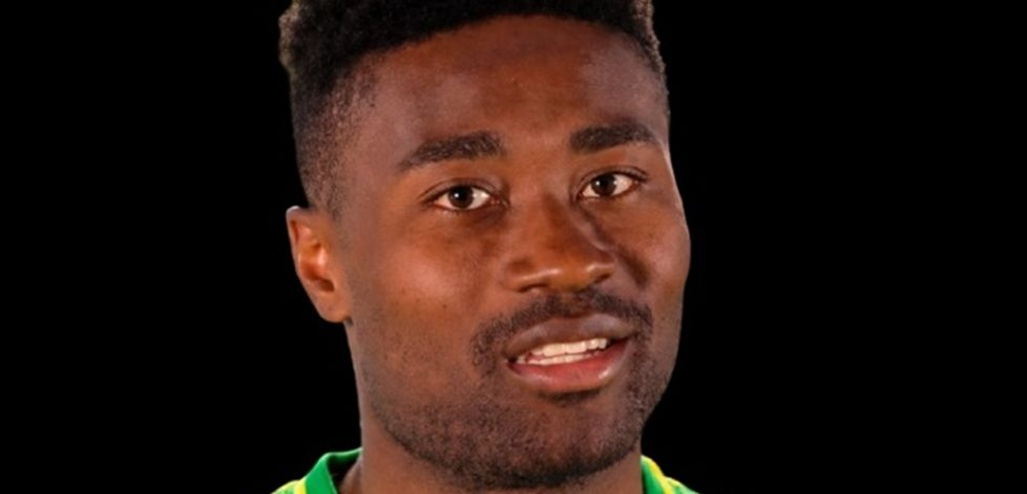
Alexander Banor Tettey, born 4 April 1986, Accra, Ghana.
PART ONE
Alexander Tettey began playing football in Ghana but his opportunity to make a living from the game developed after he moved to Norway in 1999, settling first in Bodø before a further move took him to Trondheim side Kolstad. There was nothing automatic about the progress that followed, because a place in local football still left him some distance from Rosenborg’s first team, although his running, strength and ability to handle the ball persuaded the country’s leading club to bring him into their youth department, where he could train towards a standard that demanded considerably more than promise.
By January 2003, the sixteen-year-old midfielder had done enough to appear in a first-team friendly against GIF Sundsvall, and when Rosenborg promoted him to their senior squad that September, he became one of their youngest ever squad members, giving him an early chance to learn among established professionals without pretending that his football education was complete. That distinction brought Tettey closer to senior football, although his competitive opportunities remained limited, and after making his Norwegian league debut against Bodø/Glimt in 2004, he discovered that being considered good enough for the squad did not necessarily mean being selected often enough to develop at the pace he wanted.
Consequently, a loan spell with Skeid in 2005 supplied useful first-team experience, with two goals in five league appearances providing evidence that he could contribute when given responsibility, before his return to Rosenborg put him back among players competing for domestic honours and European places. His stronger breakthrough came during the 2006 season, when he scored his first Rosenborg goal against Sandefjord on 7 May, arriving as a substitute and helping complete a 3–1 victory, while the wider importance of that year lay in his growing involvement in a championship-winning side, because regular football began turning the young prospect into a midfielder whose selection could be justified by what he was doing each week.
With that greater involvement came a change in responsibility and Tettey eventually moved into the defensive midfield position that would become his usual role. His running remained valuable, but the position also demanded restraint, since charging towards every loose ball could leave the very space he was supposed to protect, and his development increasingly depended on combining his physical qualities with a clearer understanding of when to press, when to hold his ground and when a straightforward pass would help the side most. Alongside that progress at club level, he advanced from Norway’s youth teams to the senior international side, making his debut in a 2–1 friendly victory over Argentina on 22 August 2007, before Rosenborg appointed him vice-captain in 2008, when Roar Strand’s absences gave the younger midfielder further opportunities to lead a team in which he had recently been trying to establish himself.
As those responsibilities increased, interest from abroad became a practical possibility, and on 31 July 2009 Rennes announced an agreement with Rosenborg for Tettey to move to France, with a four-year contract awaiting completion of the medical and formalities. The attraction was understandable for both sides, because Rennes were acquiring a Norwegian international who had developed in a demanding club environment, while Tettey was taking the opportunity to test his football in Ligue 1, where the speed of decisions, the quality of opponents and the competition for places would ask different questions of him.
Rosenborg were leading the Norwegian top flight table when the agreement was announced, and even though Tettey´s departure came before that campaign was finished, his contribution belonged to another title-winning season, while the transfer move itself meant leaving familiar teammates and surroundings for a club where previous standing counted for less than the ability to settle, stay available and convince a new manager that he deserved selection.
France provided that higher level of competition, but injuries repeatedly interrupted Tettey’s attempt to establish a settled run, and although he accumulated 60 Ligue 1 appearances during his time with Rennes, the three seasons did not give him the uninterrupted progress that a player changing countries might reasonably hope to make. Nevertheless, there were afternoons when his ability to contribute beyond his defensive duties became clear, particularly on 9 January 2011, when he scored twice in a 7–0 French Cup victory over Cannes, putting Rennes ahead and then adding their fifth goal as the home side comfortably dealt with opposition from the third tier. Those goals did not turn him into an attacking midfielder, but they showed that he could recognise an opening and finish it, while the wider experience of playing in France added another set of demands to his understanding of the game before an English club offered him a fresh opportunity during the summer of 2012.
That opportunity took Tettey to Norwich City in August 2012, when Chris Hughton was beginning the difficult business of following Paul Lambert, whose successive promotions had lifted the club from League One into the Premier League before an encouraging first season back among England’s leading sides. Norwich needed players who could help them remain competitive when opponents had more possession and greater attacking resources, and Tettey’s experience offered Hughton another option in the centre of midfield, although the newcomer still had to earn his place rather than expect a straightforward transfer from the Rennes team sheet to the Norwich one.
He made an immediate contribution when his debut against Doncaster Rovers in the League Cup on 26 September produced the only goal of a 1–0 victory, but the next stages brought a sharper introduction to English league football, with a substitute appearance in the 5–2 home defeat by Liverpool three days later followed by his first Premier League start at Chelsea on 6 October, when Grant Holt’s early opener was overtaken by a 4–1 defeat. On 20 October Tettey helped Norwich beat Arsenal 1–0 at Carrow Road, where Holt scored the winner and Hughton’s side showed that they could protect a lead against opponents expected to control much of the play. And another major home result followed on 17 November, when Anthony Pilkington headed Javier Garrido’s cross past Manchester United goalkeeper Anders Lindegaard to secure a second 1–0 victory against one of the division’s strongest teams.
However, his first English season also brought another interruption through injury, which kept him out during the spring before he returned as a late substitute in the 1–0 defeat at Wigan Athletic on 30 March 2013, leaving him to work his way back into a side still concerned with securing its place in the division. Norwich eventually finished eleventh, and Tettey was involved in the final afternoon’s 3–2 victory at Manchester City on 19 May, entering from the bench during a match in which Anthony Pilkington and Grant Holt each put the visitors ahead, Jack Rodwell twice equalised and Jonny Howson supplied the decisive third Norwich goal. That result gave the campaign an impressive finish, although the more substantial achievement was remaining clear of relegation under a new manager, and for Tettey the season had established that his football could serve a Premier League side even when injuries reduced his availability.
PART TWO
The 2013-14 campaign brought less comfort, and after an ankle problem required surgery in the autumn of 2013, Alexander Tettey again had to recover his fitness while Norwich struggled to find the consistency that would keep them away from the bottom three. His most spectacular contribution arrived against Sunderland at Carrow Road on 22 March 2014, when Robert Snodgrass opened the scoring before Tettey met a headed clearance with a first-time volley from long range, striking the dropping ball cleanly and sending it beyond Vito Mannone to complete a 2–0 victory with a finish that looked remarkably assured for someone whose normal duties lay much farther from goal. Yet the three points collected could not settle Norwich´s season, because their results deteriorated, Hughton was dismissed in April and Neil Adams took over for the closing games, before relegation left them preparing for Championship football.
Relegation therefore gave the 2014–15 campaign a clear purpose, although Norwich’s immediate return to the Premier League required another managerial change, with Alex Neil arriving from Hamilton Academical in January and improving a side whose promotion prospects still needed turning into a sustained run of results. Tettey remained an important midfield presence as Norwich finished third, and their play-off semi-final against Ipswich Town began with a 1–1 draw at Portman Road on 9 May, where he struck the post before Jonny Howson put Norwich ahead and Paul Anderson equalised for the hosts. A 3–1 victory at Carrow Road on 16 May then secured a 4–2 aggregate success and a place at Wembley against Middlesbrough, giving Tettey and his teammates a final opportunity to repair the previous season’s disappointment.
At Wembley on 25 May 2015, Norwich a good start to the game with an opening spell that put them firmly in charge, Cameron Jerome taking advantage of Daniel Ayala’s mistake to score after twelve minutes before Nathan Redmond finished a well-worked move three minutes later to establish a 2–0 lead. Tettey played throughout the final alongside teammates including Howson and Bradley Johnson, and once the early goals had altered the contest, his responsibility was to help Norwich retain their organisation, challenge Middlesbrough’s attempts to advance through midfield and make sure that attacking ambition did not leave unnecessary openings behind it. Middlesbrough could not recover, and Norwich’s victory completed an immediate promotion under Neil, giving Tettey a full season’s reward for work that seldom looked as dramatic as the goals but mattered across the afternoon, because protecting the advantage required repeated decisions about positioning, possession and pressure.
Promotion restored Premier League football to Tettey’s club schedule, while the autumn of 2015 also brought important international commitments, including Norway’s 2–0 European Championship qualifying victory over Malta on 10 October, when he scored the opening goal before Alexander Søderlund added the second. Norway subsequently missed out on the tournament after losing their play-off against Hungary, but Tettey soon supplied Norwich with a memorable club result on 19 December, scoring their second goal in a 2–1 victory at Manchester United after Jerome had put them ahead, with Anthony Martial’s reply unable to prevent the visitors taking all three points. He followed that contribution with the winner against Southampton at Carrow Road on 2 January 2016, finishing first time after work by Vadis Odjidja-Ofoe to secure a 1–0 victory, and although neither afternoon altered his basic role, both demonstrated how useful his occasional forward runs could be.
Even those victories could not keep Norwich in the Premier League, and relegation at the end of 2015–16 meant that Tettey faced another attempt to help the club recover, while his international playing days also reached their closing stage during a year that brought his final appearance for Norway. He finished with 34 senior caps and three goals, a substantial contribution for a player who had arrived in the country as a boy, although the demands of club football continued as Norwich finished eighth in the Championship in 2016–17 and changed direction again following Neil’s departure. Daniel Farke took charge in 2017, introducing a greater emphasis on controlled possession and developing a different group of players, and Tettey had to demonstrate that his experience could fit the new approach, because protecting defenders remained necessary but so did receiving the ball in awkward areas and helping Norwich build attacks without surrendering possession cheaply, particularly during a first season under Farke that ended with the club fourteenth.
That period of adjustment produced much better results in 2018–19, when Norwich won the Championship and Tettey made 30 league appearances, supplying experience in a side increasingly associated with Teemu Pukki’s finishing and the attacking contributions of players such as Emiliano Buendía. He also reached his 200th Norwich appearance during the season, and although the team’s most eye-catching football developed farther forward, his involvement reflected Farke’s willingness to retain a midfielder who understood the club, accepted competition and could help maintain order when a match became less comfortable than Norwich’s passing suggested it ought to be.
By the time promotion to the Premier League was secured, Tettey had contributed to two successful returns to the Premiership under managers with different methods, which said something practical about his usefulness and versatility, because he had adapted sufficiently to remain involved while teammates changed, expectations shifted and the Norfolk outfit moved from the disappointment of their previous relegation towards another opportunity to compete in the top division of English football.
The Premier League return supplied an outstanding early result on 14 September 2019, when Tettey captained an injury-hit Norwich side to a 3–2 victory over Manchester City at Carrow Road, where Kenny McLean and Todd Cantwell scored before Sergio Agüero reduced the deficit shortly before half-time. Pukki restored Norwich’s two-goal advantage after the interval and Rodri’s late reply left the home side defending a narrower lead, but Tettey and his teammates held on against the reigning champions, combining their attacking opportunities with the concentration required to withstand opponents capable of creating danger even when they were playing below their best. The season nevertheless became increasingly difficult and ended in relegation after the disruption caused by the coronavirus pandemic, leaving Tettey to complete another demanding Premier League campaign in which individual afternoons of satisfaction could not conceal the broader problem of Norwich conceding too often and failing to collect enough points to remain in the division.
Another relegation brought another promotion effort, but by 2020–21 Tettey’s role had changed, with younger midfielders receiving more of the playing time and the experienced Norwegian contributing through fewer starts, substitute appearances and the standards expected of a senior player within Farke’s squad. Norwich won the Championship again, making it his third promotion with the club, and when his departure was announced in May 2021 he was approaching the end of nine seasons that would leave him with 263 appearances and eight goals in all competitions, figures that covered several managers, three relegations and three successful returns to the Premier League. There was also room during his final Norwich season for mentoring work with BADU Sports, supporting children and young adults, before the end of his contract closed a long association with a club where he had repeatedly proved useful through changing circumstances.
After that final promotion, Tettey returned to Rosenborg in 2021 on a contract covering the remainder of the Norwegian campaign, re-joining the club that had introduced him to senior football. But the move also required a realistic assessment of what a thirty-five-year-old midfielder could still provide, and Rosenborg’s agreement included a future role in their academy once he stopped playing, allowing the knowledge gained in Norway, France and England to remain useful within the club. Tettey eventually confirmed during the autumn that 2021 would be his final season as a player, bringing his competitive football to an end back in Trondheim.