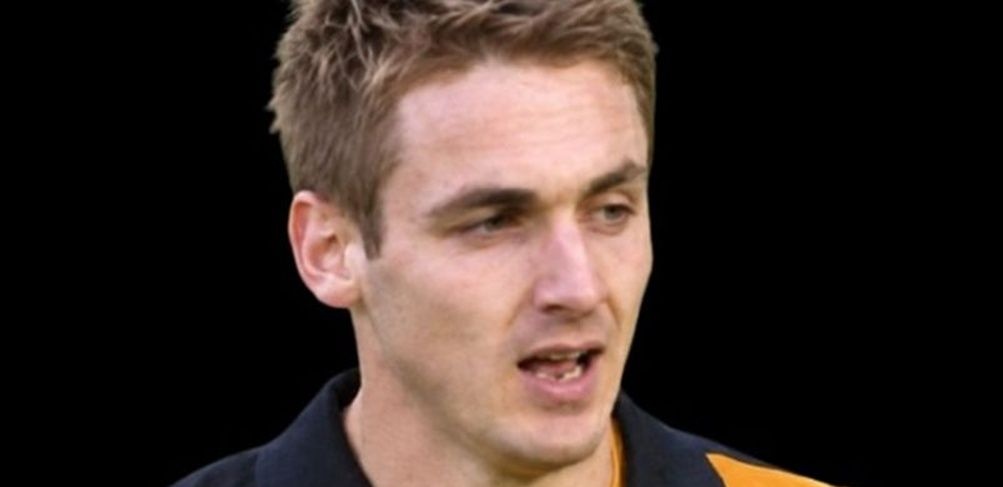
Kevin Edward Doyle, born 18 September 1983, Adamstown, Ireland.
PART ONE
Kevin Doyle began his senior football with St Patrick’s Athletic after signing in September 2001, and although the forward from County Wexford had arrived without the fanfare attached to a youth already marked out for an English club, he soon moved beyond the under-18 side and into the more demanding business of playing against experienced men. His League of Ireland Premier Division debut arrived at Richmond Park on 25 November, in a 1–1 draw with Monaghan United, and those early appearances introduced him to a trade in which a promising touch meant little unless it could survive the next challenge, the next difficult away match and the next evening when possession had to be fought for. Under Pat Dolan, Doyle had an opportunity to learn those lessons close to home, and while his first spell in senior football brought limited opportunities rather than an immediate rush of goals, it established an important connection with a manager who would help him take his next step.
When Dolan took charge at Cork City, Doyle followed him to Turners Cross in March 2003, signing a two-year agreement and joining a club where there was enough ambition to stretch him and enough responsibility to prevent him from hiding among more established players. Initially used on the right, he gained experience of receiving the ball away from the centre-forward’s usual territory, working back towards his own goal and choosing when to carry possession or release a team-mate, before moving into the central attacking position that suited him best.
Meanwhile, his involvement with the Republic of Ireland’s younger teams offered another measure of his progress, and his appearance at the 2003 World Youth Championship, where he scored against Colombia, showed that he could make a contribution outside the familiar surroundings of domestic football; for a forward still finding his place, club matches and international competition were supplying different examinations of the same developing abilities.
By the summer of 2004, the improvement was visible against opponents with rather more European standing than Cork, whose Intertoto Cup campaign gave Doyle a chance to test his movement and finishing against players he might otherwise have encountered only on television. After Cork had drawn away to NEC Nijmegen, he scored the only goal of the return at Turners Cross on 11 July, sending the Dutch club out and giving the home supporters an afternoon in which their team’s confidence was supported by the result rather than simply by hopeful applause. The campaign eventually ended against Nantes, but the experience mattered because Cork had competed with recognisable opposition and Doyle had supplied a decisive finish; as his domestic form improved as well, the forward who had needed an opening at St Patrick’s was becoming someone capable of deciding matches, and his performances earned the Soccer Writers’ Association of Ireland’s player-of-the-month award for November.
His rise attracted attention from biggers clubs, and on 7 June 2005 Reading signed him from Cork for a transfer fee of around £78,000, a modest outlay that reflected how much remained unproven rather than how much he might eventually contribute. Steve Coppell already had attacking options, including Dave Kitson and Leroy Lita, so the newcomer had to make himself useful within an existing squad, while fellow arrival Shane Long provided another link with the Irish football from which he had emerged.
Doyle’s departure also left unfinished business at Turners Cross, where the goals he had scored earlier in the year remained part of Cork’s championship challenge, and when City secured the Irish title in November he received a medal for his contribution; by then, however, his everyday task was to establish himself in a Championship dressing room, absorb the quicker decisions demanded by English football and turn the manager’s relatively inexpensive investment into a dependable first-team option.
Injuries among Reading’s forwards helped provide that opening, but Doyle kept it through performances that fitted the team Coppell was building, because his running gave the midfield a target, his willingness to compete stopped defenders enjoying easy possession and his finishing added something more substantial than a promising first impression. Reading’s attacking strength was spread across the side, with width and accurate delivery helping the forwards, and Doyle looked comfortable in a team that asked players to understand their jobs and carry them out repeatedly rather than wait for somebody else to produce a moment of brilliance. As the 2005–06 season developed, the new signing’s value could be seen in the way he joined attacks as well as completed them, and his growing partnership with the players around him helped turn a personal opportunity into part of a much larger advance; the Royals were sustaining results over months, and the inexpensive Irish forward had become an important reason why opponents struggled to interrupt them.
Amid the promotion push came another step for Ireland, with Doyle making his senior debut against Sweden at Lansdowne Road on 1 March 2006, before returning to a club campaign that reached its decisive afternoon at Leicester City on 25 March. Reading travelled knowing victory would confirm their first promotion to England’s top division, and after falling behind they fought back through Doyle’s equalising header, which secured a 1–1 draw that proved sufficient alongside results elsewhere. Coppell’s side went on to finish with 106 points, winning 31 league matches and losing only two, while Doyle contributed 18 Championship goals and 19 in all competitions, collected Reading’s player-of-the-season award and earned a place in the PFA divisional team.
PART TWO
Promotion brought stronger defenders and less room for mistakes, yet Kevin Doyle made an early impression in the Premier League when he headed Reading in front at Aston Villa on 23 August 2006, even though the visitors eventually lost 2–1. His movement in the air was especially useful because it depended on judging the delivery and getting into the right position rather than simply overpowering a marker, and Reading could use him both as a finisher inside the penalty area and as an outlet when opponents pushed them backwards.
Internationally, the same autumn brought Doyle´s first competitive start for Ireland against Germany at the Gottlieb-Daimler-Stadion on 2 September and his first senior goal in the 5–0 victory over San Marino at Landsdowne Road on 15 November, so the adjustments were happening together; a player who had been learning the Championship a year earlier was now dealing with top-division centre-halves at the weekend and the demands of European Championship qualification when he joined his country.
Recognition followed early in 2007, when Doyle received Ireland’s young-player award for his performances during 2006, and although a hamstring injury interrupted his club season, he returned to continue demonstrating that his contribution was more than the enthusiasm of a promoted player enjoying a brief opportunity. On 28 March he headed home a Damien Duff free-kick against Slovakia at Croke Park, providing the only goal of a qualifying victory in which Ireland needed both an early advantage and the concentration to protect it. Reading, meanwhile, finished their first Premiership campaign in eighth place, with Doyle scoring 13 league goals, and his inclusion on the PFA Young Player shortlist placed him alongside Cristiano Ronaldo, Wayne Rooney, Cesc Fàbregas, Aaron Lennon and Micah Richards. Ronaldo won the award, but the nomination itself showed how convincingly Doyle had handled the change in standard.
The next few months showed different sides of his finishing, beginning with Ireland’s 1–1 friendly draw against Ecuador on 23 May 2007 and continuing into the following season, when his powerful left-footed strike helped Ireland draw 2–2 away to Slovakia on 8 September. He scored again in the 2–2 draw with Wales on 17 November, but his club football was becoming more difficult as Reading discovered how quickly the advantages of a confident first Premier League season could disappear when opponents were better prepared and results stopped providing reassurance.
Doyle finished the 2007–08 league campaign with six goals, and even though Reading walloped Derby County by a 4-0 score at Pride Park Stadium on the final afternoon, that result could not save them because Fulham’s 1-0 victory against Portsmouth at Fratton Park left Coppell’s men relegated on goal difference; the forward who had played such a visible part in promotion now had to decide how to respond to his first substantial setback in England. Rather than leave immediately, Doyle remained for the 2008–09 Championship season and supplied 18 league goals as Reading tried to recover the ground they had lost, while his international football continued to develop under Giovanni Trapattoni. He scored Ireland’s opening goal in their 2–1 World Cup qualifying victory over Georgia in Mainz on 6 September 2008, and his work alongside Robbie Keane gave Trapattoni a forward who could contest possession, occupy defenders and create space for the national side’s most reliable scorer.
At Reading, however, individual production could not guarantee the desired finish, and a fourth-place league position led to a play-off semi-final against Burnley rather than automatic promotion; defeats in both legs ended the challenge, Coppell departed, and Doyle reached the summer of 2009 with evidence that he remained effective but also with a decision to make about whether another season outside the Premier League was the right next move.
PART THREE
Wolverhampton Wanderers knocked on the door on 30 June 2009, signing Kevin Doyle on a four-year contract for a reported club-record £6.5 million, and Mick McCarthy’s newly promoted side were buying a forward whose experience covered both the excitement of reaching the Premier League and the difficulty of remaining there. His introduction was disrupted by a hernia operation and another injury, so his competitive debut did not arrive until 22 August when he came on at half-time in a 1–0 defeat Manchester City at the City of Manchester Stadium.
Doyles international involvement nonetheless continued with a goal in Ireland’s 2–1 victory in Cyprus on 5 September and the captaincy against South Africa three days later. Back at Molineux, Doyle opened his Wolverhampton account in a 2–1 victory over Fulham at Molineux on 20 September, beginning to repay a fee that had transformed him from Reading’s bargain purchase into a substantial investment for a club trying to establish itself among much wealthier opponents.
During that autumn, the contrast between his club and international duties was mainly one of formation rather than responsibility, because both Wolverhampton and Ireland needed him to make awkward possession playable and give others time to join the attack. Ireland’s World Cup challenge ended in November against France, with the play-off decided after extra time in Paris amid the handling controversy involving Thierry Henry, and although the circumstances dominated the discussion, the disappointment for Doyle and his team-mates was straightforward: they had come close to the finals and would not be going.
One particularly valuable contribution came in Wolverhampton´s 3–1 victory over West Ham United at Boleyn Ground on 23 March 2010, when Doyle, Ronald Zubar and Matt Jarvis scored in a result that gave McCarthy’s side considerable help in the struggle to stay clear of relegation. His first Wolves season finished with nine league goals and the club in fifteenth place, while the players’ player award reflected the appreciation of team-mates who could see how much effort went into making the team’s shape work, especially on afternoons when the forward spent long periods competing without another striker beside him.
Ireland also benefited from his continued involvement, with a goal in a 2–1 friendly fixture victory over Paraguay at the RDS Arena on 25 May followed by another in the 3–1 European Championship qualifying win against Andorra at the Aviva Stadium on 7 September; as the new club season began, Doyle was being asked to repeat a difficult job, and the arrival of Steven Fletcher from Burnley increased McCarthy’s attacking choices without removing his reliance on the Irishman.
The clearest reward for that persistence arrived at Molineux on 5 February 2011, when bottom-placed Wolverhampton faced a Manchester United side still unbeaten in that season’s Premiership, and Luis Nani’s third-minute opener threatened to make the afternoon follow the league table rather more closely than the home crowd wanted. Instead, the Midlanders managed to equalise in the tenth minute of the encounter when a short-corner routine allowed Matt Jarvis to deliver for George Elokobi’s header. And five minutes before the half-time signal Nenad Milijaš sent a free-kick into the crowded eighteen-yard area, where Doyle was credited with the decisive touch as he and Elokobi attacked the ball.
Old Trafford boss Sir Alex Ferguson eventually decided to replace Michael Carrick with Paul Scholes at the half-time break, while Javier Hernandez and Chris Smalling came on for Dimitar Berbatov and Jonny Evans respectively midway through the second period of the clash. Manchester United pressed hard for an equalising goal, but Wolverhampton held on for a 2–1 victory that ended the visitors’ undefeated Premier League sequence and supplied three badly needed points; the finish had contained the untidiness of a contested aerial challenge, yet the result was clear enough, and Doyle had helped his side punish opponents who were accustomed to finding ways around such resistance.
The Black Country outfit still had considerable work ahead, and Doyle’s own season was interrupted on 26 March when he damaged a knee ligament playing for Ireland against Macedonia, depriving McCarthy of a central part of his attacking plan during the closing weeks. He returned as a substitute in the 3–1 victory against Sunderland at The Stadium of Light on 14 May, but did not play in the final-day defeat against Blackburn Rovers, when Wolverhampton survived despite losing 3–2, and the relief of staying up did little to disguise how narrow the margin had become.
During the following autumn he remained involved in Ireland’s qualification effort, scoring in the 2–0 win over Andorra at the Estadi Comunal d’Aixovallon 7 October before being sent off against Armenia four days later; Ireland nevertheless reached the play-offs and beat Estonia to qualify for Euro 2012, while Doyle’s club circumstances were moving towards a much less satisfying conclusion as results deteriorated and the stability of McCarthy’s first two Premier League seasons gave way to increasing uncertainty.
PART FOUR
Relegation in 2012 brought that uncertainty to a head, with Mick McCarthy dismissed during the season and Wolverhampton Wanderers unable to recover sufficiently under Terry Connor, so Kevin Doyle went into the European Championship having experienced a draining club campaign rather than the reassurance of another successful escape. Ireland’s tournament offered little comfort, as defeats by Croatia, Spain and Italy ended their involvement at the group stage, and although Doyle reached his fiftieth cap against Italy, the personal landmark could not disguise how difficult the competition had been for Giovanni Trapattoni’s side.
Even so, he supplied an important response when World Cup qualifying began in Kazakhstan on 7 September: Ireland were heading towards defeat before Robbie Keane equalised with a late penalty on 89 minutes, and Doyle then volleyed in Stephen Ward’s lay-off only a minute later to complete a 2–1 victory at the Astana Arena; four days later he captained the side and found the back of the net in a 4–1 friendly win over Oman at Craven Cottage, briefly giving a troubled period a more encouraging direction.
Club football proved harder to repair, because Wolves’ attempt to recover immediately from Premier League relegation became another season of managerial change and worsening results, with Ståle Solbakken replaced by Dean Saunders and the team eventually dropping into League One in 2013. Doyle scored nine Championship goals during that campaign, but the broader failures around him could not be solved by the work of one forward, and the arrival of Kenny Jackett brought a rebuilding programme in which the wages of players recruited for the Premier League had to be considered against third-tier income.
No summer move materialised, so Doyle continued to play during the first half of the 2013–14 campaign, offering experience within a changing Wolverhampton squad, while his place with Ireland also became less secure towards the end of Trapattoni’s time in charge; the demands were now different from those that had followed his arrival at Molineux, because maintaining a first-team berth and finding the right next opportunity had become as pressing as leading the attack.
An opportunity arrived on 31 January 2014 with a loan to Queens Park Rangers, and Doyle scored on his debut against Burnley the following day in an entertaining 3–3 draw, then added another goal in a 3-1 defeat to his former club Reading as Harry Redknapp’s side pursued promotion from the Championship. A knee problem interrupted his involvement, but he returned to take part in all three play-off matches, culminating in the Wembley final against Derby County on 24 May, when Bobby Zamora’s late goal secured a 1–0 victory for ten-man Queens Park Rangers and gave Doyle a share in another promotion. His next loan, to Crystal Palace on 1 September, offered a return to Premier League football but produced few opportunities, although he remained capable of contributing for Ireland, scoring in their 2–0 friendly win over Oman at Lansdowne Road two days later.
Doyle’s Crystal Palace spell supplied one goal, in the 4–0 FA Cup victory at Dover Athletic on 4 January 2015, before he returned to Wolves and began considering a more substantial change than another temporary move within English football. On 20 March, Colorado Rapids announced a pre-contract agreement, and an early settlement with Wolves in May allowed him to leave before the scheduled expiry of his deal, closing a Molineux record of 33 goals in 179 appearances across three divisions.
His Major League Soccer debut came as a substitute in Colorado’s 1–0 victory over Vancouver Whitecaps on 23 May, and the move offered a fresh setting in which his experience could be used, although international disappointment remained possible: a badly cut leg against Switzerland in March 2016 interrupted his preparations, and he did not make Ireland’s final European Championship squad; with Colorado, however, he helped the Rapids reach the Western Conference final that year, contributing a goal against Seattle Sounders in the first leg.
By 2017, the more serious difficulty was physical, and after suffering another concussion against LA Galaxy on 2 September, Doyle faced a decision that extended beyond whether he could recover in time for the next match or earn another contract. On 28 September he announced his immediate retirement after medical advice, explaining that heading had begun to cause repeated headaches and that the concussions he had sustained made continuing an unacceptable gamble, even though Colorado had offered the possibility of another campaign.
Doyle finished his MLS regular-season football with 16 goals in 71 appearances, and his farewell placed particular weight on the privilege of representing Ireland, for whom he had scored 14 senior goals; there was no need to manufacture a grand final scene, because the important decision had already been made, and the forward who had spent so many afternoons making himself available for another difficult ball was entitled to leave the next one alone.