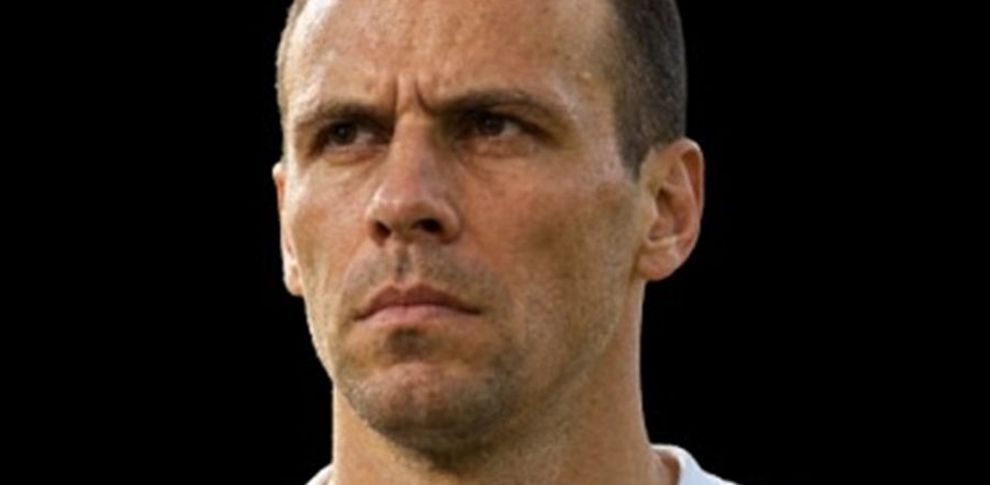
Radostin Prodanov Kishishev, born 30 July 1974, Burgas, Bulgaria.
PART ONE
Radostin Kishishev began his senior football with Chernomorets Burgas, playing for his home-town club before a move across the city to Neftochimic brought the next stage of his development, and from those Bulgarian beginnings came a player whose usefulness rested on how much work he could do and how many different jobs a manager could give him. His football rarely depended on elaborate touches or a determination to dominate possession, because much of his contribution came from recognising where help was needed, getting there quickly and giving the ball to a teammate who could make better use of the opening, qualities which became increasingly valuable as the standard around him improved and the time available to make decisions grew shorter.
Progress with Neftochimic took him into Bulgaria’s international plans, and by the summer of 1996 he was part of the squad travelling to England for the European Championship, joining players whose performances at the 1994 World Cup had raised expectations of what the country could achieve. Bulgaria opened against Spain at Elland Road on 9 June, drawing 1–1 after Hristo Stoichkov’s penalty had been answered by Alfonso, and followed that with a 1–0 victory over Romania at St James’ Park on 13 June, when another Stoichkov goal put them in a strong position to reach the quarter-finals. Their hopes ended with a 3–1 defeat by France on 18 June, however, and for Kishishev the tournament provided an early experience of the narrow difference between a promising group campaign and elimination.
That exposure preceded a move to Bursaspor in 1997, where he played alongside fellow Bulgarian Kostadin Vidolov and gained his first sustained experience of club football outside his own country, dealing with a different league and the practical demands of establishing himself in unfamiliar surroundings. He worked in central midfield during his Turkish spell, broadening the experience of a player who could also be used at right-back, before returning to Bulgaria with Litex Lovech and joining a team whose rise was changing the balance of the domestic competition.
Litex won the Bulgarian championship in 1997–98, despite a registration dispute involving Kishishev that resulted in two matches being awarded against them, and his move therefore brought both a league winner’s medal and a reminder that a player’s availability could depend on administrative decisions as well as fitness and form, although the football itself was taking him towards another major international tournament that summer.
The 1998 World Cup in France gave him a more demanding examination, and he started Bulgaria’s opening match against Paraguay in Montpellier on 12 June, a goalless draw that offered a point but left little room for error in the two fixtures still to come. A 1–0 defeat by Nigeria in Paris on 19 June increased the pressure, with Victor Ikpeba scoring the only goal, and Bulgaria then suffered a 6–1 loss to Spain in Lens on 24 June. Kishishev played throughout those three matches, experiencing the tournament from inside a defence that received little protection from the final score against Spain, but the work continued when he returned to club football, and Litex retained the Bulgarian title in 1998–99, giving him another championship.
PART TWO
In the summer of 2000, Charlton Athletic offered a different challenge when Alan Curbishley brought Radostin Kishishev to south London, recruiting an experienced Bulgarian international for a club returning to the Premier League after winning the First Division championship. Initially used at right-back, he had to judge when to support an attack and when to remain behind it, while learning the movements of teammates who were also finding their way in the division, and his introduction became the beginning of a much longer association because Curbishley found that the same willingness to cover ground could be put to good use further forward.
The move into midfield suited both the player and the manager, giving Kishishev opportunities to challenge for loose balls, close down opponents and cover the spaces left when Charlton’s more attacking players moved ahead, without requiring him to become the chief source of invention. His running was a substantial part of his value, but simply counting the ground covered never explained the whole job, because a midfielder could exhaust himself chasing the wrong opponent while another helped his side by moving a few yards at the right moment, and Kishishev’s continued selection reflected the usefulness of his effort within Curbishley’s organisation. As Charlton established themselves, he became a familiar presence in a team whose performances depended on players understanding their duties, and although he could not expect every touch to draw applause, there was a clear purpose to recovering possession, keeping a move alive or following an opponent far enough to prevent a teammate being left to defend alone against two attackers.
Goals were a much rarer contribution, which made the two he scored for Charlton during the 2002–03 league season particularly noticeable, with West Ham United and Everton the opponents against whom he found the net. The West Ham goal carried the additional interest of a London meeting, while the Everton strike added another entry to a scoring record that remained modest throughout his years at The Valley, but neither needed to be treated as evidence that he ought to abandon the work which normally earned him his place.
His importance continued to lie in the balance he gave the side, and as Charlton worked towards their seventh-place Premier League finish in 2003–04, the highest league placing of Curbishley’s time in charge, Kishishev was part of a squad demonstrating how far consistent organisation and sensible recruitment could take a club, provided the less conspicuous tasks received as much attention on the training ground as the final pass and the shot.
Maintaining that standard brought its own demands over the following seasons, because established Premier League status did not spare Charlton from injuries, changes in personnel or opponents with greater spending power, and Kishishev’s ability to move between roles remained a practical advantage when the manager needed to adjust his side. He also continued to represent Bulgaria, fitting international commitments around the club programme and adding to the experience that had begun before he arrived in England. Curbishley’s departure in 2006 altered the setting in which he had become so familiar, and as Charlton struggled through managerial changes and a difficult 2006–07 campaign, Kishishev’s opportunities diminished, bringing his long first-team involvement towards an end and leaving a player accustomed to regular football looking for a place where he could again contribute more often.
Leeds United supplied that opening in March 2007, taking him on loan while they were trying to escape relegation from the Championship, and the circumstances meant that there would be little time to settle before his performances were being judged against an urgent need for points. His debut came in a 3–2 defeat by Sheffield Wednesday, but the impression he made was more encouraging than the result, and his subsequent involvement coincided with an improvement in Leeds’s form as his experience helped a midfield working under the pressure of a worsening league position.
The recovery was insufficient to prevent relegation, however, and the club’s financial problems and administration complicated any prospect of making the arrangement permanent, so Kishishev finished the season having shown that he could still help an English side without securing the straightforward continuation that might otherwise have followed a useful loan, while Charlton’s own relegation closed the Premier League period with which he had been associated for seven seasons.
PART THREE
In June 2007, Radostin Kishishev joined Leicester City on a two-year deal, but the prospect of a fresh start soon became entangled in a succession of managerial changes, leaving little continuity for a player trying to establish what would be expected of him. A second loan to Leeds United followed during the 2007–08 season, although injury interrupted his involvement and the spell never developed the same momentum as his first stay, with Dennis Wise’s departure in January 2008 bringing another change to the circumstances around him. Back at Leicester, his opportunities remained limited as the club suffered relegation to the third tier, and although Nigel Pearson retained him initially for 2008–09, Kishishev’s playing role had become too restricted to offer a satisfactory continuation, leading to the cancellation of his contract by mutual consent on 19 December 2008.
Returning to Litex Lovech in 2009 restored a familiar working environment and a more substantial place in the team, with Kishishev again used in defensive positions and entrusted with the captaincy on occasions, responsibilities that made use of the experience he had accumulated in Bulgaria, Turkey and England. His international service was also approaching its conclusion, but it still had one unusual moment to provide, because on 5 September 2009 he scored his only senior goal for Bulgaria in the 4–1 World Cup qualifying victory over Montenegro in Sofia, adding a scoring contribution to a record built overwhelmingly on other duties. Four days later he made his final international appearance in a 2–0 defeat by Italy in Turin, finishing with 88 caps and one goal.
His club responsibilities continued after that international farewell, although experience did not make him immune to losing his temper, as a dismissal following an altercation with Zé Soares in Litex’s 2–2 draw at Levski Sofia on 25 November 2009 demonstrated. The wider season ended more satisfactorily when Litex won the Bulgarian championship in 2009–10, giving Kishishev another title with the club before a further move took him back to England, where Brighton & Hove Albion announced his signing on a one-year contract in July 2010. Gus Poyet’s side offered a different sort of midfield assignment from the one Kishishev had first encountered at Charlton, with an emphasis on keeping possession and finding a controlled route through opponents, but the underlying requirement was familiar enough: he needed to understand the shape around him, make himself available for a pass and give the more adventurous players a dependable teammate behind the ball when an attack broke down.
He made his Brighton debut in the 2–1 opening-day victory at Swindon Town in August 2010, beginning a season in which his experience became part of a squad that combined patient football with the results required to win promotion, rather than allowing possession to become an end in itself. Brighton went on to take the League One championship in 2010–11, and for Kishishev, who turned 36 shortly before the campaign began, the value of his contribution lay in showing that a player could remain useful by reading situations and distributing the ball sensibly even when he could no longer expect age to leave his running untouched. The club announced in May that he would be released when his contract expired, ending his Brighton stay after one season, but he left having helped a title-winning team and having found another working role in English football after the uncertainty of his later months at Leicester, with one final playing move still to come before he stopped.
That move took him back to Chernomorets Burgas in 2011, returning to the club where his senior football had begun and allowing him to spend his final season playing in his home city. He retired at the end of the 2011–12 campaign, closing a playing record that included Bulgarian championships, a League One title, seven seasons associated with Charlton’s Premier League spell and appearances at both a European Championship and a World Cup. Chernomorets subsequently appointed him director of football in November 2012, a position he held until May 2014.