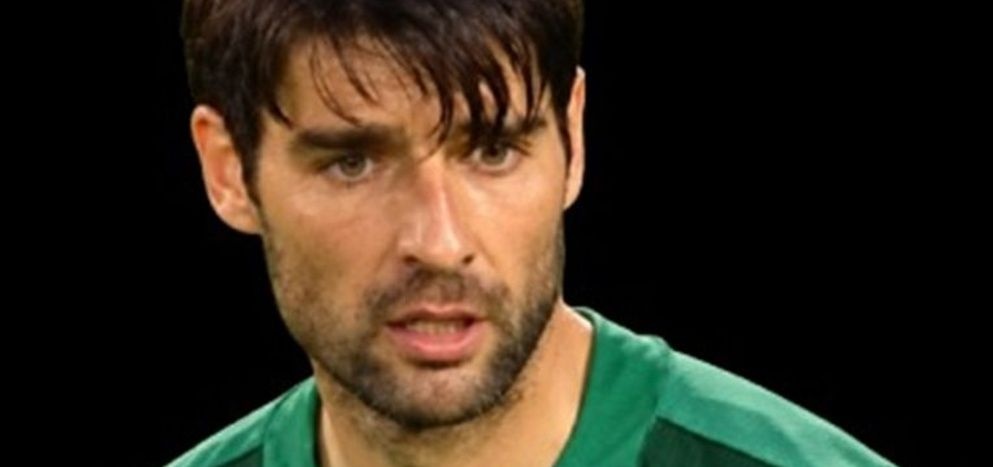
Vedran Ćorluka, born 5 February 1986, Derventa, Bosnia and Herzegovina.
PART ONE
Born in Derventa, Vedran Ćorluka moved with his family to Zagreb in 1992 because of the Bosnian War. He joined Dinamo Zagreb’s youth system in 1994, entering a club where competition for places demanded regular improvement and where an impressive performance at one age level offered no guarantee of selection at the next. As he grew, his height made him an obvious candidate for defensive work, but his usefulness depended just as much on controlling the ball, judging a pass and recognising trouble before an opponent could exploit it.
Learning those habits took time, because a defender needs to understand the position of his team-mates as well as the movement directly in front of him, and physical strength cannot repair every mistake made through poor judgement. By 2003 he had progressed towards Dinamo’s senior ranks, although the gap between training with established professionals and playing competitive football remained considerable, leaving the club to find a practical way of giving him the experience his development required.
An answer came with a loan to Inter Zaprešić for the 2004–05 season, and the opportunity to play regularly proved especially valuable because he joined a team capable of challenging much better-known opponents rather than simply surviving against them. Inter finished second in the Croatian league behind Hajduk Split, while Ćorluka contributed 27 league appearances and four goals, figures which showed that the arrangement had provided responsibility as well as time on the pitch. Luka Modrić was also gaining experience there on loan from Dinamo, and their shared season helped strengthen a friendship between two footballers whose different jobs required the same willingness to receive possession and make sensible decisions under pressure.
For the defender, senior matches brought lessons which training alone could not supply, since an experienced forward would deliberately test his concentration, draw him away from his position or challenge him before he had properly judged a dropping ball. Consequently, when he returned to Zagreb in 2005, he brought back the experience of helping a successful team through a demanding campaign, and Dinamo could assess a player who had already shown that he could contribute beyond the relative protection of youth football.
Returning with that stronger grounding, Ćorluka established himself in the Dinamo side which won the 2005–06 Croatian championship, finding that the expectations at his parent club placed a different sort of pressure on every appearance and every result. Inter’s success had surprised people, whereas Dinamo were expected to lead, and a defender in their team needed to remain alert through spells when most of the football was being played towards the other end. His ability to operate centrally or on the right helped him secure a place, but versatility would have meant little without the composure to take possession from colleagues and move it on without creating unnecessary difficulties.
During the same period he advanced through Croatia’s international ranks, and Slaven Bilić gave him his senior debut as a substitute in the 2–0 friendly victory over Italy in Livorno on 16 August 2006. Italy had won the World Cup the previous month, making the occasion a striking introduction to senior international football, although the more lasting importance lay in the opening it gave Ćorluka to become a regular part of Bilić’s plans rather than an occasional visitor to the squad.
With an international place now within reach, he helped Dinamo retain the championship in 2006–07 and add the Croatian Cup, completing a domestic double which confirmed that his first successful season back in Zagreb had been no isolated achievement. Playing for a team expected to win brought repeated demands to concentrate against opponents who might spend long periods defending before suddenly trying to punish a loose pass or an unnecessarily ambitious movement forward.
European fixtures supplied another measure of his progress, because opponents with greater speed and sharper movement could expose errors which domestic matches sometimes allowed Dinamo to overcome through their attacking strength. Manchester City recognised qualities which suited their own rebuilding plans, and on 2 August 2007 they signed the 21-year-old on a five-year contract for an undisclosed fee as Sven-Göran Eriksson assembled a substantially changed side. Moving to England therefore meant leaving the familiarity of a championship-winning team for a group still learning how to play together, while adapting to a league in which the pressure on a defender could arrive quickly and from several directions.
PART TWO
Vedran Ćorluka´s Premier League introduction came at Upton Park on 11 August 2007, when Manchester City beat West Ham United 2–0, and beginning with a clean sheet gave him an encouraging first experience of the competition he had been recruited to handle. Eriksson’s new arrivals helped produce a promising start, with Ćorluka offering measured possession on the right and enough defensive awareness to support colleagues without treating every attacking opportunity as a reason to abandon his position. Nevertheless, English football also supplied uncomfortable afternoons, including the 6–0 defeat at Chelsea on 27 October, when City discovered how severely a leading side could punish them once their organisation began to fail.
His international work continued alongside those club demands, and on 21 November he helped Croatia beat England 3–2 at Wembley in the final match of their successful European Championship qualifying campaign. Croatia’s victory ended England’s hopes of reaching the finals, and for Ćorluka it provided further evidence that the judgement developed in Zagreb could withstand occasions carrying far greater attention than the matches in which he had first learned his trade.
City eventually finished ninth in 2007–08 after losing some of their early consistency, but Ćorluka’s 35 league appearances demonstrated that he had become an established selection, and the team gained a UEFA Cup place through the Fair Play route. International football then took priority at Euro 2008, where Croatia beat Austria, Germany and Poland to win their group, carrying the confidence of three victories into a quarter-final against Turkey in Vienna on 20 June. The match remained goalless until the closing stages of extra time, when Ivan Klasnić headed Croatia in front and appeared to have settled a contest which had offered neither side an easy route towards a decisive advantage. Semih Şentürk equalised before the final whistle, however, and Turkey won the penalty shoot-out 3–1 after the 1–1 draw, leaving Croatia to absorb an elimination made harder by the very short interval between apparent victory and renewed uncertainty.
Back in Manchester under new manager Mark Hughes, Ćorluka scored his only City goal in the 4–2 defeat at Aston Villa on 17 August 2008, although a more useful contribution followed in the UEFA Cup later that month. Trailing Midtjylland after losing the home leg, City forced extra time in Denmark on 28 August through a late own goal, bringing the aggregate score to 1–1 before the additional half-hour failed to separate the teams. Joe Hart then saved twice in the shoot-out, giving Ćorluka the opportunity to convert the decisive penalty and complete a 4–2 success which kept City in European competition despite a performance which had repeatedly threatened to end badly. He made his final appearance for the club in the 3–0 victory at Sunderland on 31 August, and Tottenham Hotspur completed his signing the following day for a reported £8.5 million on a six-year contract. Re-joining Modrić offered a welcome personal connection at his new club, but Tottenham’s poor opening to the season meant that friendship could only help him settle away from matches, because the immediate professional requirement was to improve results.
Tottenham’s difficulties acquired a frightening personal dimension for Ćorluka at Stoke City on 19 October 2008, when goalkeeper Heurelho Gomes caught him beneath the chin during play and left him unconscious, requiring treatment on the field before hospital checks. He escaped serious lasting injury, but the incident interrupted an already unsettled introduction to a club whose early results had placed manager Juande Ramos under increasing pressure and made each subsequent match more important. Harry Redknapp replaced Ramos later that month, and Ćorluka became part of the work of restoring a more dependable structure, with clearer defensive responsibilities helping Tottenham recover from their damaging start.
Their improvement carried them to the League Cup final against Manchester United on 1 March 2009, when neither team scored during normal or extra time and the destination of the trophy was settled by penalties. Ćorluka converted Tottenham’s only successful attempt as United won the shoot-out 4–1, leaving him with a runners-up medal despite another composed kick and giving his first London season a disappointment which could not be blamed on his own execution from the spot.
As Redknapp gained more time with the squad, Tottenham developed into a more balanced side during 2009–10, and Ćorluka’s work behind Aaron Lennon helped the right flank function through a useful combination of defensive care and attacking speed. Lennon could threaten opponents with direct running, while the defender behind him supplied passing support and judged when an advance would help, recognising that a winger benefits from a dependable option without always needing another player in the same space. At Bolton Wanderers on 3 October 2009, Ćorluka contributed more visibly by heading Tottenham’s second equaliser in a 2–2 draw, following Niko Kranjčar’s earlier response to the home side and securing a point from a difficult away match.
His 29 league appearances formed part of a campaign which ended with Tottenham fourth and qualified for the Champions League, an achievement built on collecting results consistently as well as producing the attacking performances which drew most attention. For a defender whose game relied on timing and sound choices, the season offered a clear measure of his value, because Tottenham’s ambition required players capable of maintaining their shape while more adventurous colleagues sought the openings which could decide matches.
PART THREE
Champions League football brought a new level of scrutiny in 2010–11, and Vedran Ćorluka faced one of Tottenham’s most demanding assignments when they visited AC Milan on 15 February 2011 for the first leg of their last-16 tie. The occasion required discipline against opponents accustomed to European pressure, but his own involvement ended prematurely after a heavy challenge by Mathieu Flamini injured his ankle and forced Redknapp to reorganise the right side of the defence. Tottenham nevertheless won 1–0 through Peter Crouch, who finished after Lennon’s break and pass, and a goalless return at White Hart Lane subsequently carried the London club into the quarter-finals before Real Madrid ended their involvement.
By the following season, however, Kyle Walker’s emergence had changed Ćorluka’s position within the squad, reducing his opportunities at right-back and leaving an established international to consider whether patience would bring enough meaningful football. Although competition for places was a reasonable consequence of Tottenham’s improvement, the practical difficulty for Ćorluka remained the same, since maintaining his match sharpness required appearances which his earlier service could no longer guarantee him.
Croatia still gave him an important role, and on 11 November 2011 he scored their third goal in a 3–0 European Championship play-off victory in Turkey, helping establish an advantage which a goalless return would turn into qualification. That international responsibility sharpened the need for regular club matches, and on 31 January 2012 he joined Bayer Leverkusen on loan, exchanging the prospect of waiting for opportunities in London for a fresh challenge in German football.
He completed Leverkusen’s 2–2 home draw with Stuttgart on 4 February, beginning the process of adjusting to different team-mates and a different league while retaining the straightforward objective of being available for selection every week. Against Barcelona in the Champions League on 14 February, he delivered the cross from which Michal Kadlec headed Leverkusen level, demonstrating that his usefulness on the right extended to accurate service when the opportunity to advance presented itself. Barcelona eventually won the first leg 3–1, but the contribution still mattered to Ćorluka’s immediate purpose, because competitive involvement against strong opposition offered a better preparation for the coming European Championship than continued inactivity at Tottenham.
After completing his German loan, Ćorluka joined Croatia at Euro 2012, where a 3–1 victory over the Republic of Ireland on 10 June gave Bilić’s side a promising start in a group which also contained Italy and Spain. A 1–1 draw with Italy followed four days later, keeping qualification within reach, but the 1–0 defeat by Spain on 18 June ended Croatia’s involvement despite a campaign in which they had remained competitive against formidable opposition. His next club decision followed that tournament, with Lokomotiv Moscow securing his transfer from Tottenham and offering a reunion with Bilić, whose appointment in Russia provided a familiar manager at an important point in the defender’s working life. Ćorluka subsequently left White Hart Lane on 27 June, having made 81 Premiership appearances for the Lilywhites.
PART FOUR
Ćorluka began his Lokomotiv playing spell by scoring in a 3–2 league victory over Mordovia Saransk, providing an immediate attacking contribution even though the club had chiefly recruited him to improve the decisions and defensive work behind their forwards. Bilić remained for only one season, but Ćorluka stayed beyond the manager who had helped attract him, increasingly making central defence his main position and adapting to the changes in personnel and instruction which followed.
His international responsibilities continued at the 2014 World Cup, where Croatia lost the opening match 3–1 to Brazil on 12 June before responding with a 4–0 victory over Cameroon on 18 June. A 3–1 defeat by Mexico on 23 June then ended their tournament at the group stage, leaving another campaign in which a convincing win had been insufficient to secure progress and reminding the squad of the cost of uneven results. Greater satisfaction arrived with Lokomotiv in May 2015, when they defeated Kuban Krasnodar 3–1 after extra time to win the Russian Cup, while the supporters’ selection of Ćorluka as their player of the year reflected the importance he had acquired within their team.
An especially demanding international appearance followed at Euro 2016, when Ćorluka suffered a head wound during Croatia’s opening match against Turkey in Paris on 12 June and needed repeated attention as medical staff worked to control the bleeding. He nevertheless completed the game and helped protect the advantage supplied by Modrić’s volley in a 1–0 victory, an afternoon which required him to keep dealing with the football while treatment repeatedly interrupted his normal preparation between passages of play.
Croatia then drew 2–2 with the Czech Republic on 17 June and beat Spain 2–1 on 21 June, finishing first in their group and giving themselves reasonable grounds to expect a stronger finish than in their previous tournament appearances. Portugal ended those hopes with a 1–0 extra-time victory in the last 16 on 25 June, meaning that another encouraging group campaign had been followed by elimination in a match where the decisive goal arrived late. For Ćorluka, the tournament again combined a substantial personal contribution with a frustrating collective result, although his ability to remain useful under difficult circumstances had been plain from the opening match rather than dependent on any description supplied afterwards.
Back at Lokomotiv, the demands became considerably more personal in April 2017, when an Achilles tendon injury brought a lengthy absence and replaced the familiar routine of preparing for opponents with the slower, less predictable business of rehabilitation. The club won another Russian Cup the following month, but Ćorluka’s immediate concerns lay in recovering movement and strength, because a defender cannot simply rely on experience when his body will not yet perform the actions his judgement requires.
Returning from such an injury also meant accepting that progress could not sensibly be measured against the pace of a normal season, with each stage of recovery needing to support the next before competitive football became a realistic expectation. Lokomotiv’s 2017–18 championship campaign eventually supplied a happier setting for his return, and they secured the title with a 1–0 victory over Zenit on 5 May 2018, rewarding a squad which had maintained its challenge through the season. Ćorluka’s involvement was limited by the consequences of his absence, but returning to a championship-winning group still represented a substantial improvement on the uncertainty of rehabilitation and put him back into consideration for Croatia’s approaching World Cup campaign in Russia.
Selection for the 2018 World Cup brought a different responsibility, because Zlatko Dalić preferred Dejan Lovren and Domagoj Vida in central defence, leaving Ćorluka to provide experienced cover and support the players chosen ahead of him. On 21 June he replaced Mario Mandžukić in added time against Argentina to collect his 100th cap, reaching the landmark during a 3–0 victory secured by goals from Ante Rebić, Modrić and Ivan Rakitić.
Croatia completed the group stage with victory over Iceland, then eliminated Denmark and Russia on penalties before beating England 2–1 after extra time in the semi-final, carrying a team accustomed to tournament disappointment into the country’s first World Cup final. France won that final 4–2 on 15 July, but Ćorluka’s willingness to accept fewer minutes formed part of a squad effort in which preparing properly and helping colleagues remained necessary even for players who were no longer automatic selections. He announced his international retirement on 10 August with 103 appearances and four goals, ending twelve years of senior service after accepting that his final contribution would involve supporting a successful team as well as performing the minutes the manager asked him to play.
Club football continued after his international retirement, and Lokomotiv added the Russian Cup and Russian Super Cup in 2019, providing further honours for a defender whose longest club commitment had brought both responsibility and a sustained place in a competitive squad. His contract extension in February 2020 reflected that standing, with the club specifically valuing the experience he could pass to younger players as well as the defensive contribution he could still make himself.
During the closing weeks of his final playing season, his move towards coaching with Croatia was being arranged, while Lokomotiv supplied a fourth Russian Cup through their 3–1 victory over Krylya Sovetov on 12 May 2021. Four days later he made his final competitive appearance in a 1–0 league victory over Ural, completing a Lokomotiv record of 242 matches and nine goals before taking up his duties alongside Dalić ahead of the delayed European Championship. A brief spell on Lokomotiv’s coaching staff ended in July for family reasons, and his playing record was complete: two Croatian championships, a Russian title, domestic cups and a World Cup runners-up medal.