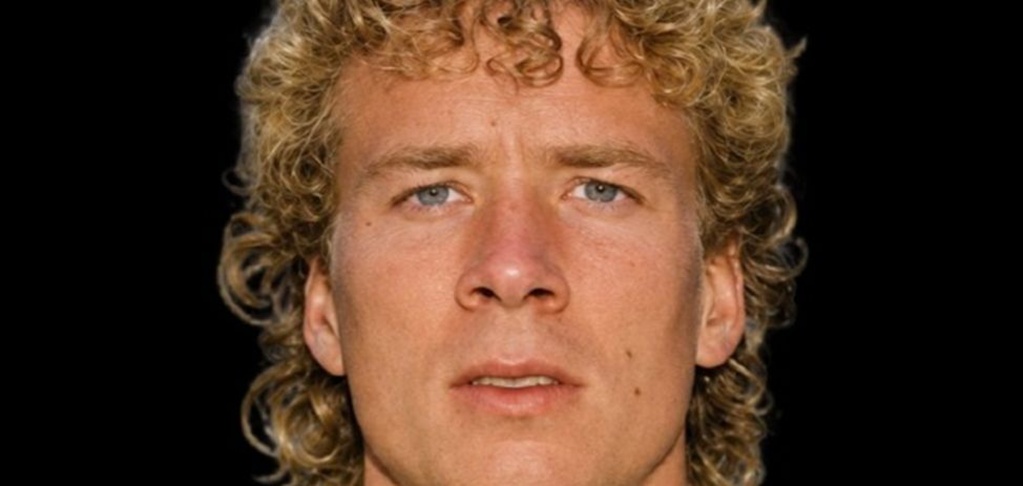
Johnny Ekström, born 5 March 1965, Gothenburg, Sweden.
PART ONE
Johnny Ekström was formed at the youth academy of Gothenburg and made his league debut for the club in 1984, although that first season gave him no more than a handful of games. The 1985–86 campaign put him on a far bigger stage as Gothenburg were in the European Cup and fought their way through the rounds with Torbjörn Nilsson scoring freely at the front, and Ekström was part of the attacking group that carried the club all the way to the semi-finals. They edged past Aberdeen on away goals along the way, a result that told the Swedes they could live with sides from the established football nations, and it earned them a semi-final against Barcelona, then managed by Terry Venables.
The first leg in Gothenburg could hardly have gone better, since the home side won 3–0 and sent their supporters off dreaming of a final in Seville, but Barcelona won the return by exactly the same score and the tie went to penalties. Barcelona took the shoot-out 5–4, and they in turn lost the final to Steaua Bucharest on penalties on 7 May 1986, which left Gothenburg followers with the nagging thought that they had come within a kick of playing in it themselves. It was a hard lesson for a forward of 21 about how thin the line can be between a good side and a great one, and he never forgot it.
Away from the club, the spring of 1986 brought him a first taste of international football at two levels, since he had played 12 games for the Sweden Under-21 side and was in the squad that reached the quarter-finals of the 1986 UEFA European Under-21 Championship, where Italy put them out. Then, on 1 May 1986, he made his full debut in a friendly against Greece, playing 71 minutes alongside Dan Corneliusson at forward before Lasse Larsson replaced him in a 0–0 draw that gave nobody much to shout about.
The goals followed soon enough, and his first for the full national side came on 6 August 1986 in a 3–1 friendly win against Finland, which felt like a gentle warm-up for what was to come. On 24 September he made his competitive debut in a UEFA Euro 1988 qualifier against Switzerland, and he marked it by scoring both goals in a 2–0 win, a first night in a qualifying tie that most strikers would be happy to put on the mantelpiece. By the autumn he had finished the 1986 Allsvenskan as the league’s top scorer, and he had played in the first half of the 1986–87 UEFA Cup.
In October 1986, Empoli, a club trying to find its feet in Serie A, signed him in a deal that made him the most expensive Swedish transfer of all time. Ekström adapted better than most foreigners of his day, and made 24 league appearances in 1986–87 and 29 outings in 1987–88, but the goals came sparingly, eight in the league across the two seasons. On the international front, he finished the Euro 1988 qualifiers with a respectable six goals, but it was not enough, and Sweden did not make it to the finals in West Germany. Then, in 1988, he signed for Bayern Munich and he repaid the faith by playing 23 league games and scoring seven goals as the Bavarians won the Bundesliga title in 1989. Bayern Munich also reached the semi-finals of the 1988–89 UEFA Cup, where Napoli, with Diego Maradona in their ranks, were too strong and knocked them out.
PART TWO
In 1989, Johnny Ekström moved to French Ligue 1 AS Cannes where he played alongside Zinedine Zidane, though the league numbers were modest, four goals in 32 games over two seasons. He had a better scoring ratio for Sweden, though, as he netted twice in the qualifying campaign for the 1990 FIFA World Cup, which helped his country reach its first World Cup since 1978, and when the finals came around in Italy he was in the squad. He came on in the second group game against Scotland, replacing Stefan Pettersson in the 63rd minute of a 2-1 defeat, and he started the third against Costa Rica, scoring the first goal in yet another 2-1 loss, a third in a row that sent Sweden home from the tournament without a point. It was a cruel way to go out for a side that had played with spirit, but the goal against Costa Rica gave him a line in the World Cup record books that nobody could take away, and he left Cannes in 1991 with that memory in his bag.
He returned to Gothenburg in 1991 and the reunion paid off straight away, because the side won both the Swedish Championship and the Swedish Cup the same year. He did not play for Sweden in 1991, but the national team came calling again in 1992, when the European Championship was staged on home soil, and he was in the squad that took part in it, appearing as a substitute in all four of Sweden’s games as they reached the semi-finals before Germany knocked them out. That autumn Gothenburg went into the 1992–93 UEFA Champions League, where they finished joint-third in their group behind Marseille and AC Milan, a decent haul for a Swedish side up against the big spenders of the continent.
Gothenburg then went on to win the Swedish Championship in 1993, which gave him a second league title in his second spell. The pull of Italy proved too strong, however, as he signed for Serie A Reggiana in 1993, although it turned out to be a short and unrewarding stay of nine league games in the 1993–94 campaign. He would play in four qualifying matches for the 1994 FIFA World Cup before announcing his retirement from international football in October 1993. Then, in the spring of 1994, he went on loan to Real Betis in Spain, becoming the second Swede to represent the club in Seville after Torbjörn Jonsson, and he made seven Segunda División appearances and hit two goals for the club during his time there.
The summer of 1994 took him back to German football when he signed a two-year contract with Dynamo Dresden, who were then in the Bundesliga, and he ended up playing one season for them, scoring seven goals in 30 league games. Part way through that campaign, on 8 March 1995, he came out of his international retirement for a friendly against Cyprus in Limassol and netted one of Sweden’s goals in a 3–3 draw, a final appearance that took him to 47 caps and 13 goals for the country of his birth. In 1995 he signed for Eintracht Frankfurt, but the move did not work out as either side had hoped, and he scored two goals in 16 games as the club was relegated to the 2. Bundesliga in 1996. He stayed with Frankfurt in the second tier, though he could not help the team win promotion back to the top flight.
In 1997, he returned to Gothenburg for a second time and spent two seasons there, and while his legs were no longer what they used to be, there was enough left to make him a useful member of the squad. In late 1998 he retired from professional football, bringing to a close a spell in the game that had started at Gothenburg in the early 1980s and ended in the same place sixteen years later. By then he had played more than 200 matches for Gothenburg across his three stints with the club, and he had a collection of medals to show for them.